The Rapid Proliferation of Law Enforcement AI Sparks Deep Accountability and Governance Crises
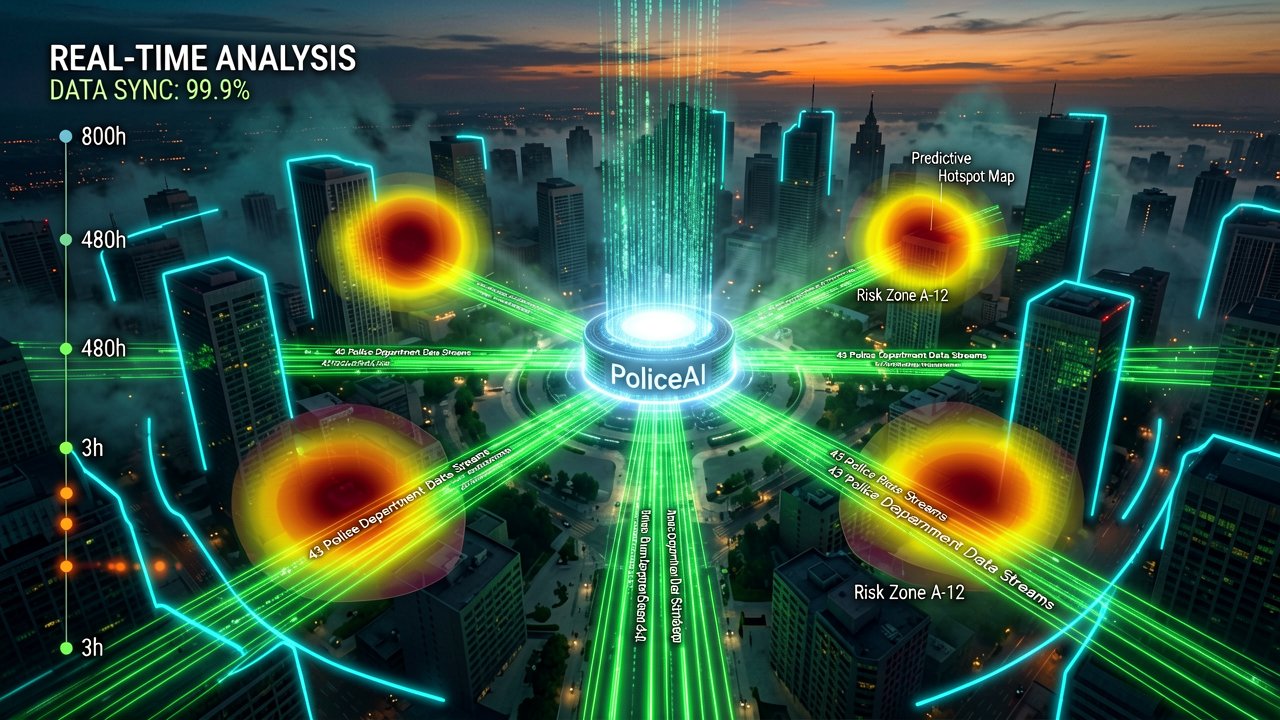
Law enforcement agencies are deploying artificial intelligence tools at a rapid pace, driving a massive operational transformation that far outpaces current regulatory and ethical safeguards. According to an extensive mapping study highlighted by Police Professional, at least 70 AI tools have already been deployed, trialed, or placed in active development across the criminal justice system in England and Wales alone. This institutional acceleration is underscored by major state funding injections, such as the UK Home Office investing £75 million to launch PoliceAI, a national center tasked with putting algorithmic intelligence into the hands of all 43 regional police forces.
This aggressive commercial adoption marks a strategic shift from retrospective investigative analytics to real-time, automated operational applications. For instance, investigative workflows that traditionally required 800 hours of manual video review are being condensed into three hours through automated video analysis. However, this technical efficiency has triggered severe concerns regarding accuracy, transparency, and human rights. Recent independent reviews from organizations like the American Civil Liberties Union indicate that automated police report generation tools often produce substantively worse accuracy metrics while failing to yield actual time savings when rigorous human verification is maintained.
The gap between software capabilities and legislative oversight continues to widen, creating localized accountability vacuums. While framework attempts like the European Union's AI Act impose phased compliance deadlines throughout 2026, many police deployments operate under self-regulated conditions or exploit judicial delays to deploy capabilities before local courts can establish legal precedents. The absence of unified, mandatory safeguards risks entrenching systemic algorithmic biases and turning public spaces into zones of continuous, unconstitutional surveillance.
Market Drivers and the Automation Shift
The market for police automation is expanding rapidly as law enforcement leaders attempt to mitigate severe staffing shortages and mounting backlogs of digital evidence. Operational demands have pushed vendors to move past license plate readers into multi-modal systems capable of analyzing jail calls, identifying subtle vehicular modifications, and running predictive crime-hotspot mapping. Proponents argue that automating these processing pipelines could save millions of administrative hours annually, freeing up thousands of physical officers for community patrol.
The Regulatory Deficit and Civil Liberties
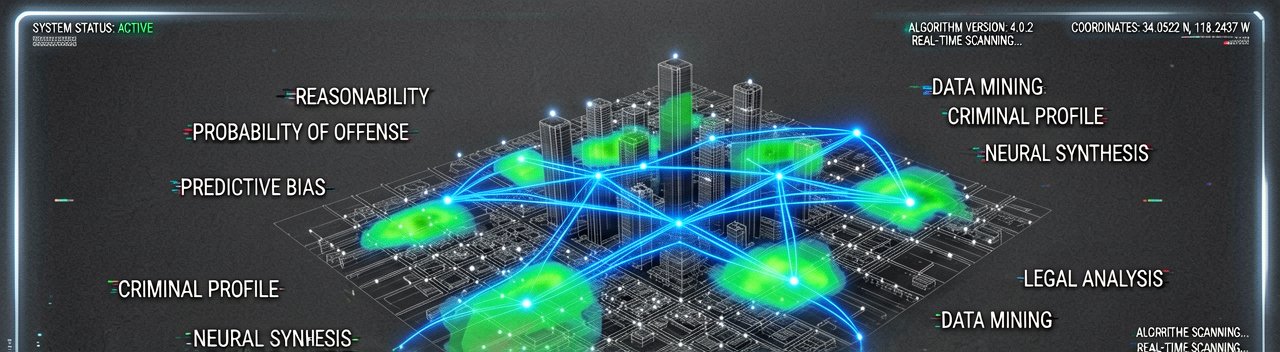
Legal experts and human rights organizations warn that the systemic lack of independent auditing, mandatory impact assessments, and clear disclosures undermines the foundational right to a fair trial. Policy analysts from the Brennan Center for Justice emphasize that without pre-deployment testing and ongoing independent oversight, high-risk AI tools can perpetuate historical racial and socioeconomic profiling embedded within legacy training data. As proprietary models increasingly influence decisions regarding public freedom and legal outcomes, the demand for statutory state-level and federal regulations remains critical to preventing a total collapse of public trust.
An Invisible Governance Vacuum
Behind the Scenes of Algorithmic Patrols: The rapid integration of machine learning into local precincts has fundamentally altered the mechanics of judicial discovery. Defense attorneys are increasingly encountering prosecutorial files where the foundational investigative lead originated from a proprietary algorithm, yet the underlying source code remains hidden behind corporate trade-secret protections. This intellectual property barrier effectively shields software vendors from independent cross-examination, leaving defense teams unable to challenge the reliability, error rates, or potential biases of the code that flagged their clients. Consequently, courts are forced to weigh the liberty of defendants against the commercial interests of private tech firms.
This dynamic has created a profound shift in institutional power, transferring public policy decisions from elected officials to private software developers. When an engineering team adjusts the weights and thresholds within a predictive policing model, they are implicitly redefining how police resources are distributed across a city. Communities historically subjected to over-policing find themselves trapped in an automated feedback loop, as legacy arrest data feeds the algorithm, which then directs more patrols to the same neighborhoods, inevitably yielding more arrests. This cycle occurs entirely outside the view of traditional municipal oversight boards or public comment periods.
Furthermore, front-line officers often receive minimal training regarding the mathematical limitations of the tools they deploy. This knowledge gap frequently leads to automation bias, a psychological phenomenon where human operators inherently trust algorithmic recommendations over their own situational judgment or conflicting physical evidence. When a facial recognition system or a gunshot detection sensor generates an alert, responding officers frequently approach the scene with an elevated perception of threat, escalating encounters that might have otherwise been resolved through routine verification procedures.

The financial infrastructure supporting these acquisitions further insulates the technology from public scrutiny. Rather than utilizing standard municipal budget appropriations, which require city council approval and public debates, many departments secure these capabilities through federal homeland security grants, asset forfeiture funds, or private police foundations. By bypassing legislative line-item reviews, law enforcement agencies can quietly acquire sophisticated surveillance ecosystems, establishing operational precedents long before the public or local lawmakers even realize the technology is active in their communities.
The Paradox of Automated Efficiency
Reading Between the Lines: The primary marketing narrative driving the adoption of law enforcement AI hinges on the promise of objective efficiency, yet a closer examination reveals a fundamental contradiction. Proponents argue that automating administrative workflows reduces human error and racial bias by replacing subjective police intuition with standardized mathematical models. However, this assumption ignores the reality that machine learning models are fundamentally historical in nature. By training algorithms on decades of arrest records that reflect systemic socioeconomic disparities and biased policing patterns, departments are not eliminating human prejudice; they are merely codifying it into an unassailable, automated authority.
This reliance on historical inputs creates a self-fulfilling prophecy that distorts municipal resource allocation. When a predictive model projects a high probability of property crime in a specific low-income neighborhood, it triggers an influx of patrols to that area. The increased police presence naturally leads to higher rates of minor citations and arrests for low-level infractions, which are then logged back into the database as fresh validation data. The algorithm appears to be highly accurate simply because its own predictions dictate the real-world conditions that ensure its success, effectively trapping marginalized communities in an inescapable statistical loop.
Furthermore, the industry's metrics for success are often structurally divorced from actual public safety outcomes. Software vendors frequently boast about high correlation percentages or dramatic reductions in manual video-review times during controlled pilot programs. Yet, when these systems face the chaotic, unpredictable environments of real-world policing, their utility drops significantly. Independent audits routinely reveal that the time saved by automated transcription or facial matching is quickly consumed by the mandatory, grueling hours human analysts must spend correcting high rates of false positives, rendering the promised fiscal savings largely illusory.
Looking ahead, the long-term implication of this unchecked expansion is a steady erosion of the legal standard for reasonable suspicion. As algorithmic risk scores become standard elements of investigative dossiers, the basis for detaining or questioning citizens shifts from observable, articulable behavior to opaque, probabilistic calculations generated by a proprietary server. Once courts fully accept a black-box percentage as sufficient grounds for a physical stop, the constitutional protections against arbitrary state intrusion will be fundamentally rewritten, transforming the public square into a permanently monitored environment where everyone is a suspect until cleared by data.
"We are rapidly approaching a future where an algorithm will confidently predict exactly who is going to commit a crime, right up until the moment it mistakes a stray shadow for a firearm and a delivery driver for a fugitive, leaving human officers to sort out the math while the software vendor hides behind a liability waiver."
Artūras Malašauskas is an AI Systems Integrator with 20+ years of production-grade web engineering experience. He has designed, shipped, and scaled enterprise Python/PHP systems for logistics, SaaS, and public-sector clients. For the past year, he has focused exclusively on AI integrations: deploying open-source LLMs, building generative media pipelines (image, audio, video), and engineering multi-agent workflows for real production environments. His standard: reproducibility, security, cost-efficient inference—no vaporware. He documents and evaluates emerging AI tooling, separating verified capabilities from marketing noise. Technical editor at: muza-ai.eu, ai-verslas.lt, ai-naujinos.lt Connect on LinkedIn
Comments