BlueVoyant Steps In to Tame the Wild West of Enterprise AI Agents
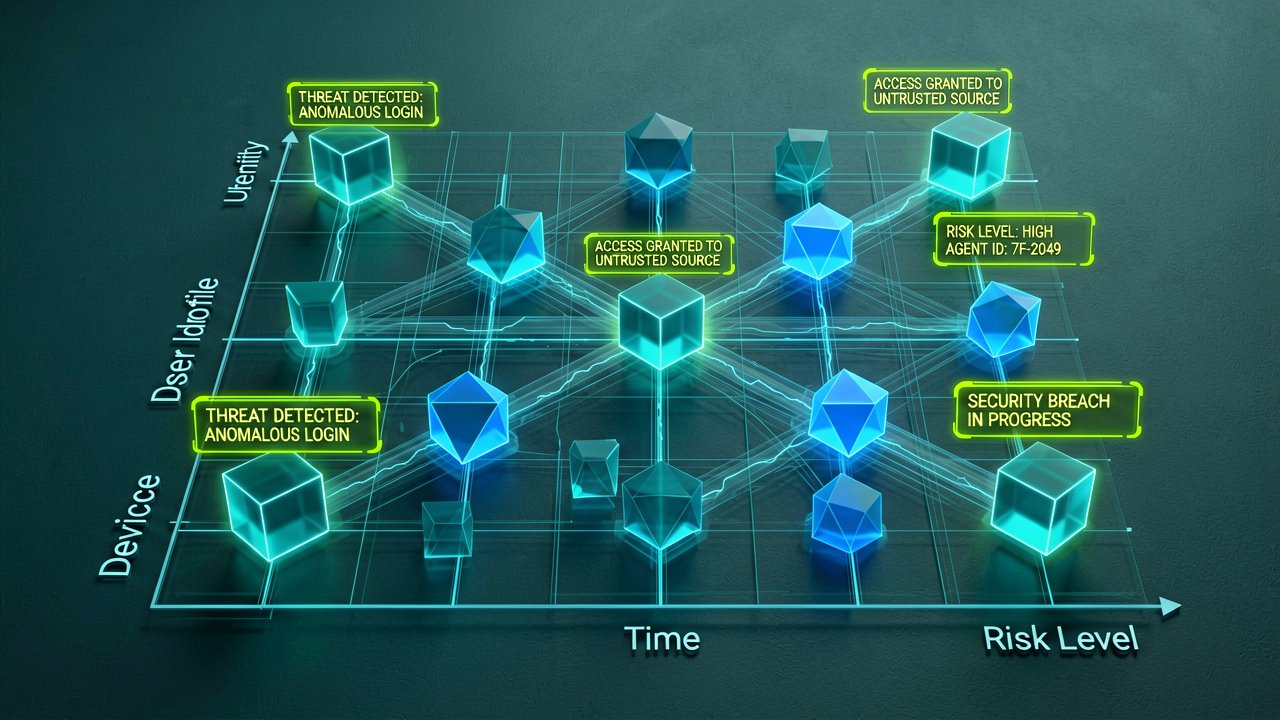
As organizations scramble to deploy autonomous AI agents faster than their IT departments can keep track of them, a glaring governance gap has opened up in the enterprise landscape. Stepping directly into this vulnerability, cybersecurity heavyweight BlueVoyant launched its new Microsoft Agent 365 Security Deployment Service on July 1, 2026. This professional services program is designed as a direct response to the chaotic rush of integrating tools like Microsoft 365 Copilot, Copilot Studio, and various third-party autonomous workflows into daily business operations.
The initiative essentially establishes a centralized control plane for what the industry is calling the "agentic enterprise." By leveraging Microsoft Agent 365, the service helps security teams pin down exactly what digital entities are running in their environments, who owns them, and what kind of sensitive corporate data they can touch. It's a critical safety net considering how easily unauthorized "shadow AI" can slip into corporate infrastructure when departments buy into automated tools without proper oversight.
Building a Concrete Defense Plan
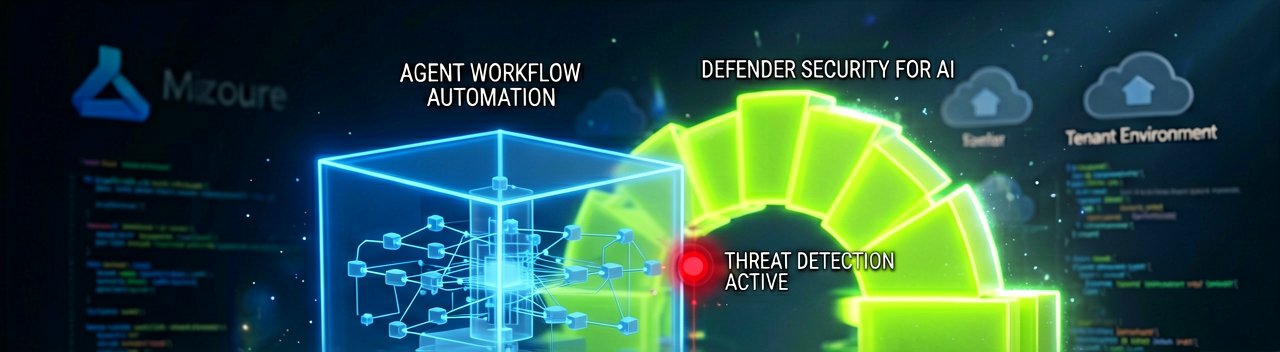
Delivered as a guided, 90-day engagement, BlueVoyant’s specialists work right inside the client’s existing Microsoft tenant to harden their defenses. The process builds out a clear inventory of active agents, implements robust identity and access controls through Microsoft Entra , and activates specialized threat detection via Microsoft Defender Security for AI. Furthermore, it stretches Microsoft Purview’s data loss prevention policies to cover autonomous scripts, ensuring that an overly ambitious bot doesn't accidentally leak proprietary information or overshare files internally. Crucially, all configuration architecture remains entirely within the client's own tenant, meaning businesses retain full ownership of their security baseline once the onboarding wraps up.
The Hidden Cost of Autonomy
The Real Risk Nobody Likes to Talk About: Most enterprise leadership teams view autonomous agents purely as productivity boosters, missing the reality that these agents behave less like software tools and more like digital employees. When an organization hands an AI agent the keys to cross-application workflows, they are inadvertently expanding their attack surface exponentially. Unlike a human employee who might hesitate before executing a suspicious request, an inadequately configured bot will faithfully manipulate spreadsheets, access sensitive HR databases, or execute API calls the exact millisecond it is instructed to do so. This blind compliance creates a playground for prompt injection attacks and malicious data manipulation.

Historically, enterprise IT departments relied on rigid firewall rules and predictable user identities to secure their corporate perimeters. The sudden rise of the agentic enterprise shatters that entire framework because autonomous entities operate in a gray area where traditional access management struggles to keep pace. When an agent pulls information from a secure cloud bucket, processes it through an external large language model, and then drops the summary into a public Slack channel, tracking data lineage becomes a nightmare. Without real-time discovery mechanisms, security teams are essentially flying blind while their automated infrastructure mutates by the day.
This blind spot explains why industry chief information security officers are pivoting away from purely reactive monitoring toward aggressive posture management. Early enterprise adopters of Microsoft Copilot Studio frequently discovered that default permissions allowed bots to index internal files that should have been strictly off-limits to general staff, such as unannounced financial performance metrics or private restructuring drafts. BlueVoyant’s strategy leans heavily into this exact friction point by forcing organizations to define rigid behavioral guardrails and strict cryptographic identities for every non-human actor before allowing them to touch production data.
From an operational perspective, the true battleground over the next year will center on identity governance. Treating an AI agent as a standard service account is a recipe for disaster, as standard accounts lack the context-aware scrutiny required to evaluate whether a specific sequence of automated actions constitutes a breach. Forward-looking security frameworks are now requiring continuous authentication protocols that treat every single interaction between an AI agent and an enterprise database as a discrete, potentially hostile request. This meticulous approach is the only way to prevent complex cascading failures where one compromised agent tricks another into violating core compliance mandates.
The Illusion of Turnkey Governance
Reading Between the Lines: The industry’s rush to deploy specialized security services for AI agents exposes a glaring paradox in modern corporate strategy. Enterprises are eagerly paying premium licensing fees for autonomous tools designed specifically to bypass human friction and speed up workflows, only to immediately turn around and spend millions more trying to throttle, monitor, and restrict those very same tools. There is a fundamental conflict of interest embedded here; the more secure and bound by guardrails an autonomous agent becomes, the less autonomous and disruptive it actually is. By forcing these digital entities into traditional compliance frameworks, businesses may accidentally strip away the agility that justified the AI investment in the first place.
Furthermore, relying on a third-party managed service to police a rapidly evolving ecosystem like Microsoft's reveals a deep systemic dependency. Microsoft updates its foundational models, Copilot features, and API hooks at a breakneck pace, frequently rendering yesterday's configuration standards obsolete overnight. A 90-day security deployment service can certainly clean up the immediate mess left by eager departments, but it assumes the enterprise environment will remain static after the consultants pack up. Without a fundamental shift in how internal IT teams view continuous asset discovery, these fixed-timeline security engagements risk becoming expensive band-aids on infrastructure that changes by the hour.
This reality highlights a deeper contradiction in the marketing of the "agentic enterprise." Vendor narratives often paint a picture of frictionless, self-governing bots that cleanly respect corporate data boundaries. Yet, the very existence of a market for dedicated agent defense services proves that out-of-the-box AI permissions are treated as an afterthought. It is a familiar, cyclical pattern in enterprise tech: innovate first, break the corporate perimeter, and let the cybersecurity industry monetize the subsequent cleanup effort. For all the talk of sophisticated algorithmic threat hunting, the core issue remains old-fashioned human impatience wrapped in the trendy veneer of artificial intelligence.
Looking ahead, the long-term viability of this security model depends heavily on whether platforms can successfully distinguish between an AI agent performing an optimization task and one that has been subtly manipulated into data exfiltration. Because prompt injection attacks can be masked within routine business emails or poisoned training documents, distinguishing a malicious command from a legitimate user request requires an absurdly high level of contextual awareness. Until security tools can flawlessly read human intent behind a machine's actions, even the most rigorously hardened tenants will remain vulnerable to clever manipulation that completely bypasses rigid identity rules.
In their relentless pursuit to replace human overhead with flawless digital workers, enterprises have successfully invented a brand-new corporate entity: an automated employee that never sleeps, works for free, and possesses the terrifying capability to accidentally leak the entire company database before anyone has poured their first cup of morning coffee.
Artūras Malašauskas is an AI Systems Integrator with 20+ years of production-grade web engineering experience. He has designed, shipped, and scaled enterprise Python/PHP systems for logistics, SaaS, and public-sector clients. For the past year, he has focused exclusively on AI integrations: deploying open-source LLMs, building generative media pipelines (image, audio, video), and engineering multi-agent workflows for real production environments. His standard: reproducibility, security, cost-efficient inference—no vaporware. He documents and evaluates emerging AI tooling, separating verified capabilities from marketing noise. Technical editor at: muza-ai.eu, ai-verslas.lt, ai-naujinos.lt Connect on LinkedIn
Comments