Bespoke Labs Secures $40 Million to Fix the AI Reliability Gap via Simulated Workspaces
The enterprise artificial intelligence landscape is undergoing a critical shift from simple prompt-and-response software to persistent, autonomous systems. Mountain View-based startup Bespoke Labs has secured $40 million in funding across its Seed and Series A rounds to build specialized, hyper-realistic simulation environments that guarantee the reliability of enterprise AI agents. Announced recently, the funding rounds were anchored by prominent Silicon Valley venture firms, with 8VC spearheading the Seed round and Wing VC leading the Series A. The capital injection also drew significant participation from Mayfield, The House Fund, and elite tech leaders like Google’s Jeff Dean and dbt Labs CEO Tristan Handy, alongside angel investors from Anthropic, OpenAI, and Meta.
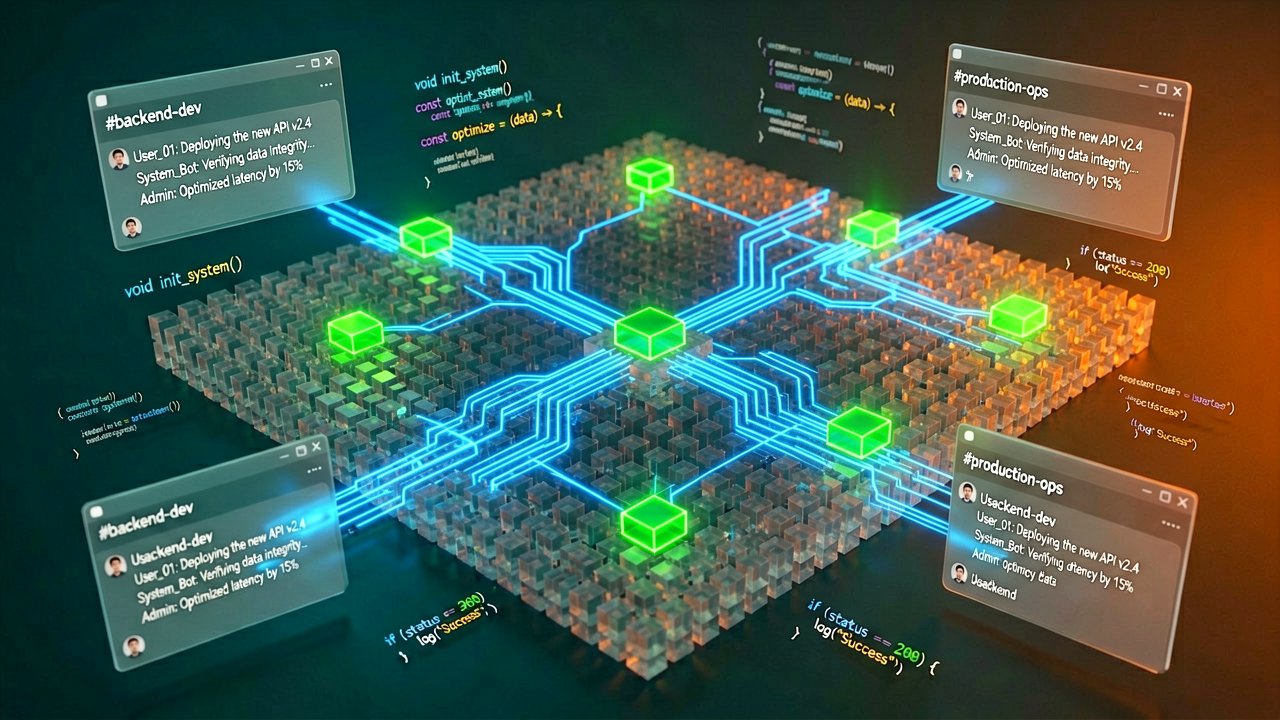
While modern AI agents excel at isolated, short-duration digital tasks, they notoriously struggle to maintain consistency or prevent hallucination spirals over long-horizon workflows without human oversight. Bespoke Labs directly targets this operational bottleneck by recreating complete corporate ecosystems—including deep codebases, live email systems, and active communications channels like Slack. These synthetic workspaces act as robust reinforcement learning environments where autonomous agents can execute multi-step professional tasks through iterative trial and error, enabling businesses to mathematically optimize and evaluate agent performance before deployment in production infrastructure.
This strategic capital infusion highlights a broader venture capital trend that prioritizes the validation, post-training alignment, and orchestration layers of the generative AI stack over foundational model building. Instead of relying on labor-intensive manual prompt engineering, Bespoke Labs utilizes a research-first approach featuring its proprietary Genetic-Pareto Agent Optimizer (GEPA) tool to automate the discovery of optimal operational policies. By providing a scalable framework for continuous simulation, benchmarking, and optimization, the startup establishes a critical infrastructure layer necessary for transitioning autonomous agents from experimental toys into reliable, enterprise-grade digital workers.
Solving the Persistence Problem for Enterprise Autonomy
Deploying AI agents in real-world corporate workflows requires shifting from traditional chat paradigms to persistent execution models. In these high-stakes digital environments, unexpected software edge cases often cause basic agents to fail, breaking complex operational pipelines. By mirroring an organization's specific technical and conversational context, realistic simulations allow developers to safely expose autonomous agents to unpredictable scenarios and stress-test their long-term stability.
A Scientific Paradigm Shift in AI Post-Training
The reliance on manual adjustments and "vibe-based" prompt tweaking represents a massive scalability obstacle for modern enterprises trying to scale their AI operations. Utilizing automated optimization algorithms within sandboxed simulation spaces allows organizations to systematically evaluate and refine agent capabilities across millions of computational iterations. This structured training methodology transforms raw behavioral models into predictable corporate tools, shifting the industry focus from brute-force scale to verifiable algorithmic performance.
Behind the Scenes of the Agentic Infrastructure Boom
What Most Reports Miss: The rush to fund simulation environments like Bespoke Labs highlights a growing frustration among enterprise buyers who find that raw foundation models are fundamentally unequipped for actual corporate workloads. For the past two years, organizations have tried to bridge this gap using basic prompt engineering and retrieval-augmented generation (RAG). However, when an AI agent is tasked with navigating an unpredictable, multi-layered enterprise stack—such as pulling data from a legacy CRM, verifying it via Slack, and updating a codebase—minor digital friction frequently triggers catastrophic failures. Venture capitalists are shifting away from funding the next massive language model, recognizing that the true bottleneck to AI adoption is the lack of verifiable, predictable testing grounds.
Industry insiders note that the traditional method of testing software simply does not work for non-deterministic AI agents. In standard software development, engineers write predictable unit tests with explicit inputs and outputs. Because generative models behave differently each time they encounter a problem, they require thousands of simulated trials to map out statistical probabilities of success or failure. By deploying agents into sandboxed corporate clones, developers can safely observe how an automated worker handles complex, long-horizon tasks without risking real-world customer data or disrupting live operational pipelines. This shift from static testing to dynamic simulation represents a fundamental evolution in software engineering QA methodologies.
The strategic involvement of angel investors from leading AI labs like Anthropic, OpenAI, and Meta underlines an industry-wide acknowledgement of the "post-training" challenge. Foundation model creators excel at teaching models how to converse, but they lack the hyper-specific, localized data required to train an agent to act as a specialized enterprise operator. Stakeholders point out that building these simulation environments requires an incredibly deep understanding of enterprise architecture, as the simulations must perfectly mimic human delays, API throttling, and messy data formats. Consequently, the startups that successfully control the simulation layer will likely dictate the benchmarking standards for the next generation of autonomous enterprise software.

The Hidden Paradox of Synthetic Certainty
Reading Between the Lines: The enterprise tech sector is eagerly embracing the promise of automated simulation, yet this approach contains an inherent structural contradiction. Silicon Valley is attempting to solve the erratic behavior of artificial intelligence agents by trapping them inside environments populated by equally synthetic corporate data and simulated humans. The underlying assumption is that a perfectly controlled digital sandbox can anticipate the chaos of real-world enterprise infrastructure. In practice, however, simulations are only as comprehensive as the engineers who design them, meaning that the most catastrophic edge cases are often the exact blind spots the simulation creators failed to envision.
Furthermore, this infrastructure boom risks introducing a secondary layer of operational opacity rather than resolving the primary one. Organizations deploying these advanced frameworks will soon find themselves using complex, non-deterministic AI optimization algorithms, such as Bespoke Labs' proprietary GEPA tool, to evaluate and tweak equally complex autonomous agents. This creates a closed-loop system where AI is essentially auditing and training AI. When a failure inevitably occurs in production after millions of successful simulated trials, tracing the root cause will require untangling a massive web of algorithmic interactions, potentially making system debugging more convoluted than it was under human QA teams.
Ultimately, the massive capitalization of agentic simulation startups exposes a quiet lowering of expectations for generalized artificial intelligence. Instead of delivering agents capable of fluidly navigating the messy, unpredictable world built by and for humans, the industry is pivoting toward rebuilding the world to accommodate the limitations of the software. For enterprises, the hidden cost of AI autonomy may not be the software licenses or the compute power, but the immense engineering overhead required to continually maintain, update, and police the vast simulation matrices needed to keep these digital workers from losing their way.
"We spent decades trying to teach computers to understand human messiness, only to realize it is much easier to build a multi-million dollar digital matrix and force the software to pretend we are perfectly logical."
Artūras Malašauskas is an AI Systems Integrator with 20+ years of production-grade web engineering experience. He has designed, shipped, and scaled enterprise Python/PHP systems for logistics, SaaS, and public-sector clients. For the past year, he has focused exclusively on AI integrations: deploying open-source LLMs, building generative media pipelines (image, audio, video), and engineering multi-agent workflows for real production environments. His standard: reproducibility, security, cost-efficient inference—no vaporware. He documents and evaluates emerging AI tooling, separating verified capabilities from marketing noise. Technical editor at: muza-ai.eu, ai-verslas.lt, ai-naujinos.lt Connect on LinkedIn
Comments