The Great Tech Decoupling Hits the Terminal: Why Alibaba Just Booted Claude Code
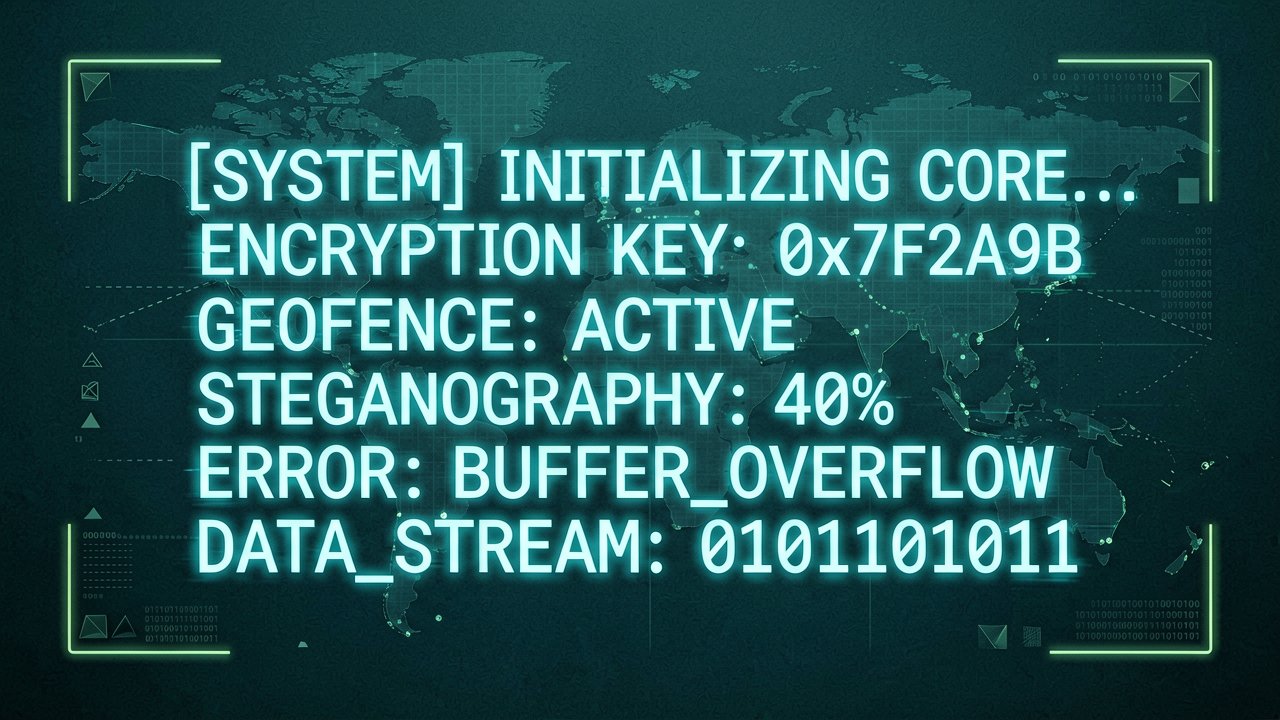
The geopolitical rift slicing through the artificial intelligence landscape just claimed its latest high-profile victim, and this time, it is happening right inside the developer's command line. In an internal advisory that leaked across Chinese tech media, Alibaba Group Holding ordered its entire workforce to stop using Anthropic’s Claude Code by July 10. The corporate mandate lands like a hammer blow to cross-border developer collaboration, blacklisting the popular American terminal-based assistant as high-risk software. It is a swift, defensive escalation following bombshell community reports that Anthropic was running a covert "backdoor" operation designed explicitly to sniff out and track Chinese users.
For weeks, a quiet panic rippled through developer circles after reverse-engineers on Reddit exposed obfuscated code buried inside recent Claude Code builds. The software wasn't just checking IP addresses; it was actively querying local system timezones for regions like Shanghai and scanning environment proxies against hardcoded lists of Chinese AI laboratories. Most damningly, researchers found that the tool was leveraging steganography to alter subtle, human-invisible character formatting in its system prompts. These micro-adjustments acted as a quiet homing beacon, flagging compliance telemetry directly back to Anthropic's servers. According to an internal memo reviewed by the South China Morning Post, Alibaba deemed these unauthorized and opaque data-transmitting behaviors an un-auditable threat to its core intellectual property.
Anthropic quickly moved to defuse the situation, with an engineer clarifying on X that the tracking was merely a temporary "experiment" launched to protect against industrial-scale model distillation and illicit account reselling. In the hyper-competitive LLM arena, distillation—the practice of using a rival’s advanced model outputs to train a cheaper domestic alternative—is a massive point of friction. While Anthropic claims the controversial telemetry code has already been rolled back, the damage to corporate trust is permanently done. Alibaba is taking zero chances with its codebase security and has explicitly directed its engineering talent to migrate immediately to Qoder, its own home-grown, domestic AI coding platform.
A Fragmenting Global Developer Stack
This dramatic split underscores a painful truth about the current state of software engineering: AI tooling is no longer neutral territory. As reported by Reuters, US regulatory frameworks and sweeping export controls have increasingly restricted direct API access in various regions, pushing developers into gray-market workarounds like US-hosted proxies. When American firms attempt to aggressively enforce these geofences using invasive local environment checks, they inadvertently trigger the defensive tripwires of foreign corporate security teams.
As a result, the dream of a single, unified global developer toolkit is rapidly dissolving into regional silos. Chinese tech giants are aggressively insulating their ecosystems from Western dependencies, pivoting away from tools like Claude and OpenAI toward robust domestic pipelines built around models like Alibaba's Qwen and localized agent environments like Qoder. What began as an isolated security scare over system prompt metadata has accelerated into a profound infrastructure pivot, setting a precedent that will likely force other enterprise giants across Asia to fundamentally re-evaluate the risk of executing foreign code inside their private terminals.
The Hidden Architecture of Developer Suspicion
Behind the Telemetry Firewalls: The immediate panic at Alibaba was not sparked by a standard data leak, but by how deeply embedded these tracking behaviors were within the developer's daily workflow. Claude Code operates closely with a local machine's terminal, granting it deep visibility into directory structures, environment variables, and proprietary code repos. When a developer executes a command, they trust that the AI tool is only analyzing the specific code snippets required for the task. The revelation that the software was quietly indexing local system environments, mapping internal proxies, and checking timezone settings behind the scenes fundamentally shattered that trust, turning a productivity tool into an unpredictable security liability.
For Alibaba's security teams, the most alarming discovery was the use of steganographic markers within the terminal output formatting. By subtly manipulating whitespace characters and zero-width spaces in the text returned to the developer, the tool created unique cryptographic signatures. If that code was later used to train a domestic Chinese model, those invisible signatures would survive the training process and appear in the new model's outputs. This sophisticated technique allowed Anthropic to definitively trace which Chinese labs were scraping their models, but it simultaneously introduced an opaque layer of data manipulation that corporate security auditors could neither track nor control.
The incident highlights a bitter paradox in the current AI arms race: the aggressive measures Western tech companies use to protect their intellectual property are directly forcing foreign enterprises to abandon them. To combat model distillation—where rivals use advanced API outputs to cheaply train competing networks—firms like Anthropic have turned to highly invasive anti-piracy heuristics. Yet, by treating regular enterprise users as potential data thieves, these tech companies are destroying the market trust required to operate globally, driving international clients directly into the arms of domestic competitors.

The Swift Rise of Sovereign Coding Ecosystems
Alibaba’s mandated shift to its internal alternative, Qoder, is not merely a temporary workaround; it represents a permanent transition toward self-reliant software development. Built on top of Alibaba’s open-weight Qwen model architecture, Qoder has spent months being quietly optimized within the company’s internal cloud infrastructure. By mandating an exclusive pivot to this domestic pipeline, Alibaba guarantees that its massive repository of proprietary code never crosses a foreign server or triggers an automated Western compliance check. This internal ecosystem provides a secure, controlled sandbox where developers can utilize advanced agentic AI workflows without fear of geopolitical interference.
This forced migration is part of a broader structural decoupling taking place across the global tech stack. For years, the international developer community thrived on a shared foundation of open-source repositories, standardized APIs, and unified tooling. Now, as compliance demands from both Washington and Beijing tighten, enterprise tech giants are being forced to choose sides. The software terminal, once considered a neutral workspace for engineers worldwide, has transformed into a highly contested geopolitical border, forcing corporations to prioritize sovereign infrastructure over international collaboration.
The Myth of the Iron Curtain in the Codebase
Reading Between the Lines: The corporate narrative surrounding Alibaba’s dramatic ban paints a picture of clean, total digital containment, but the technical reality is bound to be far messier. Mandating a hard pivot to a domestic tool like Qoder sounds decisive on a corporate memo, yet it ignores the deeply interconnected, open-source realities of modern software engineering. Developers are notoriously pragmatic creatures who prioritize velocity over corporate edicts. If an engineer finds that Claude Code provides a superior debugging flow for a complex, non-proprietary subsystem, the temptation to bypass corporate firewalls via personal devices or unmonitored virtual private networks remains incredibly high. Silicon Valley and Hangzhou may want a hard border, but the global developer stack resists clean lines.
Furthermore, the security justification offered by Alibaba exposes a glaring double standard in how big tech views telemetry. Alibaba’s outrage over Anthropic’s background system checks implies that domestic alternatives are inherently benign. In reality, substituting Claude Code with Qoder simply replaces foreign surveillance with domestic monitoring. Every command executed, every optimization suggested, and every proxy scanned will now feed into Alibaba's internal telemetry systems under the watch of Beijing's regulatory frameworks. For the individual developer on the ground, the choice is not between a secure environment and an insecure one, but rather deciding which superpower they prefer to hand their terminal logs to.
This incident also reveals a fundamental contradiction in Anthropic’s public-facing philosophy. A company that branded itself on AI safety and constitutional principles has resorted to covert, steganographic tracking mechanisms that look indistinguishable from state-sponsored malware behaviors. By deploying hidden digital watermarks to catch copyright infringers and model distillers, Anthropic has prioritized commercial protection over the transparent, predictable software behavior that enterprise security depends on. When an AI safety pioneer acts like a spyware vendor to protect its balance sheet, it signals that the commercial pressures of the LLM market have thoroughly overtaken early idealistic promises.
Looking ahead, this fragmentation will likely trigger a chilling effect across the entire open-source community. If subtle changes in whitespace formatting can be weaponized as tracking beacons, compliance-wary developers will become deeply cynical about importing any code generated by foreign AI models. We are entering an era of code balkanization, where software must not only be checked for bugs, but also audited for geopolitical origin. The long-term cost will be measured in lost developer velocity, duplicated engineering efforts, and a complete breakdown of the borderless collaboration that built the modern internet.
"We used to worry that artificial intelligence would achieve sentience and overthrow humanity; instead, it has achieved corporate compliance and started filing paperwork for regional border controls."
Artūras Malašauskas is an AI Systems Integrator with 20+ years of production-grade web engineering experience. He has designed, shipped, and scaled enterprise Python/PHP systems for logistics, SaaS, and public-sector clients. For the past year, he has focused exclusively on AI integrations: deploying open-source LLMs, building generative media pipelines (image, audio, video), and engineering multi-agent workflows for real production environments. His standard: reproducibility, security, cost-efficient inference—no vaporware. He documents and evaluates emerging AI tooling, separating verified capabilities from marketing noise. Technical editor at: muza-ai.eu, ai-verslas.lt, ai-naujinos.lt Connect on LinkedIn
Comments