Algorithmic Alchemy: Can IonixAIChain Deliver on Its Exponential Retail Promises?
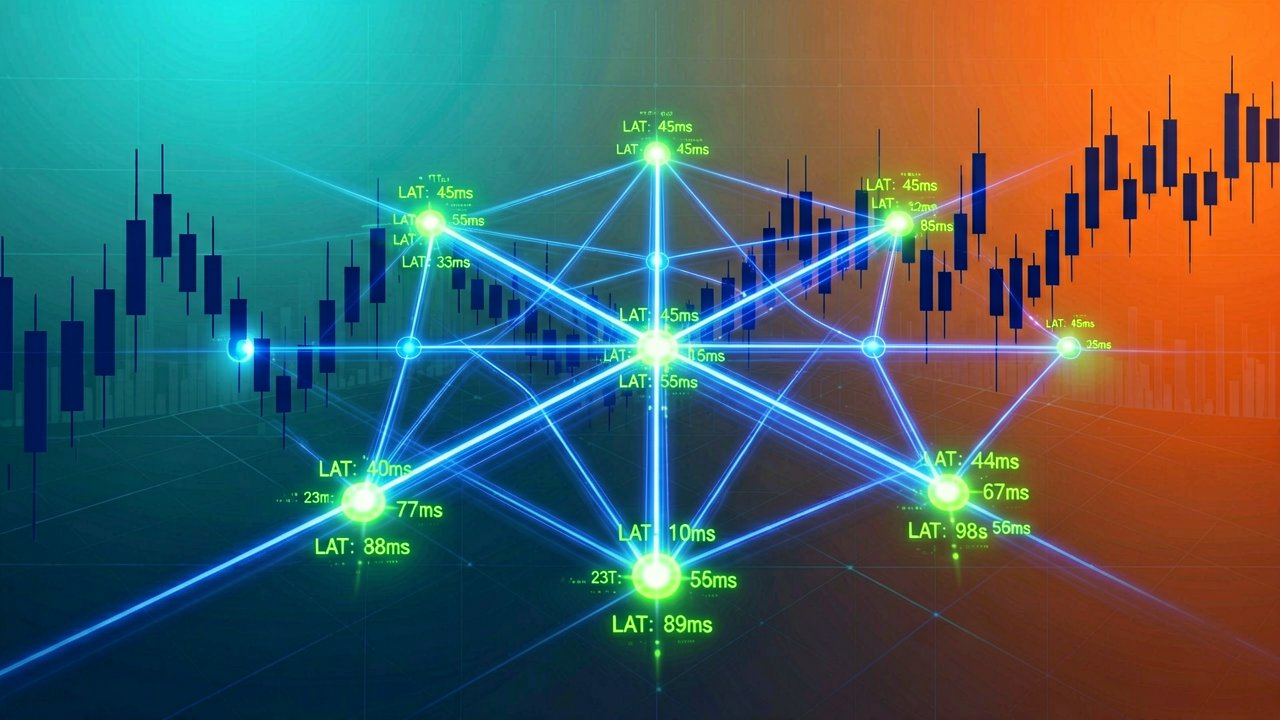
The intersection of artificial intelligence and retail crypto trading faces its newest litmus test as IonixAIChain officially lands on major cryptocurrency exchanges. Billed as an AI-native Layer-1 blockchain ecosystem, the platform claims it can optimize complex trading mechanisms to secure outsized returns for everyday retail investors holding modest portfolios. Market watchers are locking eyes on this high-profile 2026 debut, eager to see if the project's algorithmic software can turn tiny stakes into massive windfalls or if it will simply succumb to standard market volatility.
According to reports tracked by OpenPR, the project raised upwards of $6.7 million during its foundational funding phases prior to the public listing of its native $IONX token. The team behind the network has promised built-in machine learning capabilities designed to offer predictive analytics, high-speed execution, and automated portfolio rebalancing directly on-chain. By streamlining these institutional-grade strategies into a user-friendly framework, the creators hope to level the playing field for retail participants who are usually outpaced by corporate trading desks.
The Architecture of the Hype
What sets this launch apart from standard speculative tokens is its underlying infrastructure. The development roadmap outlines a Quantum AI Consensus mechanism that supposedly blends traditional proof-of-stake validation with directed acyclic graph efficiency to handle massive transaction volumes. While tech purists remain skeptical of any protocol promising zero-effort wealth creation, the initial tokenomics structure features strict vesting schedules for advisors and early developers. This measure aims to suppress sudden market dumps, giving retail traders a smoother runway as the network transitions from testnet trials to a fully liquid asset class.
Behind the Trading Desk: The foundational math driving IonixAIChain represents a massive gamble on the maturity of decentralized machine learning. While the project's whitepaper promises institutional-grade returns for casual market participants, veteran quantitative analysts point out that deploying complex neural networks directly on a blockchain architecture introduces steep computational bottlenecks. Historically, automated retail trading bots have struggled with latency during high-congestion market events, often executing trades at suboptimal prices. Whether the protocol's custom consensus mechanism can genuinely bypass these architectural limits or if it will buckle under heavy volume remains the multi-million-dollar question for early adopters.
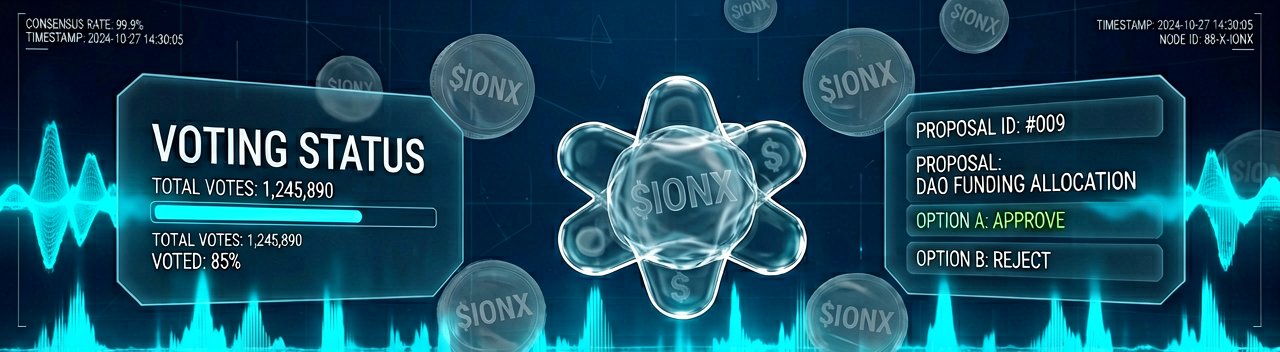
Industry insiders are also keeping a watchful eye on the regulatory landscape, which has historically shown little patience for platforms promising automated wealth generation. Because the $IONX ecosystem relies heavily on black-box algorithmic strategies to manage user portfolios, it risks crossing into the territory of managed investment schemes. Regulatory bodies across North America and Europe have ramped up scrutiny on software that automatically executes financial decisions for retail clients without traditional fiduciary licenses. The development team has countered these concerns by emphasizing the decentralized, open-source nature of their codebase, effectively passing governance and operational liability over to the community DAO.
The broader retail sentiment surrounding the 2026 launch reflects a mix of weary exhaustion and lingering fear of missing out. Having witnessed multiple cycles of algorithmic stablecoins and yield-farming protocols collapse under their own weight, seasoned crypto traders are approaching IonixAIChain with a healthy dose of cynicism. Nevertheless, the allure of an automated system capable of navigating volatile swings without human emotion continues to attract a steady stream of capital. The early exchange liquidity metrics suggest that while whales are tread-water testing the waters with small allocations, retail volume is driving the bulk of the initial token velocity, signaling a highly speculative but passionate user base.
The Realities of On-Chain Compute
For the platform to survive past its initial listing hype, the underlying technology will need to deliver on its computational efficiency promises. Running machine learning models requires massive processing power, a requirement that traditionally conflicts with the resource-constrained environment of a decentralized network. If the developers manage to optimize their off-chain computing network to feed accurate, real-time trading signals to the main ledger, they might set a new standard for decentralized finance. If those models lag even by a few seconds during a market flash crash, the automated safety stops could trigger cascading liquidations for the very retail portfolios the system was built to protect.
Reading Between the Lines: The central paradox of IonixAIChain lies in its democratic promise to provide an exclusive trading edge to everyone simultaneously. In the hyper-competitive arena of quantitative finance, an algorithmic advantage remains profitable only as long as the broader market remains ignorant of it. If the platform's proprietary machine learning models successfully identify a market inefficiency and automate buy orders for tens of thousands of retail portfolios at once, they will inevitably eliminate the very inefficiency they sought to exploit. The marketing narrative relies on the illusion that alpha can be mass-produced, ignoring the fundamental economic law that crowded trades quickly become unprofitable ones.

Furthermore, the project’s dual emphasis on absolute decentralization and advanced artificial intelligence creates a glaring governance contradiction. True machine learning systems require constant retraining, patching, and optimization to adapt to changing market conditions, requiring swift intervention from core developers. However, by offloading operational control to a decentralized autonomous organization (DAO), IonixAIChain subjects its highly sensitive technical infrastructure to the slow, bureaucratic, and often chaotic processes of community voting. Trusting a crowd of retail token holders to vote on complex algorithmic adjustments during a market emergency is a recipe for gridlock, leaving the automated system vulnerable to exploitation while the community debates the fix.
The long-term survival of the ecosystem will likely depend on whether the $IONX token can transition from a speculative asset into a functional utility. Right now, the initial trading frenzy is fueled by the promise of exponential returns rather than any organic demand for the blockchain’s computational storage or processing power. If the automated trading features fail to consistently beat simple market benchmarks like holding Bitcoin or Ethereum, retail investors will rapidly migrate to the next hyped protocol. Once the speculative premium evaporates, the platform will face the harsh reality of maintaining an expensive, over-engineered network infrastructure without the transaction fees needed to sustain its validators.
The Yield Illusion
Ultimately, IonixAIChain serves as a modern manifestation of financial alchemy, repackaging the age-old pursuit of effortless wealth in the fashionable vocabulary of neural networks and consensus layers. By shifting the blame for potential losses from human error to an impartial algorithmic black box, the platform offers traders a psychologically comforting buffer. Yet, an automated loss hurts a retail bank account just as severely as a manual one. As the initial listing hype cools into everyday market reality, the project will either prove it has built a revolutionary decentralized engine or stand as a cautionary tale about the dangers of mixing cutting-edge buzzwords with retail capital.
“The ultimate irony of automated crypto trading is that we have spent years building incredibly complex, multi-million-dollar artificial intelligences, all so a retail investor can avoid the agonizing emotional labor of losing money on their own.”
Artūras Malašauskas is an AI Systems Integrator with 20+ years of production-grade web engineering experience. He has designed, shipped, and scaled enterprise Python/PHP systems for logistics, SaaS, and public-sector clients. For the past year, he has focused exclusively on AI integrations: deploying open-source LLMs, building generative media pipelines (image, audio, video), and engineering multi-agent workflows for real production environments. His standard: reproducibility, security, cost-efficient inference—no vaporware. He documents and evaluates emerging AI tooling, separating verified capabilities from marketing noise. Technical editor at: muza-ai.eu, ai-verslas.lt, ai-naujinos.lt Connect on LinkedIn
Comments