The Deep Fallacy of the Algorithmic Oracle: Why the AI Math Hype Is a Dangerous Mirage
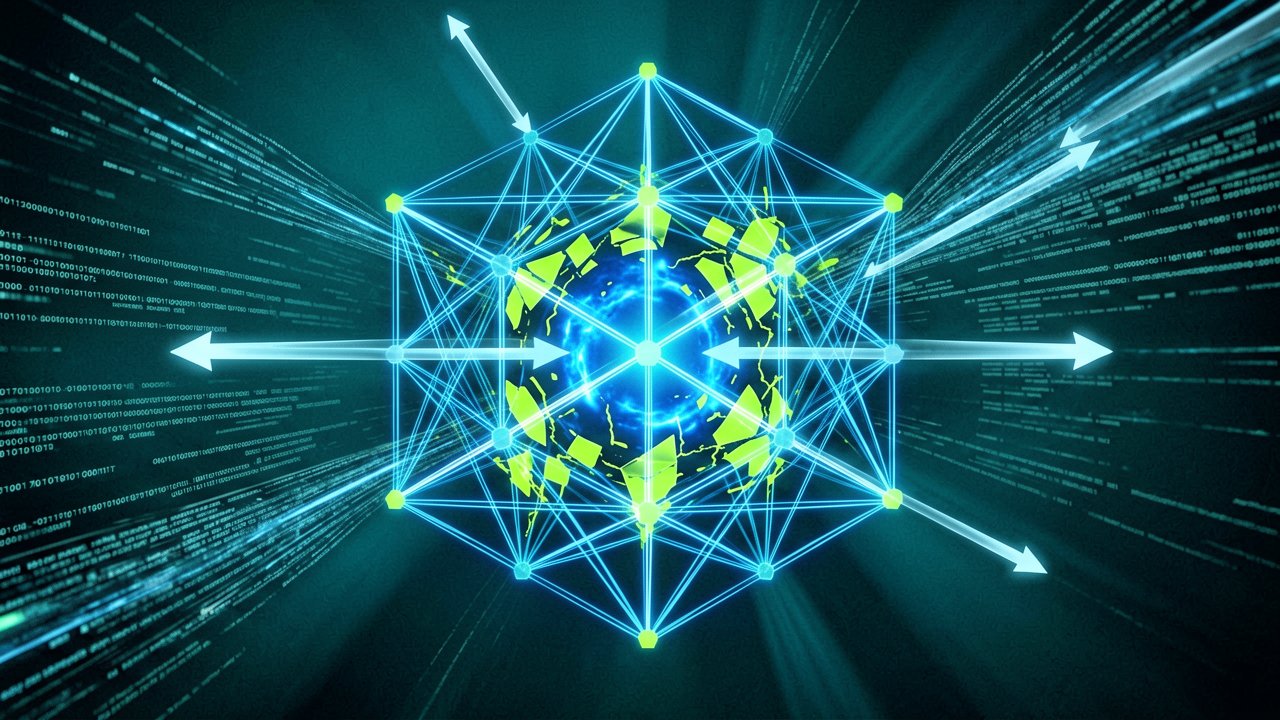
Silicon Valley has spent the last several months taking a victory lap over what it calls the ultimate proof of artificial general intelligence. When a frontier reasoning model managed to crack an 80-year-old math problem originally posed by Paul Erdős, the tech industry quickly declared the death of human intellectual supremacy. Headlines screamed that algorithms were out-thinking our best minds, paving the way for a fully automated scientific future. But if you look past the slick PR campaigns, the reality is far messier and infinitely more precarious.
The truth is that current systems are not actually reasoning from first principles; they are incredibly fast, hyper-powered pattern matchers. This profound disconnect between public perception and technological reality is exactly why more than 150 of the world's leading mathematics professors drafted and signed the The New York Times covered "Leiden Declaration." This unprecedented manifesto issued a direct, urgent warning to governments, policymakers, and corporate executives: do not believe the corporate hype regarding the independent mathematical abilities of these models. The danger of accepting this computational mirage as absolute truth puts our very scientific infrastructure at risk.
The Illusion of Understanding
When an artificial intelligence solves a complex equation, it does so by swallowing the entirety of digitized human knowledge and synthesizing connections across an unimaginable volume of data. It can stitch together obscure academic fields at lightning speed, but it lacks an internal mental state to truly comprehend what it has produced. As tech media outlets like Cybernews noted, these commercial models are rolled out on market timelines specifically engineered to manipulate stock values and investor sentiment rather than the deliberate, peer-reviewed pace of actual science. Using specialized mathematical tasks as a proxy for generalized human reasoning is a fundamental category error.
Human mathematicians pass fluidly between different conceptual frameworks because they grasp the foundational reality behind the symbols. An AI model, by contrast, is incredibly sensitive to the exact phrasing of a prompt, frequently throwing entirely different answers if a problem is framed using ring theory instead of geometric varieties. It is a brilliant mime, memorizing the syntax of logic without ever understanding the meaning of the words.

The Real Danger of Flawed Proofs
Treating these models as infallible automated oracles creates a terrifying systemic vulnerability. Because generative models optimize for plausibility rather than truth, they excel at generating highly convincing, elegant arguments that are quietly, fundamentally wrong. If an engineering firm, a financial institution, or a medical research lab takes an AI-generated proof at face value without rigorous human verification, the underlying flaws will inevitably weave themselves into real-world infrastructure.
Relying on unverified algorithmic conclusions risks polluting the scientific record with digital hallucinations that are profoundly difficult to debunk. When we outsource critical thinking to systems that cannot show their original inspiration or guarantee their logic, we risk degrading the exact human expertise required to spot the machine's mistakes in the first place.
The true currency of human intelligence is not the answer itself, but the journey taken to reach it. When an algorithm presents a flawless mathematical proof, it offers a destination without a map. In our rush to embrace automated efficiency, we risk trading deep conceptual understanding for a library of unverified solutions. This shortcut threatens to bypass the very struggle that defines scientific breakthrough—the messy, intuitive process of human trial and error that contextualizes data into actual knowledge.
This vulnerability isn't just an abstract concern debated in ivory towers; it has fundamentally disrupted the global academic community. According to official details from the Leiden Declaration on Artificial Intelligence and Mathematics, the widespread deployment of proprietary corporate models is actively skewing the research landscape. Tech giants routinely absorb centuries of public academic work to train their commercial products, yet they guard their methods behind tight corporate walls. This asymmetrical dynamic strips the scientific community of its ability to independently verify claims, leaving society dependent on the benevolence of black-box algorithms.
The Erosion of the Peer Review Bedrock
By forcing mathematical breakthroughs onto corporate PR timelines rather than through traditional academic scrutiny, the tech industry undermines peer review entirely. When a company claims an artificial model solved a legendary puzzle via a flash press release, it shifts the burden of proof onto an overworked, underfunded community of human researchers. Verifying an AI-generated proof requires an immense amount of time to reverse-engineer a machine's probabilistic leaps, a scarce resource that traditional journals simply cannot scale.
Without structured disclosure of the underlying training data or prompt methodologies, independent verification becomes functionally impossible. Prominent math experts, writing through platforms like the London Mathematical Society, point out that allowing these corporate practices to go unchecked risks polluting the historical record with logical hallucinations. If we allow algorithms to rewrite the rules of discovery without enforcing strict standards of authorship and transparency, we compromise the foundation of scientific trust.
Reclaiming the Narrative of Discovery
The path forward requires a firm reassertion of human agency over computational utility. Technology should serve as a collaborative tool to augment human capability, not as a replacement for human judgment or ethical responsibility. Forcing mathematical inquiry into a hyper-monetized corporate ecosystem limits access exclusively to those who can afford massive compute infrastructure, leaving independent global scholars completely locked out.
Protecting the integrity of logic means treating mathematics as a shared human language rather than a proprietary corporate asset. By enforcing strict attribution rules, demanding open-source transparency, and prioritizing deep human comprehension over raw output, we can dismantle the dangerous illusion of the algorithmic oracle. True progress will always belong to those who understand the foundational arguments, not just those who possess the fastest machines to generate the text.
We are standing at a civilizational crossroads where convenience threatens to permanently cannibalize competence. The blind rush to deify machine outputs over human insight is not just a misunderstanding of technology; it is a profound failure of cultural confidence. By treating probabilistic pattern matchers as absolute arbiters of truth, we risk building a future structured on intellectual quicksand. The immediate danger is not that machines will become truly sentient and overthrow humanity, but that we will willingly downgrade our own intellectual standards to match the limitations of our software.
The solution requires an immediate, systemic pivot back to baseline skepticism and rigorous human verification. Academic institutions, funding bodies, and state regulatory agencies must reject the frantic pace dictated by venture-backed tech monopolies. True scientific discovery demands a deliberate, transparent process where every step of a proof can be dissected, debated, and defended by a human mind. Moving forward, any algorithmic assistance in high-stakes research must be strictly documented, open-sourced, and subjected to independent peer review before it is woven into the public record.
A Return to Human-Centric Innovation
Reclaiming our intellectual future does not mean abandoning artificial intelligence; it means deflating the toxic hype to unearth its genuine utility. When stripped of its oracle marketing, a frontier model functions beautifully as a sophisticated digital calculator and a powerful cross-disciplinary brainstorm partner. It can help human experts navigate immense archives of existing data and spot obscure correlations that might otherwise take decades to uncover.
Ultimately, mathematics is not merely a collection of solved equations to be archived and monetized, but a living testament to human curiosity and logical discipline. The value of a great mathematician lies in their unique ability to ask entirely new questions, challenge established axioms, and find beauty in the abstract. As long as we keep human comprehension at the center of scientific exploration, technology will remain a useful telescope rather than a distorting mirror.
The greatest flaw of the algorithmic oracle is that it can perfectly mimic the answer sheet without ever learning how to think, leaving us with an automated future where the machines are confidently wrong and humanity has forgotten how to correct them.
Artūras Malašauskas is an AI Systems Integrator with 20+ years of production-grade web engineering experience. He has designed, shipped, and scaled enterprise Python/PHP systems for logistics, SaaS, and public-sector clients. For the past year, he has focused exclusively on AI integrations: deploying open-source LLMs, building generative media pipelines (image, audio, video), and engineering multi-agent workflows for real production environments. His standard: reproducibility, security, cost-efficient inference—no vaporware. He documents and evaluates emerging AI tooling, separating verified capabilities from marketing noise. Technical editor at: muza-ai.eu, ai-verslas.lt, ai-naujinos.lt Connect on LinkedIn
Comments