The Sovereign Algorithmic State: How the Gulf is Rewriting the Rules of AI Governance

For years, the global narrative around the Gulf Cooperation Council (GCC) block centered on steel, glass, and raw economic momentum. But a quieter, vastly more ambitious architecture is taking shape beneath the hyper-modern skylines of Riyadh and Dubai. Gulf governments are no longer just consumers of global tech trends; they are aggressively repositioning themselves as algorithmic pioneers, turning data and artificial intelligence into the absolute bedrock of modern state governance. It is a massive operational pivot aimed at entirely reinventing how civic infrastructure operates, moving the region swiftly past the era of standard digital bureaucracy.
This is not just another boilerplate public sector upgrade. According to Vishu Singhal, a Data & Consulting Partner at the global data firm TahawulTech (reporting on insights from Artefact), we are witnessing a profound structural shift where unified data environments are replacing fractured legacy systems. The goal is straightforward yet incredibly complex: building an intelligent state capable of predicting traffic bottlenecks, managing massive municipal grids, and deploying hyper-personalized citizen services before a resident even thinks to log into a portal. But as the algorithms dig deeper into the mechanics of daily life, the true test of this regional transformation will not be the sophistication of the code, but the resilience of public trust.
The Architecture of the Algorithmic State
The GCC approach to automation cuts through the experimental hesitation seen in Western democracies. Driven by aggressive national agendas like Saudi Vision 2030 and its regional counterparts, Gulf nations have treated AI implementation as a core sovereign objective. They are constructing a highly specialized digital ecosystem, deploying unified data platforms to eliminate institutional silos and bring financial, operational, and risk data under a single authoritative view. This structural integration turns passive historical registries into highly active, predictive operational models.
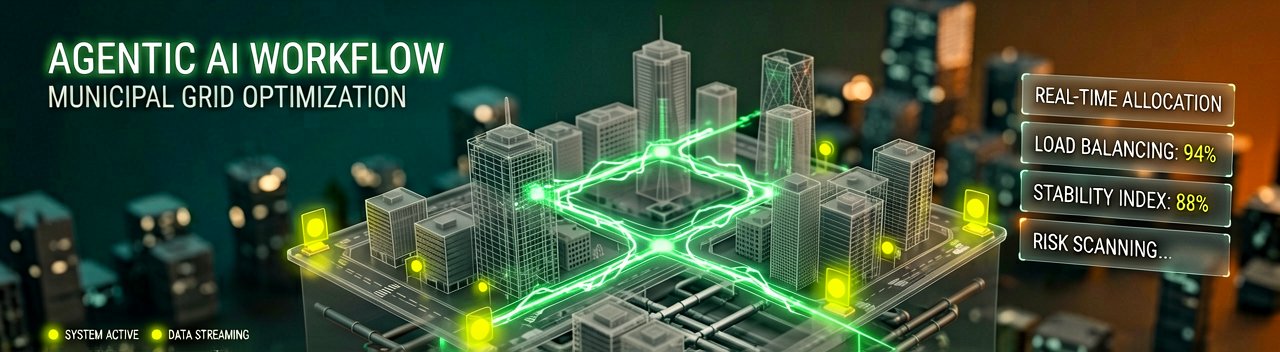
By moving past simple conversational chat interfaces and adopting agentic AI frameworks that handle complex, multi-step administrative workflows, public service delivery is undergoing a complete structural overhaul. Municipalities and federal entities are using these tools to optimize resource allocation, automate complex licensing procedures, and run rapid scenario-modeling simulations to ensure long-term policy continuity. This heavy infrastructure investment positions the region as an incredibly unique laboratory for state-level automation, free from the bureaucratic gridlock holding back older global economies.

Sovereignty, Transparency, and the Trust Horizon
Operating a state on predictive algorithms introduces a delicate balancing act between rapid innovation and citizen reassurance. For an automated government to function effectively, the underlying data foundations must be completely unimpeachable. Recognizing this vulnerability, regional policymakers are placing a massive strategic emphasis on localized, sovereign digital infrastructure. By keeping data processing and algorithmic execution within domestic borders, regional governments protect critical public infrastructure from shifting global geopolitical dynamics while ensuring strict compliance with local cultural values.
However, the real foundation of sustainable AI governance lies in radical transparency. Deploying automated decision-making engines requires clear, understandable visibility into how those algorithms arrive at policy choices or service allocations. Gulf authorities are actively working to balance raw computational speed with robust risk management frameworks, proving that an efficient government must also be an explicitly accountable one. The ultimate metric of success in this next phase of public transformation will be how seamlessly these intelligent systems protect data privacy while improving everyday civic life.
The shift from predictive to proactive governance requires a fundamental rewrite of the relationship between citizen and screen. In this new administrative landscape, the state ceases to be a reactive entity that waits for paperwork to be filed. Instead, it transforms into an ambient utility, quietly operating in the background of everyday life. Imagine a world where a business license updates itself because municipal sensors verified compliance, or where educational subsidies adapt in real time to the fluctuating economic needs of a household. This level of seamless automation is the ultimate destination for the GCC’s digital architects, who view the traditional, friction-heavy bureaucracy of the twentieth century as an unnecessary relic.
Yet, the true brilliance of this transition lies in its insistence on localization. For too long, large language models and analytical frameworks were trained on Western-centric data, reflecting cultural nuances and societal structures entirely foreign to the Arabian Peninsula. By investing heavily in homegrown Large Language Models like Abu Dhabi’s Falcon and Saudi Arabia’s ALLaM, regional planners are ensuring that the digital brains powering their public services understand local dialects, cultural traditions, and specific regional priorities. This cultural alignment is not just about pride; it is a critical requirement for building accurate, context-aware systems that citizens can naturally interact with and rely upon.
Building the Human Core of the Autonomous State
But software is only as capable as the hands that guide it, and the Gulf's leadership understands that importing foreign technical expertise is a temporary bandage, not a permanent strategy. Across the region, a massive educational and corporate restructuring is underway to cultivate a generation of localized data scientists, prompt engineers, and algorithmic ethicists. This human-centric investment bridges the gap between raw computational capability and real-world application, ensuring that the systems being built today can be maintained, audited, and evolved by the very societies they are designed to serve.
Ultimately, the success of this grand digital experiment will be measured by its resilience during times of systemic strain. When global supply chains fracture or macroeconomic shifts demand rapid policy pivots, these unified data environments will be tested not on their ability to generate sleek dashboards, but on their capacity to protect vulnerable populations and keep vital infrastructure online. The GCC is betting its future on the premise that an algorithmic state, rooted in local values and built on sovereign infrastructure, can out-pace, out-plan, and out-govern the legacy models of the past.
The ultimate metric for the Gulf’s algorithmic experiment will not be the sophistication of its code, but the permanence of its stability. As the region transitions from a period of rapid deployment to one of long-term operational maturity, the initial novelty of state-level automation is giving way to a much deeper institutional reality. The tech-driven governance pioneered across the GCC is no longer an optional luxury or a futuristic marketing campaign; it has become an foundational element of public policy that cannot be decoupled from daily operations. This total integration means that any systemic vulnerability within the digital infrastructure automatically becomes a core vulnerability for the state itself.
To mitigate these risks, the focus of regional digital architects is shifting heavily toward aggressive stress-testing and continuous ethical auditing. Ensuring that automated systems remain free from algorithmic bias and resilient against global cyber threats requires an unyielding, day-to-day commitment to regulatory oversight. By establishing dedicated data protection authorities and clear sandboxes for public-sector innovation, Gulf nations are proving that speed does not have to come at the expense of systemic safety. They are building a blueprint for how a government can run at the speed of software without compromising the core stability required of a sovereign nation.
The Emergence of a Global Model
What is happening in Riyadh, Abu Dhabi, and Dubai is effectively a living case study for the rest of the world. While Western democracies remain trapped in endless legislative paralysis over how to regulate existing tech monopolies, the GCC has demonstrated the immense power of unified state intent. By aligning capital, policy, and national vision under a single objective, these governments have managed to bypass decades of institutional inertia. They have established a new standard for public infrastructure that older, more fragmented administrative systems will eventually be forced to emulate or risk obsolescence.
As the regional digital architecture continues to evolve, the distinction between public service and predictive technology will completely disappear. The true triumph of this transformation will be achieved when the algorithms become entirely invisible, quietly and efficiently anticipating the needs of the population without requiring a second thought from the user. The Gulf has successfully laid the groundwork for a highly agile governance model, setting a precedent that reshapes our global understanding of what a modern state can achieve when it fully embraces the digital age.
"The true test of a fully automated state is not how loudly it boasts of its artificial intelligence, but how quietly and seamlessly its systems solve human problems before the citizen even realizes they exist."
Artūras Malašauskas is an AI Systems Integrator with 20+ years of production-grade web engineering experience. He has designed, shipped, and scaled enterprise Python/PHP systems for logistics, SaaS, and public-sector clients. For the past year, he has focused exclusively on AI integrations: deploying open-source LLMs, building generative media pipelines (image, audio, video), and engineering multi-agent workflows for real production environments. His standard: reproducibility, security, cost-efficient inference—no vaporware. He documents and evaluates emerging AI tooling, separating verified capabilities from marketing noise. Technical editor at: muza-ai.eu, ai-verslas.lt, ai-naujinos.lt Connect on LinkedIn
Comments