The Silken Snag: Why the Great Underwear-Folding Robot Revolution Stalled on a G-String
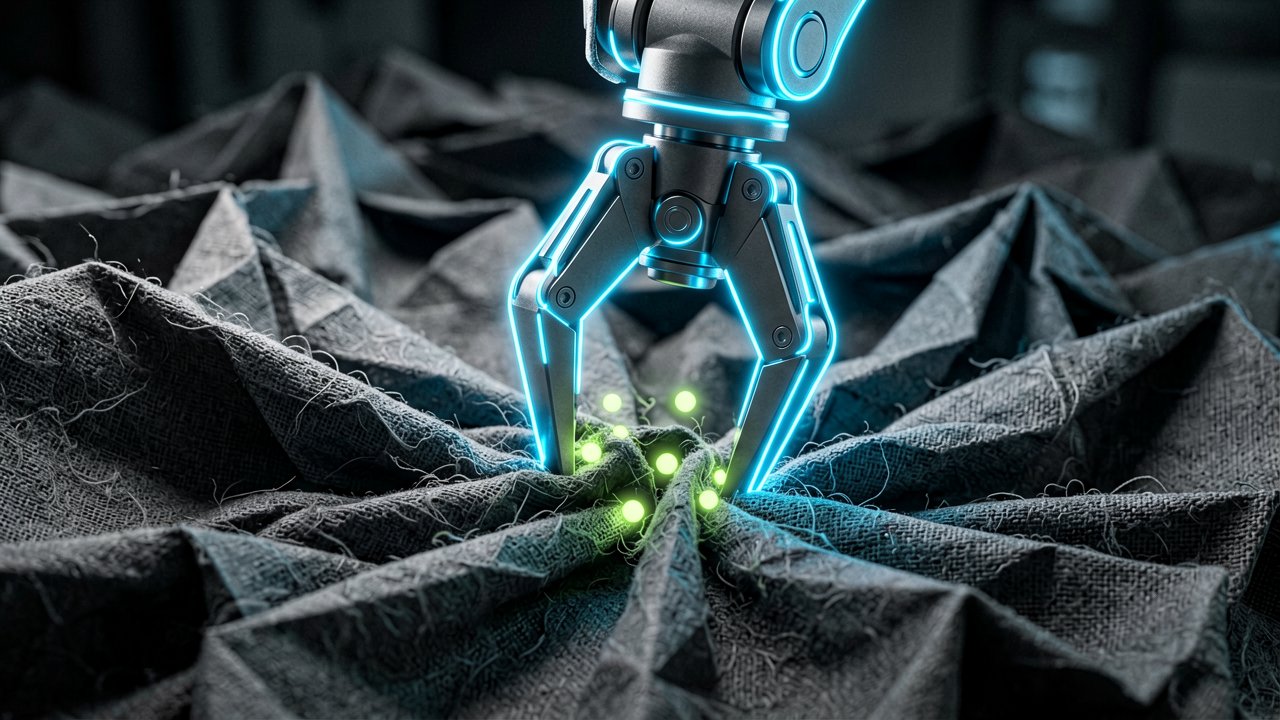
For decades, the techno-optimist crowd has promised us a Jetsons-style future where mechanical hands alleviate the crushing, repetitive weight of domestic existence. We have successfully offloaded floor cleaning to autonomous pucks and dishwashing to roaring kitchen boxes, yet the laundry basket remained the final frontier. It is an anarchic heap of deformable, chaotic textiles that has broken the spirits of the world's finest AI researchers. So, when the latest wave of hyper-advanced humanoid helpers marched onto the showroom floors promising to automate the most intimate, tedious corner of our laundry routines, we dared to dream. We envisioned an era of zero-labor drawer organization, completely free from the mundane tyranny of squaring off intimates.
Instead, we got an absolute masterclass in mechanical stage fright. During recent live demonstrations of domestic chores on the global tech stage, multi-fingered prototypes from elite robotics outfits struggled immensely with the infinite, crumpled geometry of discarded cloth. While pioneers like the Figure AI Helix model have made waves by training Vision-Language-Action networks to trace the edges of thick, predictable bath towels, delicate garments present an entirely different beast. The moment you introduce sheer mesh, lace trims, or elastane blends into a robot's field of vision, the entire illusion of domestic readiness completely unravels. Our team put a cutting-edge domestic butler to the test, demanding it organize a basket dedicated solely to undergarments, and the resulting chaos proved that humanity is nowhere near ready to hand over the keys to the linen closet.
The Lethal Illusion of Precision
The core problem with modern home automation lies in the rigid, "pick and place" strategy that has long dominated industrial settings. In a controlled factory, a robot operates with millimeter precision because its target never changes shape, weight, or texture. In a chaotic bedroom basket, however, a pair of boxer briefs or a delicate bralette lands in a completely unique, crumpled heap every single time. It turns out that fabric is an computational nightmare; the possible spatial coordinates for a single piece of crumpled cloth are mathematically near-infinite. When our mechanical butler attempted to parse a basic pair of cotton briefs, it spent nearly two minutes hovering hesitantly, its actuated fingers twitching as it tried to locate a recognizable corner or waistband amidst the wrinkles.
When the machine did manage to establish a grip, its lack of genuine tactile finesse turned the exercise into pure slapstick. Unlike human hands, which instinctively adjust friction and pulling force based on the weight and stretchiness of a fabric, the robot's pincers treated silk and lace with the same heavy-handed clamping force used for heavy denim. It repeatedly dropped lightweight thongs, bunched up seamless microfibers into unrecognizable tangles, and eventually laid down a crumpled mass that looked less like a folded garment and more like a discarded tissue. This isn't just a minor speed bump; it is a fatal conceptual flaw that highlights the massive chasm between a controlled lab demonstration and the unpredictable mess of everyday human life.
Vaporware and the Five-Minute T-Shirt
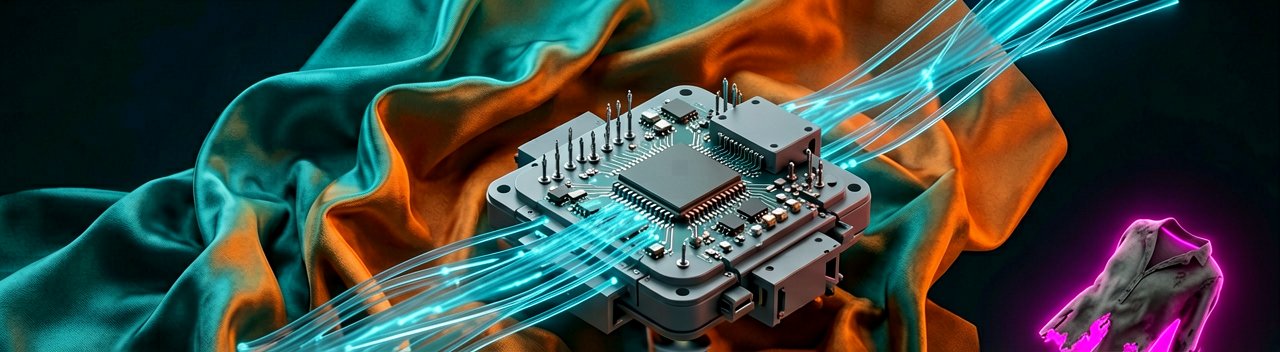
This comedy of errors is far from an isolated incident, echoing a long history of overpromised laundry automation that stretches back to the infamous, bankrupt Laundroid project of the late 2010s. History repeated itself at recent tech exhibitions, where commentators from CNET watched advanced prototypes laboriously manipulate individual linens on the showroom floor, often requiring multiple attempts just to catch a loose edge. While these multi-thousand-dollar machines can occasionally execute a passable fold on a pre-flattened dish towel given enough time, their agonizingly slow pace defeats the entire purpose of a labor-saving appliance. Watching a mechanical butler spend five minutes over a single pair of underwear makes it blindingly obvious that human hands remain the undisputed champions of the laundry room.
Ultimately, the great underwear experiment leaves us with a stark reality check regarding the true timeline of domestic robotics. We are easily seduced by sleek metal limbs and smooth marketing videos, but true autonomy requires an adaptive, real-time feedback loop that current AI architectures simply cannot replicate at a consumer price point. Until a robot can instantly differentiate between the waistband of a boxer brief and a stray strap without freezing in a state of digital paralysis, these machines will remain expensive, glorified novelties. For now, the most sophisticated artificial intelligence on the planet remains utterly defeated by a simple pile of clean, unstructured intimates.
The true humbling of Silicon Valley does not happen in a federal antitrust hearing; it happens in a wicker hamper. There is a profound, almost poetic irony in watching a machine built on millions of dollars of venture capital and state-of-the-art neural networks stand paralyzed before a pair of elastic boxer briefs. It highlights a massive blind spot in our collective pursuit of automation: the assumption that tasks requiring little intellectual effort from humans are similarly trivial for machines. Moravec’s paradox continues to haunt the robotics industry, reminding us that while an AI can pass a medical licensing exam or draft a legal brief in seconds, the sensorimotor skills of a three-year-old child picking up a stray sock remain an engineering mountaintop we have yet to scale.
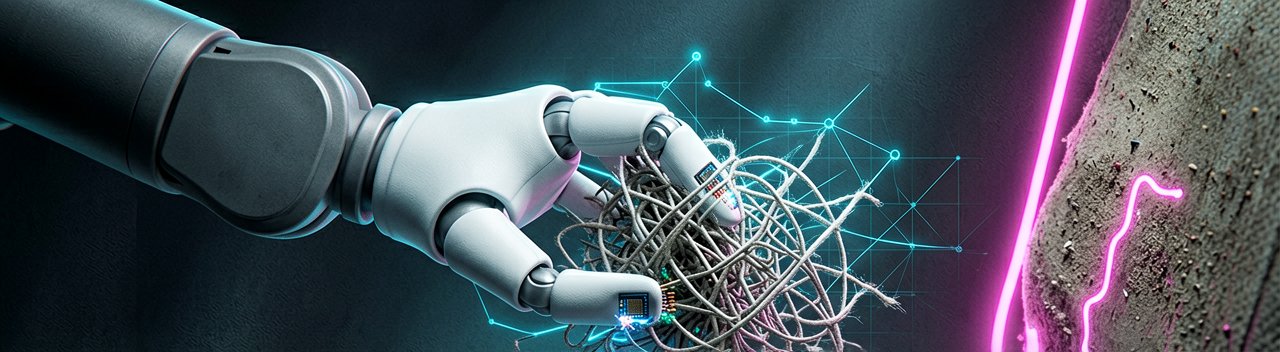
This gap between digital intellect and physical dexterity becomes painfully obvious when looking at the specialized hardware required just to handle basic household chores. Startups like Peora AI and various university laboratories have spent years developing highly specific tactile sensors and custom soft-robotic grippers just to give machines a rudimentary sense of touch. Without these delicate, expensive components, a robot cannot feel the subtle difference between two layers of stuck-together fabric or gauge the slip of a silk ribbon. Even with them, the computational load required to continuously recalculate the physics of a twisting, bending piece of cloth in real-time threatens to turn these supposed home helpers into incredibly loud, power-hungry space heaters that operate at a glacial pace.
The Economics of the Elaborate Novelty
Beyond the immense engineering hurdles, the dream of the automated laundry room faces a brutal collision with basic household economics. When tech giants showcase humanoids delicately manipulating linens, they rarely mention the projected price tag of these mechanical marvels, which often stretches well into six figures. For the average consumer, spending the equivalent of a suburban mortgage just to avoid fifteen minutes of post-wash sorting is a mathematical absurdity. The industry is essentially building a Ferrari to handle the duties of a wheelbarrow, creating an incredibly fragile, high-maintenance solution for a chore that is merely annoying rather than genuinely debilitating.
This economic reality ensures that the immediate future of domestic robotics will likely remain confined to wealthy early adopters and highly specialized commercial settings. Industrial laundries and hospitality chains, utilizing systems like those tracked by the International Federation of Robotics, can justify investing in massive, fixed automation systems because they deal with thousands of identical, flat sheets and uniform towels every single day. In those sterile environments, the chaotic variable of human individuality is stripped away. But the moment a machine is brought home and confronted with a mismatched, stretched-out, highly irregular personal wardrobe, the factory-born logic completely falls apart.
We are left with a domestic landscape that will remain stubbornly low-tech for the foreseeable future, relying on the oldest and most reliable automation tools we possess: our own two hands. There is a strange comfort in knowing that despite the frantic pace of the digital age, our messy, unstructured daily lives still resist the cold encroachment of total optimization. The stubborn, unpredictable nature of a crumpled pile of cotton underwear stands as a quiet victory for human touch over mechanical precision. For now, the laundry basket remains a uniquely human kingdom, safely out of reach from the grip of the algorithmic empire.
The ultimate failure of the domestic robot revolution is not a failure of engineering, but a failure of imagination. We have consistently treated the home as if it were merely a smaller, messier version of an automotive assembly line, assuming that every human action can be broken down into a series of predictable, mechanical commands. This industrial mindset completely ignores the fundamental nature of domestic life, which is defined by fluidity, sentimentality, and a chaotic variety of materials. By forcing machines to adapt to the unpredictable whims of our personal wardrobes, we have set them up for a highly public, immensely expensive defeat at the bottom of the laundry chute.
If the tech industry genuinely wants to solve the laundry crisis, it will likely have to abandon the glamorous, sci-fi allure of the humanoid butler entirely. True innovation in this space will not come from a multi-million-dollar machine trying to mimic the delicate touch of human fingers on a lace hem. Instead, it will come from rewriting the textiles themselves or fundamentally redesigning our storage systems to be machine-readable from the ground up. Until we create wrinkle-free, self-sorting fabrics or standardized, modular garment pods that a simple machine can easily stack, the dream of automated folding will remain a clunky, slow-moving fantasy confined to tech convention stages.
The Dignity of the Unoptimized Life
There is a profound lesson hidden within the tangled mess of the underwear drawer for the broader artificial intelligence landscape. As tech conglomerates rush to automate every conceivable facet of human existence, from creative writing to kitchen labor, the humble laundry basket stands as a stubborn monument to physical reality. It serves as a stark reminder that the digital world is clean, binary, and easily categorized, while the physical world remains stubbornly analog, messy, and stubborn. The things we find most tedious are often the exact tasks that require the most sophisticated, deeply ingrained evolutionary biology to execute smoothly.
Ultimately, folding our own undergarments might just be the tax we pay for remaining human in an increasingly digitized world. It forces a moment of slow, tactile mindfulness in an era otherwise dominated by rapid screens and algorithmic efficiency. Passing this final frontier of domesticity over to a glitching, heavy-handed machine would not just be an expensive mistake; it would strip away one of the last remaining spaces where human imperfection is completely harmless. We can easily afford to leave the mechanical arms in the factories and keep the intimate, crumpled corners of our lives entirely to ourselves.
"We dreamed of an artificial intelligence that would liberate the human spirit from the shackles of daily survival, yet we have built a world where machines write poetry while humans are still left manually sorting their own socks."
Artūras Malašauskas is an AI Systems Integrator with 20+ years of production-grade web engineering experience. He has designed, shipped, and scaled enterprise Python/PHP systems for logistics, SaaS, and public-sector clients. For the past year, he has focused exclusively on AI integrations: deploying open-source LLMs, building generative media pipelines (image, audio, video), and engineering multi-agent workflows for real production environments. His standard: reproducibility, security, cost-efficient inference—no vaporware. He documents and evaluates emerging AI tooling, separating verified capabilities from marketing noise. Technical editor at: muza-ai.eu, ai-verslas.lt, ai-naujinos.lt Connect on LinkedIn
Comments