The Ghost in the Lens: Documenting the Silicon Age When Hardware Melts Away
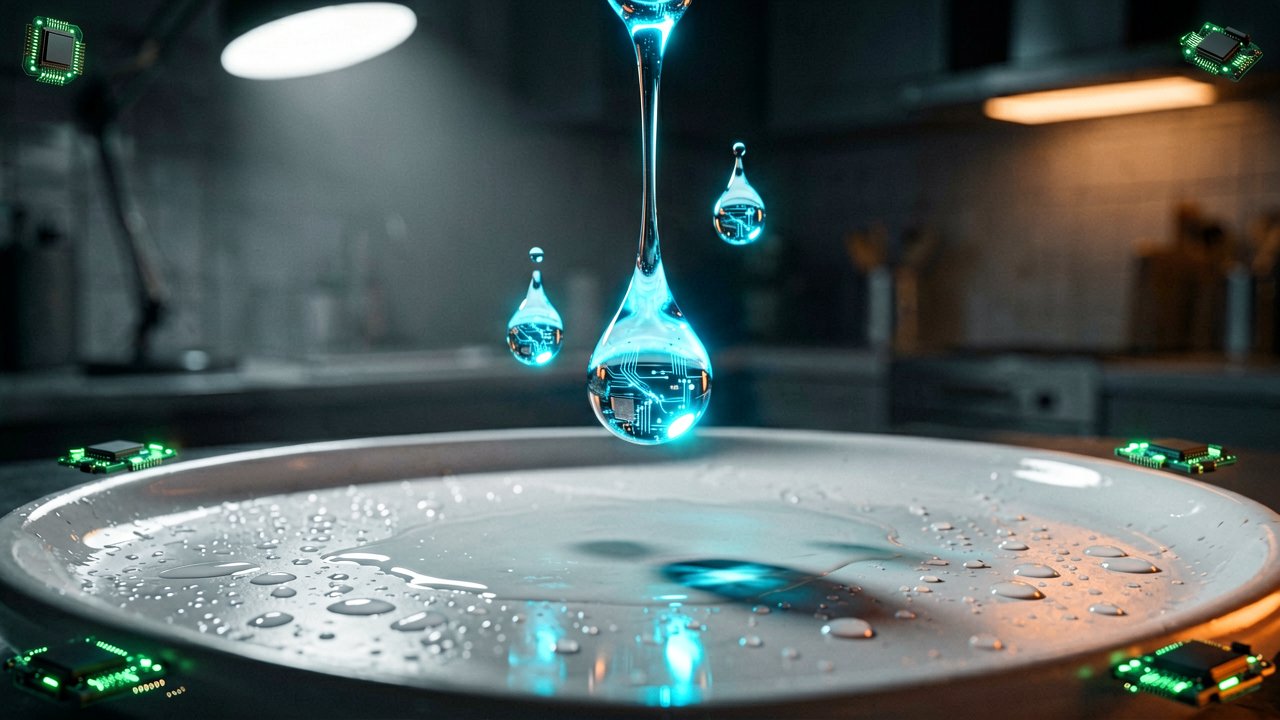
We've officially hit the point where technology is outgrowing the glossy promotional studio shot. For decades, tech journalism relied on a predictable visual formula: an unblemished, angular piece of black glass resting on a monolithic marble block, or a grinning software engineer pointing at an absurdly clean dashboard. But as we coast through 2026, the tangible weight of our machinery is dissolving into algorithms, spatial fields, and conversational ghosts, challenging photographers to capture a revolution that doesn't want to be seen.
Look no further than the recent hardware showcase loops captured by photojournalists covering major industry shifts. When Apple unrolled its visionOS updates at CNET, the most striking images weren't of the physical aluminum goggles themselves, but the awkward, beautiful, and deeply surreal portraits of humans interacting with empty air. The camera lens has to look past the magnesium alloy and focus on the eerie, unblinking concentration of a user painting a virtual canvas over their kitchen sink. Photography has been forced to shift its vocabulary from product design to human behavior; we are no longer cataloging objects, but capturing the physical residue of invisible digital labor.
The Vibrant Tragedy of the Screenless Gadget
This visual identity crisis becomes even more acute when tracking the short, volatile lifecycle of standalone artificial intelligence devices. Early product photography of devices like the neon-orange Rabbit R1 or the metallic Humane AI Pin framed them as playful, futuristic totems—artifacts of a post-smartphone era. Yet, as deep-dive retrospectives from publications like WIRED point out, the real story of these devices wasn't their form factor, but the immense gap between expectation and utility. Documenting this era requires a camera that can capture the profound loneliness of an object built entirely to look at the world for you, only to be left sitting on a desk, collecting dust while the user goes back to tapping their iPhone.
Even the way we photograph software interfaces has taken an abstract turn. Gone are the days of the straightforward screenshot; today's editorial photography treats interfaces as environments. Photographers now capture the reflections of generative text prompts bouncing off a subject's retinas, or use macro lenses to resolve the tiny, intricate sensor arrays embedded in the bridge of a mixed-reality headset. The modern digital era demands a documentary style that feels less like a catalog and more like forensic science, mapping the exact points where human biology and machine learning collide.
Chasing the Light in an Automated World
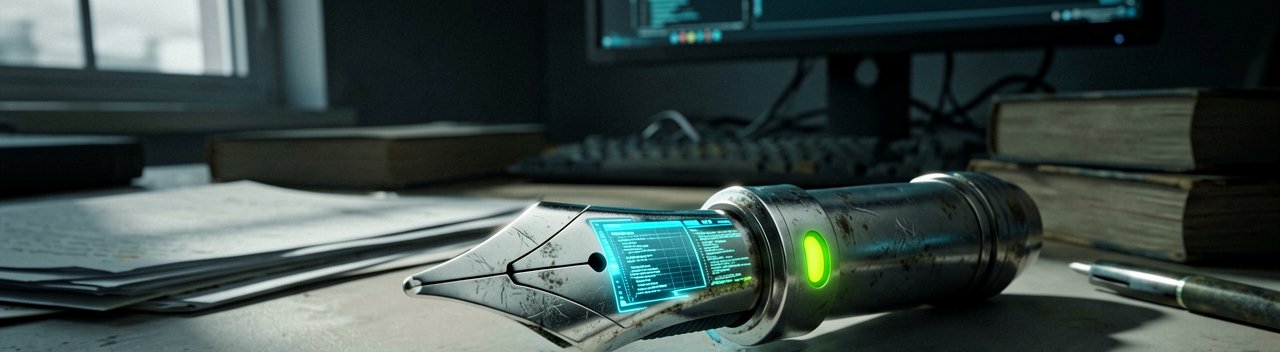
Ultimately, the true challenge for contemporary tech photography is documenting an industry that is actively trying to separate itself from physical constraints. When a software update can completely overwrite the purpose of a device overnight—turning a camera-laden wearable into a hands-free industrial diagnostic tool—the static image of the hardware becomes instantly obsolete. Photojournalism in this space can no longer be passive. It has to look for the friction: the tangled nest of charging cables under a supposedly wireless smart home setup, the intense glare of a developer working past midnight under fluorescent lights, or the bizarre sight of a crowd holding up smartphones to take a picture of an empty stage where an AI agent is supposedly speaking. The machinery is disappearing, and if we don't change how we look at it, we'll miss the moment it vanishes entirely.
The physical geography of human workspace is transforming into a landscape of isolation. Where we once photographed thriving open-plan tech campuses buzzing with collective energy, contemporary lenses capture the solitary architecture of remote infrastructure. The sprawling server farm—monolithic, sterile, and entirely unpopulated—has replaced the corporate laboratory as the visual anchor of the tech industry. Photographers tracking the environmental toll of data infrastructure at WIRED emphasize that these colossal, hyper-cooled warehouses are the real engines of the software era, even if they remain miles away from the consumers they serve.
This geographic shift has triggered an unexpected aesthetic reaction among photojournalists documenting everyday tech culture. Instead of framing devices within pristine, minimalist living rooms, the modern editorial voice leans into the chaotic reality of the human element. Pictures of mismatched cables spilling off kitchen tables, the intense blue light of dual monitors reflecting off a worker's tired face at midnight, and the half-eaten meals sitting next to thousand-dollar setups tell the true story of digital integration. These images reject corporate perfection, choosing instead to document the unpolished friction of humans adapting to an completely digital workflow.
The Disappearing Act of Interactive Software
Capturing the actual essence of software has always been the tech journalist’s hardest task, but the shift toward generative systems has shattered the classic layout rules entirely. When a software update can fundamentally alter a platform's capabilities overnight, the static image of a hardware shell becomes instantly obsolete. Photographers covering the spatial computing beat at CNET face the immense challenge of shooting subjects whose primary interactions are invisible to anyone not wearing a headset. The resulting photos capture a strange double-reality: a person deeply engaged in complex, invisible labor while appearing completely motionless to the physical world outside.
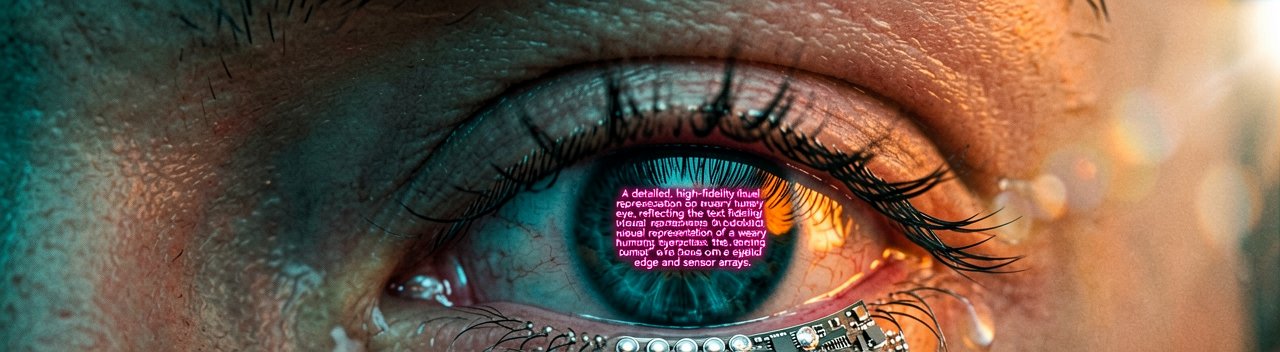
This evolution alters how we read tech imagery, moving it away from a focus on the object and toward a focus on biological adaptation. Microphotography now exposes the intricate sensor arrays tucked into smart rings, or the reflection of automated prompt responses bouncing directly off human retinas. By pulling the lens so close, editorial photography highlights the increasingly thin boundary between machine infrastructure and human biology, transforming tech reporting into a kind of digital forensics. We are no longer photographing tools that we use; we are photographing systems that we inhabit.
Documenting this silent transition requires a deliberate rejection of passive observation. The modern tech landscape cannot be accurately captured by merely showcasing shiny gadgets on a stage. It demands a willingness to look closely at the awkward spaces, the messy setups, and the quiet moments where human habits bend around algorithmic demands. As hardware continues to shrink, dissolve, and recede into the background, the true challenge for the camera is to preserve the human footprint left in the machinery's wake before it is entirely erased by automation.
The ultimate irony of the silicon age is that as our tools grow more omnipotent, they become increasingly invisible. We have transitioned from an era where technology was defined by its heavy, tactile presence to one where its success is measured by how seamlessly it vanishes into the background of our lives. The bulky desktop towers and tangled dial-up modems of the past have given way to ambient spatial fields, whisper-quiet server farms, and software that anticipates our thoughts before we finish typing them. This presents a unique challenge for the visual historian, who must learn to document an industrial revolution that leaves behind no physical ruins, only lines of discarded code and empty desks.
This vanishing act shifts the burden of tech journalism from chronicling the machine to analyzing its cultural footprint. When we look at contemporary images of technology, we are really looking at mirrors of ourselves—our changing postures, our isolated social habits, and our deep dependence on invisible networks. The photographer's lens can no longer rely on the physical object to tell the story; it must capture the psychological weight of living in a world managed by algorithms. It is found in the eerie glow of an automated fast-food kiosk at midnight, or the intense, hyper-focused gaze of a worker operating entirely within a virtual overlay.
The Permanent Impermanence of Modern Innovation
Because software can be rewritten in an instant, the visual archive of our current digital era is fundamentally fragile. A device photographed today may possess an entirely different set of capabilities, interfaces, and ethical implications by tomorrow morning, rendering traditional product photography obsolete almost the moment the shutter clicks. This extreme fluidity requires a documentary approach that captures tech not as a finished monument, but as a shifting, unstable environment. We are witnessing a living history where the hardware is merely a temporary vessel for an ever-evolving digital ghost.
Ultimately, capturing this era requires looking directly into the spaces where human intent and automated systems push against each other. It means photographing the frantic energy of the remaining human-centric tech hubs, the massive infrastructure required to cool artificial minds, and the quiet, daily moments where ordinary people negotiate with automated systems just to navigate their lives. By focusing the lens on these points of friction, we preserve a vital record of humanity adapting to an environment that is rapidly outgrowing its creators.
The tragedy of the modern gadget isn't that it will eventually break, but that it will simply dissolve into a software update, leaving us with a flawless piece of aluminum that forgets what it was originally built to do.
Artūras Malašauskas is an AI Systems Integrator with 20+ years of production-grade web engineering experience. He has designed, shipped, and scaled enterprise Python/PHP systems for logistics, SaaS, and public-sector clients. For the past year, he has focused exclusively on AI integrations: deploying open-source LLMs, building generative media pipelines (image, audio, video), and engineering multi-agent workflows for real production environments. His standard: reproducibility, security, cost-efficient inference—no vaporware. He documents and evaluates emerging AI tooling, separating verified capabilities from marketing noise. Technical editor at: muza-ai.eu, ai-verslas.lt, ai-naujinos.lt Connect on LinkedIn
Comments