The IBM-Deloitte-Red Hat Pact Redefines Enterprise Open Source Security Standards

The strategic alliance between IBM, Red Hat, and Deloitte introduces a profound shift in how modern enterprises secure their open-source environments. By combining their industrial capabilities into an initiative known as Project Lightwell, these tech giants have established an AI-driven blueprint designed to tackle automated cyber threats across complex infrastructure. Backed by a historic $5 billion commitment from IBM and Red Hat, the partnership delivers a comprehensive ecosystem capable of identifying, patching, and standardizing vulnerability management at a massive scale, as detailed in the initial platform strategy outlined by Red Hat.
This pact represents a critical maturation point for software supply chain security. Historically, enterprise reliance on open-source software suffered from fragmented patching cycles and delayed threat reactions, often stalling because production systems could not absorb the downtime of continuous updates. By deploying an army of 20,000 engineers alongside AI-powered automation, the coalition provides a subscription-based mechanism that ensures code stability while mitigating risks in business-critical infrastructure, a market transformation highlighted by Dark Reading.
By bringing Deloitte into the fold as a primary integration collaborator, the alliance effectively bridges the gap between raw technological capability and regulatory adherence. Modern cloud and AI environments operate under stringent global compliance laws, necessitating specialized deployment architectures to navigate complex risk profiles. Through this systemic integration, the alliance guarantees that foundational open-source code receives continuous, enterprise-grade validation without disrupting existing digital workflows, according to the official joint announcement featured on the IBM Newsroom .
Stabilizing the Foundation of Hybrid Cloud and AI Infrastructure
As enterprise cloud operations scale, open-source code serves as the fundamental building block for generative AI models and containerized apps. However, this shared foundation is an attractive target for automated software supply chain exploits. The alliance establishes a predictable framework that hardens the Linux, Kubernetes, and hybrid cloud ecosystems against systemic threats, ensuring that foundational AI layers remain trustworthy from development through to enterprise-grade deployment.
Bridging the Gap Between Engineering and Enterprise Risk Advisory
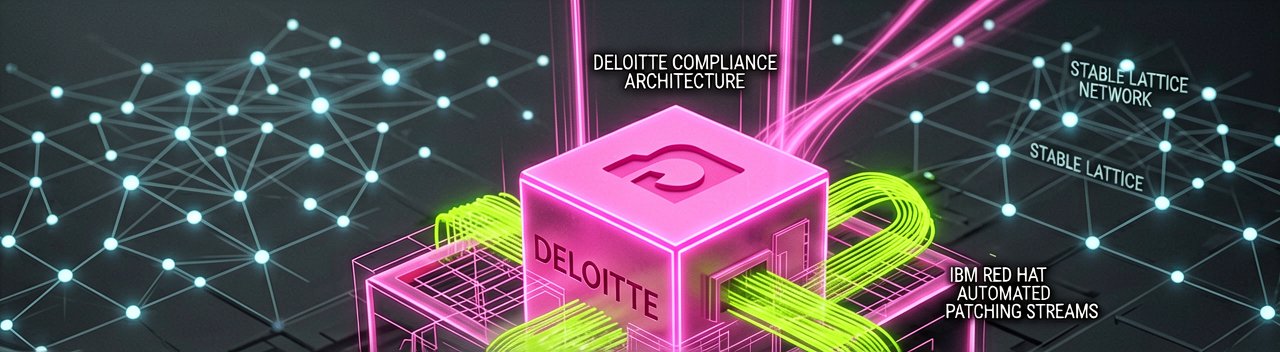
Engineering initiatives often lose velocity when encountering strict compliance guidelines. Deloitte's contribution involves deploying dedicated teams of Forward Deployed Engineers to smoothly weave these automated open-source security fixes into heavily regulated enterprise environments, as noted by Deloitte. This collaboration sets a new benchmark, demonstrating that high-velocity software patching and rigorous corporate compliance can coexist effectively in the modern digital age.
Inside the Core Infrastructure Battlefront
Behind the Scenes of the Supply Chain Mandate: The true driving force behind Project Lightwell extends far beyond typical corporate collaboration; it is a direct response to a fundamental structural vulnerability in how the modern enterprise is built. Today, over ninety percent of all business software relies heavily on a complex web of deeply nested open-source modules. When a core flaw emerges in a foundational piece of code, the ripple effect triggers an immediate, resource-draining race against automated exploits that normal IT operations cannot handle. By committing billions to automated AI-driven patching, this alliance treats software security as a critical utility rather than a series of isolated perimeter defense tasks.
Engineers operating behind the scenes point out that the main hurdle in securing open-source software has rarely been finding a vulnerability; it is the sheer difficulty of deploying a fix without crashing a live production environment. In high-stakes fields like banking, aviation, and healthcare, IT leaders frequently delay critical updates because a minor dependency conflict could halt vital operations. The strategic integration of Red Hat’s stable Linux and Kubernetes foundations with IBM’s advanced artificial intelligence aims to remove this precise friction point. Automated systems can now continuously test, isolate, and safely deploy fixes into live cloud setups with minimal human intervention.
This initiative also marks a massive shift in how global regulatory compliance influences the software development lifecycle. Organizations worldwide now face strict legal penalties for failing to secure their digital products. By bringing Deloitte’s extensive enterprise risk advisory framework directly into the engineering loop, the alliance transforms security from an after-the-fact compliance checkbox into a core part of the code development process. This approach helps corporate legal teams and chief information security officers speak the same language as the software developers working in the trenches.
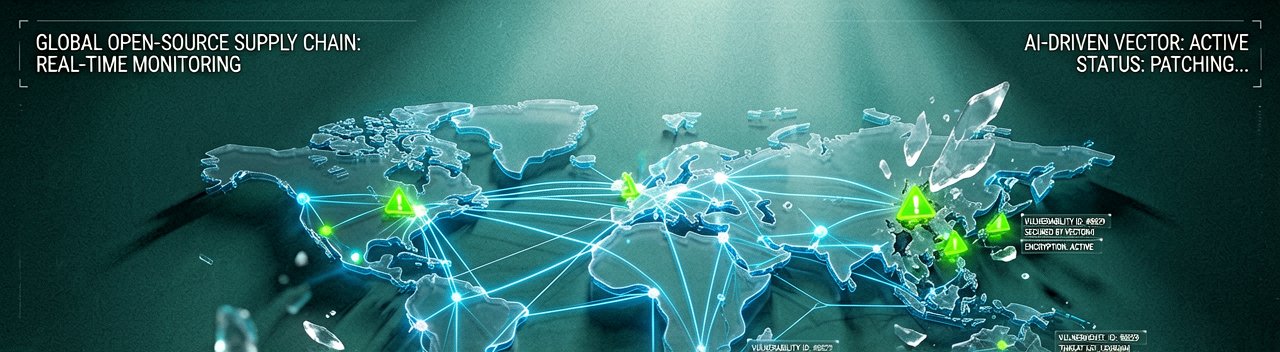
Looking ahead, the long-term impact of Project Lightwell will likely reshape the economics of the open-source community itself. For over a decade, a handful of independent developers have maintained some of the world's most critical software projects without compensation or corporate backing. By building a vast, enterprise-grade subscription framework around these community assets, IBM, Red Hat, and Deloitte are establishing a new commercial model that protects both global enterprise interests and the open-source creators who power them.
The Execution Challenge and Long-Term Implications
Reading Between the Lines: The staggering five-billion-dollar price tag attached to Project Lightwell signals a massive commitment, but it also highlights a glaring contradiction within the modern enterprise tech ecosystem. For years, the corporate world has treated open-source software as a cost-free engine for rapid innovation while underinvesting in its maintenance. Now, tech giants are forced to spend billions to secure infrastructure that was built on public code repositories. This alliance is not just a proactive upgrade; it is an expensive emergency response to structural vulnerabilities that the industry ignored during its rush toward rapid cloud migration.
The reliance on AI-driven automated patching introduces a new layer of technical skepticism that enterprise leaders must navigate carefully. While the promise of automated, zero-downtime updates sounds perfect on a corporate slideshow, the reality of live, production-critical environments is far more unpredictable. Artificial intelligence systems operate on statistical probabilities, whereas enterprise security demands absolute certainty. If an automated patch misinterprets a complex software dependency in a legacy banking network or a healthcare system, the resulting downtime could cause just as much operational damage as the security threat it was deployed to fix.
Furthermore, Deloitte’s prominent role as the primary integration partner introduces a distinct layer of organizational friction that could slow down the alliance's ambitions. Bridging the cultural gap between fast-moving software engineers and risk-averse corporate consultants is famously difficult. If the implementation process becomes bogged down in endless compliance audits and corporate red tape, the automated speed promised by IBM and Red Hat will be lost. The true measure of this partnership will not be found in its massive engineering workforce, but in whether it can deploy patches faster than malicious actors can write exploits.
Ultimately, this initiative risks creating a deep divide within the broader open-source ecosystem, splitting it into two distinct classes. On one side will be the well-funded, enterprise-sanctioned codebases guarded by Project Lightwell, and on the other will be the vast sea of independent, community-driven projects that still power significant portions of the web. By commoditizing security behind a premium subscription wall, the alliance may inadvertently push smaller enterprises into a dangerous corner, forcing them to choose between expensive corporate protection and the unverified, high-risk open-source landscape of the past.
The modern enterprise tech stack is a marvel of engineering, built on cutting-edge cloud infrastructure, advanced artificial intelligence, and a patch management strategy that secretly hopes a random open-source developer in another timezone doesn't delete their entire repository before Monday morning.
Artūras Malašauskas is an AI Systems Integrator with 20+ years of production-grade web engineering experience. He has designed, shipped, and scaled enterprise Python/PHP systems for logistics, SaaS, and public-sector clients. For the past year, he has focused exclusively on AI integrations: deploying open-source LLMs, building generative media pipelines (image, audio, video), and engineering multi-agent workflows for real production environments. His standard: reproducibility, security, cost-efficient inference—no vaporware. He documents and evaluates emerging AI tooling, separating verified capabilities from marketing noise. Technical editor at: muza-ai.eu, ai-verslas.lt, ai-naujinos.lt Connect on LinkedIn
Comments