Taking on the ‘Openwashers’: OSI Launches Global AI Fellowship at the UN
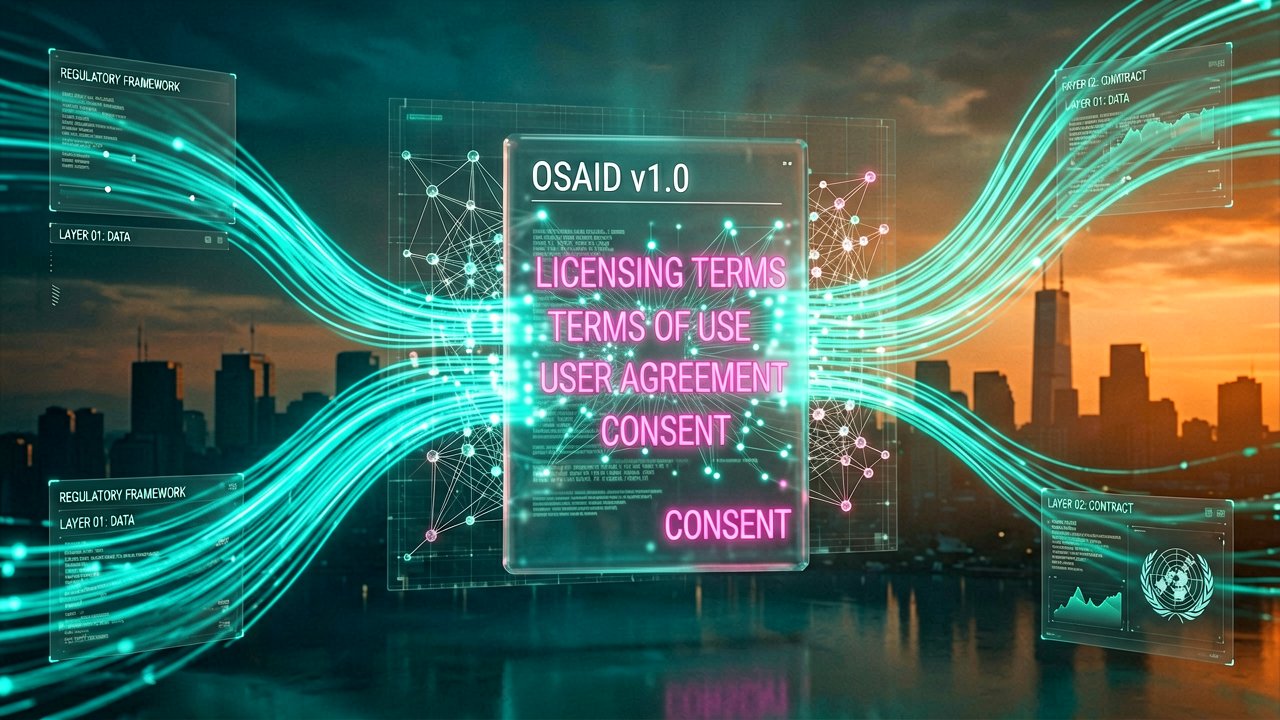
The term "open source" has been stretched to its absolute breaking point by tech giants looking for a quick marketing halo. In an effort to draw a hard line in the sand, the Open Source Initiative (OSI) used the backdrop of the United Nations Open Source Week in New York to officially launch its new global Open Source AI Fellowship. Announced on June 23, 2026, the two-year program aims to cut through corporate spin and establish an international, peer-reviewed consensus on what it actually takes for an artificial intelligence model to earn the open-source label.
Backed by heavyweight launch sponsors including Google, AWS, Red Hat, Mozilla, and Automattic, the initiative pairs the OSI with Duke University’s Sanford School of Public Policy. The fellowship’s inaugural researcher, Gabriel Toscano, isn't wasting any time getting to work. His first major task involves stress-testing recent, high-profile model architectures—like Google’s Gemma 4 family—directly against Version 1.0 of the official Open Source AI Definition (OSAID). By systematically measuring how public value flows through these ecosystems, the project hopes to map out exactly how community modifications iterate and cycle back into foundational frameworks.
Building a Regulatory Blueprint
This is far more than an academic exercise in terminology. As governments worldwide scramble to construct guardrails around artificial intelligence, the fellowship is positioning its findings to directly inform looming regulatory frameworks, such as the European Union's newly minted Tech Sovereignty package. By establishing a neutral, verifiable baseline for AI openness, the OSI is trying to ensure that future policy decisions are rooted in transparent, standardized technical requirements rather than the restrictive user licensing agreements and hidden training datasets that dominate the market today.
To combat the dilution of the "open source" label by major tech corporations, the Open Source Initiative (OSI) launched its Global Open Source AI Fellowship during the United Nations Open Source Week in New York. Announced in June 2026, this two-year program aims to establish an international, peer-reviewed standard for defining open-source artificial intelligence. Supported by partners like Google, AWS, and Duke University, the fellowship seeks to move beyond marketing rhetoric and define the technical requirements for true AI openness, as reported in the official announcement.
The fellowship’s inaugural researcher, Gabriel Toscano, is tasked with stress-testing prominent models against the Open Source AI Definition (OSAID) 1.0. This research, detailed in Toscano's preliminary studies, analyzes how public value and community modifications, such as those seen in Google’s Gemma 4, actually interact with foundational frameworks. This work is critical as governments, particularly in the EU, look to develop regulatory frameworks, turning the fellowship’s technical findings into a blueprint for policy, as noted in the project's launch materials.
What Most Reports Miss: The Data Contract Crisis
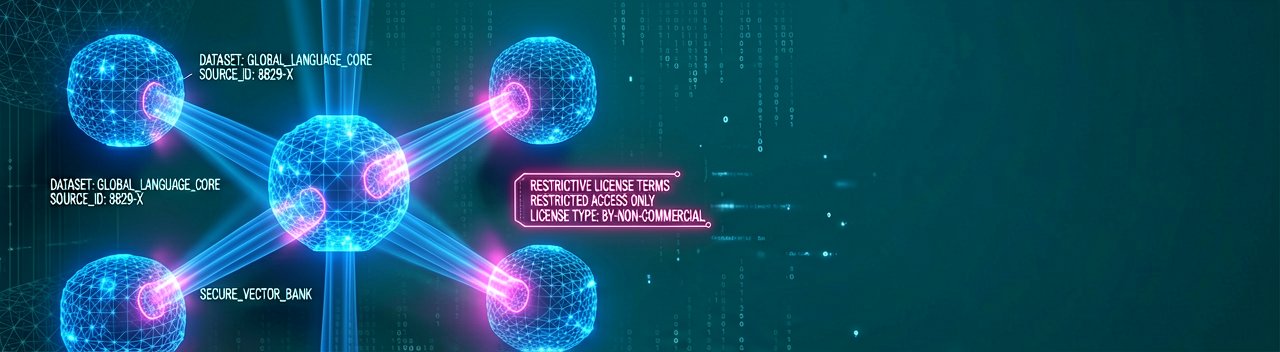
The core conflict lies in data sovereignty rather than just code access. While tech companies often restrict information on training datasets as trade secrets, true openness requires transparent data provenance to avoid copyright and bias issues, as highlighted by Toscano. Furthermore, early audits reveal that many self-proclaimed open models lack proper licensing or include restrictive, non-standard terms, creating a "Wild West" for developers, as described in Toscano's research.
By engaging with intergovernmental bodies like the G7 and the UN, as reported in project documents, the OSI aims to move beyond reacting to corporate definitions. The fellowship acts as a watchdog, providing technical analysis to help shape global standards against "openwashing," ensuring that AI development remains transparent and accountable to the public, as outlined in the OSI announcement.
To combat the dilution of the "open source" label by major tech corporations, the Open Source Initiative (OSI) launched its Global Open Source AI Fellowship during the United Nations Open Source Week in New York. Announced in June 2026, this two-year program aims to establish an international, peer-reviewed standard for defining open-source artificial intelligence. Supported by partners like Google, AWS, and Duke University, the fellowship seeks to move beyond marketing rhetoric and define the technical requirements for true AI openness, as reported in the official announcement.

The fellowship’s inaugural researcher, Gabriel Toscano, is tasked with stress-testing prominent models against the Open Source AI Definition (OSAID) 1.0. This research, detailed in Toscano's preliminary studies, analyzes how public value and community modifications, such as those seen in Google’s Gemma 4, actually interact with foundational frameworks. This work is critical as governments, particularly in the EU, look to develop regulatory frameworks, turning the fellowship’s technical findings into a blueprint for policy, as noted in the project's launch materials.
What Most Reports Miss: The Data Contract Crisis
The core conflict lies in data sovereignty rather than just code access. While tech companies often restrict information on training datasets as trade secrets, true openness requires transparent data provenance to avoid copyright and bias issues, as highlighted by Toscano. Furthermore, early audits reveal that many self-proclaimed open models lack proper licensing or include restrictive, non-standard terms, creating a "Wild West" for developers, as described in Toscano's research.
By engaging with intergovernmental bodies like the G7 and the UN, as reported in project documents, the OSI aims to move beyond reacting to corporate definitions. The fellowship acts as a watchdog, providing technical analysis to help shape global standards against "openwashing," ensuring that AI development remains transparent and accountable to the public, as outlined in the OSI announcement.
Reading Between the Lines: The Openwashers' Paradox
Funding independence remains the elephant in the room for any framework trying to audit Big Tech. There is an undeniable irony in a watchdog program that relies on financial backing from the exact infrastructure giants whose models it intends to police. While Google, AWS, and Red Hat deserve credit for putting money behind the standardization effort, they also hold a massive vested interest in how the boundaries of the Open Source AI Definition are ultimately drawn. The risk is that the definition becomes a compromise of corporate conveniences rather than an unyielding technical benchmark.
Furthermore, setting a standard is only half the battle when international regulatory bodies move at a fraction of the speed of generative AI development. By the time the fellowship publishes its peer-reviewed taxonomy of current model families, the industry will have likely migrated to entirely new paradigms of compute and decentralized execution. This leaves the OSI in a perpetual game of catch-up, trying to enforce rules on code bases that are already obsolete by the time the ink dries on the UN research papers.
Ultimately, the true test of this global fellowship will not be whether it can draft a beautiful manifesto, but whether it possesses the teeth to publicly call out its own benefactors. If the program fails to aggressively flag the restrictive licensing practices of its major sponsors, it risks becoming an expensive rubber-stamping committee that legitimizes the very openwashing it was created to destroy.
"True open source has always been about decentralizing control, but trying to regulate corporate AI with a UN fellowship feels a bit like using a library card to police a gold rush—highly civilized, remarkably thorough, and completely ignored by the folks currently digging up the mountain."
Artūras Malašauskas is an AI Systems Integrator with 20+ years of production-grade web engineering experience. He has designed, shipped, and scaled enterprise Python/PHP systems for logistics, SaaS, and public-sector clients. For the past year, he has focused exclusively on AI integrations: deploying open-source LLMs, building generative media pipelines (image, audio, video), and engineering multi-agent workflows for real production environments. His standard: reproducibility, security, cost-efficient inference—no vaporware. He documents and evaluates emerging AI tooling, separating verified capabilities from marketing noise. Technical editor at: muza-ai.eu, ai-verslas.lt, ai-naujinos.lt Connect on LinkedIn
Comments