DocLang Group Emerges as Crucial Standard-Bearer in AI Documentation Landscape

The enterprise artificial intelligence landscape is facing a silent scalability crisis rooted in the very file formats that power global business. Legacy document types like PDF, DOCX, and HTML were engineered for human eyes rather than machine-learning architectures, forcing organizations to build fragile, costly data pipelines involving complex optical character recognition (OCR) and layout analysis. Recognizing this critical infrastructure gap, the LF AI & Data Foundation officially launched the DocLang Specification Working Group to build a vendor-neutral, open standard for AI-native documents.
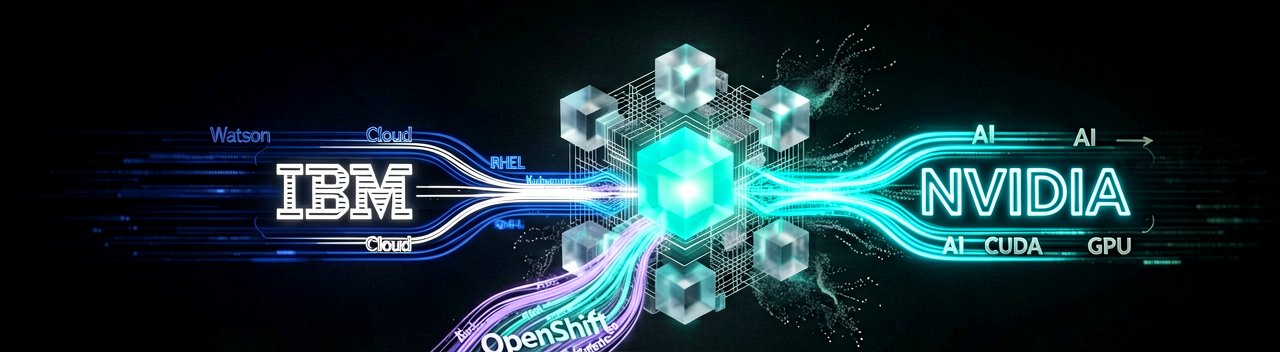
Backed by industry heavyweights including IBM, NVIDIA, Red Hat, ABBYY, and HumanSignal, DocLang addresses the foundational parsing friction that limits agentic AI and Retrieval-Augmented Generation (RAG) workflows. Rather than treating documents as static layout sheets, the new universal specification captures semantic meaning, structural elements, and geometric positioning concurrently. This structural shift optimizes documents specifically for modern AI tokenization, ensuring that language models can interpret complex tables, structural hierarchies, and data relationships without traditional preprocessing bottlenecks.
Crucially, this collaborative framework shifts documentation from a passive asset into an active, compliant participant within enterprise AI pipelines. By standardizing document structures under a vendor-neutral governance model, the consortium aims to eliminate systemic fragmentation caused by proprietary vendor formats. Early industry consensus positions DocLang as an essential building block for automated intelligence pipelines, creating a machine-readable blueprint capable of moving complex enterprise data into the agentic AI era seamlessly.
Strategic Shifts in Corporate Data Ingestion
The transition toward an AI-native document format marks a profound evolution in how corporate intelligence is indexed and mobilized. Historically, document management systems focused entirely on visual presentation and human-centric keywords. As highlighted by tech journalists at CIO, the rulebook is being rewritten to define documents as highly dynamic, iterative data models optimized directly for computational workflows rather than static human review.
Interoperability and Open Ecosystem Development
By establishing a unified, structured exchange language, DocLang functions similarly to how HTML standardized web content or how JSON unified data interchange. The specification works in tandem with existing open-source document processing frameworks, such as IBM’s Docling toolkit, which was contributed to the LF AI & Data Foundation. Together, these technologies establish a complete, open-source AI document ingestion stack that strips away proprietary ingestion friction across cross-platform enterprise environments.
Embedded Governance and Ethical Compliance
Beyond technical parsing efficiencies, DocLang integrates compliance capabilities directly into its file structure blueprint. As reported by tech industry outlets like Open Source For U, the standard introduces embedded governance controls that natively protect data privacy, enforce strict extraction boundaries, and define granular model training permissions. These structural safeguards enable downstream language models to interpret data limitations dynamically, helping enterprises mitigate risk and adhere to global compliance mandates effortlessly.
Reading Between the Lines: The Friction of Mandatory Modernization
While the marketing narrative surrounding DocLang paints a picture of a frictionless, automated future, the reality of corporate infrastructure suggests a much steeper hill to climb. The primary assumption underlying this initiative is that enterprises are willing—and technically equipped—to overhaul petabytes of legacy data into an entirely new, unproven file specification. In practice, the world’s most critical financial, legal, and medical systems still run on archaic mainframes and localized network shares where the mere act of migrating data introduces unacceptable operational risk. A new standard, no matter how elegant its tokenization optimization, does not automatically erase decades of technical debt.
Furthermore, a distinct contradiction lies at the heart of the open-source coalition backing the project. While tech giants advocate for vendor-neutral formats under the Linux Foundation banner, they simultaneously race to lock customers into their proprietary cloud data platforms and specialized agentic ecosystems. There is an ongoing strategic tension between providing a universal data blueprint and maintaining competitive advantage; companies may support a public document standard while quietly optimizing their internal retrieval pipelines to favor their own proprietary software suites. If the standard becomes diluted by corporate compromises, it risks becoming just another layer of administrative bloat rather than a unifying technical force.

The long-term impact on enterprise software development also carries unexpected systemic risks. By designing documentation exclusively for machine ingestion, the tech industry introduces a dangerous reliance on secondary translation layers for human oversight. If a document's semantic structure is optimized solely for algorithmic parsers, human auditors may struggle to verify exactly what context an AI agent extracted during a high-stakes transaction. As corporate intelligence shifts toward these machine-centric architectures, the industry must prepare for a new class of systemic errors where the data makes perfect sense to the LLM, but remains completely opaque to the professionals legally responsible for its outcomes.
Building a perfect universal standard for machine-readable documents is an admirable technological achievement, right up until the moment it collides with an enterprise's legacy storage drive that hasn't been updated since 2008 and is currently held together by digital duct tape and prayer.
Artūras Malašauskas is an AI Systems Integrator with 20+ years of production-grade web engineering experience. He has designed, shipped, and scaled enterprise Python/PHP systems for logistics, SaaS, and public-sector clients. For the past year, he has focused exclusively on AI integrations: deploying open-source LLMs, building generative media pipelines (image, audio, video), and engineering multi-agent workflows for real production environments. His standard: reproducibility, security, cost-efficient inference—no vaporware. He documents and evaluates emerging AI tooling, separating verified capabilities from marketing noise. Technical editor at: muza-ai.eu, ai-verslas.lt, ai-naujinos.lt Connect on LinkedIn
Comments