Snapchat's AI Advertising Suite Signals Paradigms Shift in Creative Marketing Automation
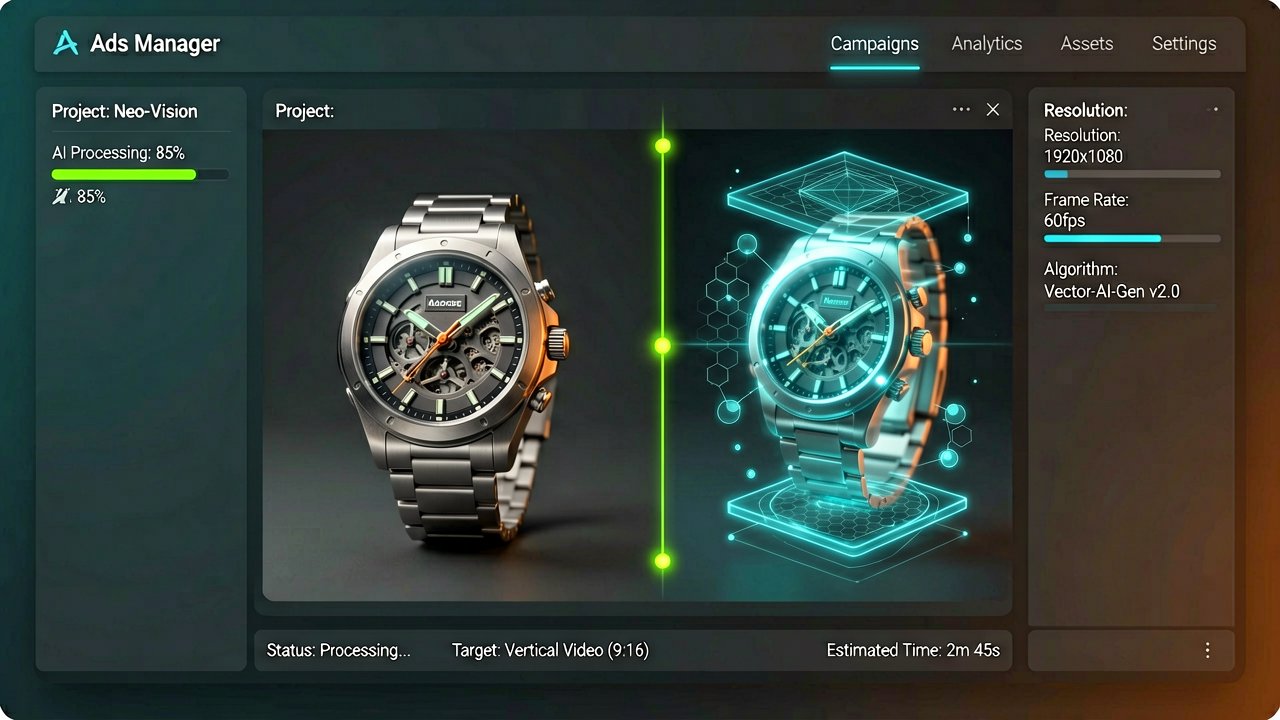
Snap Inc. has rolled out a suite of advanced, artificial intelligence-powered automation tools designed to fundamentally reshape how brands build vertical video assets, execute commerce campaigns, and manage creator workflows. According to the official announcement by Snapchat for Business, these generative enhancements are explicitly aimed at lowering technical barriers and eliminating the historical production bottlenecks associated with full-screen social media inventory. By deploying native generative AI assets, the platform intends to transition from a manual, high-friction campaign setup environment toward an automated, performance-driven marketplace that directly challenges larger automated ad infrastructures like Meta’s Advantage+.
The strategic deployment features key automated tools such as "Smart upscale" and native image-to-video generation, which empower small-to-enterprise level teams to instantly transform static assets into dynamic, highly immersive vertical formats. To scale commerce capabilities, Snapchat overhauled its Dynamic Product Ads by integrating a new class of agentic recommendation models that synthesize user behavior, product affinities, and full-funnel intents to surface inventory with immense precision, as noted by Social Media Today . Furthermore, early implementations of these generative advertising mechanisms, particularly Sponsored AI Lenses, have already demonstrated highly receptive consumer traction, amassing nearly 38 billion impressions since the final quarter of 2025.
Beyond asset rendering, this rollout redefines creator marketing operations through the upcoming introduction of the Snap Creator Network. Operating as an AI-driven matchmaking marketplace, the platform enables brands to prompt specific audience criteria, campaign targets, and creative tones to automate outreach, selection, and activation, according to Social Samosa . This integration shifts social platform utility away from traditional ad placement and moves it squarely into full-scale creative orchestration, positioning artificial intelligence as the primary operational layer linking brands, automated media, and human creators.
Market Impact on Creative Workflows
By shifting asset scaling and video production directly into the Ads Manager via built-in generative engines, the platform minimizes the necessity for expansive pre-production creative cycles. Traditional social campaigns require specialized creative formats, whereas automated upscale and contextual background generation mean a single product image can serve as the baseline for multi-variant video campaigns. This structural shift effectively democratizes localized and personalized creative output, changing the agency dynamic from asset fabrication to high-level system supervision.

The Rise of Agentic Commerce Networks
The modernization of the product recommendation layer highlights a macro industry shift away from static data attribution toward agentic AI frameworks. By feeding real-time user intent and full-funnel signals into dynamic models, the advertising platform reacts contextually to real-time behavioral vectors rather than relying entirely on historical tracking cookies. This shift ensures compliance with strict data ecosystems while maintaining the targeting efficiency necessary to drive high-volume, direct-to-consumer commerce actions.
Streamlining the Creator Economy via Programmatic Discovery
Creator discovery has historically been hampered by manual portfolio evaluation, lengthy contract negotiations, and fragmentation. Introducing natural language search and automated matchmaking into the influencer identification cycle treats creator assets with the programmatic efficiency of standard digital inventory. By matching specific parameters like conversational tone and target demographic to a verified creator database, brands can execute creator-led initiatives at scale, turning influencer marketing into a predictable, rapidly deployable performance channel.
The Hidden Machinery of Automated Influence
Beyond the Visual Polish: The sudden acceleration of Snapchat’s generative ad suite is less about aesthetic innovation and more about surviving a brutal platform battle for infrastructure supremacy. For years, social media platforms competed purely on user metrics, but the contemporary paradigm is defined by automation efficacy. By embedding native generative tools directly into the ad auction pipeline, the platform is attempting to solve the industry’s most persistent bottleneck: creative fatigue. In full-screen, vertical video environments, user attention decays rapidly when exposed to repetitive creative assets, forcing brands into continuous, expensive production loops. Automating the evolution from static product images to dynamic video variants provides an immediate logistical solution to this operational drain.
This technical realignment also exposes an internal tension between artificial automation and the organic, raw authenticity that originally fueled the platform's cultural relevance. Agency stakeholders note that while automated upscaling and prompt-driven background generation significantly reduce operational overhead, they threaten to homogenize brand identities if left unmonitored. The platform’s executive leadership is actively positioning this technology not as a replacement for human input, but as an optimization layer designed to handle low-tier formatting tasks. However, performance marketing directors increasingly rely on these automated systems to make real-time tactical adjustments during high-velocity campaigns, shifting human responsibilities from artistic curation to algorithmic supervision.

Simultaneously, the automation of the creator discovery process marks a profound structural shift in the economics of influencer marketing. Transitioning to algorithmic matchmaking treats creators less like artistic partners and more like hyper-targeted, modular advertising units. For emerging creators, this programmatic system promises immediate visibility based on behavioral data rather than high-level industry connections. Conversely, established talent agencies warn that relying entirely on programmatic parameters strips away the nuance of organic brand alignment, potentially diluting long-term community trust. This transition highlights a broader industry trend where human influence is integrated directly into automated media buying strategies.
Ultimately, this technical maturation places the platform at a critical crossroads regarding consumer data utilization. Powering real-time recommendation engines and spatial AI assets requires deep, continuous analysis of behavioral signals within a highly private interface. As regulatory bodies globally tighten restrictions on data tracking and algorithmic profiling, the platform's survival depends on its ability to run these heavy generative models locally and contextually. The success of this automation push will not be determined by the novelty of its video generation tools, but by how effectively it converts immediate, short-form engagement into predictable, measurable commerce outcomes.
The Friction Between Algorithmic Efficiency and Brand Equity
Reading Between the Lines: The industry-wide rush to automate creative production glosses over a fundamental contradiction in modern digital marketing. Platforms promise that generative artificial intelligence will democratize high-tier video production, allowing any brand to generate endless permutations of immersive vertical content. However, when every advertiser utilizes the same underlying models, prompts, and optimization mechanics, the inevitable result is creative homogenization. The very tools designed to help brands stand out in a crowded feed risk producing a highly predictable, standardized aesthetic that users will instinctively swipe past, rendering the automated volume increase counterproductive to actual consumer engagement.
Furthermore, relying heavily on programmatic matchmaking within creator networks assumes that human influence can be neatly quantified into behavioral vectors and demographic filters. This systematic approach treats an influencer's unique relationship with their audience as a standardized, transactional commodity. In practice, the power of creator marketing stems from unpredictability, raw authenticity, and idiosyncratic personal appeal—elements that algorithmic parameters actively try to smooth out. By filtering human talent through a rigid automated clearinghouse, platforms may inadvertently strip away the exact cultural nuances that made creator-led advertising effective in the first place.
There is also a clear operational tension regarding the financial realities of automated campaign management. While enterprise brands can easily absorb the trial-and-error costs of algorithmic learning phases, smaller businesses operating on razor-thin margins face a far steeper learning curve. Machine learning models require significant upfront data expenditure to find the optimal audience, meaning automated efficiency often requires a substantial financial runway before delivering profitable returns. This creates a market dynamic where the automation layer primarily benefits massive programmatic operations, further widening the competitive gap between legacy conglomerates and emerging independent brands.
Looking forward, the long-term viability of this automated advertising ecosystem hinges on platform sustainability and hardware limitations. Running high-volume generative image-to-video tools and real-time contextual recommendations requires massive computational overhead and localized server power. As computing costs scale alongside ad volume, platforms will eventually have to pass these structural expenses down to advertisers through increased cost-per-impression metrics. Ultimately, the future of creative marketing automation will not be constrained by the sophistication of the software, but by the raw economic realities of processing power and data center infrastructure.
"We have officially entered an era where artificial intelligence writes the ad, selects the human to pitch it, and optimizes the feed to ensure other algorithms track its success—leaving real humans with the vital corporate responsibility of approving the credit card statement."
Artūras Malašauskas is an AI Systems Integrator with 20+ years of production-grade web engineering experience. He has designed, shipped, and scaled enterprise Python/PHP systems for logistics, SaaS, and public-sector clients. For the past year, he has focused exclusively on AI integrations: deploying open-source LLMs, building generative media pipelines (image, audio, video), and engineering multi-agent workflows for real production environments. His standard: reproducibility, security, cost-efficient inference—no vaporware. He documents and evaluates emerging AI tooling, separating verified capabilities from marketing noise. Technical editor at: muza-ai.eu, ai-verslas.lt, ai-naujinos.lt Connect on LinkedIn
Comments