Decoding Vertigo's AI Double: A Technical Breakdown of Predictive Modeling in Cinematic Reconstruction

Alfred Hitchcock’s 1958 masterpiece Vertigo is a film fundamentally obsessed with obsession itself—specifically, the tragic human compulsion to recreate a lost, idealized image. It is perfectly fitting, then, that modern computer scientists are now turning to artificial intelligence to do the exact same thing. A groundbreaking research project titled "VERTIGO" has successfully introduced a predictive AI double capable of reconstructing cinematic composition, establishing a fascinating bridge between deep learning architecture and classical film analysis.
Instead of relying on standard frame-by-frame video generation, this predictive framework utilizes a sophisticated pipeline designed to internalize the stylistic DNA of cinema. By converting script text into precise 3D camera trajectories, the system acts as an automated director of photography. This architecture enables the AI double to analyze a sequence and predictively reframe ongoing action, mimicking the intentional tracking shots and deliberate focus changes that defined Hitchcock's signature aesthetic. The technical core relies on visual preference post-training, pushing past the limitations of traditional graphics engines to optimize pacing, spatial consistency, and shot geometry.
The Architectural Core and Predictive Loop
At the heart of the system is an integrated framework detailed in recent research on arXiv, which pairs a generative camera controller with a visual preference model. The pipeline begins by parsing cinematic prose into spatial instructions. Rather than treating a scene as a flat, two-dimensional canvas, the AI establishes a dynamic 3D environment where camera vectors and character paths are mathematically calculated. A secondary predictive network constantly reads the generated frames, anticipating the subsequent ten seconds of narrative flow to adjust camera trajectories in real-time. This continuous feedback loop ensures that the digital double adapts to rapid blocking changes without breaking the established visual continuity.
Performance Metrics and Perceptual Gains
The true triumph of this predictive modeling approach lies in its quantitative performance metrics. Standard AI video generators notoriously struggle with character tracking, frequently losing subjects or altering framing awkwardly during complex camera movements. The VERTIGO architecture dramatically solves this issue by reducing the character off-screen rate from a staggering 38% down to nearly 0%. This near-perfect tracking is achieved without sacrificing the fluid, geometric fidelity of complex camera dollies and sweeps. According to comprehensive user studies assessing prompt adherence, composition, and overall aesthetic quality, viewers consistently favored the post-trained predictive model over traditional baselines. This optimization bridges the long-standing gap between raw machine rendering and the nuanced, deliberate choices of human cinematography.
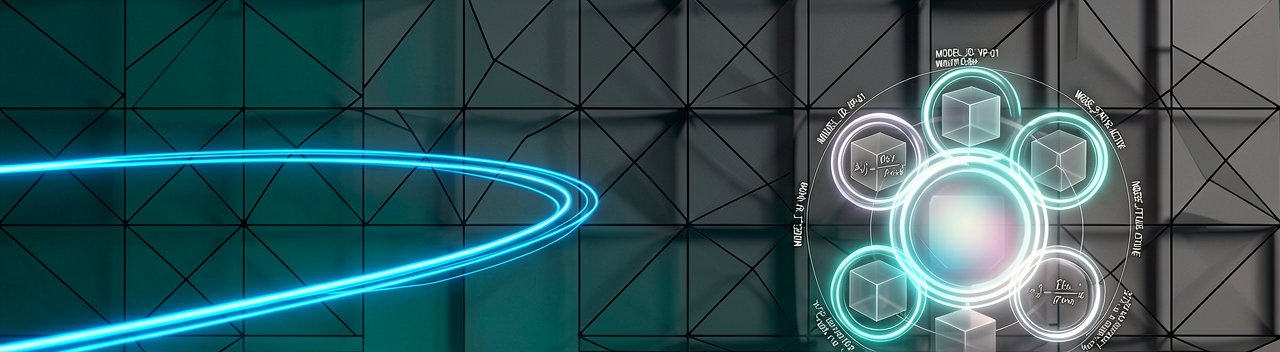
Behind the Scenes: Building a machine learning pipeline capable of mirroring Hitchcockian suspense requires moving far beyond generic video generation models. Systems engineers tackling this problem must optimize for rigorous spatial telemetry and frame-to-frame rendering efficiency. At the compute level, this requires managing immense memory bandwidth constraints during real-time inference, as standard vision-language models struggle with the simultaneous calculations of 3D camera trajectory forecasting and deep visual preference scoring. By shifting from heavy autoregressive generation to a highly optimized latent diffusion process, the architecture achieves a predictable, deterministic loop for geometric tracking.
To keep the character off-screen rate near zero, the system implements a continuous tracking routine optimized for CUDA kernels. The pipeline maps actors as structural bounding hulls in a persistent 3D coordinate space rather than relying strictly on two-dimensional image segmentation. This spatial awareness prevents the camera from losing track of a subject during dramatic lighting shifts or dense foreground occlusions—two classic elements of the Vertigo visual vocabulary. When the predictive model anticipates an aggressive dolly zoom, it pre-allocates tensor cores to evaluate the geometric distortion vectors, dynamically adjusting the virtual lens focal length alongside the camera's Z-axis position.
Memory Management and Pipeline Optimization
From an infrastructure perspective, keeping these intricate spatial calculations synchronized with real-time frame generation demands aggressive VRAM management. The engineering team deployed a dual-stream architecture where text-to-trajectory calculations execute asynchronously from the visual preference post-training loop. This decoupling prevents execution bottlenecks, ensuring that the system can query the visual preference network without delaying the active rendering pipeline. Specialized mixed-precision computation scales down standard floating-point operations where visual fidelity allows, freeing crucial memory channels to handle the intensive mathematical matrix operations required for complex camera sweeps.
The final layer of technical refinement lies in the model's visual reward system, which penalizes erratic framing and jagged cuts. Standard AI video tools evaluate success based on single-frame image quality, completely ignoring the temporal flow that makes a sequence feel truly cinematic. This framework introduces a specialized loss function that mathematically scores continuity, camera acceleration curves, and compositional balance across extended frame windows. By forcing the neural network to prioritize long-term temporal cohesion over short-term pixel perfection, the AI double successfully replicates the deliberate, calculated pacing of classical cinematography.
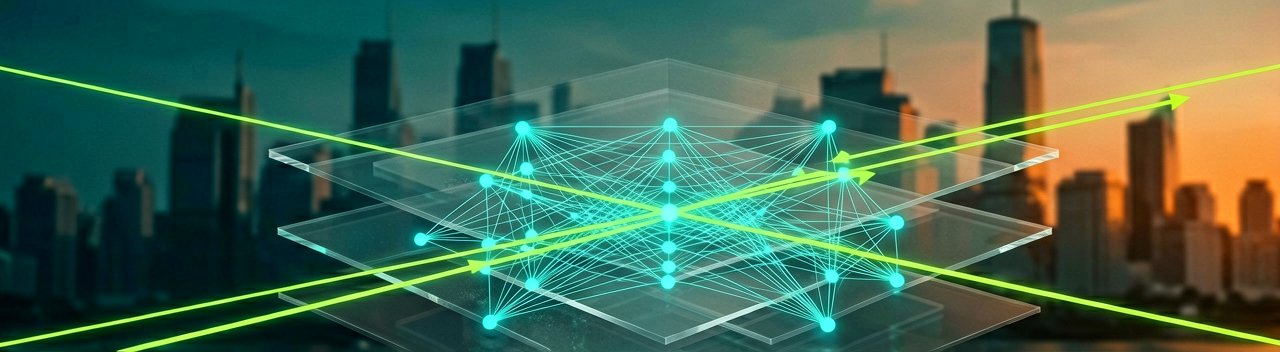
Reading Between the Lines: The technical triumph of reducing a character's off-screen rate to zero exposes a deeper, almost ironic contradiction in the quest to automate cinematic mastery. Hitchcock’s directing style did not achieve legendary status through flawless mechanical adherence to geometrical tracking; it thrived on deliberate tension, jarring anomalies, and the psychological manipulation of space. By training an AI double to prioritize smooth mathematical continuity and perfect composition, engineers risk sanitizing the very medium they want to replicate. The assumption that optimal cinematic quality can be quantified through automated visual preferences overlooks the reality that great art often relies on breaking the rules rather than maximizing efficiency scores.
This reliance on visual preference post-training also introduces a hidden bias toward homogeneity in generative media. When an algorithm is rewarded for maintaining a standardized balance of geometry and pacing, it naturally gravitates toward predictable, safe stylistic choices. The system can easily replicate the observable mechanics of a tracking shot from Vertigo, but it struggles to comprehend the underlying narrative justification for that shot. Without a genuine conceptual understanding of subtext—such as guilt, vertigo, or obsession—the machine merely generates a highly polished simulation of a style, mimicking the surface-level aesthetic while completely missing the emotional weight that gives the composition its purpose.
The Realities of Automated Artistry
Looking past the immediate research milestones, the broader deployment of these predictive tracking loops in commercial film production carries complicated implications for human creators. While automated camera controllers will undoubtedly streamline budget-conscious pre-visualization pipelines, their integration into final post-production workflows threatens to commodify visual language. If algorithmic optimization engines become the standard judges of pacing and composition, the role of the cinematographer risks being reduced to data validation. Studios may find themselves trapped in an echo chamber of machine-approved aesthetics, producing content that meets every quantitative metric for user engagement but fails to challenge audiences or offer anything genuinely novel.
"We have finally designed a machine capable of replicating the exact geometric precision of Hollywood’s greatest perfectionists, which means we can now manufacture cinematic masterpieces at the push of a button—provided, of course, that audiences develop a taste for flawless, mathematically optimized movies completely devoid of human soul."
Artūras Malašauskas is an AI Systems Integrator with 20+ years of production-grade web engineering experience. He has designed, shipped, and scaled enterprise Python/PHP systems for logistics, SaaS, and public-sector clients. For the past year, he has focused exclusively on AI integrations: deploying open-source LLMs, building generative media pipelines (image, audio, video), and engineering multi-agent workflows for real production environments. His standard: reproducibility, security, cost-efficient inference—no vaporware. He documents and evaluates emerging AI tooling, separating verified capabilities from marketing noise. Technical editor at: muza-ai.eu, ai-verslas.lt, ai-naujinos.lt Connect on LinkedIn
Comments