xAI Lowers the Barrier to Sounding Human with Grok Voice Agent Builder

Building production-grade conversational AI used to mean stitching together multiple distinct services. You needed one API for speech-to-text, a large language model to process the logic, and a final text-to-speech engine to output the answer. Each step added latency, cost, and a brand-new failure point. On July 1, 2026, Elon Musk's artificial intelligence venture, xAI, shattered that paradigm by officially launching its new Voice Agent Builder platform in beta. It is an all-in-one, no-code environment designed to let developers and enterprise operators configure complete voice agents in under two minutes.
What makes this release compelling is its unified speech-to-speech architecture. By bypassing the traditional three-tier API stack, the platform links audio processing directly to the core Grok model. The result is a highly polished, sub-second latency conversational experience that holds up under challenging, real-world conditions. According to technical documentation released by xAI, the underlying voice models were intentionally trained on the messy realities of telephony—including background noise, heavy accents, and unpredictable callers who constantly interrupt or change their minds mid-sentence.
Enterprise-Ready Infrastructure Out of the Box
Instead of requiring complex backend engineering, the Voice Agent Builder packages everything needed for deployment into a single, straightforward dashboard. Users describe their desired call flows using plain language, upload corporate documents for instant knowledge retrieval, and establish guardrails to keep interactions secure. The platform native-ly handles more than 25 languages and comes with robust enterprise features like Model Context Protocol (MCP) integrations, custom API tool calling, and full observability. To make onboarding seamless, each new account includes one free phone number, though businesses can easily migrate their existing corporate lines using standard SIP protocols.
A Price War in Conversational AI
Beyond the technical architecture, xAI is positioning this launch to compete heavily on economics. The company set a flat rate of $0.05 per minute for real-time, full-duplex voice conversations. This aggressive pricing structure, coupled with compliance readiness for regulations like GDPR, SOC 2, and HIPAA eligibility, makes it a highly disruptive option for industries like logistics, retail, and automated customer service. By eliminating the specialized coding barriers historically tied to advanced conversational design, the platform shifts the voice automation market from a complex engineering hurdle to an accessible utility for mainstream operators.

The Architectural Pivot to Real Audio
Behind the Engineering Shift: The traditional pipeline for voice AI was fundamentally broken from a user-experience standpoint. For years, developers had to chain together independent automatic speech recognition, a central text-based language model, and a separate text-to-speech engine. This multi-step process introduced a staggering amount of lag, turning conversations into awkward, walkie-talkie-style exchanges. By processing audio natively from end to end, xAI bypasses these intermediate translation layers entirely. This architectural shift allows the model to sense tone, emotion, and pace directly, delivering a degree of conversational nuance that text-only layers historically ironed out.
This approach highlights a growing divide in the AI ecosystem regarding how voice data should be handled. While some competitors rely on heavily patched orchestration layers to mask latency, the Grok Voice Agent Builder treats voice as a first-class citizen. Engineers working with early builds note that the platform behaves less like a software chatbot and more like a fluid audio stream. The system detects when a user starts speaking over it, immediately cuts its own audio output, and shifts context in real time without losing track of the broader conversation goals.
Disrupting the Telephony Monopoly
The strategic inclusion of standard SIP trunking and native phone number provisioning shows that xAI is aiming squarely at established call center infrastructure. For decades, enterprise telephony has been dominated by entrenched legacy software providers charging steep premiums for basic routing and rigid IVR menus. By bundling a fully capable, multi-lingual voice agent with immediate phone connectivity at a fraction of the cost, the platform turns what used to be a month-long infrastructure project into a configuration that takes a few clicks.
Industry insiders view this aggressive pricing strategy as a direct shot at both legacy call center providers and specialized AI middleware developers. A flat rate of five cents per minute simplifies budgeting for small-to-medium businesses that were previously locked out of custom voice tech due to high upfront setup costs. For these smaller operators, the ability to upload a product manual, write a prompt, and instantly have a functioning, compliance-ready customer service line fundamentally changes how they can scale support operations.
The Challenge of Real-World Deployment
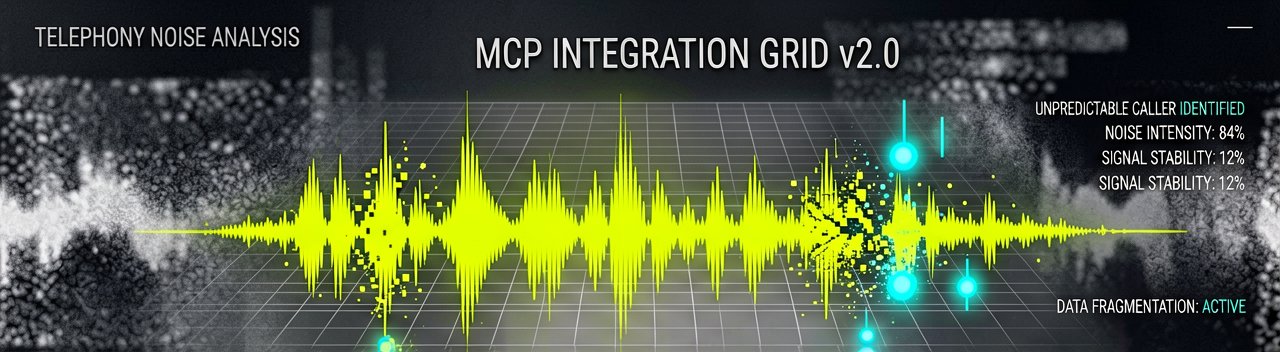
Despite the streamlined interface, the true test for xAI will be how these voice agents handle the chaotic, unscripted nature of everyday business calls. Customer service is notoriously unpredictable, filled with garbled cell phone connections, heavy background noise, and frustrated users who rarely follow a linear script. While training models specifically on telephony data helps mitigate these issues, managing complex database updates and dynamic API calls mid-conversation still requires careful configuration from the human designers behind the scenes.
As the platform moves deeper into its beta phase, the focus will likely shift from basic voice capabilities to the sophistication of its external tool integrations. The inclusion of the Model Context Protocol suggests that xAI wants these agents to do more than just talk; they need to interact deeply with enterprise databases, update shipping logs, and process complex booking requests. The success of this no-code push relies heavily on whether non-technical operators can configure these advanced tool calls reliably without needing a team of engineers to bail them out when edge cases arise.
The Hidden Cost of Frictionless AI Deployment
Reading Between the Lines: The tech industry loves to celebrate the democratization of development, but lowering the barrier to entry always comes with a hidden tax. By stripping away the need for engineering expertise, the Voice Agent Builder shifts the responsibility of quality assurance entirely onto the business owner. While a non-coder can undeniably stand up a fully functional voice agent in less than two minutes, configuring that agent to handle complex data security, avoid hallucinated pricing promises, and navigate intricate regulatory environments is an entirely different matter. The reality is that making a tool easy to build does not automatically make it safe to deploy at scale.
This dynamic introduces a stark contradiction in xAI’s enterprise push. On one hand, the platform boasts robust compliance features like HIPAA eligibility and GDPR readiness out of the box. On the other hand, the no-code interface actively encourages rapid, unvetted deployments by operators who may not understand the subtle liabilities of automated customer interactions. When an AI voice agent inadvertently promises a refund that violates corporate policy or misunderstands a customer’s medical symptom due to a faulty knowledge-base upload, the blame will not fall on the platform architecture, but on the business that trusted a simple prompt to do a human manager's job.
The Economics of the Commodity Voice Market
Furthermore, the aggressive price point of five cents per minute hints at a broader, race-to-the-bottom commodity war across the entire AI ecosystem. While this pricing structure is incredibly disruptive to legacy call centers today, it relies on the assumption that infrastructure costs will continue to plummet predictably. If computational overhead or network bandwidth demands spike as these models grow more complex, maintaining these razor-thin margins could force platform restrictions, sudden price hikes, or a quiet reduction in the model’s reasoning capabilities behind the curtain.
Ultimately, the long-term impact of this rollout will not be measured by how many thousands of voice agents are created, but by how many of them survive their first week of actual consumer frustration. Real human conversations are messy, repetitive, and deeply inefficient. Forcing that chaos into a structured, automated tool-calling pipeline—even one natively trained on noisy telephony data—will inevitably expose the gap between a polished tech demo and the grueling reality of everyday customer service. True democratization means giving everyone the power to build, but it also means giving everyone the power to fail with unprecedented speed.
"We are rapidly approaching a future where you can build a multi-lingual, compliant, enterprise-grade customer support department over a single lunch break, which is incredibly impressive—right up until the moment your brand-new, five-cents-a-minute synthetic receptionist politely and fluidly agrees to give away the entire company inventory for free."
Artūras Malašauskas is an AI Systems Integrator with 20+ years of production-grade web engineering experience. He has designed, shipped, and scaled enterprise Python/PHP systems for logistics, SaaS, and public-sector clients. For the past year, he has focused exclusively on AI integrations: deploying open-source LLMs, building generative media pipelines (image, audio, video), and engineering multi-agent workflows for real production environments. His standard: reproducibility, security, cost-efficient inference—no vaporware. He documents and evaluates emerging AI tooling, separating verified capabilities from marketing noise. Technical editor at: muza-ai.eu, ai-verslas.lt, ai-naujinos.lt Connect on LinkedIn
Comments