XBTFX AI Trading Stack Redefines Multi-Asset Market Strategies
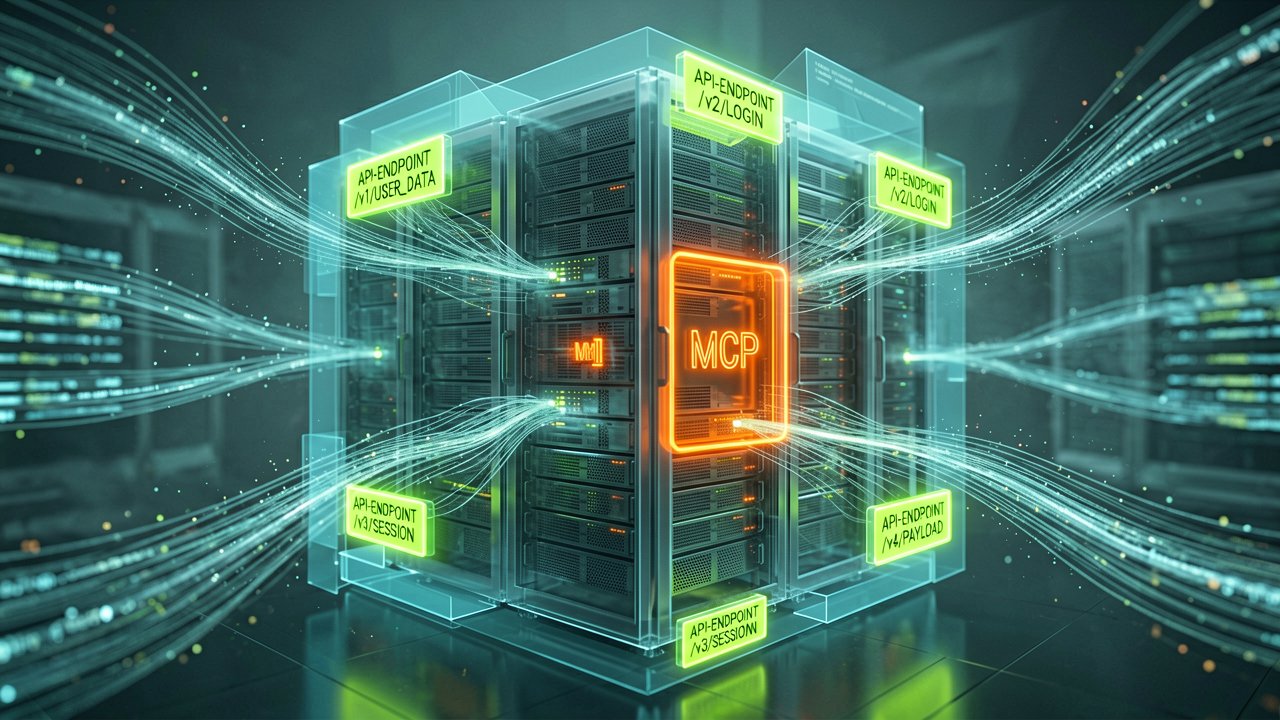
The convergence of artificial intelligence and multi-asset derivative execution has entered a highly practical era with the deployment of the new AI trading stack by XBTFX. Rather than introducing a proprietary, opaque black-box trading bot that makes predictive market assumptions, this infrastructure functions as a robust agent integration layer. It allows external, compatible AI assistants, development tools, and automation frameworks to directly communicate with live contracts for difference (CFD) and cryptocurrency trading accounts. This design signals a significant strategic shift away from static algorithmic rules toward fluid, natural-language-driven interface control for retail and institutional traders alike.
By transforming traditional multi-asset execution pipelines into programmable ecosystems, the platform addresses a persistent bottleneck in quant development. Historically, linking large language models (LLMs) or automated agents to real-time order books required extensive, specialized middleware engineering. The platform bypasses these limitations by standardizing the way AI clients fetch real-time market data, inspect account metrics, and pass parameterized transaction requests. This development directly caters to an emerging demographic of tech-savvy investors who prefer building custom, dynamic tools within integrated development environments over relying on traditional turnkey trading applications.
From a broader market perspective, this architecture represents a clear democratization of programmatic execution frameworks across varied asset classes, including forex, metals, crypto, and indices. The deployment model enables users to maintain absolute authority over their underlying risk parameters and proprietary logic, treating the broker strictly as an un-conflicted execution layer. As autonomous software agents continue to expand their footprint across financial markets, providing structured, native connectivity to brokerage accounts is fast transforming from an advanced perk into a fundamental requirement for modern multi-asset brokerages.
Programmable Infrastructure and the Model Context Protocol
The structural backbone of the release relies heavily on a newly deployed Model Context Protocol (MCP) server alongside a unified Skills Hub. This arrangement creates a secure abstraction layer between the user’s live portfolio and the AI client. When a trader prompts an AI assistant to evaluate exposure or structure a trade, the client interprets the intent and converts it into a clean, authenticated tool call or API request via the Traders Union documentation. Crucially, raw natural language inputs are never exposed to the core account infrastructure, protecting the environment against structural anomalies and typical prompt injection vulnerabilities.

Market Impact and the Rise of Agentic Commerce
The release of these open-ended connectivity tools marks a departure from standard industry practices that usually lock users into closed software ecosystems. According to details shared through coverage on MEXC, the absence of separate subscription costs or per-request usage fees lowers the entry barrier for building custom trading assistants. This allows independent developers to freely tie models like Claude or Cursor directly into active financial markets. This movement lays down the baseline groundwork for an interconnected market environment where autonomous AI agents manage complex arbitrage, multi-asset diversification, and risk control loops across highly diverse asset classes entirely in the background.
Architectural Realities of Agentic Market Execution
Beneath the Hype Cycle: The practical friction of deploying artificial intelligence into live financial markets has historically been a story of latency and API fragmentation. Traditional institutional setups rely on high-frequency FIX protocols and rigid JSON-RPC endpoints that expect deterministic inputs. When an LLM attempts to interact with these environments, the system faces an immediate translation bottleneck. Turning fuzzy, natural-language reasoning into a precise, parameter-perfect transaction order requires a robust orchestration layer. The introduction of open-standard servers like the Model Context Protocol directly targets this friction, creating a universal translator that forces the AI agent to output structured tool calls rather than unpredictable text strings.
From an engineering perspective, this shifts the primary challenge from prompt engineering to state management and context window optimization. A trading agent cannot simply look at a snapshot of a chart; it must ingest real-time order book depth, account equity data, open margin requirements, and historical slippage metrics simultaneously. Veteran quantitative developers note that the real test for this stack is how efficiently it filters noise. If an LLM is continually fed raw tick-by-tick data, it quickly exhausts its token limits and suffers from context drift, resulting in delayed execution or hallucinatory risk calculations in fast-moving market conditions.
This operational reality has triggered a quiet debate among stakeholders regarding where the actual intelligence should reside. Some early adopters advocate for lean, edge-based models that run locally within a developer’s environment, using the broker purely as an execution pipe. This model minimizes data privacy concerns, as proprietary strategies are never transmitted to external cloud servers. Conversely, a growing faction of retail users relies on cloud-hosted frontier models for their superior reasoning capabilities, accepting the trade-off of minor routing delays in exchange for more sophisticated macroeconomic synthesis and cross-asset correlation analysis.

The regulatory implications of this shift remain a complex frontier that compliance departments are scrambling to map out. Traditional algorithmic trading requires rigorous backtesting logs and clear, hard-coded circuit breakers to prevent rogue feedback loops. When an autonomous agent is granted the authority to dynamically alter its own logic or interpret market news on the fly, establishing a clear lineage of intent becomes incredibly difficult. Brokerages expanding into this space must carefully balance open access for developers with strict, client-side risk guards that automatically kill connections if margin thresholds are breached, regardless of what the AI client commands.
Ultimately, this architectural transition marks the beginning of an era where the trading desk is completely decoupled from the traditional user interface. The reliance on legacy charting software, complex manual indicator overlays, and click-to-trade dashboards is giving way to automated pipelines managed entirely through terminal scripts and agentic loops. As these tools become more accessible, the competitive edge in multi-asset trading will likely move away from who has the fastest fingers or the most complex visual setup, landing squarely on who can design the most resilient, tightly constrained guardrails for their autonomous market software.
The Friction of Autonomous Capital and Market Realities
Reading Between the Lines: The industry-wide rush to replace traditional trading interfaces with agentic stacks rests on a deeply optimistic assumption: that natural language models possess the deterministic precision required for capital preservation. While marketing narratives celebrate the seamless integration of large language models into active multi-asset markets, veteran risk managers point to a fundamental architectural contradiction. Generative models are probabilistic engines designed to predict the next most likely token, whereas financial execution demands absolute, non-negotiable compliance with mathematical logic. Forcing an inherently creative, non-deterministic software layer to manage leverage, slippage, and real-time margin requirements creates a fragile structural bridge that has yet to be tested by a systemic liquidity crisis.
This operational mismatch becomes particularly acute when analyzing how autonomous agents interpret macroeconomic anomalies. A standard algorithmic script handles a flash crash by executing a hard-coded circuit breaker or pulling liquidity orders instantly based on simple price boundaries. An AI agent utilizing contextual reasoning, however, may attempt to synthesize breaking news feeds, social media sentiment, and order book imbalances simultaneously. In a highly volatile, low-liquidity environment, this multi-layered processing introduces a dangerous latency paradox. The time it takes for an LLM to parse complex contextual variables and output a structured tool call can easily turn a routine risk-mitigation step into an obsolete entry order, executing long after the market has moved against the position.
Furthermore, the democratization of these developer-centric tools introduces a significant conflict of interest regarding order routing and broker execution models. When a platform lowers the barrier to entry by offering free, open-ended API access, the underlying monetization strategy naturally shifts toward volume generation and order flow dynamics. Autonomous agents, by their very nature, can generate thousands of micro-adjustments and contextual balance inquiries an hour if left unconstrained. This hyper-activity serves the broker’s interest by driving execution frequency, but it frequently erodes the trader's edge through relentless commission drag and micro-slippage. The industry has yet to reconcile how retail portfolios can survive the compounding costs of an over-analytical agent that prioritizes continuous portfolio optimization over structural patience.
Looking ahead, the widespread adoption of standardized frameworks like the Model Context Protocol may inadvertently trigger a new form of market homogenization. If thousands of independent retail traders rely on the same handful of dominant frontier models to interpret market events and execute multi-asset strategies, their localized agentic systems will inevitably converge on identical conclusions. This systemic correlation risks creating localized feedback loops, where autonomous agents collectively dump specific crypto assets or pile into identical forex hedges based on a shared interpretation of a single major data release. Far from diversifying market strategies, the democratization of AI could simply replace the diverse biases of human traders with the unified, highly synchronized errors of a few centralized model architectures.
"We have spent decades building complex visual dashboards to help human brains process the chaos of global markets, only to immediately replace them with text-based server protocols that let algorithms lose money at the speed of light—proving that progress in financial technology isn't measured by certainty, but by how elegantly we can automate our collective financial panic."
Artūras Malašauskas is an AI Systems Integrator with 20+ years of production-grade web engineering experience. He has designed, shipped, and scaled enterprise Python/PHP systems for logistics, SaaS, and public-sector clients. For the past year, he has focused exclusively on AI integrations: deploying open-source LLMs, building generative media pipelines (image, audio, video), and engineering multi-agent workflows for real production environments. His standard: reproducibility, security, cost-efficient inference—no vaporware. He documents and evaluates emerging AI tooling, separating verified capabilities from marketing noise. Technical editor at: muza-ai.eu, ai-verslas.lt, ai-naujinos.lt Connect on LinkedIn
Comments