Jamf AI Governance: Moving Control for Mac Fleets Straight to the Endpoint

Jamf made its AI Governance solution generally available on July 1, 2026, introducing a native macOS control plane designed to tackle the headache of shadow artificial intelligence across enterprise Mac fleets. Companies have scrambled to block AI platforms entirely or lost sleep over raw JSON configs that break whenever a vendor pushes an update. This release rolls the capability right into the standard Jamf for Mac platform, giving IT admins a unified way to discover hidden developer tools, configure compliance rules, and export tamper-resistant proof directly to the board.
The core philosophy here is that managing artificial intelligence models shouldn't mean adding more bloat or a dozen separate point solutions to a corporate machine. Because localized processes and background agents run natively on Apple Silicon, network proxies and cloud-level filters often miss them completely. By deploying policy constraints natively at the operating system layer, corporate tech policies can enforce "vendor-correct" configurations that local users and rogue command-line tools can't simply bypass or alter.
Visibility, Rigid Baseline Controls, and Tracking Continuous Vendor Shifts
Instead of demanding a fresh telemetry client, the new feature leans on existing system telemetry to reveal large language model runtimes, background AI assistants, and Model Context Protocol (MCP) servers operating across endpoints. Administrators can segment their teams using pre-curated default postures ranging from Maximum Security to Developer-friendly. This approach removes the guesswork from deploying complex access parameters across thousands of systems simultaneously.
A major roadblock for IT departments is that AI vendors change their enterprise file permissions, model settings, and tenant control variables constantly. To counter this, a tracking engine monitors major platforms for modifications and applies verified adjustments to active blueprints. The tool includes immediate, day-zero support for localized engineering tools like Claude Code, Claude Desktop, and OpenAI Codex. For a deep dive into the technical details and implementation strategies, you can read the comprehensive product breakdown on the official Jamf Press Room.
Bridging the Compliance Void Between Corporate Users and Corporate Boards
The rush to embed smart productivity features into daily workflows has opened wide security risks, making native security oversight an immediate operational requirement. Enterprise leaders face constant pressure to protect internal source code, access credentials, and customer data from accidental leaks. Jamf's own data indicates a sharp 40% jump in incidents among companies with deeply integrated AI workflows compared to those just testing the waters, proving that blanket blocks simply aren't working.
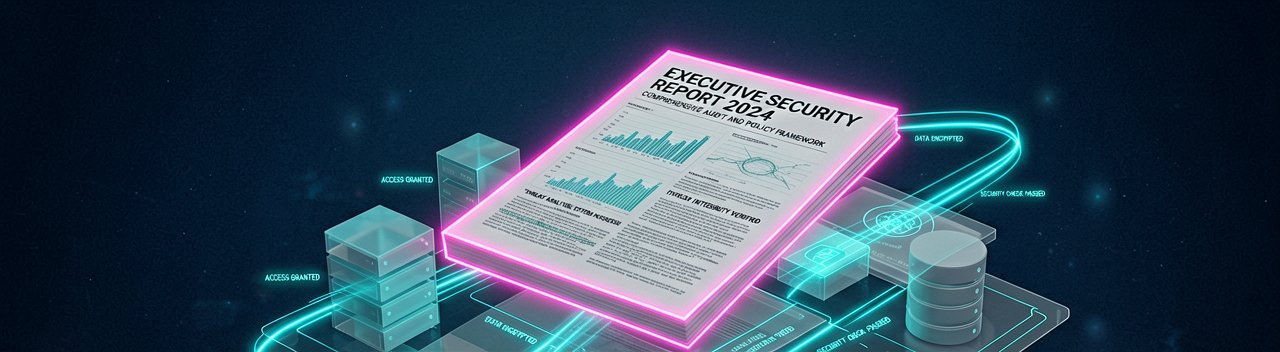
When leadership teams ask whether automated pipelines are secure, loose promises won't cut it with auditors. The system answers this by generating an on-demand, executive-level PDF report summarizing precise policy configurations across the entire fleet. Because the governance parameters reside natively within the Mac architecture, companies can seamlessly stream logs into existing SIEM platforms. This shifts the entire security discussion from fragile assumptions to verified, audit-ready data.
The Architectural Shift from Network Perimeter to Apple Silicon Endpoint
What most standard product announcements miss is the underlying architectural war being waged between legacy network proxies and modern endpoint hardware. For nearly a decade, enterprise security relied on intercepting traffic at the firewall or through secure web gateways to police what data left the corporate network. But the rise of specialized Apple Silicon, packed with highly efficient Neural Engines, completely scrambles that playbook. Developers and data scientists are no longer just querying cloud-hosted APIs; they are running quantized, multi-billion parameter large language models right on their local MacBook Pro hardware. When an engineer spins up a local model to analyze proprietary source code, a cloud-level filter never even sees the traffic, leaving a massive visibility gap that Jamf's native endpoint integration aims to close.
By shifting the control plane directly onto the macOS kernel and system architecture, administrators can finally monitor telemetry that network tools are blind to. This includes tracking Model Context Protocol (MCP) servers, which act as local data pipelines connecting desktop apps to remote AI brains. When an application attempts to index a local directory or read a clipboard to feed an intelligence prompt, the native control plane can evaluate the request against company compliance profiles in real-time. It is a pragmatic response to a reality where the endpoint itself has become a self-contained AI datacenter, requiring a management strategy that treats local compute resources with the same scrutiny as an external cloud database.

Balancing Developer Agility with Executive Risk Mitigation
This technological tug-of-war highlights a sharp cultural divide between aggressive engineering teams and risk-averse legal departments. Software engineers view friction-free access to automated coding assistants as a foundational requirement for modern productivity, openly warning management that heavy-handed blocks will only drive talent to companies with more permissive policies. Conversely, Chief Information Security Officers point to a growing graveyard of data exposure incidents where proprietary algorithms and sensitive customer data were inadvertently absorbed into public training sets. Jamf attempts to broker a peace treaty between these factions by moving away from binary 'allow or block' toggles, instead opting for granular, context-aware guardrails.
Under this tiered governance model, a junior web developer might operate under rigid parameters that restrict third-party data ingestion, while a senior data engineer is granted the latitude to test experimental runtimes within an audited sandbox. This flexibility is critical because the operational landscape shifts weekly; an AI extension that is safe today might alter its data retention policy tomorrow. By establishing a dynamic baseline, organizations can protect their intellectual property without triggering a shadow IT rebellion where frustrated developers find clever workarounds to bypass traditional corporate security measures entirely.
The Audit Trail Dilemma in the Age of Automated Workflows
Beyond the daily operational friction, the explosive growth of automated workflows has created an absolute nightmare for compliance officers and corporate boards. Standard regulatory frameworks like SOC 2, ISO 27001, and emerging international AI compliance laws demand a level of forensic logging that traditional endpoint tools simply were not built to provide. When an AI tool autonomously modifies code or generates documentation, standard event logs frequently fail to capture the specific prompt context, user intent, or underlying model weights used during the transaction. This lack of transparency turns regulatory audits into tedious, manual guessing games that put corporate certifications at serious risk.
Resolving this compliance deficit requires an automated, tamper-resistant data pipeline that bridges the gap between raw endpoint telemetry and executive-level reporting. By constantly streaming structured compliance logs directly into central Security Information and Event Management (SIEM) systems, organizations can maintain a continuous, verifiable audit trail of how intelligence models are utilized across the fleet. This shift moves enterprise AI adoption away from experimental, ad-hoc deployments and integrates it into a mature, governable corporate infrastructure. Ultimately, securing the modern enterprise requires proving to auditors and stakeholders exactly where data went, how it was handled, and that policy baselines remained uncompromised throughout its lifecycle.
The Myth of Absolute Control in a Rapidly Decoupled Ecosystem
Reading between the lines of this corporate rollout reveals a fundamental paradox that tech giants and security vendors rarely care to admit: the concept of absolute endpoint governance is chasing an ever-moving goalpost. While establishing a native control plane on macOS is a massive leap forward from brittle cloud proxies, it assumes that AI tools will continue to play by traditional operating system rules. The reality is that the artificial intelligence ecosystem is decentralizing at a breakneck pace, with developers wrapping local models into hyper-customized containers and virtualized environments that deliberately mask their underlying architecture. An IT admin might successfully secure the native desktop environment, only to realize that engineers have shifted their most data-sensitive experiments into unmanaged browser-based WebAssembly runtimes or encrypted development containers that completely obfuscate local telemetry.
Furthermore, there is a distinct contradiction in claiming day-zero security compliance for tools that rewrite their own operational blueprints on a weekly basis. When an AI vendor pushes a silent server-side update that fundamentally changes how an assistant handles local file permissions or tenant data routing, an endpoint agent can only react after the fact. This creates a dangerous window of exposure where an enterprise believes it is protected by a rigid baseline blueprint, while the underlying software has already shifted its behavior. Relying on automated tracking engines to monitor external vendor adjustments means security teams are trapped in a perpetual cycle of playing catch-up, transforming what is marketed as proactive governance into an elegant exercise in reactive damage control.
The Friction Matrix and the Inevitable Rise of Compliance Theater
This endless chase highlights the looming threat of compliance theater, where organizations deploy incredibly sophisticated tools to satisfy board members and auditors while failing to address actual user behavior. History proves that whenever corporate security introduces friction into software development workflows, developers do not suddenly become compliant; they simply become more creative in hiding their activities. Granular guardrails sound excellent in an executive presentation, but if a pre-curated security posture introduces even a minor delay in a coding pipeline, an engineer might choose to offload proprietary data to a personal, unmonitored device to get the job done. The ultimate irony is that hyper-secure corporate fleets can inadvertently incentivize the exact data exfiltration behaviors they were deployed to prevent.
Additionally, the promise of on-demand, executive-ready compliance reports creates a false sense of security at the leadership level. Presenting a clean PDF to a board of directors offers a comforting snapshot of theoretical policy enforcement, but it rarely reflects the messy, real-time realities of a distributed workforce. An enterprise might boast a flawless compliance score across its managed Mac fleet while remaining completely blind to the fact that employees are routinely copying sensitive data out of secure windows and pasting it into unauthorized web portals via secondary personal devices. True operational resilience requires looking past the polished dashboards and acknowledging that software restrictions are only as effective as the human culture supporting them.
The Realpolitik of Corporate Silicon Lock-In
Looking at the broader market implications, this aggressive push for endpoint-level AI governance serves as a convenient catalyst for deeper corporate lock-in to specific hardware ecosystems. By demonstrating that Apple Silicon can handle complex, localized policy evaluation far more efficiently than generic network alternatives, vendors are effectively handing enterprises a compelling financial and operational argument to standardize exclusively on Mac fleets. While this is a massive win for corporate standardization and hardware optimization, it leaves mixed-platform organizations in a difficult position. Security teams face the uncomfortable choice of managing fractured, disjointed policies across different operating systems or footing the massive bill required to completely migrate their remaining infrastructure over to Apple hardware.
Ultimately, this shift toward localized, hardware-dependent security architecture signals the definitive end of the platform-agnostic enterprise security era. As organizations realize that generic, cloud-first security frameworks are fundamentally inadequate for managing localized models, the pressure to align completely with a single hardware ecosystem will only intensify. The future of corporate IT will not be defined by who has the most comprehensive cloud security policy, but by which hardware vendor can bake the most robust, un-bypassable governance controls directly into the physical silicon of the machine itself.
"We have officially entered an era where corporate security teams spend millions of dollars deploying advanced artificial intelligence to watch over software developers who are using automated artificial intelligence to write code that will eventually be audited by another artificial intelligence, proving that while human productivity may be debatable, the job security for enterprise IT administrators remains entirely absolute."
Artūras Malašauskas is an AI Systems Integrator with 20+ years of production-grade web engineering experience. He has designed, shipped, and scaled enterprise Python/PHP systems for logistics, SaaS, and public-sector clients. For the past year, he has focused exclusively on AI integrations: deploying open-source LLMs, building generative media pipelines (image, audio, video), and engineering multi-agent workflows for real production environments. His standard: reproducibility, security, cost-efficient inference—no vaporware. He documents and evaluates emerging AI tooling, separating verified capabilities from marketing noise. Technical editor at: muza-ai.eu, ai-verslas.lt, ai-naujinos.lt Connect on LinkedIn
Comments