Tech Mahindra and Microsoft AI Digital Twin Redefines Enterprise Network Optimization
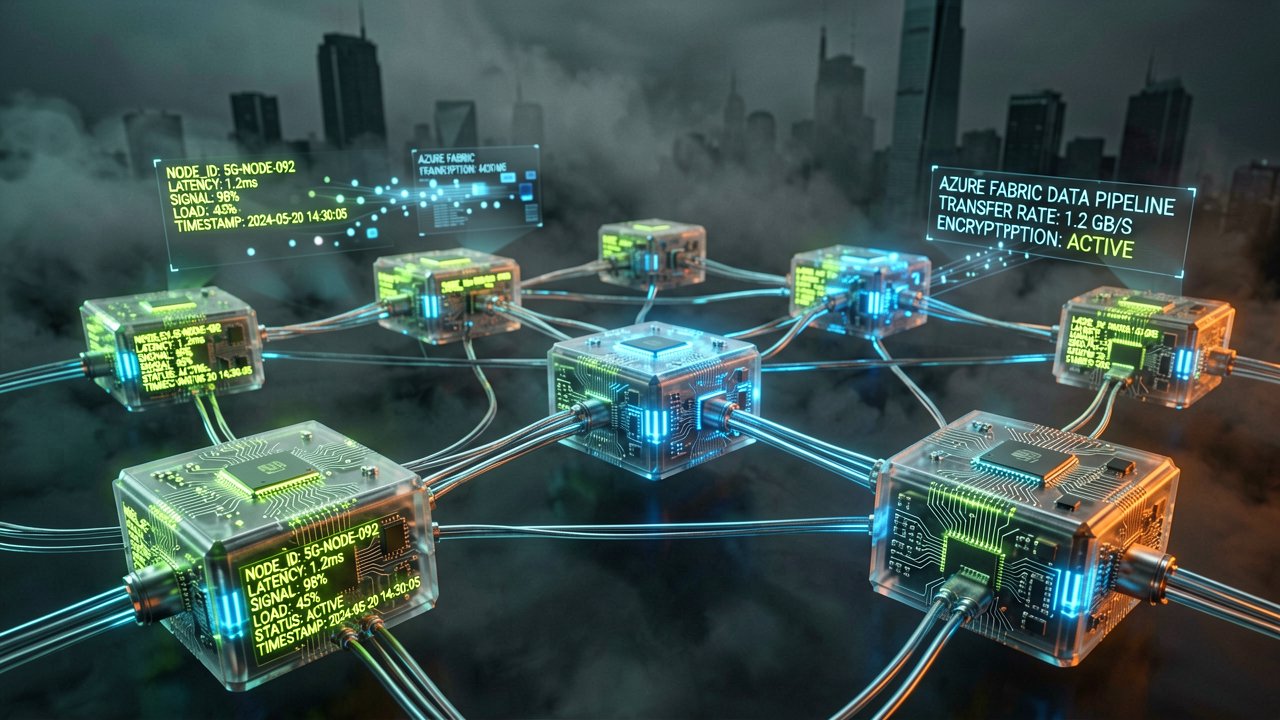
The telecommunications and enterprise infrastructure landscapes are undergoing a fundamental shift toward automated, self-healing architectures. Tech Mahindra has officially announced a landmark collaboration with Microsoft to showcase an advanced, AI-driven 5G Network Digital Twin solution, according to a press release hosted by PR Newswire. This strategic alliance merges Tech Mahindra’s deep telecommunications domain expertise with Microsoft’s enterprise-grade cloud, data infrastructure, and AI ecosystems to address growing operational complexities within multi-vendor network environments.
Historically, enterprise network management relied on passive monitoring tools and isolated traditional simulation models. This new solution consolidates high-volume network telemetry into a real-time, AI-ready data estate by integrating Microsoft Azure, Microsoft Fabric, and Azure Digital Twin services, as reported by ET CIO. By transforming digital twins from simple visual representations into active, autonomous decision-making engines, the collaboration enables communication service providers to transition to cloud-scale infrastructure management equipped with semantic intelligence.
The partnership highlights a broader market trend where major telecom operators shift toward agentic AI frameworks to automate operations. Industry reporting via ThePrint notes that the platform embeds Microsoft Foundry, Fabric IQ, and advanced orchestration layers. This specific configuration allows medium- and large-scale operators to deploy autonomous reasoning and closed-loop mitigation strategies across live network environments, protecting strict enterprise service level agreements (SLAs).
Market Impact and Monetization Prospects
The launch introduces immediate commercial opportunities for infrastructure monetization, particularly regarding high-margin enterprise services. Telecom providers can leverage the twin architecture to support SLA-driven offerings such as dynamic network slicing and edge computing orchestration. Enhanced real-time risk prediction and service assurance allow operators to guarantee performance parameters that were previously too risky or complex to manage manually over shared public or private infrastructure.
Strategic Shift to Autonomous Agentic Frameworks
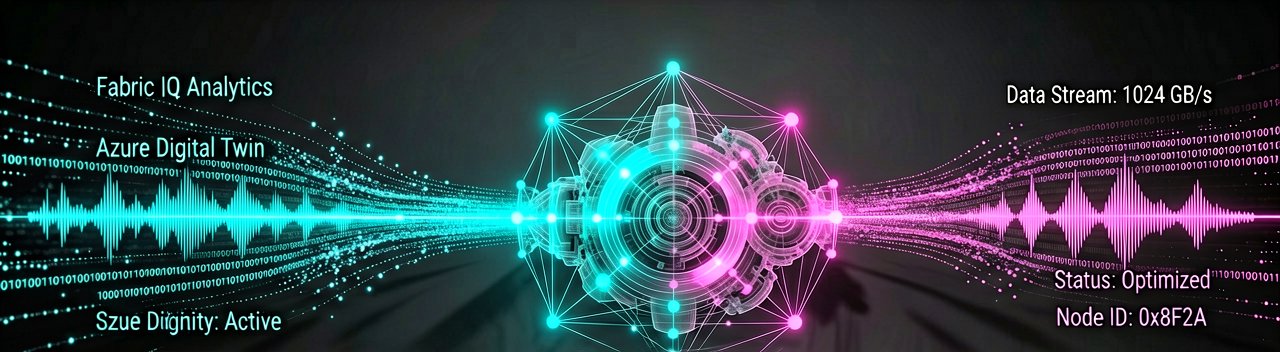
The core technological evolution within this digital twin model lies in the deployment of agentic AI. Unlike classic automation scripts that execute pre-defined, rigid instructions, agentic AI frameworks are capable of independent reasoning and simulation within a virtualized model of the live network. This enables the platform to predict infrastructure anomalies, model the downstream ripple effects of configuration updates, and execute fixes autonomously without human intervention, reducing both operational overhead and critical downtime.
Optimizing Enterprise Infrastructure Investments
Beyond daily network troubleshooting, the cloud-scale digital twin serves as a macroeconomic asset planning platform. By reflecting an accurate semantic model of multi-vendor hardware deployments, the system allows executives to run data-driven simulations for lifecycle management. Operators can precisely evaluate asset utilization, strengthen operational governance, and stress-test future network expansions virtually before committing capital expenditures to physical hardware deployments.
Behind the Scenes of the Network Shift
The Operational Reality: The true disruption of Tech Mahindra and Microsoft’s network digital twin lies in how it untangles the multi-vendor realities that have historically plagued telecommunications infrastructure. For decades, communication service providers constructed networks using disparate hardware from various legacy manufacturers. This created deeply siloed data streams, requiring massive engineering teams to manually translate telemetry between competing proprietary standards. By layering an abstraction model over these physical assets, the partners have essentially created a universal translator that brings cohesion to otherwise fragmented systems.
This development represents the long-awaited fulfillment of promised network virtualization efficiencies. Early iterations of software-defined networking often fell flat because they lacked the raw processing power and granular predictive capabilities required to handle high-frequency data from millions of edge devices simultaneously. By integrating Microsoft’s distributed cloud architecture, the platform moves enterprise network management away from a purely reactive, dashboard-driven methodology toward an entirely proactive posture. Operators are now able to stress-test major configuration alterations in a virtual sandbox, eliminating the high-stakes guesswork that previously accompanied system upgrades.
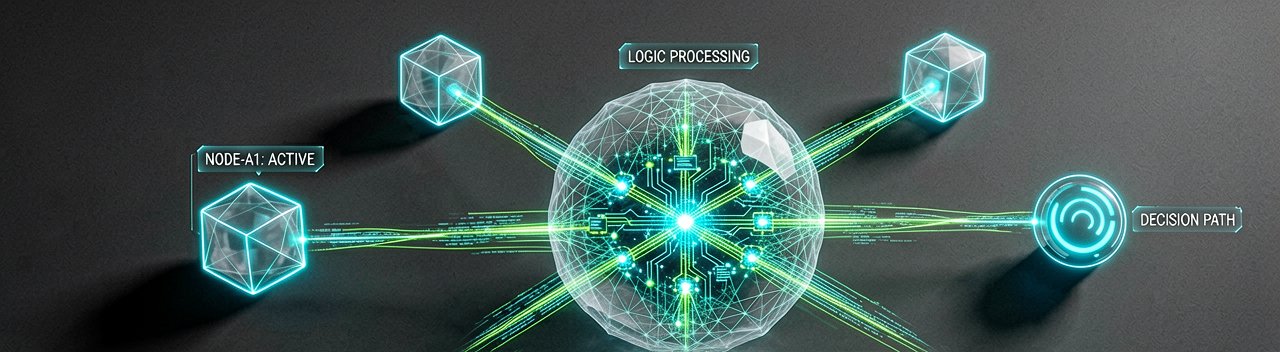
The strategic incentives behind this collaboration reflect distinct priorities for both tech giants. For Microsoft, embedding its analytical services directly into the core fabric of telecom infrastructure secures its position as the foundational cloud layer for next-generation edge applications, fending off aggressive pushes from rival hyperscalers. Meanwhile, Tech Mahindra reinforces its positioning as a high-value system integrator capable of steering complex legacy architectures through modern digital overhauls. This joint approach directly answers a growing enterprise demand for platforms that justify the massive capital investments poured into 5G rollouts.
Ultimately, the long-term viability of this platform hinges on its ability to manage the accelerating complexity of edge computing topologies. As automated factories, autonomous logistics hubs, and localized corporate networks demand microsecond latencies, traditional centralized data centers face physical scaling limitations. Moving intelligence closer to the user requires a highly dynamic network architecture that can reallocate bandwidth on the fly. This digital twin serves as the crucial orchestration layer needed to govern these volatile micro-environments, setting a new baseline for enterprise operational resiliency.
Reading Between the Lines of Autonomous Networks
The Corporate Illusion: Enterprise marketing surrounding AI-driven digital twins frequently presents a flawless vision of seamless orchestration, but a critical evaluation reveals significant operational friction points. The promise of automated network optimization relies entirely on the assumption that enterprise data estates are clean, unified, and immediately accessible. In reality, most Tier-1 operators sit on decades of unstructured data, conflicting database schemas, and legacy hardware interfaces that actively resist standardization. While the partnership relies heavily on the capabilities of advanced cloud-scale AI models, the output of any autonomous system remains constrained by the systemic messiness of the real-world infrastructure it tries to mirror.
A deeper contradiction lies in the industry's rush toward autonomous, closed-loop mitigation frameworks. Enterprises are eager to adopt self-healing systems to reduce operational overhead, yet corporate risk management policies remain fundamentally incompatible with letting an unguided algorithm modify live infrastructure. Giving an AI model the authority to reallocate enterprise bandwidth or change routing protocols during a simulated failure creates an entirely new layer of systemic risk. If an autonomous model misinterprets a temporary data spike and inappropriately shifts network loads, the resulting cascading failure could easily trigger the exact service level agreement violations the platform was deployed to prevent.
Furthermore, the long-term economic model of these enterprise platforms introduces a subtle form of vendor lock-in that contradicts the open-source spirit of modern network virtualization. By binding Tech Mahindra's engineering solutions tightly to specialized cloud and analytics frameworks, operators may find themselves trapped in an expensive data ecosystem. The cost savings achieved through automated efficiency could easily be eclipsed by escalating consumption fees required to process massive, continuous streams of network telemetry. As these twins become essential to daily corporate operations, the freedom to migrate to alternative service providers disappears entirely.
The success of this collaborative venture will ultimately be measured by its stability under stress rather than its performance in controlled laboratory demonstrations. True network optimization is not a static math problem to be solved once, but a continuous battle against unpredictable real-world variables, ranging from unexpected hardware degradation to sophisticated cyber threats. Until these agentic frameworks can reliably prove they can handle chaotic edge-case scenarios without human supervision, the digital twin remains an expensive diagnostic tool rather than a fully autonomous network coordinator.
Deploying autonomous AI to manage legacy telecom infrastructure is a bit like putting a self-driving system into a vintage car; it works beautifully until the software realizes the brakes are entirely mechanical, the dashboard is held together by tape, and the mechanics who understand how it actually runs retired three years ago.
Artūras Malašauskas is an AI Systems Integrator with 20+ years of production-grade web engineering experience. He has designed, shipped, and scaled enterprise Python/PHP systems for logistics, SaaS, and public-sector clients. For the past year, he has focused exclusively on AI integrations: deploying open-source LLMs, building generative media pipelines (image, audio, video), and engineering multi-agent workflows for real production environments. His standard: reproducibility, security, cost-efficient inference—no vaporware. He documents and evaluates emerging AI tooling, separating verified capabilities from marketing noise. Technical editor at: muza-ai.eu, ai-verslas.lt, ai-naujinos.lt Connect on LinkedIn
Comments