The Only Tech Giant Shipping with Teething Accessories: How Valve Perfected the Art of the ‘Baby-Proof’ Warranty
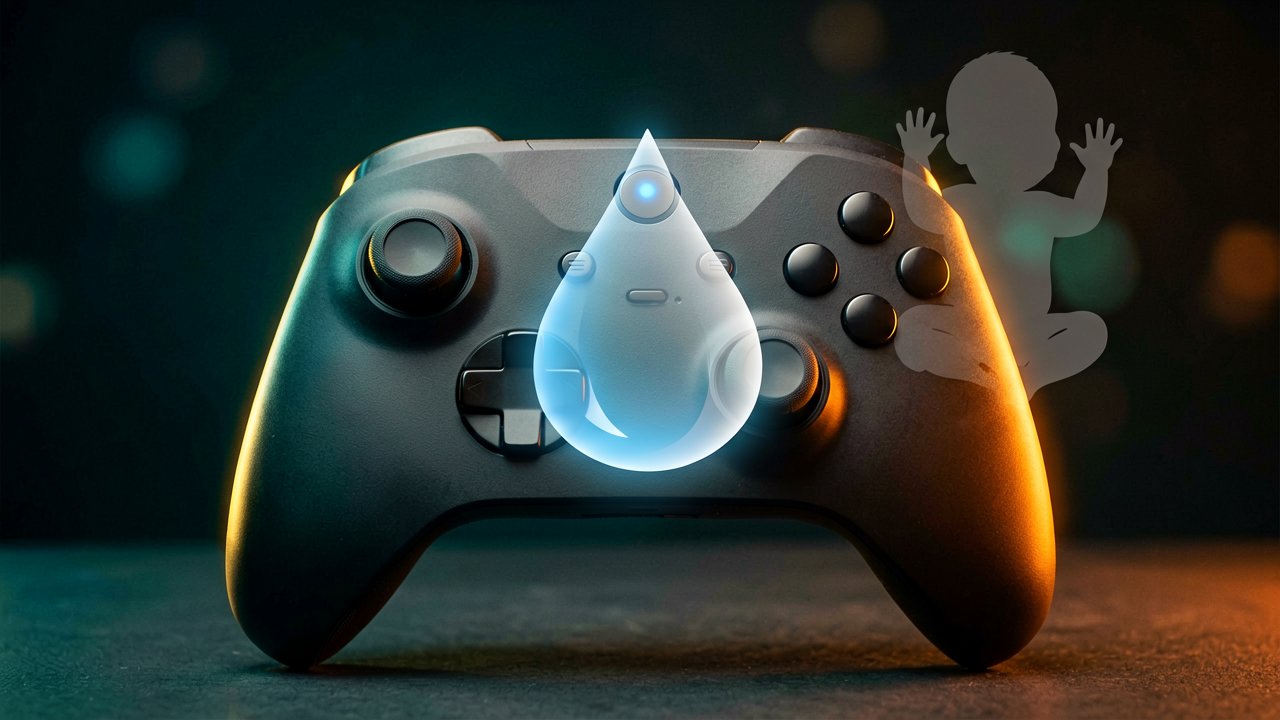
Hardware warranties usually exist to protect a company from its customers, operating as corporate shields wrapped in dense legalese designed to prove that whatever broke was entirely your fault. If you drop a premium handheld down a flight of stairs or spill morning coffee across its motherboard, you expect the standard, cold rejection from customer service. Yet, every so often, a company decides to throw out the script and treat the people buying their products like actual human beings navigating the messy reality of daily life. Case in point: a disgruntled parent recently reached out to Valve after their newborn child completely destroyed a crucial piece of gaming gear, only to find that the studio behind Half-Life has effectively pioneered the industry's first unofficial "baby-proof" warranty.
The incident, which quickly captured the internet's attention and even earned a nod from Military.com for the company’s uniquely aggressive commitment to customer satisfaction, began with a domestic disaster. A Reddit user known as AHappyGummyWormx posted about a harrowing rite of passage for any gaming parent when his newborn vomited all over his official Steam Deck case. Preferring the tailored fit of the first-party protective shell over generic options found at the store, the dad reached out to Valve support with a modest request: he simply wanted to know if he could purchase a standalone replacement. Instead of sending a billing link or a polite refusal, Valve did him one better, instantly shipping out a brand-new, official replacement case free of charge without even being asked, as detailed by GamesRadar.
Building Lifelong Fandom Through Biohazards
It’s a deceptively simple gesture that highlights a massive gap in how modern tech conglomerates interact with their communities. While industry peers routinely fight consumers over the right to repair or lock basic troubleshooting behind premium subscription walls, Valve treats bizarre household accidents as opportunities to secure lifelong brand loyalty. By shipping out a clean accessory to replace one ruined by an unpredictable infant, they didn't just solve a minor hardware issue; they acknowledged the chaotic reality of their audience's lives. It turns out that the best way to keep players anchored to an ecosystem isn't aggressive digital rights management or exclusive software locks, but making sure they know someone has their back when life gets messy.
In an era where customer service is increasingly outsourced to tone-deaf AI bots and rigid automated scripts, Valve's radically human touch feels like a transmission from a different timeline.The Digital Dividend of Analog Empathy
The ultimate irony of Valve’s customer service triumph is that it succeeds by ignoring the playbook of every other billion-day hardware manufacturer on earth.The True Cost of Corporate Generosity
"In a world where buying gadgets feels increasingly like signing a temporary peace treaty with a hostile corporation, Valve reminds us that the best way to secure a customer for life is to remember they actually have one."
Artūras Malašauskas is an AI Systems Integrator with 20+ years of production-grade web engineering experience. He has designed, shipped, and scaled enterprise Python/PHP systems for logistics, SaaS, and public-sector clients. For the past year, he has focused exclusively on AI integrations: deploying open-source LLMs, building generative media pipelines (image, audio, video), and engineering multi-agent workflows for real production environments. His standard: reproducibility, security, cost-efficient inference—no vaporware. He documents and evaluates emerging AI tooling, separating verified capabilities from marketing noise. Technical editor at: muza-ai.eu, ai-verslas.lt, ai-naujinos.lt Connect on LinkedIn
Comments