The Melo-D Debacle: Why AI-Infused Guitars Might Be Music's Plastic Waste Crisis
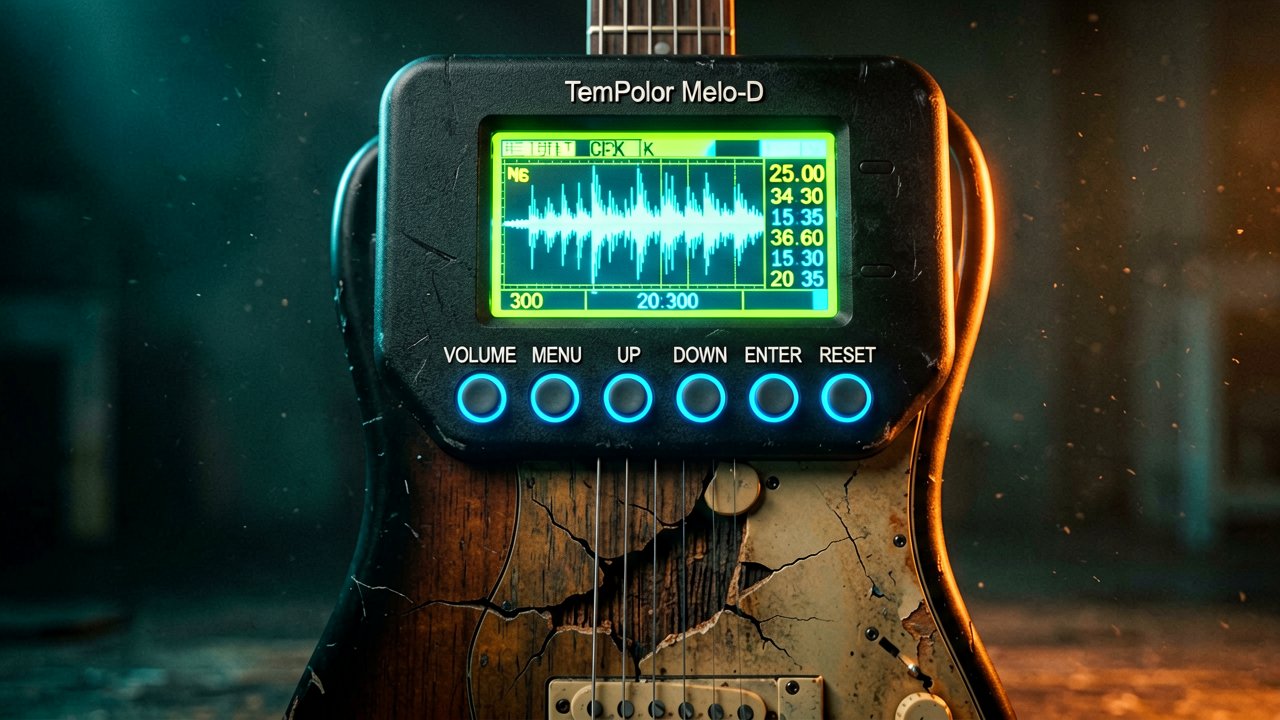
Walk into any pawn shop or garage sale and you will find them. Guitars that have been loved, beaten, scratched, and infused with the sweat of someone trying to capture a feeling. They are made of wood, wire, and intent. Now, contrast that with the TemPolor Melo-D, a device boldly heralded as the world's first generative AI guitar. It promises to bypass the calluses, skip the agonizing months of practice, and deliver instant musical gratification through an algorithm. But strip away the flashy marketing bluster, and you are left staring at a deeply cynical shortcut that feels less like the future of art and more like a looming environmental catastrophe wrapped in a 4.8-pound shell of PC and ABS plastic.
Art has always been about the graft making the craft. We find meaning in the struggle of learning an instrument, but the Melo-D flips that entirely on its head by substituting human effort with a large language model. You hum a vague melody into its built-in microphone, and the proprietary AI engine spits out a fully formed guitar solo or an entire song. To actually "play" it, you simply follow a grid of rainbow LED lights illuminating a fretboard that replaces traditional strings with squishy, rubberized buttons. It turns the profound act of musical creation into a glorified, high-stakes game of mobile rhythm taps. Instead of empowering creators, it treats them like passive operators of a software suite housed inside a guitar-shaped toy.
The Fast Fashion of Music Gear
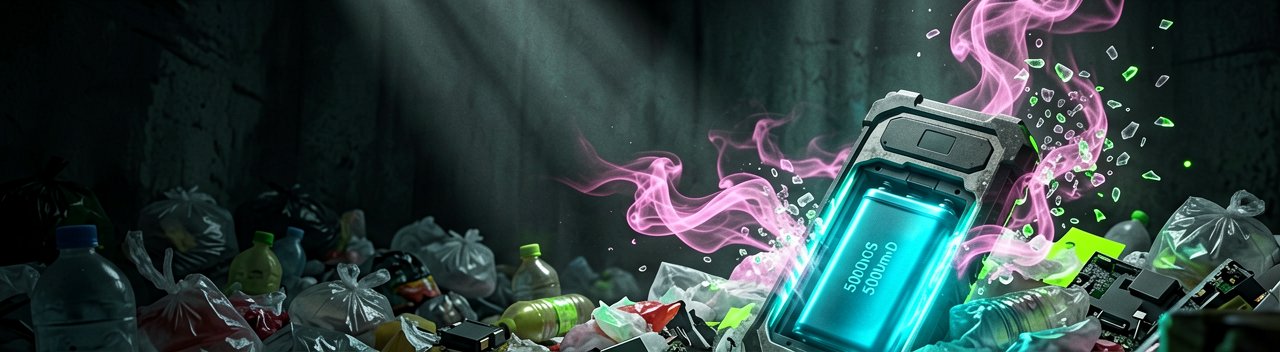
The core issue here is not just that the music feels hollow; it is that the hardware itself is inherently disposable. Traditional instruments can last for generations, gaining character and value as they age, but smart gadgets have a notoriously short shelf life. The Melo-D relies heavily on a 2.4-inch LCD touchscreen, Wi-Fi connectivity, and a companion app to function properly. When the internal 5000 mAh battery inevitably degrades, or when the company servers eventually go dark, this $599 instrument will immediately lose its brains. Industry critics at Guitar.com have already rightly slammed the device as a cynical waste of time and plastic, pointing out that it targets a hyper-casual crowd likely to abandon it the moment the novelty wears off.
When an electronic gadget built on fleeting AI hype loses its luster, it does not sit lovingly in a case waiting for a second life. It gets thrown straight into a landfill. By lowering the barrier to entry to absolute zero, we are not creating a new generation of dedicated musicians. Instead, we are manufacturing high-tech landfill fodder disguised as innovation. Music deserves better than automated algorithms, and our planet certainly deserves better than more unrecyclable plastic e-waste masquerading as creative liberation.
The Short Life of Disposable Innovation
The ultimate cost of automated creativity will not be counted in dollars, but in tons of toxic e-waste and silent bedrooms.A Better Path Forward for Music
"The greatest danger of the AI guitar isn't that it will replace the next Jimi Hendrix, but that it will convince a million potential musicians to settle for a plastic toy that does the dreaming for them."
Artūras Malašauskas is an AI Systems Integrator with 20+ years of production-grade web engineering experience. He has designed, shipped, and scaled enterprise Python/PHP systems for logistics, SaaS, and public-sector clients. For the past year, he has focused exclusively on AI integrations: deploying open-source LLMs, building generative media pipelines (image, audio, video), and engineering multi-agent workflows for real production environments. His standard: reproducibility, security, cost-efficient inference—no vaporware. He documents and evaluates emerging AI tooling, separating verified capabilities from marketing noise. Technical editor at: muza-ai.eu, ai-verslas.lt, ai-naujinos.lt Connect on LinkedIn
Comments