Algorithmic Autonomy: Boy George and the New Era of Ethical AI Re-Recordings
The music industry is entering a definitive shift in the battle for intellectual property control as Culture Club frontman Boy George launched a new tech venture named Artist Included. This platform offers legacy musicians an artificial intelligence-driven mechanism to reclaim ownership of their catalog. To mark the debut, Boy George released a newly recorded, AI-enhanced iteration of the 1983 global hit "Karma Chameleon," a track that spent weeks atop charts worldwide but left its creator with minimal commercial equity due to decades-old master recording agreements. This corporate blueprint presents a high-tech alternative to the traditional "Taylor's Version" approach, aiming to disrupt how legacy masters are valued, licensed, and monetized.
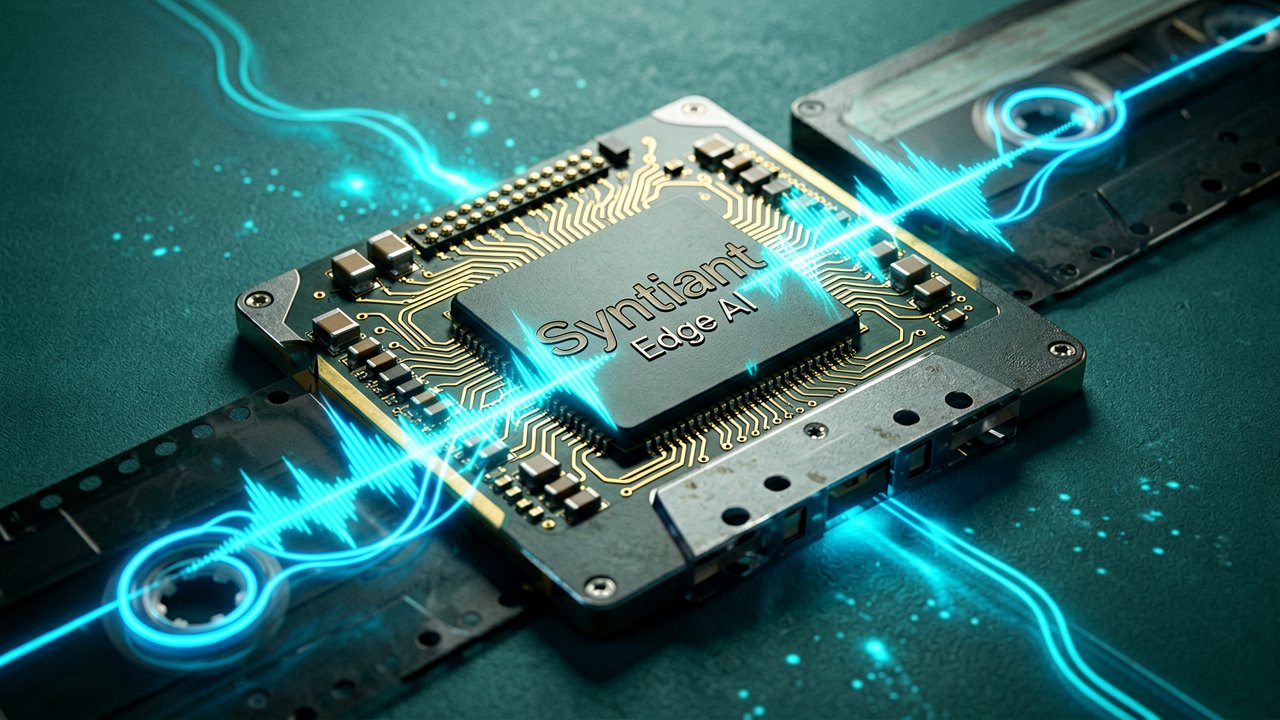
The operational framework relies on ethical voice synthesis rather than generative prompt modeling, setting a critical legal and financial precedent. For the new track, Boy George recorded fresh vocal stems in a modern studio environment while the hardware platform—powered by edge-AI semiconductor firm Business Insider—calibrated his vocal presentation to mirror the acoustic dynamics of his 22-year-old voice. To maintain absolute structural fidelity, original producer Steve Levine supplied archival studio demos to train the underlying models safely. This highly precise technique produces a master that acts as a true market-competing alternative to the original asset owned by legacy record labels.
The Economics of the Synthetic Master
The core motivation behind this model is financial equity rather than mere creative exploration. A recent sync licensing arrangement for "Karma Chameleon" generated millions for the underlying master rights holders, while the creator received only nominal compensation. By leveraging Rolling Stone data, legacy artists can see exactly how the traditional system cuts out the actual authors during commercial syncs in television, cinema, and brand advertisements.
Artist Included directly targets this imbalance by engineering near-identical recordings. This allows the newly formed entities to bypass label-held masters entirely when corporate buyers seek sync licenses. Major publishers are acknowledging this transition; for instance, entertainment giant PEOPLE reports that BMG is handling the global distribution of this reborn version, confirming that major industry pillars are willing to work with authorized AI assets.

Redefining IP and Legacy Control
The launch marks a transition from defensive anti-piracy litigation to offensive market participation. For the past several years, corporate labels have focused heavily on blocking unauthorized voice clones and generative musical models. Artist Included flips this dynamic by establishing explicit, artist-backed consent as the primary engine for tech integration. Moving forward, legacy artists over a certain age can circumvent physical vocal decline, giving them the power to secure financial sovereignty over their creative legacies.
The Mechanical Architecture of Legacy Reclamations
Beyond the Studio Stems: The mechanical implementation of Artist Included represents a fundamental shift away from the typical deepfake vocal cloning tools currently rattling the major music conglomerates. Unlike consumer-facing web apps that simply overlay a generic vocal filter onto a pre-existing track, this process requires deep historical cooperation and pristine source material. Original producer Steve Levine supplied the actual multi-track tapes from the 1983 recording sessions, which allowed engineers to isolate the individual acoustic fingerprints of the original instruments. By training the proprietary AI models specifically on these isolated 24-track analog masters, the technology captured the subtle room acoustics, microphone characteristics, and production nuances that defined the original record's identity.
This strict methodology addresses a massive commercial obstacle that has historically plagued the "Taylor's Version" approach to catalog re-recordings. When Taylor Swift embarked on her ambitious project to re-record her first six albums, she had to recruit live musicians, book world-class rooms, and spend months attempting to recreate the lightning-in-a-bottle energy of her youth. Even with massive financial backing, small differences in tempo, modern digital mixing, and vocal maturation meant the new versions sounded distinct from the originals. The AI architecture used for the new version of "Karma Chameleon" removes this variance by mathematical precision, ensuring that commercial music supervisors who want the specific vintage sound can license the new, artist-owned asset without alienating consumers who expect to hear the exact 1983 performance.
The strategic deployment of edge-AI hardware also alters the cost-to-benefit equation for legacy acts who may no longer possess the physical endurance for grueling studio sessions. Boy George only needed to supply brief, contemporary vocal performances to establish a modern framework of pitch and timing data. The local hardware platform then took over, handling the heavy algorithmic lifting required to map his current phrasing onto the youthful timbre captured in the training data. This workflow opens the door for hundreds of aging or retired artists to effectively clone their prime vocal eras with minimal physical effort, transforming an artist's past physical peak into a permanently accessible, monetizable asset.
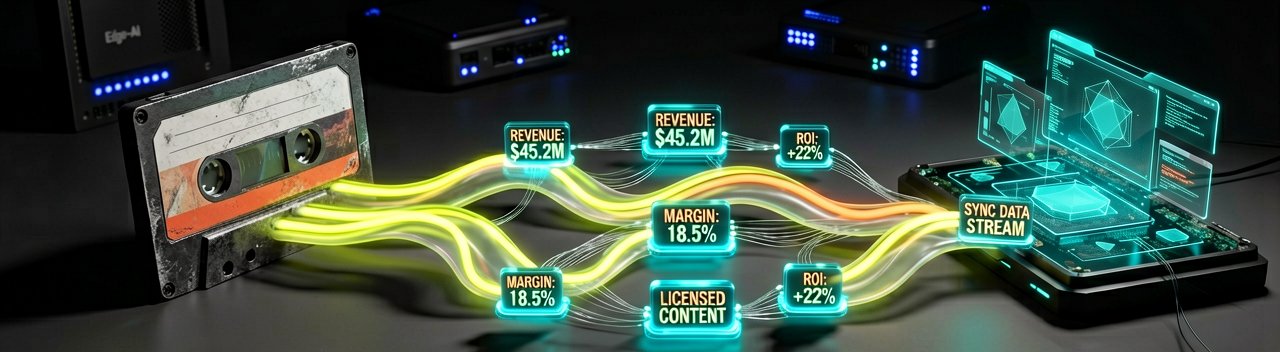
However, this technological leap introduces distinct systemic friction within the industry's traditional power structures. Major record labels, which have spent decades profiting off the exclusive ownership of master recordings, now face a future where their most lucrative catalogs can be structurally duplicated with perfect legality under the guise of new creations. Because the underlying musical compositions are distinct from the specific sound recordings, an artist who retains or controls their publishing rights can freely approve these AI re-recordings. This leaves the original label holding an incredibly expensive, historic asset that no longer maintains a monopoly on the market for that specific listening experience.
Ultimately, this development forces a complete reassessment of what constitutes an authentic musical performance. Traditionalists argue that removing the physical reality of an artist's current age erases the natural evolution of a performer's career, turning live art into a static corporate product. Conversely, for creators who were trapped in predatory contracts during the vinyl era, the technology provides a form of digital restorative justice. By decoupling an artist's voice from the physical limitations of aging and the legal shackles of old recording contracts, the music industry is transitioning into an era where identity, ownership, and technology are permanently intertwined.
The Paradox of Synthetic Authenticity and Market Friction
Reading Between the Lines: The celebratory narrative surrounding AI-driven catalog reclamation obscures a deeper, more systemic contradiction within the music industry's current legal framework. While platforms like Artist Included promise to liberate legacy acts from predatory twentieth-century contracts, they simultaneously commodify the very concept of artistic authenticity. The financial viability of these synthetic masters hinges entirely on their ability to perfectly mimic the past, forcing living artists to compete directly against the idealized ghosts of their younger selves. This creates an existential loop where a performer's primary commercial asset is no longer their ongoing creativity, but rather their ability to algorithmically counterfeit a frozen, decades-old cultural moment.
This technical workaround also faces an impending bottleneck within the mechanics of publishing administration and synchronized licensing. While an artist can easily authorize a new sound recording if they hold a share of the underlying composition, most legacy hits are entangled in complex, multi-writer publishing splits. If a former bandmate, disgruntled co-writer, or institutional publishing fund objects to the deployment of artificial intelligence, the entire synchronization strategy collapses. Major labels are already modifying their standard contracts to include sweeping "non-replication" clauses, explicitly banning signed talent from ever training AI models on their vocal stems, effectively closing the window for future generations before it even opens.
Furthermore, the reliance on major distribution hubs like BMG to push these synthetic masters into the mainstream introduces a glaring corporate irony. The industry is witnessing a scenario where institutional power players are enthusiastically monetizing the very technology they spend millions of dollars lobbying against in legislative chambers. This selective endorsement reveals that the entertainment complex's primary objection to artificial intelligence was never ethical or philosophical, but rather a simple question of revenue distribution. Once the financial pipelines are safely rerouted through established corporate channels, the alleged threat to human creativity is swiftly rebranded as an innovative triumph of digital autonomy.
The long-term macroeconomic consequence of this trend is a highly congested marketplace where living, aging artists actively depress the value of emerging talent. When algorithmic replicas can endlessly generate "new" iterations of established, low-risk cultural hits, streaming algorithms and corporate music supervisors have even less incentive to invest in unproven contemporary creators. By weaponizing advanced technology to claw back their financial legacies, the vanguard of the classic rock and pop eras may inadvertently starve the next generation of the financial resources required to build a legacy of their own.
"The ultimate irony of the digital age is that musicians are finally achieving absolute creative immortality, only to discover that their primary career obligation is to spend eternity acting as their own tribute band."
Artūras Malašauskas is an AI Systems Integrator with 20+ years of production-grade web engineering experience. He has designed, shipped, and scaled enterprise Python/PHP systems for logistics, SaaS, and public-sector clients. For the past year, he has focused exclusively on AI integrations: deploying open-source LLMs, building generative media pipelines (image, audio, video), and engineering multi-agent workflows for real production environments. His standard: reproducibility, security, cost-efficient inference—no vaporware. He documents and evaluates emerging AI tooling, separating verified capabilities from marketing noise. Technical editor at: muza-ai.eu, ai-verslas.lt, ai-naujinos.lt Connect on LinkedIn
Comments