Cursor Launches iOS App, Unlocking AI Coding Agents on the Move
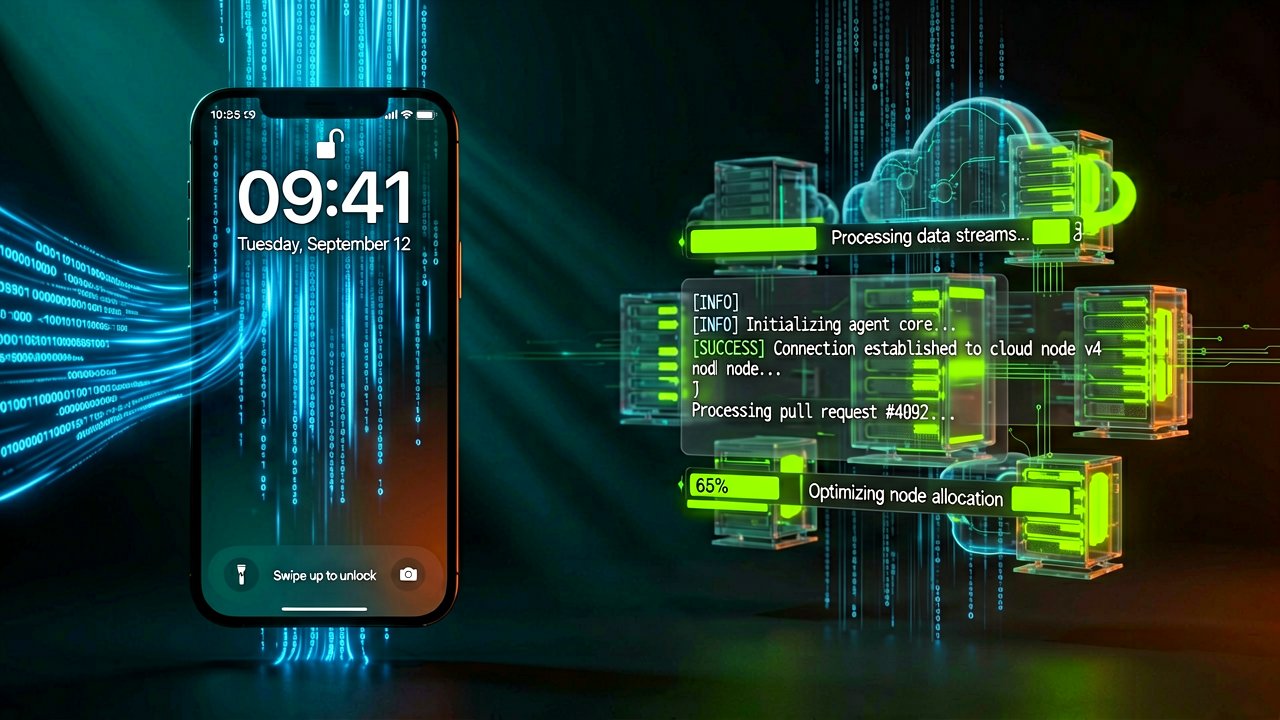
The boundary between a fully realized development environment and a smartphone has officially dissolved. Anysphere, the software outfit behind the widely popular AI code editor Cursor, has released its native iOS app in public beta. Announcing the launch on the official Cursor Blog, the company is attempting to pivot the very nature of software development away from keyboard dependency. Instead of manually typing syntax on a touchscreen, developers can now spin up, monitor, and deploy autonomous AI coding agents directly from an iPhone.
This mobile rollout arrives on the heels of a massive industry shift, coming shortly after SpaceX acquired Cursor in a major corporate play. Rather than forcing engineers to peck out lines of complex logic on a glass pane, the new app treats the phone as a high-level command center. Users can pick a repository, dictate tasks using voice or text, and command cloud-based agents running inside isolated virtual machines. Alternatively, a remote-control feature allows developers to check in on scripts currently executing on their home or office desktops.
Supervision Over Syntax
By leveraging iOS features like Live Activities, Cursor ensures engineers do not have to keep the app actively open. The lock screen displays real-time updates as the agent modifies the codebase, notifying the user when the job is complete, when it encounters an issue, or when it requires human intervention. Once a task finishes, developers can review pull requests, read terminal logs, inspect generated visual artifacts, and merge code straight into production. It represents a significant step toward an automation revolution where mobile software creation is defined by oversight rather than pure manual execution.
What Most Reports Miss: The shift to mobile isn't just about coding on a smaller screen; it's a fundamental recalculation of how software engineers allocate their time and attention. Historically, localized environments tied developers to multi-monitor workstations, effectively chaining productivity to a desk. By decoupling execution from the physical machine and introducing headless cloud environments, Cursor is leaning into a reality where typing code becomes secondary to orchestration. Early metrics indicate the transition is yielding immense financial fruit, with Bloomberg noting that the startup’s recurring revenue recently doubled to a staggering $2 billion as enterprise adoption catches fire.

Industry veterans are tracking this trajectory closely, recognizing that the engineering landscape is rapidly dividing between those who write syntax and those who guide autonomous systems. According to Kevin Niparko, Cursor's product lead, the rise of agentic tools has forced engineers into unnatural behaviors, like carrying specialized physical peripherals just to keep a laptop half-open and awake on the go. The native iOS app serves as an intentional antidote to that hardware friction, allowing full multi-file editing agents to persist and execute tasks within isolated cloud virtual machines while the phone sits in a pocket.
The Infrastructure Play
Behind this immediate software release lies a massive, highly coordinated infrastructure play that reshapes the competitive dynamics of Silicon Valley. The rollout follows Cursor's acquisition by SpaceX in a colossal $60 billion all-stock deal designed to align the platform directly under the xAI umbrella. Through this corporate consolidation, the development team has secured access to the sprawling Colossus supercomputer cluster in Memphis. This compute pipeline is currently fueling the training of a custom 1.5-trillion-parameter frontier model, built specifically to power the next generation of agentic reasoning.
At the recent Compile developer conference, the team also unveiled Origin, a specialized Git architecture built explicitly for parallel agent commits, acknowledging that legacy source control protocols are optimized for human speeds rather than automated fleets. By pairing custom frontier models, mobile intervention points, and a re-engineered Git architecture, the platform is laying the foundation for a permanent structural shift. Software creation is decisively moving away from manual labor, transforming the modern programmer from a conventional line-writer into a high-level systems architect.
Reading Between the Lines: The grand vision of frictionless mobile programming assumes that software development is primarily bottlenecked by deployment convenience rather than cognitive bandwidth. While managing autonomous fleets from a lock screen sounds like peak efficiency, it overlooks the brutal reality of debugging complex systems. The friction isn't just about typing text on glass; it's about the deep, contextual focus required to understand why a distributed system broke at 2:00 AM. Stripping away the desktop environment may actually widen the cognitive gap between what the agent generates and what the human supervisor genuinely comprehends.
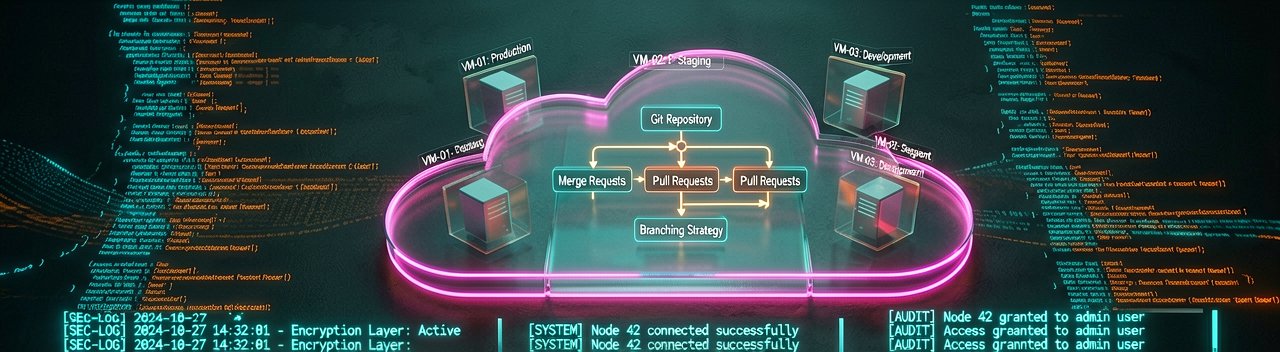
This operational disconnect introduces a glaring architectural contradiction. The newly minted Cursor mobile app relies entirely on a remote cloud infrastructure to host isolated virtual machines and execute tasks. Yet, it pitches itself as the definitive tool for developers on the move, inherently introducing a heavy dependency on flawless, low-latency mobile connectivity. The moment an engineer enters a subway tunnel, a dead zone, or an airplane cabin, the tether snaps, rendering the high-octane autonomous agent completely unreachable and useless.
The Skeptical Horizon
There is also a distinct corporate paradox at play. The platform’s meteoric rise—evidenced by a massive Forbes report tracking its rapid climb to $4 billion in annualized revenue—was fueled by deep enterprise penetration. Major corporations bought into the platform for its strict security, localized contexts, and robust desktop guardrails. Pushing those same corporate repos onto a pocket-sized iOS device, where notifications bleed together and physical security is notoriously compromised, will undoubtedly trigger a wave of red flags across corporate IT security departments.
Ultimately, this mobile pivot threatens to shift the engineering profession from a disciplined craft into a superficial game of push-notification whack-a-mole. If the ultimate destination of software engineering is simply approving PRs during a lunch queue, the industry risks creating a generation of supervisors who can monitor code, but can no longer write it. The automation revolution promises total freedom from the terminal, but it may just substitute the physical desk chair for a digital leash that never lets the engineer log off.
"We were promised that AI would give us our weekends back, but instead it just gave us the terrifying ability to deploy a massive hallucination to production while standing in line at the grocery store."
Artūras Malašauskas is an AI Systems Integrator with 20+ years of production-grade web engineering experience. He has designed, shipped, and scaled enterprise Python/PHP systems for logistics, SaaS, and public-sector clients. For the past year, he has focused exclusively on AI integrations: deploying open-source LLMs, building generative media pipelines (image, audio, video), and engineering multi-agent workflows for real production environments. His standard: reproducibility, security, cost-efficient inference—no vaporware. He documents and evaluates emerging AI tooling, separating verified capabilities from marketing noise. Technical editor at: muza-ai.eu, ai-verslas.lt, ai-naujinos.lt Connect on LinkedIn
Comments