The Automated Codebase: Rethinking Workforces and Quality Standards in the Age of AI Coding Agents
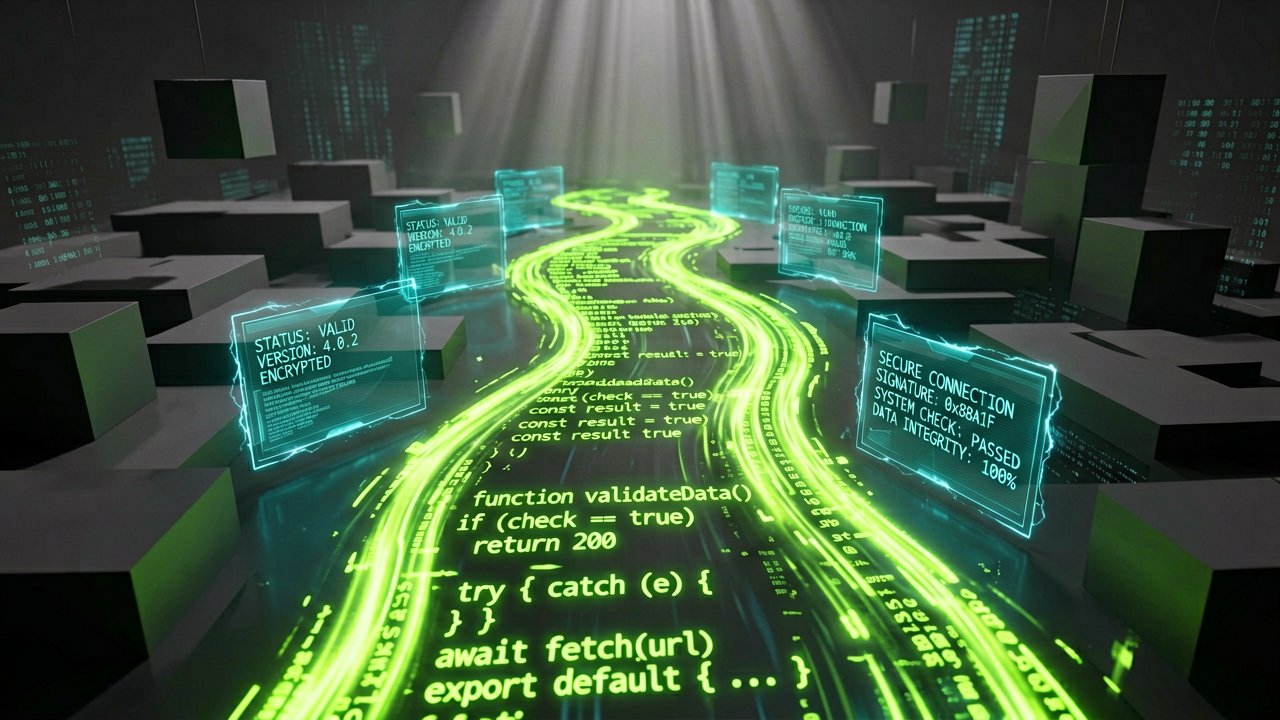
The enterprise software development lifecycle is undergoing a structural reinvention, transitioning rapidly from human-centric programming to autonomous generation. Market data highlights the scale of this paradigm shift; according to research published by , the enterprise AI coding agent market expanded to an annualized value between $9.8 billion and $11.0 billion. Driving this massive capital allocation is a fundamental change in how code is produced. Engineers are migrating away from basic, inline autocomplete extensions toward sophisticated, asynchronous agents capable of managing multi-file transformations, continuous integration tasks, and legacy refactoring independently.
This automated volume is fundamentally altering internal metrics for engineering efficiency and organizational velocity. Operational reports from major hyper-scalers underscore the reality of this automated transition; for instance, engineering teams at Google now see roughly 75% of new internal software code generated initially by artificial intelligence systems. While these tools dramatically accelerate the early phases of feature creation, they introduce a distinct downstream operational bottleneck. The sheer throughput of machine-generated code is overwhelming conventional quality gates, creating unprecedented friction across deployment pipelines and testing environments.
As organizations attempt to scale these tools, the traditional pillars of software engineering—specifically manual peer code reviews and baseline unit testing—are becoming increasingly unsustainable. The core challenge facing modern technology leaders is no longer the speed of code generation, but rather the systemic debt and security risks created by an unmanaged, high-velocity output. Engineering workflows must evolve to address this mismatch, shifting the human developer's primary objective from writing original lines of code to orchestrating, validating, and governing autonomous systems.
The Obsolescence of Traditional Peer Code Review
The standard practice of human peer review is collapsing under the weight of automated development throughput. Engineering teams leveraging advanced AI coding assistants are generating code volumes that outpace human analytical capacity, resulting in pervasive pull-request fatigue and elongated release cycles. A comprehensive analysis by McKinsey indicates that organizations capturing real economic value are abandoning isolated code-generation pilots in favor of an AI-native development model. In these advanced environments, developers move away from line-by-line manual code authorship, reorienting their responsibilities toward system architecture validation, deep security auditing, and macro-level quality management.

Compounding this operational strain is a measurable decline in the architectural integrity of autonomous outputs. While generative models excel at syntax compliance and rapid implementation, they frequently inject structurally fragile patterns that pass baseline unit tests but exacerbate systemic technical debt. Security frameworks are facing similar vulnerabilities; deep-dive surveys by Deloitte Insights reveal that over half of global technology leaders have been forced to prioritize entirely new testing and validation protocols specifically to mitigate quality risks unique to AI-driven generation. To maintain stability, organizations are compelled to shift quality assurance and security reviews much earlier into the product design and requirements stages.
Workforce Restructuring and the Skills Gap Paradox
The proliferation of autonomous engineering tools is driving a deep realignment of technical talent requirements across enterprise organizations. Industry assessments from the McKinsey Global Institute suggest that while up to 30% of current software engineering tasks will be fully automated by 2030, overall technical employment is projected to expand. The nature of this demand is highly bifurcated; repetitive implementation, boilerplate syntax writing, and basic script scripting are increasingly automated, whereas complex system architecture, cross-functional technical leadership, and domain-specific debugging demand deeper human expertise.
This structural shift has created an acute skills-experience paradox within enterprise engineering pipelines. Junior developers utilizing AI systems frequently experience accelerated initial learning curves and rapid task completion, yet they risk developing surface-level dependencies without acquiring foundational computer science competencies. Engineering leaders are consequently adjusting hiring frameworks and training programs to prioritize system-level thinking and precise technical prompting. This training ensures that emerging talent can effectively act as capable orchestrators of autonomous agents rather than passive consumers of unverified code.
The Future of the Software Development Lifecycle
The traditional, linear software development lifecycle is being replaced by highly integrated, agentic workflows that operate continuously across every phase of production. Industry forecasting by Gartner projects that by 2028, asynchronous AI coding agent workflows will drive engineering team productivity gains of 30% to 50%. Realizing these efficiency gains requires organizations to deploy agentic capabilities beyond mere code completion, embedding automated intelligence directly into the security, compliance, governance, and deployment layers where operational blockages actively occur.
As autonomous systems assume responsibility for standard execution, the competitive differentiator for enterprise engineering shifts from sheer developer headcount to organizational design and architectural control. Human engineering teams are evolving into strategic product curators, focusing their cognitive capacity on translating complex business objectives into precise functional and non-functional requirements. Software production is transitioning from a discipline centered on technical syntax construction to one defined by systemic design oversight and strict algorithmic governance.
Behind the Scenes: The Invisible Friction in the Autonomous Assembly Line
While executive suites celebrate the hockey-stick metrics of artificial intelligence throughput, engineering managers on the ground are grappling with an unspoken crisis of cognitive friction. The transition from writing code to reviewing code has fundamentally altered the developer's psychological flow state. Reading and validating code written by another entity—especially an unwearied machine that generates thousands of lines in seconds—demands a higher, more exhausting level of concentration than writing original syntax. Senior architects now find their days consumed by a relentless stream of complex pull requests, leading to a new form of technical burnout that standard engineering metrics like velocity and commit counts fail to capture.
This operational strain is forcing a quiet revolution in the tooling that surrounds the developer. Legacy version control systems and code review interfaces, built decades ago for human-to-human collaboration, are wholly inadequate for managing agentic outputs. Seasoned engineering leaders are realizing that they cannot solve an automated volume problem with manual oversight. As a result, pioneering organizations are experimenting with automated dual-agent architectures, where a separate, independently trained AI model is tasked with auditing, stress-testing, and red-teaming the code generated by the primary production agent before a human ever sees it.
From a historical perspective, this shift mirrors previous computing abstractions, such as the transition from assembly language to high-level compiled languages like C and Java. In each historical epoch, traditionalists feared a loss of optimization and deep systemic understanding, yet the industry ultimately adapted by inventing new debugging paradigms and optimization tools. Today, the stakes are notably higher because the abstraction layer is non-deterministic; the compiler is no longer a predictable rule-engine but a statistical model. This lack of predictability requires a cultural shift toward deterministic runtime verification and aggressive integration testing over static visual code inspection.
Furthermore, the long-term economic implications of this transition are reshaping vendor-enterprise dynamics. Companies that previously locked themselves into multi-year enterprise agreements with specific cloud providers are finding that autonomous agents can drastically lower the cost of platform migration, effectively commoditizing infrastructure. If an AI agent can automatically refactor an entire monolithic application from one cloud native stack to another over a weekend, vendor lock-in loses its grip. Consequently, the true value in the software ecosystem is migrating away from the underlying code infrastructure and concentrating heavily within the proprietary datasets, business logic definitions, and architectural constraints that guide the AI systems.
Reading Between the Lines: The Mirage of Infinite Productivity
The tech industry's current fixation on code generation volume exposes a profound misunderstanding of what software engineering actually entails. The prevailing corporate assumption is that doubling or tripling lines of code per hour equates to a linear increase in business value. This metric is a dangerous illusion. Software engineering has never been bottlenecked by the speed of typing code; it is bottlenecked by the speed of clear thinking, accurate problem definition, and the alignment of technical architecture with volatile human business requirements. Injecting millions of machine-generated lines into a repository does not inherently solve a business problem; it frequently just scales the surface area for bugs, vulnerabilities, and future technical debt at an unprecedented velocity.
This dynamic introduces a glaring structural contradiction within the modern enterprise: companies are simultaneously investing in AI to generate code faster, while heavily expanding budgets for AI-driven observability, automated debugging, and runtime monitoring to catch the inevitable fallout of that rapid generation. It is a closed-loop economic paradox where organizations spend capital to create a problem, only to spend more capital purchasing software to fix it. The tech stack is becoming a complex, self-referential ecosystem where machine-authored code is largely reviewed, tested, and maintained by machine-driven infrastructure, effectively reducing the human developer to a passive, bewildered spectator reading logs of an algorithmic conversation.
Furthermore, the long-term systemic stability of our digital infrastructure faces a slow-moving crisis of degradation. Generative models are trained on historical internet code repositories, meaning they excel at reproducing common, average-quality patterns. As human-authored code becomes a minority share of the global codebase, future models will inevitably be trained on data generated by previous iterations of themselves. This feedback loop risks introducing an era of architectural homogenization and systemic decay, where subtle, hallucinated edge-case errors compound over generations, resulting in brittle, hard-to-debug software systems that no living engineer fully understands from the ground up.
"We are rapidly approaching a milestone where software will be entirely built by machines that don't sleep, reviewed by agents that don't blink, and deployed to servers that don't care, leaving human engineers with the sole, prestigious task of explaining to the board exactly why the system decided to delete the quarterly database in a fraction of a millisecond."
Artūras Malašauskas is an AI Systems Integrator with 20+ years of production-grade web engineering experience. He has designed, shipped, and scaled enterprise Python/PHP systems for logistics, SaaS, and public-sector clients. For the past year, he has focused exclusively on AI integrations: deploying open-source LLMs, building generative media pipelines (image, audio, video), and engineering multi-agent workflows for real production environments. His standard: reproducibility, security, cost-efficient inference—no vaporware. He documents and evaluates emerging AI tooling, separating verified capabilities from marketing noise. Technical editor at: muza-ai.eu, ai-verslas.lt, ai-naujinos.lt Connect on LinkedIn
Comments