Arcane Producer's Wheel of Time Collaboration Signals Shift in Epic Fantasy Animation Strategy
The strategic partnership between IP rights holder iwot Studios and Variety -confirmed Arcane executive producer Thomas Vu marks a major turning point for the expansion of epic fantasy franchises. Following the cancellation of Amazon’s live-action television adaptation, this newly forged alliance aims to deliver a multi-platform ecosystem consisting of an animated television series, feature films, and a companion video game. By transitioning Robert Jordan’s 14-novel masterpiece away from the constraints of live-action production, the studio is embracing a transmedia approach meant to capture a younger, global audience while preserving the intricate lore of the original texts.
The shift highlights an evolving industry consensus that traditional live-action formats frequently buckle under the economic and logistical pressures of high-concept fantasy settings. Live-action adaptations struggle significantly with escalating CGI budgets, lengthy intervals between seasons, and the physical aging of the core cast. According to expert commentary hosted by Tech Times, high-end animation removes these limitations, presenting a highly scalable canvas where complex magic systems, massive troop deployments, and otherworldly creatures can be rendered fluidly without astronomical cost overruns.
Advanced Animation Pipelines as a Solution for Complex Magic
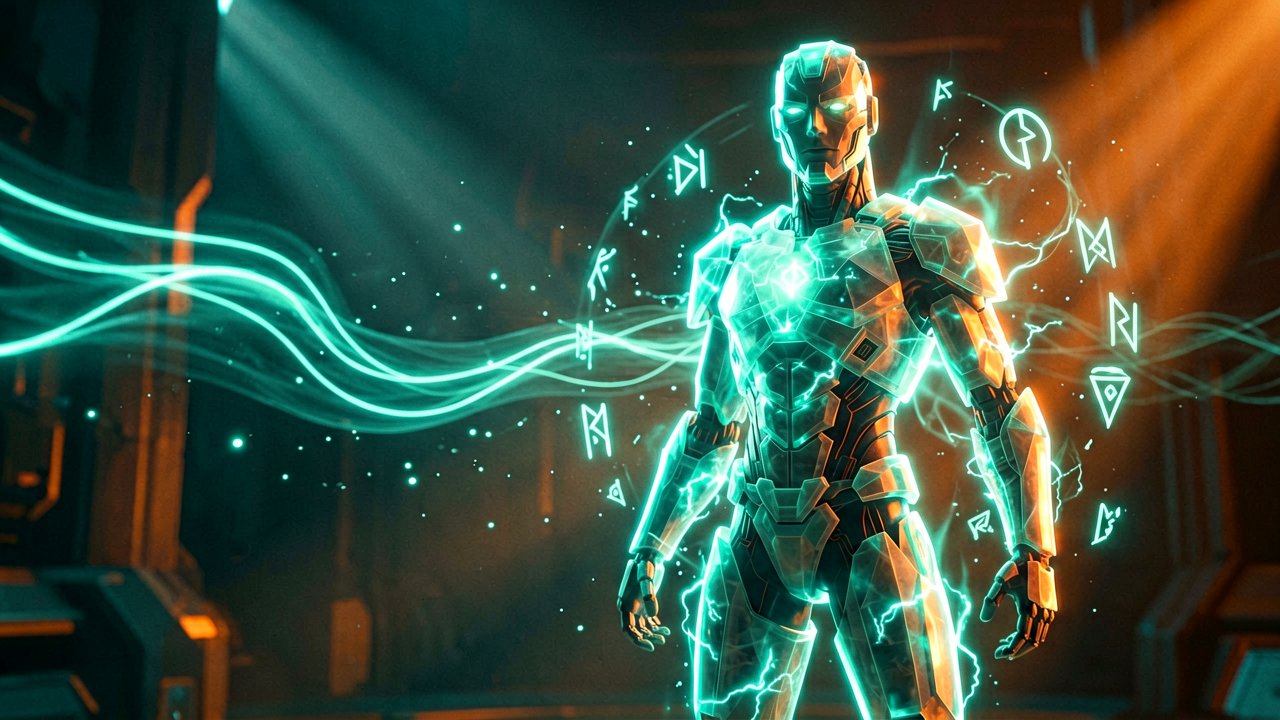
The technical methodologies pioneered in contemporary animation provide a direct blueprint for solving long-standing adaptation hurdles. Advanced pipelines mix 3D foundations with layered, hand-drawn 2D visual effects, allowing abstract concepts like the channeling of the One Power to achieve physical texture. This hybrid rendering style allows distinct magical components to run at custom frame rates separate from the environment, producing a visual contrast that live-action compositing cannot replicate efficiently. Animators can establish unique spatial rules for fantasy elements, delivering an authentic translation of written source material that respects the complexity established by the author.
The Transmedia and Cross-Platform Imperative
Modern franchise architecture requires a synchronized launch across multiple digital mediums rather than relying on a standalone television series. By co-developing a PC and mobile video game alongside the animated films and series, Initiate Entertainment and iwot Studios are designing an interactive pipeline that captures community engagement across separate platforms. This unified development structure ensures shared asset allocation, narrative consistency, and simultaneous marketing pushes. It signals a move away from isolated licensing deals toward integrated worldbuilding, cementing animation as the optimal anchor for modern, long-term intellectual property cultivation.
The Technical and Narrative Pivot Away From Live-Action Limits
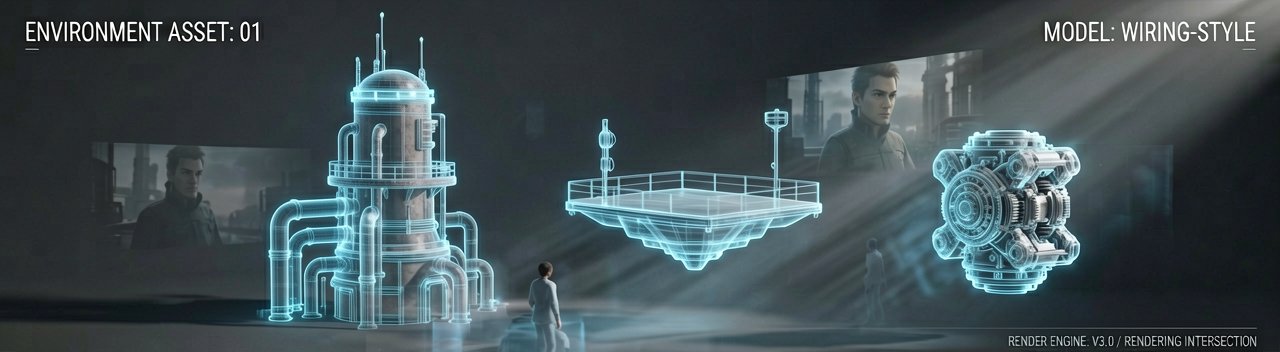
Behind the Corporate Restructuring: The sudden pivot to animation represents a calculated course correction after Amazon’s live-action series suffered from production bottlenecks and divided fan reception. Live-action fantasy epics face an inevitable logistical crisis: the multi-year gap between seasons alienates viewers, while the linear aging of a young cast clashes with a narrative timeline spanning only a few years. By resetting Robert Jordan's universe within a digital pipeline, the production teams at iwot Studios and Initiate Entertainment escape these physical constraints entirely, ensuring that characters remain visually consistent over a planned decade-long release schedule.
Thomas Vu's attachment brings the precise technical methodology that elevated Arcane from a simple video game adaptation into a critical masterpiece. Traditional live-action green-screen environments often feel detached from the actors, whereas modern hybrid animation seamlessly embeds characters into their surroundings. In Jordan's lore, the "One Power" is an omnipresent, invisible fabric woven by channelers; rendering this complex magic system requires an art style where the environment itself can warp, fracturalize, and respond to supernatural elements without breaking the immersion of the viewer.
Industry insiders view this collaboration as a direct challenge to how Hollywood conceptualizes "prestige" fantasy. For decades, live-action was deemed the only medium capable of commanding massive mainstream audiences and critical awards. However, the ballooning costs of physical set construction, practical costuming, and post-production visual effects have made live-action fantasy an existential financial risk for studios. Animation offers a predictable, highly controllable budget structure where every dollar spent appears directly on the screen rather than being consumed by logistical overhead and scheduling conflicts.
Furthermore, the decision to develop a synchronized video game alongside the animated films and series points to a deeper shift in franchise monetization. Instead of treating gaming as an afterthought or a licensed spin-off, the creators are building a shared asset pipeline from day one. This integration allows 3D environment models, character rigs, and visual effect assets to be shared between the animation studio and the game developers. This dual-threat deployment maximizes the intellectual property's reach, capturing passive viewers on streaming screens and active players on PCs and mobile devices simultaneously.
The Hidden Financial Realities of the Transmedia Gamble
Reading Between the Lines: The pivot from live-action to a sprawling, multi-platform animated universe is widely celebrated as a creative liberation, yet it introduces a punishing new set of operational risks. Hollywood frequently treats animation as a cost-effective cure-all for fantasy fatigue, ignoring the fact that prestige, hybrid 2D/3D animation requires exceptionally long production cycles. High-end pipelines do not magically accelerate the creative process; they merely exchange the chaotic, weather-dependent delays of a physical film set for the painstaking, frame-by-frame bottlenecks of digital asset rendering and complex compositing.
Furthermore, the ambitious strategy to launch a concurrent PC and mobile video game alongside the animated feature films relies on an idealized version of asset sharing that rarely survives actual production. While sharing 3D models and environment rigs between an animation engine and a modern game engine sounds economically efficient on paper, the technical requirements of an interactive gaming environment are fundamentally different from those of a linear, pre-rendered film. Game engines demand strict optimization for real-time frame rates and variable hardware, which frequently forces developers to rebuild shared assets from scratch, eroding the promised cost synergies.
There is also a distinct corporate contradiction in aiming a dense, 14-novel literary epic at a younger, global gaming audience. The core fanbase that sustained Robert Jordan’s work for decades values meticulous, slow-paced worldbuilding and internal political maneuvering—elements that are notoriously difficult to translate into fast-paced mobile gameplay or streamlined animated features. If the production simplifies the lore to capture the casual, cross-platform gamer, it risks alienating the passionate purists who form the foundational audience needed to generate initial momentum and word-of-mouth buzz.
Ultimately, this collaboration serves as a high-stakes test case for the survival of legacy intellectual properties in an oversaturated streaming market. If Thomas Vu can replicate the lightning-in-a-bottle success of his previous work, it will solidify animation as the preferred anchor for massive worldbuilding projects moving forward. However, if the project succumbs to the fragmentation that often plagues transmedia launches—where the game releases late, the films feel disconnected, and the core narrative is stretched too thin—it may prove that some fantasy worlds are simply too vast to be bound to a unified corporate template.
Adapting a massive literary epic across three different digital mediums simultaneously is a brilliant way to ensure that if the project fails, it does so with spectacular structural complexity—proving that while you can easily animate a magical fireball, managing a Hollywood multi-platform pipeline still requires a real-world miracle.
Artūras Malašauskas is an AI Systems Integrator with 20+ years of production-grade web engineering experience. He has designed, shipped, and scaled enterprise Python/PHP systems for logistics, SaaS, and public-sector clients. For the past year, he has focused exclusively on AI integrations: deploying open-source LLMs, building generative media pipelines (image, audio, video), and engineering multi-agent workflows for real production environments. His standard: reproducibility, security, cost-efficient inference—no vaporware. He documents and evaluates emerging AI tooling, separating verified capabilities from marketing noise. Technical editor at: muza-ai.eu, ai-verslas.lt, ai-naujinos.lt Connect on LinkedIn
Comments