Hyundai's AI-Powered Avante Signals Shift in Global Midsize Sedan Market Strategy
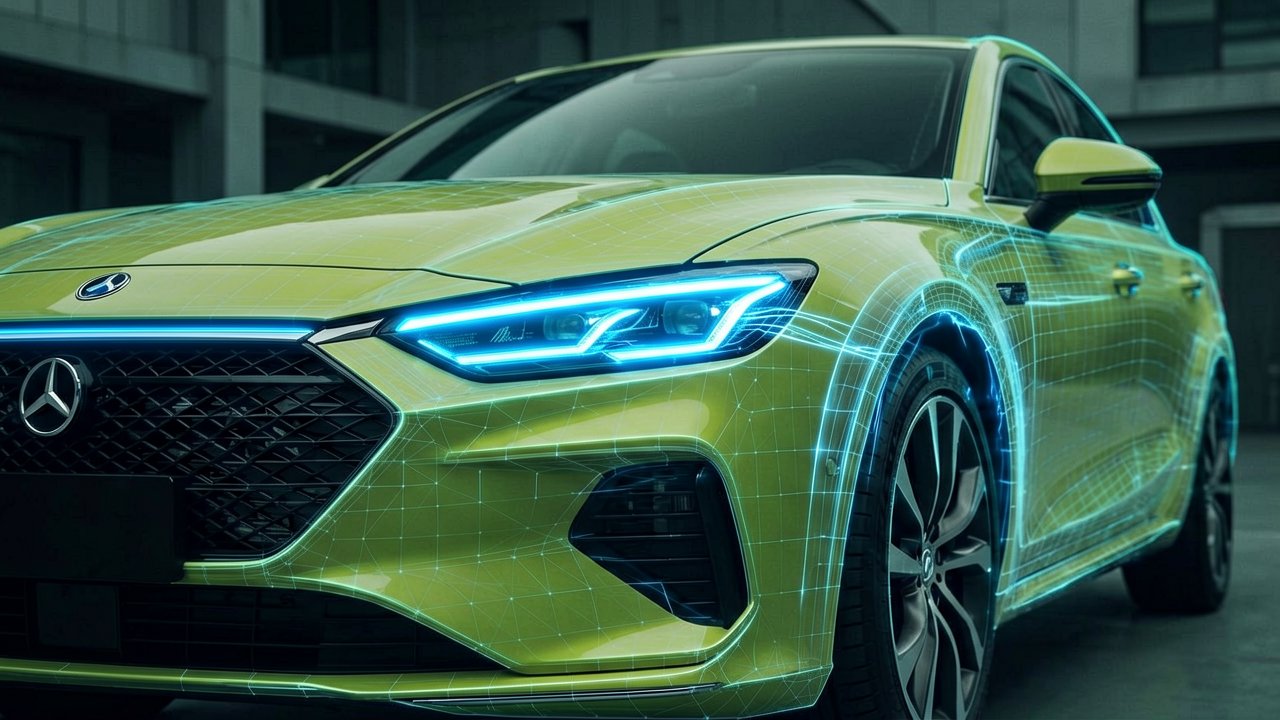
Hyundai Motor Company has officially unveiled the eighth-generation Avante at the 2026 Busan International Mobility Show, executing a strategic pivot toward software-defined vehicles (SDVs) in the traditional passenger car market. This comprehensive overhaul, arriving six years after the previous generation's launch, moves the historically compact vehicle closer to the midsize segment with expanded footprints and an aggressive aesthetic overhaul under Hyundai's "Art of Steel" design philosophy. The physical expansion directly targets evolving customer expectations for cabin space, pushing the model's dimensions to 4,765 mm in length with a 2,750 mm wheelbase, which successfully introduces midsize utilities to an affordable price bracket, as detailed by The Chosun Daily.
The core of Hyundai's strategic redirection lies within the sedan's heavily integrated artificial intelligence architecture. The vehicle features Pleos Connect, an advanced Android Automotive OS-based infotainment ecosystem originally reserved for Hyundai's flagship Grandeur sedan, according to The Korea Times. Centered around a prominent 14.6-inch touchscreen display, the platform powers Gleo AI, a large language model (LLM)-backed generative AI agent capable of contextual continuous dialogue, route planning, and real-time vehicle optimization. This deployment marks a profound market evolution: advanced automotive AI is no longer a premium luxury gatekeeper but a standardized weapon deployed in the mass-market volume sectors.
From an industrial standpoint, this tech-forward escalation serves a dual defensive purpose in global and domestic markets. Hyundai is utilizing this heavily digitized eighth-generation Avante to recapture younger consumer demographics in their 20s and 30s, countering aggressive entry-level pricing structures and tech packages offered by competing Chinese manufacturers like BYD, as noted by Maeil Business Newspaper. By synthesizing hybrid efficiency with an intelligent software ecosystem, Hyundai seeks to counter stagnant conventional sedan volumes and build a high-utility gateway product that retains brand loyalty before buyers inevitably migrate toward larger sport utility segments.
The Upscaling of Mass-Market Architecture
The eighth-generation model represents a literal and figurative stretching of the conventional automotive classification ladder. By expanding the length by 55 millimeters and widening the wheelbase by 30 millimeters, Hyundai has engineered midsize legroom into a historically compact frame, blurring traditional segmentation lines. The physical footprint is paired with mechanical refinement, offering a 2.0-liter gasoline powertrain generating 149 horsepower alongside an optimized 1.6-liter hybrid configuration delivering 157 horsepower, as documented by Yonhap News Agency . The upmarket push is finalized by an exterior featuring muscular wheel arches, a sharp Lamborghini Urus-inspired fender architecture, and distinctive H-shaped LED lighting signatures.

Pleos Connect and the Generative AI Battleground
The integration of Pleos Connect transforms the cabin into an active data terminal, emphasizing voice-driven navigation over manual menu diving. The Gleo AI engine bypasses rigid command syntax, accurately assessing natural conversations to configure climate zones, retrieve knowledge datasets, and cross-reference itinerary recommendations based on active telemetry. Furthermore, the inclusion of an open app marketplace, over-the-air (OTA) system upgrades, and specialized drive configurations—such as a battery-powered "Stay Mode" for operating climate controls while parked—validates how completely the software architecture dictates the modern mechanical package.
Industrial Implications for the Sedan Segment
Hyundai's aggressive technological injection into the Avante outlines the future survival blueprint for the global sedan. As consumer interest continues to skew toward crossovers and utility platforms, traditional passenger cars must differentiate via superior structural efficiency and digital sophistication. Rather than stripping features to hit aggressive target margins, Hyundai's deployment of next-generation driver-assistance suites—including memory-based reverse steering and navigation-linked cruise controls—establishes a baseline where entry-level vehicles are expected to match premium executive flagships in raw processing capabilities.
Silicon Over Steel: The True Margin Engine
What Most Reports Miss: The eighth-generation Avante represents far more than an ambitious vehicle refresh; it is a calculated bet on structural software monetization within a historically low-margin segment. Traditionally, automakers viewed midsize and compact sedans as high-volume, low-yield entry points designed primarily to capture market share and meet corporate fleet fuel efficiency standards. By aggressively embedding Pleos Connect and the subscription-capable Gleo AI architecture into the Avante, Hyundai is actively shifting its profit dependencies away from raw physical manufacturing tolerances and toward continuous digital revenue streams. Senior product strategists recognize that a driver paying a recurring monthly premium for localized AI route optimization and in-car marketplace features creates a highly lucrative, multi-year valuation tail that far outlasts the initial showroom transaction.
This aggressive pivot to a software-defined framework highlights a massive corporate realignment within the Hyundai Motor Group. Over the past three product cycles, engineering divisions have quietly standardized vehicular electrical architectures across the lineup, effectively treating the mass-market Avante with the same electronic baseline found in premium Genesis platforms. By utilizing a unified Android Automotive OS backbone, the automaker drastically reduces fragmented software localization costs across global markets, allowing a single LLM pipeline to deploy universally with minimal regional fine-tuning. This architecture completely upends the legacy component sourcing pipeline, as investment priorities pivot away from traditional Tier 1 mechanical suppliers and flow directly into proprietary cloud data centers and localized semiconductor partnerships.
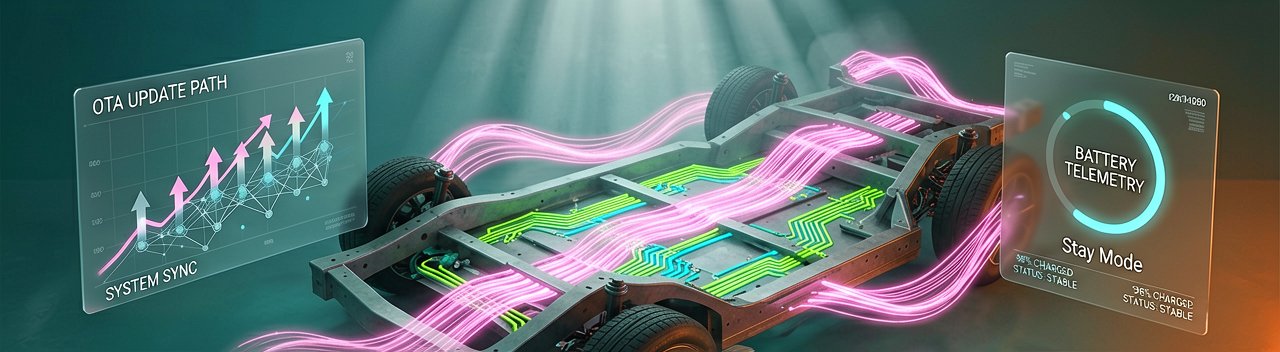
From a competitive standpoint, this technological escalation acts as a defensive shield against aggressive market pressures originating from China's rapidly expanding electric vehicle sector. With manufacturers like BYD driving hardware manufacturing costs down to unprecedented levels, traditional international brands can no longer rely solely on mechanical reliability or historical brand equity to capture younger demographics. Hyundai is leveraging localized digital integration—such as seamless connection to domestic smart-home ecosystems and custom workspace productivity suites—to establish a localized digital experience that foreign competitors cannot easily replicate out of the box. The physical vehicle ultimately evolves into an indispensable, localized mobile device, rendering the hardware platform secondary to the software experience running within it.
The Software-Defined Paradox
Reading Between the Lines: The industry’s rush to celebrate Hyundai’s transition to an AI-driven, software-defined vehicle architecture glosses over a fundamental structural contradiction. While integrating large language models and continuous cloud processing into an entry-level midsize platform democratizes premium technology, it simultaneously introduces a ticking depreciation clock to an asset class historically prized for mechanical longevity. The typical lifecycle of a consumer smartphone or an AI model operates on an exponential decay curve of eighteen to thirty-six months before hardware limitations degrade performance. By anchoring the identity of the eighth-generation Avante to volatile, rapidly evolving digital ecosystems, Hyundai faces the daunting logistical challenge of preventing a perfectly functional, decade-old mechanical chassis from feeling technologically obsolete to its third or fourth owner.
Furthermore, this digital migration exposes a deep friction point between cutting-edge software promises and the real-world limitations of legacy infrastructure. Automakers frequently tout continuous over-the-air updates as a magic cure for vehicular aging, yet these features remain entirely dependent on localized high-speed cellular networks and unyielding regulatory frameworks. In major metropolitan tech hubs, an AI agent capable of dynamic itinerary planning and smart-home syncing operates flawlessly; however, the moment the vehicle crosses into regions with fragmented data coverage, the flagship digital experience inevitably defaults back to standard AM/FM radio capabilities. This geographical disparity risks dividing the mass-market consumer base, forcing buyers in developing or rural territories to pay an upfront hardware premium for complex silicon processing units they cannot realistically utilize.
This strategic shift also introduces a massive financial liability regarding long-term server maintenance and backend compute costs. Running continuous, contextual large language model dialogues for hundreds of thousands of active drivers requires a monumental amount of cloud computing power, incurring substantial recurring operational expenditures that do not disappear after the vehicle leaves the dealership lot. If consumer adoption of premium subscription tiers fails to meet internal targets, Hyundai will find itself trapped in an uncomfortable fiscal corner, tasked with subsidizing expensive server overhead for a depreciating fleet of older sedans. Ultimately, the transition to software-defined mobility forces traditional manufacturers to absorb the volatile operational risks of tech giants, completely rewriting the predictable margins that once defined the automotive assembly line.
"We have officially reached the era where buying a dependable family sedan requires reading a software end-user license agreement, proving that while your grandfather's car might have broken a fuel pump at one hundred thousand miles, at least it never refused to start because its cloud server was undergoing scheduled maintenance."
Artūras Malašauskas is an AI Systems Integrator with 20+ years of production-grade web engineering experience. He has designed, shipped, and scaled enterprise Python/PHP systems for logistics, SaaS, and public-sector clients. For the past year, he has focused exclusively on AI integrations: deploying open-source LLMs, building generative media pipelines (image, audio, video), and engineering multi-agent workflows for real production environments. His standard: reproducibility, security, cost-efficient inference—no vaporware. He documents and evaluates emerging AI tooling, separating verified capabilities from marketing noise. Technical editor at: muza-ai.eu, ai-verslas.lt, ai-naujinos.lt Connect on LinkedIn
Comments