Nebius Drops AI Cloud 3.6: Shifting the Full-Stack Infrastructure Paradigm with "Echo" and Smarter Storage

The race to scale production-grade artificial intelligence has officially moved past raw computational power and into the territory of workflow efficiency. Stepping right into that gap, Nasdaq-listed AI cloud pioneer Nebius unveiled its highly anticipated AI Cloud 3.6 update, internally dubbed “Aether,” on June 24, 2026. This comprehensive overhaul positions the Amsterdam-headquartered firm as a critical infrastructure partner for enterprises scrambling to automate their pipelines and protect high-value datasets. Rather than merely offering more GPUs, the platform addresses the day-to-day friction developers face when coordinating complex, multi-node workloads.
The crown jewel of this rollout is Nebius Echo, a built-in AI assistant that allows developers to manage their cloud infrastructure using natural language commands right from the web console. It isn't just a gimmick either; Echo can inspect active project resources, spin up virtual machines, or pause clusters based on simple conversational prompts. To prevent automated chaos, Nebius has baked in strict guardrails ensuring that destructive or costly actions require clear confirmation. It's a pragmatic approach to automation that removes a massive layer of administrative friction for engineering teams.
Enterprise-Grade Security Meets Regulated Reality
As enterprise AI applications shift from sandbox experiments to sensitive, customer-facing systems, standard cloud security measures no longer cut it. Nebius has addressed this by embedding advanced governance tools directly into the 3.6 architecture. The introduction of customer-managed encryption keys via a dedicated Key Management Service gives enterprises full control over data security, complete with cryptographic erasure capability for absolute compliance. Furthermore, the platform now utilizes Workload Identity Federation, a step that allows credential-free authentication to eliminate the risk of leaked access tokens.
Infrastructure teams working in strictly regulated environments will also appreciate the new "Bring Your Own Image" (BYOI) support. This feature enables developers to deploy hardened, pre-validated base images directly within Managed Kubernetes environments. Combined with granular access roles and threshold-based alerts managed through a brand-new FinOps budgeting tool, the release bridges the gap between agile development and strict regulatory compliance.
Breaking the Storage Bottleneck
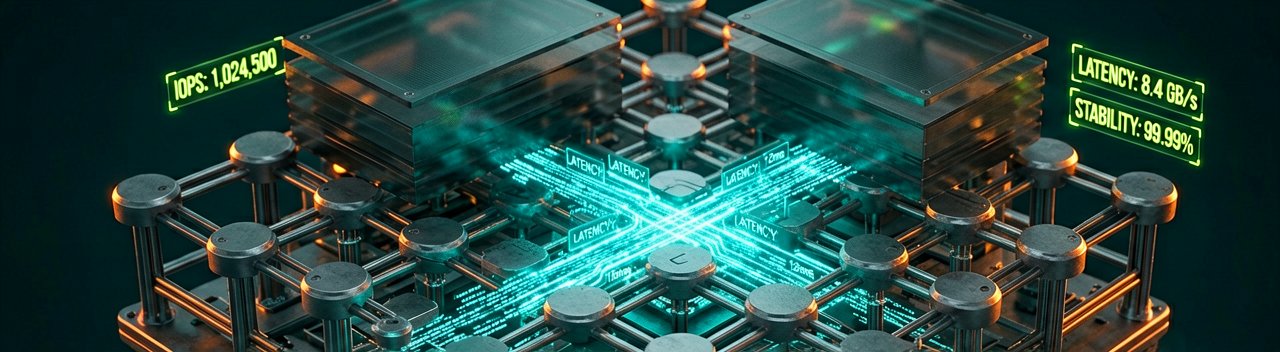
You can have all the GPU horsepower in the world, but your training run will crawl if it's waiting on data delivery. To combat this, version 3.6 unleashes massive storage performance upgrades. According to the official announcement published on the Nebius Newsroom, the platform now equips its GPU servers with local SSDs dedicated entirely to high-performance caching. This eliminates input/output (I/O) bottlenecks during heavy training and inference phases, ensuring that expensive processors aren't sitting idle.
The network data tiering is equally impressive, introducing an Intelligent Object Storage Class that seamlessly moves cold, archived data to cheaper tiers without slapping teams with request or egress penalties. For active workloads, Object Storage now delivers 30% more read bandwidth for single-threaded connections. Crucially, the platform's shared filesystem IOPS have skyrocketed—showing up to a 100x increase for metadata-heavy tasks—while validated cluster sizes can now scale up to a staggering 100 petabytes. Along with these upgrades, Nebius launched its Builder Program in early preview, offering cloud credits and formal certification paths to build a loyal developer community around its maturing stack.
Behind the Scenes of the Infrastructure Pivot
The tech industry's obsession with bare-metal hardware numbers has often obscured a messy truth: managing thousands of tightly coupled GPUs is an operational nightmare. While traditional hyperscalers were built to handle fragmented, general-purpose microservices, AI workloads demand massive, synchronized cluster performance. Nebius’s 3.6 update represents a calculated shift away from the "GPU landlord" model toward a deeply integrated, full-stack platform. By focusing on orchestrating the surrounding ecosystem—network latency, data caching, and user accessibility—the firm is positioning itself to capture enterprises that are weary of paying for idle compute time while engineering teams wrestle with cluster orchestration.
Industry insiders note that the introduction of natural language automation via Nebius Echo isn't just about making developers comfortable; it is an aggressive play to reduce the total cost of ownership. Historically, operating AI infrastructure required specialized DevOps teams fluent in obscure clustering frameworks and custom networking protocols. By shifting standard tasks like machine instantiation and cluster pausing into natural language prompts, the platform effectively democratizes infrastructure management. Stakeholders point out that this addresses a critical talent shortage in the AI space, allowing data scientists to tweak active resources on the fly without waiting for dedicated systems administrators to clear a ticketing queue.

The Real Battle is in the Data Pipeline
What mainstream coverage frequently overlooks is that storage speed, not compute capacity, has become the primary bottleneck in modern deep learning. When a multi-node cluster stalls during a training checkpoint because the filesystem cannot write metadata fast enough, thousands of dollars evaporate in minutes. The 100x increase in shared filesystem IOPS for metadata operations addresses this exact pain point. Early feedback from enterprise pilot programs suggests that optimizing local SSDs specifically for cache tiers allows companies to run continuous checkpointing and data ingestion without experiencing the systemic performance drops that typically plague shared cloud storage environments.
At the same time, the security updates reveal a pragmatic understanding of corporate compliance realities. Large financial institutions and healthcare providers have largely stayed on the sidelines of the public AI cloud boom, restricted by stringent regulations surrounding data sovereignty and key management. By introducing Workload Identity Federation and custom-managed keys with cryptographic erasure, Nebius is directly targeting these risk-averse sectors. It signals a transition for the platform from a playground for agile startups into an environment capable of hosting heavily regulated, production-grade corporate intelligence systems.
Reading Between the Lines of the Automated Cloud
While the marketing narrative surrounding Nebius 3.6 paints a picture of seamless, automated efficiency, a healthy dose of skepticism is warranted when evaluating natural language infrastructure. Tools like Nebius Echo promise to lower the barrier to entry, but abstracting away the underlying cloud architecture creates its own set of hidden risks. When an AI assistant handles complex cluster management, the true depth of operational visibility shrinks. Engineering teams risk losing a granular understanding of their own deployments, creating a paradoxical scenario where troubleshooting a systemic failure could actually take longer because human operators are detached from the direct configuration loops.
There is also an inherent tension between the platform's simultaneous push for aggressive automation and ironclad corporate governance. Nebius boasts that Echo includes rigid guardrails to prevent accidental, costly deletions or unauthorized scaling. However, relying on one layer of artificial intelligence to police the infrastructure decisions of another—or to accurately interpret the vague phrasing of a tired developer at 2:00 AM—feels like an uneasy compromise. In highly regulated sectors, the idea of an AI assistant dynamically spinning up or modifying environments could easily give compliance officers cold sweats, regardless of how tightly integrated the new Key Management Service claims to be.
Furthermore, the staggering promises of 100x metadata performance increases and 100-petabyte cluster scaling look brilliant on a spec sheet, but they highlight the crushing financial realities of modern enterprise AI. By building specialized storage tiers to stop GPUs from sitting idle, Nebius is admitting that the current generation of hardware is fundamentally inefficient without a massive, expensive scaffolding of surrounding software. Enterprises must realize that maximizing hardware utilization through these new caching tiers requires significant architecture rewriting. The update does not make AI cheaper; it merely shifts the financial burden from wasted compute cycles to premium storage architectures and ecosystem lock-in.
"We were promised that artificial intelligence would democratize computing and eliminate mundane tasks, but the reality looks a lot like paying a premium for a chatbot to translate human frustration into the exact same cloud configuration files we have been fighting with for a decade—just with fewer typos and a significantly higher monthly storage bill."
Artūras Malašauskas is an AI Systems Integrator with 20+ years of production-grade web engineering experience. He has designed, shipped, and scaled enterprise Python/PHP systems for logistics, SaaS, and public-sector clients. For the past year, he has focused exclusively on AI integrations: deploying open-source LLMs, building generative media pipelines (image, audio, video), and engineering multi-agent workflows for real production environments. His standard: reproducibility, security, cost-efficient inference—no vaporware. He documents and evaluates emerging AI tooling, separating verified capabilities from marketing noise. Technical editor at: muza-ai.eu, ai-verslas.lt, ai-naujinos.lt Connect on LinkedIn
Comments