NTT DATA’s New AI Agent Promises to Shrink Months of Consumer Product Planning into Minutes
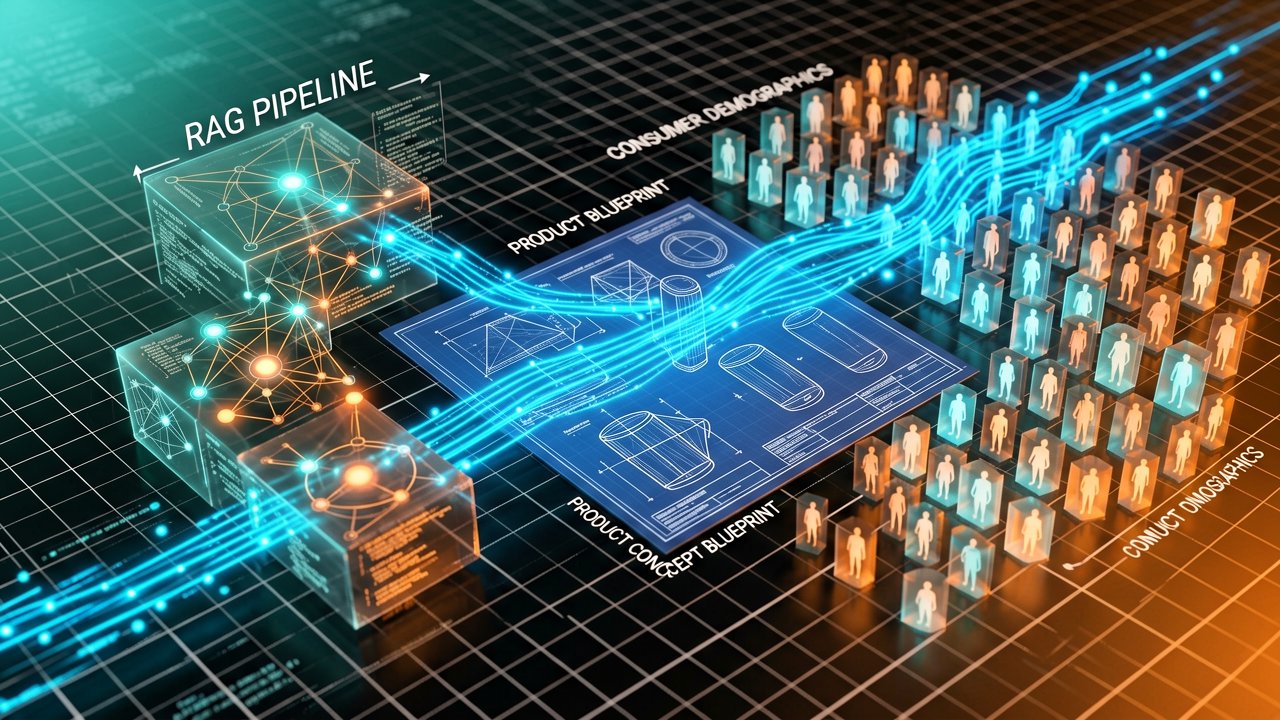
The sluggish, multi-month sprint to get a new consumer product off the ground is getting a major digital overhaul. Tech services giant NTT DATA announced the global launch of a specialized AI agent service explicitly engineered to automate the tedious early-stage product planning pipeline. Set to roll out globally, this targeted solution aims to collapse the time it takes for food, beverage, and consumer packaged goods brands to move from initial brainstorms to formal corporate evaluations.
Anyone who has worked in corporate product development knows the drill: traditional ideation means navigating an exhausting maze of internal alignment, brand compliance checks, and regulatory hurdles that drag on for months. By deploying a multi-agent architecture built on proprietary generative AI and retrieval-augmented generation (RAG), NTT DATA promises to compress these long cycles. Instead of weeks of back-and-forth, teams can reportedly generate structured product concept proposals—complete with naming ideas, feature designs, and visual concept imagery—in a matter of minutes.
Balancing Speed with Corporate Rigor
Moving fast is meaningless if the output ignores real-world constraints. To prevent the tool from spitting out generic hallucinated junk, the service integrates directly with a company’s internal brand guidelines, target consumer segments, and overarching product strategy. According to NTT DATA, the framework features baked-in sales forecasting tools to evaluate early market potential and uses industry-specific expert agents trained specifically for the nuances of consumer goods planning.
Enterprise data security remains a massive bottleneck for AI adoption, but the company has implemented dedicated controls to keep proprietary corporate data locked safely within each client’s private environment. Looking ahead, the tech giant plans to expand the agent’s reach deeper into downstream development processes like chemical formulation, packaging engineering, and production feasibility, moving closer toward an end-to-end autonomous planning pipeline.
What Most Reports Miss: The real bottleneck in consumer packaged goods isn’t a lack of creative ideas, but the crushing weight of enterprise bureaucracy that smothers them before they reach the factory floor. In traditional setups, a simple tweak to a beverage flavor or a snack formulation triggers a cascade of manual workflows across compliance, legal, procurement, and marketing teams. By the time a concept proposal is vetted against brand guidelines and local regulations, the market trend it was meant to capture has often already evolved, leaving slow-moving legacy brands at a distinct disadvantage against nimble, digital-native startups.
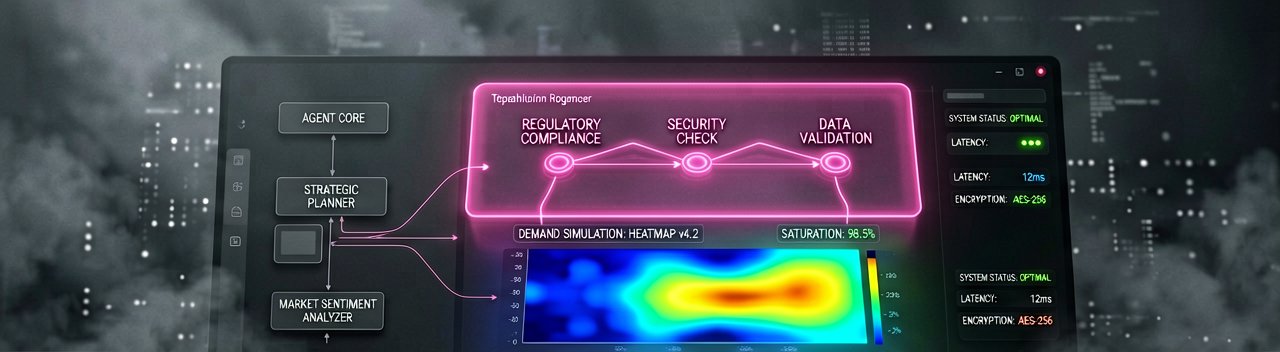
Industry insiders point out that the integration of multi-agent architectures represents a structural shift from passive AI tools to active digital colleagues. Rather than acting as a glorified search bar, these agents hold specialized roles—one evaluates regulatory compliance, another simulates market demand, and a third refines visual branding. This collaborative setup allows the system to pressure-test concepts simultaneously rather than sequentially, catching catastrophic flaws early in the design cycle before significant capital is committed to physical prototypes.
The High Stakes of Algorithmic Forecasting
However, shifting early-stage decision-making to algorithmic agents introduces a new layer of risk that seasoned product planners view with healthy skepticism. Consumer preferences are famously fickle, heavily influenced by unpredictable cultural moments and viral social media trends that historical corporate data cannot always predict. If an enterprise relies too heavily on synthetic forecasting models to greenlight projects, it risks creating a feedback loop of highly optimized but sterile products that lack true consumer resonance.
To counter this, the success of NTT DATA's rollout will depend entirely on how effectively it balances automated efficiency with human intuition. The ideal enterprise framework positions the AI agent not as the final arbitrator of what gets built, but as a high-speed engine that eliminates the administrative friction of paperwork and basic compliance screening. This frees up human designers and brand strategists to focus on high-level creative direction and nuanced market testing, ensuring that efficiency does not come at the cost of genuine product innovation.

Reading Between the Lines: The corporate promise of collapsing months of administrative friction into minutes of algorithmic efficiency sounds like an absolute victory, but it conveniently glosses over a fundamental contradiction in modern enterprise strategy. Large consumer goods companies are historically risk-averse, built entirely on layers of human oversight designed precisely to slow things down and prevent costly market failures. Forcing a hyper-accelerated, AI-generated product pipeline into a legacy corporate structure will inevitably create severe friction points where fast-tracked concepts slam into slow-moving executive sign-offs.
Furthermore, there is a distinct irony in relying on historical enterprise data to spark genuine market innovation. Generative AI and retrieval-augmented generation models are fundamentally backward-looking engines; they predict the future by analyzing what has already succeeded within a company’s past portfolio and brand guidelines. If every major consumer packaged goods brand adopts similar multi-agent systems trained on overlapping industry datasets, the market faces a real threat of structural homogenization, resulting in a flood of mathematically optimized, perfectly compliant, and utterly uninspired products.
The Illusion of Frictionless Scale
We must also look critically at the claims surrounding synthetic sales forecasting and autonomous compliance screening. Simulating consumer behavior within a closed data loop is a far cry from predicting how a real shopper will react in a grocery aisle when faced with rising inflation or shifting economic realities. While a digital agent can instantly verify if a new snack concept complies with regional regulations, it cannot accurately model the chaotic, irrational nature of human viral trends, which frequently defy historical logic and algorithmic predictions.
Ultimately, the true measure of this technology won't be found in press release metrics about accelerated timeline efficiencies, but in how much creative autonomy human teams manage to retain. If enterprise leadership views these autonomous agents merely as a tool to cut headcount and automate the creative process entirely, they will likely end up with an efficient assembly line that produces nothing but safe, forgettable iterations. True disruption requires a level of eccentric human intuition and calculated risk-taking that no multi-agent architecture, no matter how sophisticated, can successfully replicate on a server.
"We are rapidly approaching a future where an AI agent designs a product, another AI agent forecasts its multi-million dollar success, and a third AI agent automatically approves the budget—all while human executives sit in a meeting room, nodding sagely at a slide deck, completely unaware that the actual consumer has stopped buying the product altogether."
Artūras Malašauskas is an AI Systems Integrator with 20+ years of production-grade web engineering experience. He has designed, shipped, and scaled enterprise Python/PHP systems for logistics, SaaS, and public-sector clients. For the past year, he has focused exclusively on AI integrations: deploying open-source LLMs, building generative media pipelines (image, audio, video), and engineering multi-agent workflows for real production environments. His standard: reproducibility, security, cost-efficient inference—no vaporware. He documents and evaluates emerging AI tooling, separating verified capabilities from marketing noise. Technical editor at: muza-ai.eu, ai-verslas.lt, ai-naujinos.lt Connect on LinkedIn
Comments