Microsoft's Unreal Engine 5.8 Streamlining Signals Strategic Shift in Xbox PC Gaming Dominance
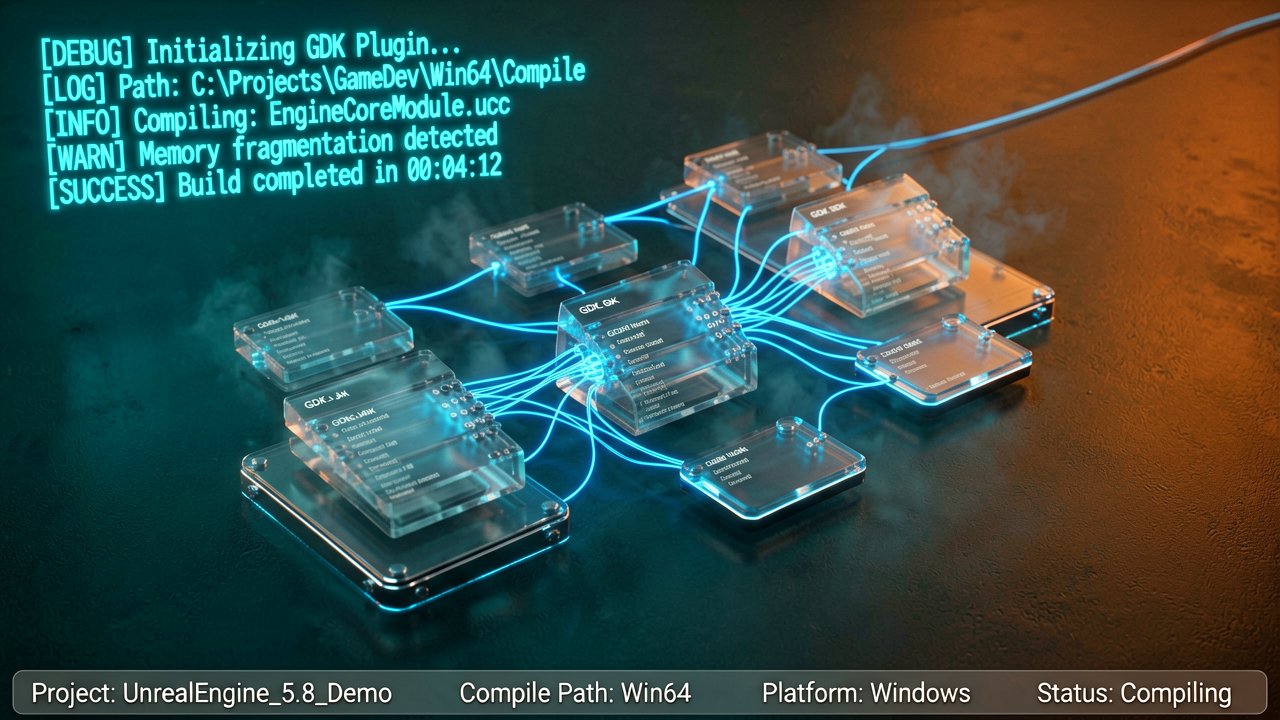
The public integration of Microsoft Game Development Kit (GDK) plug-ins directly into the Epic Games Unreal Engine 5.8 ecosystem marks a critical technical milestone for Windows ecosystem deployment. Announced natively within the release of Unreal Engine 5.8, these specialized plug-ins remove structural development friction by shifting game compilation away from the fragmented WinGDK platform and allowing studios to target standard Win64 architectures instead, according to details published by Microsoft Developer. While this native integration dramatically lowers build complexities, the targeted focus specifically on the Xbox App on PC signals an intense competitive maneuver to seize desktop platform dominance.
Historically, deploying games to the Xbox PC app demanded unique, parallel engineering pipelines to convert standard Windows builds into separate, ecosystem-compliant packages. This redundancy routinely resulted in delayed or entirely abandoned releases for Microsoft's desktop client, giving entrenched operators like Valve's Steam an unyielding competitive moat. Under the unified environment of Unreal Engine 5.8, developers can compile a single executable that simultaneously handles standard PC operations and integrates Xbox-specific services, such as user profiles, cloud saves, and achievements, as detailed by Microsoft Learn. Consequently, Microsoft is actively weaponizing middleware efficiency to turn its storefront into a frictionless migration destination for high-end titles.
The Architecture of Desktop Fragmentation
By streamlining engine architectures to favor the specific runtime parameters of the Xbox ecosystem on PC, Microsoft risks inducing deep fragmentation within the broader software development landscape. Creators opting into these proprietary workflows may find their fundamental assets structurally bound to Xbox backend services, complicating post-launch porting or multi-store parity. While these optimizations enhance performance scaling for systems built natively on the Microsoft GDK, they force a critical architectural crossroad for smaller, independent studios with limited porting bandwidth. The immediate economic appeal of reduced build times and unified codebases may inadvertently pressure engineering teams to prioritize the Xbox ecosystem, altering long-term software availability curves.
Ecosystem Moats and Market Implications
This localized technical overhaul serves as an explicit infrastructure moat designed to boost the long-term adoption of the Xbox PC ecosystem. Reducing engineering overhead minimizes the time-to-market friction for day-and-date game additions to subscribers, strengthening the core value proposition of Microsoft's software distribution networks against competing storefront architectures. However, this strategic isolationism creates a distinct contrast with historical cross-platform integration models. By confining these deepest development optimizations to its desktop distribution umbrella, Microsoft is transitioning its long-term gaming strategy away from a purely cross-platform accessibility framework toward an aggressive, ecosystem-first market acquisition strategy.
Behind the Architectural Shift
What Most Reports Miss: The integration of Microsoft GDK plug-ins natively into Unreal Engine 5.8 represents a calculated tactical retreat from a decade-long engineering misstep. For years, Microsoft attempted to force PC developers into the Universal Windows Platform (UWP) framework, an architectural paradigm that treated high-end desktop gaming identical to mobile software applications. This forced isolation alienated prominent studio engineers, who widely rejected the sandboxed constraints that restricted access to low-level hardware optimizations. By finally abandoning these legacy barriers and anchoring Unreal Engine 5.8 directly to standard Win64 compilation pathways, Microsoft is acknowledging that software dominance cannot be achieved without aligning to the preexisting habits of enterprise-tier engine architects.
From the perspective of independent studio engineers, this streamlining brings both operational relief and immediate logistical dilemmas. Smaller production pipelines historically dedicated months of auxiliary development time simply to build, test, and pass compliance checks for separate, ecosystem-compliant packages destined for the Xbox App on PC. While the unified environment allows teams to handle user identity, cloud saves, and achievement tracking within a single core executable, this convenience comes with hidden technical debt. Veteran programmers note that embedding these proprietary plug-ins deep within an engine's core infrastructure creates an invisible gravity well, making it increasingly complex to decouple the software when porting to alternative, competing digital storefronts.
This structural friction risks creating a two-tiered development culture, splitting production priorities down predictable economic fault lines. Major publishers with dedicated porting departments will absorb these changes as a minor efficiency gain, continuing to maintain distinct, parallel development branches for Epic Games Store, Steam, and proprietary clients. Conversely, mid-sized and independent studios operating under razor-thin margins may find the reduced engineering overhead too lucrative to pass up. The immediate cost reduction associated with native GDK compilation will inevitably pressure these smaller teams to optimize for Microsoft’s desktop ecosystem first, transforming a technical distribution pipeline into an implicit mechanism for market exclusivity.
Ultimately, this localized technological overhaul highlights a fundamental pivot in how platform holders define and defend their digital market share. Rather than relying on costly upfront financial outlays to buy temporary content exclusivity, Microsoft is building an infrastructure moat designed to capture games at the foundational level of source code. By minimizing time-to-market friction for titles launching on its subscription frameworks, the company is quietly positioning its PC application as a friction-free destination for bleeding-edge software. The true impact of this strategy will be felt over the coming development cycles, as the wider gaming landscape adjusts to an environment where the architecture of the game engine itself influences where a game is played.
Reading Between the Lines
Reading Between the Lines: Microsoft’s framing of this Unreal Engine 5.8 optimization as an act of pure developer altruism directly contradicts the historical realities of platform preservation. The technology giant routinely champions an "every screen is an Xbox" philosophy, an idealized vision of a borderless gaming ecosystem where hardware barriers dissolve. Yet, by locking these advanced pipeline efficiencies exclusively behind the walls of its own PC client, Microsoft exposes a fierce protectionist impulse. The corporate strategy is not to liberate PC game development as a whole, but rather to construct a highly specific, optimized sub-tier within Windows that explicitly disadvantages open-ecosystem distribution models.
This aggressive infrastructure play highlights a deep architectural paradox that independent software engineers must now navigate. Microsoft is offering to alleviate the systemic burden of platform porting, but only if developers consent to deeper integration with proprietary Xbox backend services. This dynamic shifts the platform bottleneck from an overt distribution challenge to a subtle, baseline engineering dependency. While studios will undeniably save hundreds of development hours during initial compilation cycles, they are effectively trading operational flexibility for near-term convenience. The true cost of this optimization is the loss of modular codebase portability, a consequence that will manifest when studios attempt to deploy outside Microsoft’s immediate orbit.
Furthermore, this strategy introduces a highly disruptive variable into the delicate economic relationship between game creators and digital storefronts. For years, Valve's Steam has maintained an unassailable monopoly on PC gaming by virtue of its robust community infrastructure and frictionless API integrations. Microsoft’s attempt to challenge this dominance through engine-level favoritism creates an artificial divide in software performance and development cost. If compilation for the Xbox app becomes significantly cheaper and less labor-intensive than optimizing for open Win32 standards, the industry may witness a forced migration. Developers will not switch platforms because consumers demanded it, but because the financial realities of middleware integration left them no viable alternative.
As these proprietary plug-ins become deeply embedded in the standard production cycles of Unreal Engine 5.8, the long-term impact on game preservation and cross-compatibility remains highly precarious. The broader industry has spent the better part of a decade moving toward universal standards that protect software from the sudden shifts of corporate priorities. By re-introducing localized runtime dependencies into the world's most dominant game engine, Microsoft is subtly rewinding this progress. The ultimate irony is that in its relentless quest to simplify the act of game creation, the platform holder may have laid the technical groundwork for a more fragmented, store-locked era of desktop gaming.
"In the grand theater of desktop gaming, Microsoft has finally realized that the easiest way to win a platform war is to build the battlefield directly into the developer's game engine—proving once again that nothing ensures loyalty quite like a beautifully automated, gilded cage."
Artūras Malašauskas is an AI Systems Integrator with 20+ years of production-grade web engineering experience. He has designed, shipped, and scaled enterprise Python/PHP systems for logistics, SaaS, and public-sector clients. For the past year, he has focused exclusively on AI integrations: deploying open-source LLMs, building generative media pipelines (image, audio, video), and engineering multi-agent workflows for real production environments. His standard: reproducibility, security, cost-efficient inference—no vaporware. He documents and evaluates emerging AI tooling, separating verified capabilities from marketing noise. Technical editor at: muza-ai.eu, ai-verslas.lt, ai-naujinos.lt Connect on LinkedIn
Comments