The Ghost in the Engine: Why Fast-Food AI Gaming Won't Buy Soul
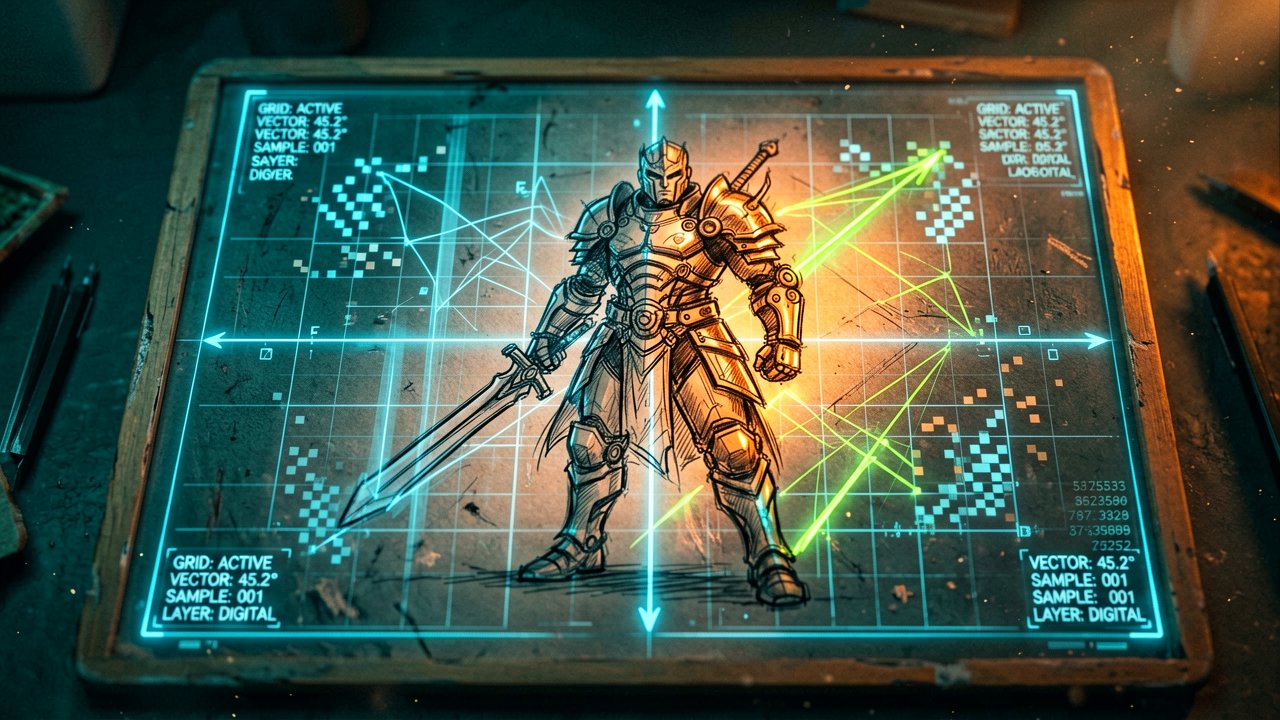
The algorithmic gold rush is officially knocking on the doors of the gaming industry, promising a reality where games are birthed from prompts rather than sweat, tears, and overextended budgets. In an industry increasingly plagued by Ballooning timelines and eye-watering production costs, the allure of the automated assembly line is easy to understand. Yet, the leadership at CD Projekt Red isn't buying into the synthetic dream quite yet. While speaking on the inevitable surge of algorithmically engineered software, joint chief executive officer Michał Nowakowski revealed he knows for a fact that fully AI-generated titles are actively creeping toward the market, but he remains deeply unconvinced that this factory-line approach is the right path forward.
The conversation around automation in game development took a fascinating turn when Nowakowski recalled chatting with an AI-centric studio founder who boasted about an impossibly compressed development pipeline. This specific founder claimed their setup could churn out forty prototypes in a single week, filter that down to five viable games in a fortnight, and ship a completed product to consumers just three weeks later. It is a dizzying tempo that sounds less like artistic creation and more like high-frequency stock trading. While that hyper-lean model might find niche financial success, Nowakowski's skepticism underscores a fundamental truth that Silicon Valley evangelists continuously overlook: players deeply underestimate the staggering complexity required to build digital worlds that actually resonate.
This pushback from the creators of Night City isn't just standard corporate Luddism; it is a calculated stance on creative longevity within an oversaturated marketplace. The gaming landscape is already overflowing with automated assets and procedural fluff, and throwing an army of entirely synthetic games into the mix only intensifies what Nowakowski describes as the hardest battle for player attention the industry has ever seen. Standing out requires a human soul, distinct writing, and a willingness to take risks—elements that an iterative prediction engine simply cannot replicate. According to reporting from GamesRadar+ , the Polish studio refuses to let algorithms dictate their creative direction, even as they acknowledge that a wave of pure generative projects from other teams is imminent.
The Commodity Versus the Craft
There is an unspoken anxiety throughout the current tech landscape that more content automatically translates to better business. Game development platforms are shifting rapidly, and the temptation to press a button to generate an entire open-world sandbox is immense. But there is a massive difference between generating a functional landscape and designing an environment with intent. When every rock, questline, and non-player character dialogue tree is the product of an optimized probability matrix, the entire medium risks flattening into a gray sludge of corporate-friendly mediocrity. CD Projekt Red's own quest design teams have historically noted that the quality gap between scripted human character work and generative AI outputs remains a vast canyon.

The studio's ongoing projects, like the highly anticipated development of their next Witcher title, are being crafted with a clear mandate to use technology as a tool for engineering productivity rather than an outright replacement for human talent. Efficiency tools that clean up code or accelerate visual effects rendering are welcome additions to the pipeline, but the core narrative architecture remains fiercely human. This strategic focus is essential for a company that has spent years rebuilding its reputation, proving that deliberate artistic vision holds more market value over a ten-year cycle than pumping out disposable products at lightning speed. Shifting development entirely to machine code might lower overhead costs, but it fundamentally breaks the emotional contract between the storyteller and the player.
As detailed in documentation from Rock Paper Shotgun, surviving the modern industry requires a studio to stay close to its audience and cultivate a distinct creative identity that cannot be easily copied by a machine. Churning out five fully realized games in a month might generate brief viral interest or satisfy a spreadsheet in a quarterly investor meeting, but it will never build a legacy. If the future of gaming is destined to split between rapid-fire automated commodities and meticulously handcrafted epics, the industry's heaviest hitters are making it clear that they would rather build worlds that last.
The true hazard of the algorithmic horizon isn't that machines will fail to create games, but that they will succeed in producing an endless, suffocating ocean of functional noise. When the barrier to creation collapses entirely, the premium shifts from the ability to build to the ability to care. Industry veterans often point out that game design is a series of beautiful mistakes—a bug that becomes a feature, a tonal shift that happens because an actor interpreted a line differently, or a mechanic that was scrapped and rebuilt a week before gold master because it simply didn't feel right. Algorithms are explicitly designed to eliminate these inefficiencies, yet it is precisely within those messy, human friction points that a masterpiece like Night City or the Continent finds its heartbeat.
This tension is already spilling over into how major studios approach the training data that fuels these systems. While some publishers look at massive back catalogs as a goldmine to automate future assets, CD Projekt Red’s cautious approach highlights a growing divide between artistic preservation and corporate exploitation. If a machine is trained solely on what has already succeeded, it can only ever iterate on the past, creating an ecosystem of hyper-optimized nostalgia that actively suffocates genuine innovation. The result is a creative loop that looks technologically advanced on paper but feels emotionally bankrupt in practice, leaving players to sort through a digital landfill of games that look spectacular but possess no actual depth.

The Illusion of Endless Choice
We are rapidly approaching a cultural tipping point where the sheer volume of available content threatens to paralyze the consumer. If an indie studio can prompt an entire role-playing game into existence over a weekend, the digital storefronts will inevitably face an existential crisis of discoverability. In this hyper-saturated future, the traditional marketing playbook becomes obsolete. When everything is readily available and instantly generated, human curation, trusted brand identity, and the heavy emotional weight of a studio's reputation become the only currencies that retain any real value. CD Projekt Red's insistence on human-driven development is a calculated bet that, when players are drowning in a sea of synthetic options, they will willingly pay a premium for something that feels undeniably real.
Ultimately, the industry's obsession with generative tools reveals a fundamental misunderstanding of why people play games in the first place. Players do not just seek a checklist of mechanics or an optimized feedback loop; they seek a shared experience, a glimpse into the minds of the team that spent years agonizing over every pixel and narrative beat. An AI can mimic the structure of a gut-wrenching plot twist, but it can never understand the grief, joy, or existential dread that inspired it. By drawing a hard line in the sand, the architects of gaming's most celebrated worlds are reminding the broader tech landscape that automation might buy speed, but it will never buy soul.
The ultimate survival metric for tomorrow’s gaming industry will not be measured in teraflops or generated assets, but in the scarcity of human intent. As generative engines flatten the technical hurdles of game creation, they simultaneously devalue the currency of pure volume. The studios that thrive in the coming decade will be those that realize software optimization cannot replace cultural relevance. When any user can prompt a personalized digital world into existence from their living room, the traditional role of the developer shifts from a mere builder of systems to a curator of collective human experiences.
This reality forces an existential re-evaluation of studio overhead and production pipelines. While mid-tier publishers may find temporary financial salvation by using artificial intelligence to slash development budgets, they risk stripping away the very idiosyncrasies that make their intellectual properties distinct. A hyper-efficient, machine-driven pipeline creates a product that is perfectly smooth, entirely predictable, and utterly forgettable. For a studio operating at the scale of CD Projekt Red, maintaining a fiercely human-centric creative core is a defensive wall against the inevitable commoditization of the medium.
The Premium on Authenticity
We are entering an era where the label of being "handcrafted" will carry the same luxury status in software design as it does in high fashion or fine art. Players will increasingly seek out the deliberate flaws, the unexpected narrative left-turns, and the sheer mechanical audacity that can only stem from a group of human beings arguing in a writers' room or debugging code at midnight. The future marketplace will likely split into two distinct tiers: a massive, low-cost undercurrent of disposable, algorithmically tailored entertainment, and a premium tier of highly celebrated, authored epics that command attention precisely because they cannot be replicated by an engine.
In the final analysis, technology has always been a mirror reflecting the ambitions of its creators. If the gaming industry uses these powerful new tools merely to chase shorter production cycles and immediate quarterly returns, it will inherit a hollow victory—a landscape packed with trillions of playable hours but entirely devoid of memorable moments. By anchoring their strategy in human creative authority, the industry’s vanguard is making a vital statement: the most powerful graphics engine in the world remains entirely useless without a human heart driving the machine.
"An algorithm can easily simulate a world with a million endings, but it will never understand why a player pauses at the title screen just to listen to the music."
Artūras Malašauskas is an AI Systems Integrator with 20+ years of production-grade web engineering experience. He has designed, shipped, and scaled enterprise Python/PHP systems for logistics, SaaS, and public-sector clients. For the past year, he has focused exclusively on AI integrations: deploying open-source LLMs, building generative media pipelines (image, audio, video), and engineering multi-agent workflows for real production environments. His standard: reproducibility, security, cost-efficient inference—no vaporware. He documents and evaluates emerging AI tooling, separating verified capabilities from marketing noise. Technical editor at: muza-ai.eu, ai-verslas.lt, ai-naujinos.lt Connect on LinkedIn
Comments