Epic’s Dual Gambit: Unveiling Unreal Engine 6 and the Billion-Dollar Creator Economy

Epic Games has fundamentally altered the trajectory of the game engine market during the State of Unreal keynote at Unreal Fest Chicago by bridging high-fidelity development with a highly monetized ecosystem. On June 17, 2026, the company laid out its definitive blueprint for the future of interactive entertainment, positioning itself as both a premier tech provider and an economic powerhouse. The headline announcement confirmed that Unreal Engine 6 is actively in development, engineered to merge traditional AAA capabilities with the modular, live-service efficiency refined within Fortnite.
By blending these two worlds, Epic Games is executing a dual-track strategy designed to capture every tier of the industry. Veteran developers get a unified development pipeline that deploys across independent ecosystems, while everyday creators secure unprecedented financial viability. Alongside the tech preview, Epic Games revealed it has crossed a massive milestone, paying out over $1 billion to creators using the Unreal Editor for Fortnite (UEFN) ecosystem. It is a clear statement of intent: the future of gaming is not just about prettier pixels, but building self-sustaining digital economies.
Unreal Engine 6 and the Architecture of Interoperability
The technical transition from current generation workflows to Unreal Engine 6 represents a philosophical shift in how virtual worlds are engineered. According to documentation shared by Epic Games, the upcoming engine introduces an entirely new gameplay framework called Scene Graph. Built natively on the Verse programming language, Scene Graph aims to replace rigid object hierarchies with flexible, highly modular systems. This language layer acts as the foundation for expansive, persistent virtual spaces where global state data remains transactionally correct, ensuring that multi-user environments stay synchronized across disparate platforms without custom backend overhead.
Automation and efficiency are front and center in this new paradigm. Epic Games detailed deep integrations with foundational large language models, specifically leveraging Google's Gemini and Anthropic's Claude. Far from replacing the human element, these generative AI tools operate directly inside the editor to accelerate content generation and code synthesis, ensuring that complex programming tasks remain under the tight control of the designer. The roadmap targets an Early Access release for Unreal Engine 6 toward the end of 2027, giving the studio community an extensive runway to adapt to the new toolset.

The Monolithic Rise of the Creator Economy
While the architectural leap of Unreal Engine 6 outlines Epic’s technical future, the current market reality is being reshaped by staggering creator payouts. As reported by GamesIndustry.biz, the $1 billion milestone distributed to UEFN developers proves that user-generated content is no longer a fringe hobby, but a core commercial driver. This monetization loop will tie closer to Epic's storefront ecosystem throughout 2026, enabling cross-property cosmetic rewards that incentivize players to engage with third-party IP across both standalone games and localized social spaces.
To bridge the gap until the next-generation platform debuts, Epic Games simultaneously released Unreal Engine 5.8, deploying immediate quality-of-life updates to active production teams. This iterative drop provides advanced animation tooling and streamlined rendering pipelines, acting as a tactical stepping stone. By giving developers immediate access to better scaling tools while laying down an ambitious, AI-augmented infrastructure for the decade ahead, Epic Games has successfully forced the entire software industry to respond to its unified ecosystem model.
The Hidden Architecture: How Unreal Engine 6 Redefines Digital Sovereignty
Behind the Scenes: The technical pivot defining Unreal Engine 6 represents a profound recalibration of how intellectual property is managed, shared, and monetized across the digital frontier. While mainstream analysis frequently centers on the sheer velocity of the one-billion-dollar payout milestone, veteran developers recognize that the structural shift away from traditional, siloed gaming environments is the real story. Epic Games is effectively building an operating system for the metaverse, designed to break down the walls that have historically separated premium AAA productions from user-generated experiences.
Historically, game engines operated under a transactional model: developers built a self-contained product, paid a licensing fee or royalty upon commercial release, and maintained absolute control over their closed ecosystem. The introduction of the Scene Graph architecture fundamentally disrupts this decades-old status quo by embedding interoperability directly into the source code. By utilizing the Verse programming language to establish transactional consistency across expansive virtual spaces, Epic is solving the persistent engineering hurdle of asset persistence, allowing independent creations to coexist seamlessly within a shared global simulation.
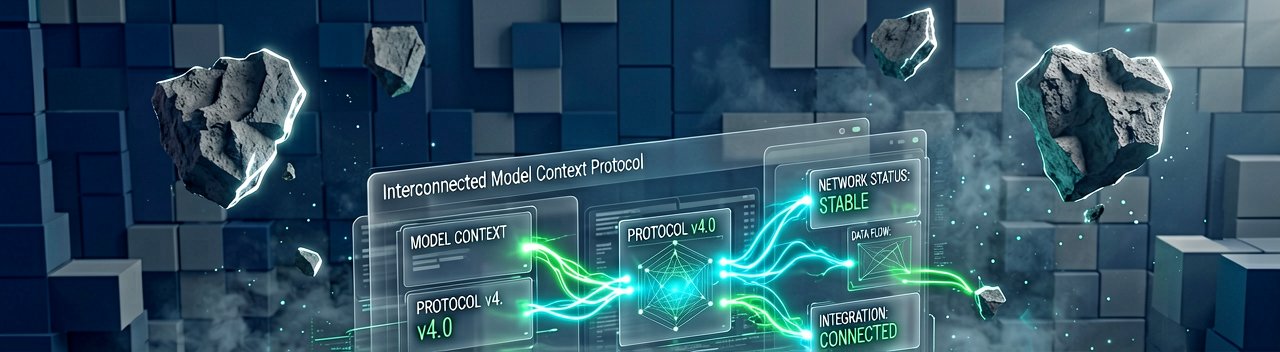
From the perspective of legacy publishers, this shift presents both an unparalleled commercial opportunity and a delicate strategic compromise. Major entertainment brands are no longer just licensing their intellectual properties for brief promotional crossovers; they are constructing permanent, interactive digital outposts that rely entirely on Epic's underlying infrastructure. This dependency shifts the balance of power in the tech industry, positioning Epic Games not merely as a software vendor, but as the primary custodian of the digital economy's underlying real estate.
Furthermore, the integration of advanced generative AI models from Anthropic and Google signals a pragmatic approach to the industry-wide problem of escalating production costs. Rather than deploying AI as an autonomous content generator, Epic has integrated these large language models as localized, context-aware digital assistants meant to absorb the friction of repetitive asset optimization and boilerplate coding. This tactical implementation allows smaller development teams to maintain the output volume of traditional mid-tier studios, effectively democratizing high-fidelity game production while compressing the development lifecycle.
Ultimately, the dual gambit presented at Unreal Fest Chicago clarifies Epic's long-term competitive strategy against entrenched marketplace gatekeepers. By weaponizing its massive Fortnite revenue engine to heavily subsidize creator payouts, Epic is creating an economic gravity well that draws talent, resources, and intellectual property away from closed platform ecosystems. The rollout of Unreal Engine 6 is a calculated effort to ensure that when the next generation of digital platforms matures, the foundational architecture supporting it will be definitively stamped with Epic’s blueprint.
The Friction Points of Epic's Interconnected Future
Reading Between the Lines: The dazzling narrative of a democratization of game development obscures a much harsher economic reality for the creators on the ground. Epic's heavily touted one-billion-dollar payout pool is not an egalitarian distribution of wealth, but a highly top-heavy ecosystem governed by opaque engagement algorithms. While top-tier studios and viral breakout developers capture the lion's share of this capital, the vast majority of independent creators operate in a high-churn, hyper-competitive attention economy where visibility is dictated by a platform holder that can alter monetization rules overnight.
There is an inherent contradiction in Epic Games championing open ecosystems while simultaneously building the ultimate walled garden. By consolidating developer tools, payment processing, cloud hosting, and discovery mechanisms into a single pipeline, Epic is creating an unprecedented level of platform lock-in. A developer deeply embedded in the Verse programming language and the Scene Graph architecture of Unreal Engine 6 is not just using a tool; they are tethering their entire business model to Epic's continuous operational dominance and market benevolence.
This structural dependency becomes particularly risky when evaluating the integration of generative AI partners like Google and Anthropic. While these tools promise to mitigate skyrocketing production budgets, they introduce a minefield of intellectual property vulnerability and regulatory scrutiny. Should future legal frameworks restrict the training models of these specific AI partners, developers who relied on integrated automation to build their vast virtual worlds may find their foundational codebases entangled in complex copyright disputes, undermining the very stability Epic promises.
Furthermore, the long timeline stretching toward the late-2027 Early Access launch of Unreal Engine 6 gives competitors an extensive window to mount a counter-offensive. Traditional engine rivals and proprietary publisher technologies are already pivoting toward lightweight, web-native deployment systems that challenge the heavy hardware requirements of Epic's high-fidelity vision. If the infrastructure demands of running massive, AI-augmented persistent spaces remain too high for mainstream consumer devices, Epic’s grand blueprint risks becoming a luxury sandbox reserved for high-end hardware, rather than the ubiquitous universal layer the company envisions.
Epic Games is essentially telling the industry that the matrix is open for business, everyone is welcome to build a virtual empire, and the first month's rent is practically free—just try not to look too closely at who owns the gravity, the air supply, and the only gift shop on the way out.
Artūras Malašauskas is an AI Systems Integrator with 20+ years of production-grade web engineering experience. He has designed, shipped, and scaled enterprise Python/PHP systems for logistics, SaaS, and public-sector clients. For the past year, he has focused exclusively on AI integrations: deploying open-source LLMs, building generative media pipelines (image, audio, video), and engineering multi-agent workflows for real production environments. His standard: reproducibility, security, cost-efficient inference—no vaporware. He documents and evaluates emerging AI tooling, separating verified capabilities from marketing noise. Technical editor at: muza-ai.eu, ai-verslas.lt, ai-naujinos.lt Connect on LinkedIn
Comments