TSM's osu.ai Disruption: How Generative Building Tools Are Fragmenting the Sandbox Economy

North American esports heavyweight TSM has officially pivoted into generative software with the launch of osu.ai, an artificial intelligence desktop application built exclusively for Minecraft Java edition. The tool interprets direct text prompts to assemble complex architectural structures block-by-block within seconds. By translating natural language instructions into three-dimensional coordinate layouts, the desktop app completely bypasses the manual voxel-placing mechanics that have defined Mojang Studios' iconic sandbox ecosystem for over a decade.
This entry into interactive entertainment tools by a major competitive gaming brand underscores an industry-wide strategic shift toward prompt-driven creation. The software allows players to conjure sprawling environments, including intricate castles and customized landscapes, without investing hundreds of manual labor hours. However, the release has immediately triggered a polarizing debate within the sandbox gaming community. Core enthusiasts argue that automating the design process devalues the intrinsic reward of learning spatial configuration and architectural geometry inside the game.
Market Implications and the Commoditization of Digital Labor
From a macroeconomic perspective, tools like osu.ai represent a massive leap in the democratization of asset generation, yet they simultaneously threaten the existing digital artisan economy. For years, professional Minecraft build teams and marketplace creators have monetized their bespoke environments, custom maps, and structural designs. Proliferating instant, free text-to-voxel generation significantly lowers the barrier to entry for casual server operators. This shift effectively forces premium digital creators to adapt or risk obsolescence as high-fidelity structural layouts become commoditized utility assets.
The Emergence of Voxel Verification and Creative Authenticity
As procedural and neural-network building tools achieve widespread adoption, the gaming landscape will likely face an authenticity crisis mirroring the current friction in the traditional digital art market. Community platforms and design forums are already exhibiting rising skepticism toward exceptional structural achievements, fearing covert AI assistance. Moving forward, the industry will require robust data verification standards, such as cryptographically signed player telemetry or block-placement history logs, to guarantee that human craftsmanship remains verifiable in an era of automated optimization.
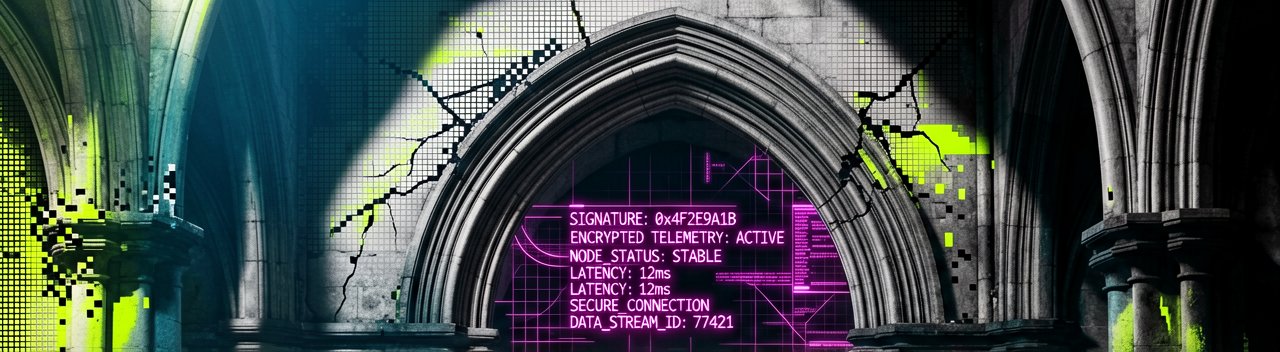
Behind the Voxel Wall: The Friction Between Automation and Human Craftsmanship
Beyond the Immediate Tech Hype: The deployment of automated building software introduces a fundamental philosophical rift within the traditional sandbox landscape. For over a decade, the cultural equity of voxel-based platforms has rested entirely on the scarcity of human time. Masterpieces like the multi-year project to recreate King's Landing or the scaling of entire fantasy continents block by individual block commanded reverence because they served as monuments to human endurance. When a text prompt erases that temporal investment, it fundamentally destabilizes the community currency of prestige, shifting the value of digital architecture from the dedication of the creator to the optimization of the algorithmic model.
This disruption has sent shockwaves through the professional marketplace networks that sustain full-time creators. Specialized digital architects, who historically commanded premium commissions from server networks for bespoke spawn areas and adventure maps, now face immediate downward price pressure. Stakeholders within these creative agencies note that client expectations are shifting rapidly; buyers are beginning to question premium pricing models when foundational layouts can be generated in a matter of seconds. The emerging reality is a bifurcated market where human designers must pivot toward hyper-complex, non-linear detailing that AI tools cannot yet replicate with structural cohesion.
Furthermore, the infrastructure supporting these automated generation suites raises critical questions regarding training data provenance and intellectual property rights in the sandbox domain. Just as 2D generative models faced intense scrutiny for absorbing artist portfolios without consent, the voxel community is beginning to question where these AI models derived their spatial sensibilities. If a tool can effortlessly generate a Gothic cathedral or a cyberpunk metropolis, it has likely internalized the geometric patterns pioneered by community creators over years of trial and error. This structural mimicry sets the stage for future licensing disputes over 3D coordinates and algorithmic training sets.
Ultimately, the institutionalization of prompt-driven engineering in sandbox games echoes historical tech transitions, such as the introduction of computer-aided design to industrial architecture. Proponents argue that by eliminating the tedious, repetitive labor of laying thousands of stone blocks, creators are finally liberated to focus purely on high-level thematic concepts, scale, and narrative design. Yet, critics maintain that the magic of the medium lies precisely within that tedious labor, where accidental misplacements frequently spark unexpected creative breakthroughs. As the ecosystem adjusts to this new paradigm, the defining challenge for platforms will be finding a technological equilibrium that celebrates automated efficiency without completely erasing the soul of human artistry.

Reading Between the Lines: The Structural Paradox of Algorithmic Creativity
The Uncomfortable Illusion of Infinite Variety: Beneath the celebratory rhetoric of prompt-to-voxel technology lies a glaring contradiction regarding the true nature of innovation. Software that automates construction relies entirely on the mathematical aggregation of existing architectural patterns, meaning it is fundamentally incapable of genuine novelty. While the technology promises to democratize building, it is highly likely to produce a paradox of homogeneity where thousands of virtual worlds begin to share the exact same aesthetic DNA. The true premium will inevitably shift away from the ability to generate a massive, flawless fortress and move toward the capacity for intentional, human-driven imperfection that resists algorithmic prediction.
Furthermore, the strategic motivation of competitive esports organizations entering the casual software development arena warrants intense skepticism. Historically, organizations like TSM have monetized their brands through competitive excellence, content creation, and merchandise distribution. Transitioning into the production of desktop automation utilities suggests a critical acknowledgement that traditional esports revenue streams are fracturing, forcing brands to capture casual user bases through utility apps. However, relying on external, closed-source ecosystems like Java-based sandboxes introduces immense platform risk, as a single structural patch or API restriction implemented by the game's parent company could instantly render these third-party automation tools obsolete.
This technical volatility exposes a broader systemic issue concerning the sustainability of algorithmic gaming add-ons. Software that interacts directly with game clients frequently walks a fine line between creative utility and forbidden automation, often triggering anti-cheat mechanisms or violating terms of service agreements. While casual players welcome the mitigation of labor, server administrators are left with the logistical nightmare of enforcing competitive fairness. If a player can deploy a neural network to instantaneously build an optimized fortification or a complex labyrinth during a live match, the core mechanics of survival and tactical resource management collapse under the weight of automated optimization.
"We have officially reached the era where we spend thousands of dollars on high-end hardware just so an algorithm can play our favorite sandbox games for us while we watch, proving that humanity’s ultimate creative achievement is inventing a machine to avoid the grueling labor of clicking virtual plastic bricks."
Artūras Malašauskas is an AI Systems Integrator with 20+ years of production-grade web engineering experience. He has designed, shipped, and scaled enterprise Python/PHP systems for logistics, SaaS, and public-sector clients. For the past year, he has focused exclusively on AI integrations: deploying open-source LLMs, building generative media pipelines (image, audio, video), and engineering multi-agent workflows for real production environments. His standard: reproducibility, security, cost-efficient inference—no vaporware. He documents and evaluates emerging AI tooling, separating verified capabilities from marketing noise. Technical editor at: muza-ai.eu, ai-verslas.lt, ai-naujinos.lt Connect on LinkedIn
Comments