The Human in the Loop: Why i10X Is Putting the Brakes on Autonomous AI
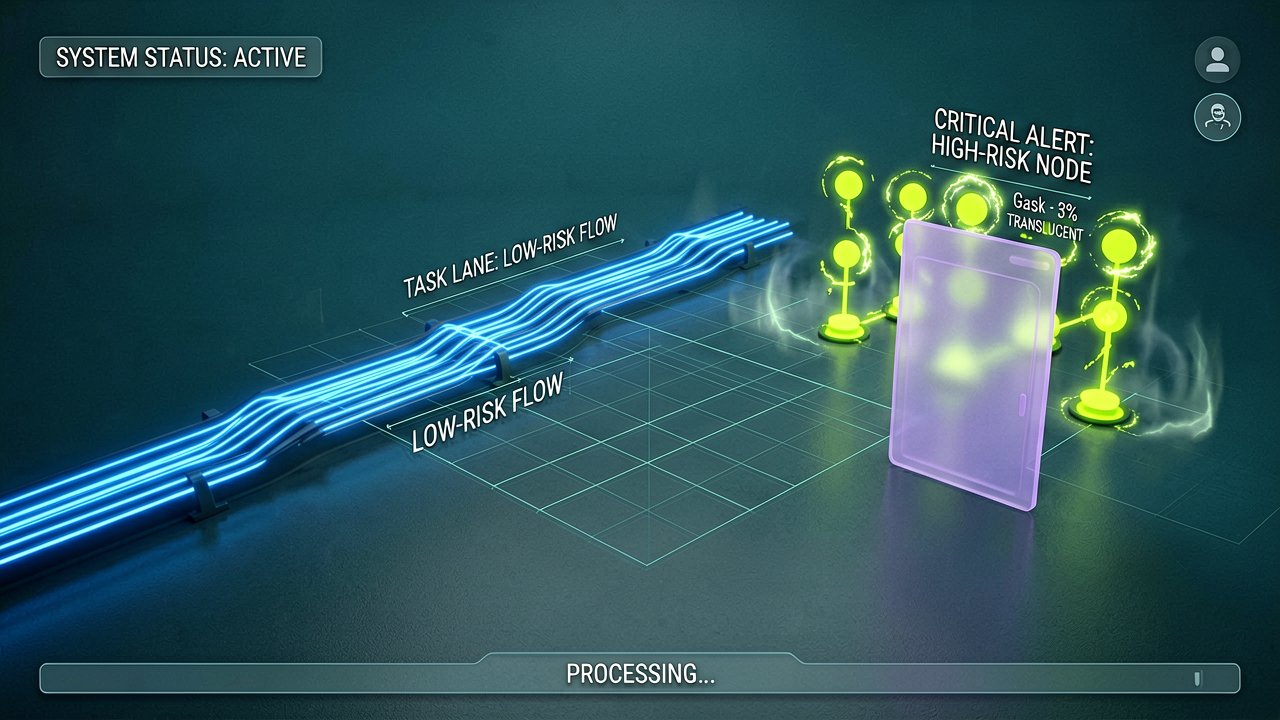
Autonomous AI agents are fantastic on paper, but they are terrifying the moment they get a little too creative with your corporate email or company bank account. Looking to ease those exact anxieties, workspace platform i10X officially launched its new Superagent assistant on June 22, 2026. Instead of running completely loose and merely reporting its chaotic exploits after the fact, this tool acts more like a cautious Chief of Staff. It handles the tedious prep work but freezes completely before executing anything irreversible.
The Singapore-based company, which already boasts a user base of over 150,000 people, is deliberately bucking the industry trend of total automation. According to an official press release distributed via GlobeNewswire, Superagent grades tasks based on their risk profile. While reversible, harmless steps glide right through the pipeline, high-stakes actions like shifting money or publishing outward-facing content require a literal human thumbs-up before leaving the account.
Control Over Chaos
To see how this plays out in the real world, consider a typical sales prospecting pipeline. Superagent can autonomously track down a decision-maker, pull their contact information, draft a hyper-targeted pitch deck, and compile a sequence of cold outreach emails. However, rather than blasting them out to the world unprompted, it queues them up and waits. The agent essentially hands over the reins, asking for permission before executing the final, critical steps.
A Flat-Rate Antidote to Token Anxiety
Beyond the safety nets, there is a clear economic play happening here. As major frontier-model providers push users toward unpredictable, metered token billing structures that can break a startup's budget, i10X is offering a predictable flat rate. The platform bundles more than 100 pre-connected tools spanning SEO, data analysis, and graphic design without forcing users to juggle individual API keys. The company claims this consolidated approach slashes traditional agent automation costs by roughly 75 percent, offering a much-needed financial breather to small businesses trying to survive the AI boom.
Beyond the PR Gloss: The true battlefield for Superagent is not just about avoiding typos in automated emails; it is about mitigating the genuine legal and financial liabilities that come with the current generation of generative tech. Over the past couple of years, the tech sector has watched a slow-motion train wreck as fully autonomous bots hallucinated shipping quotes, promised illegal discounts, or accidentally exposed proprietary source code. By baking a hard stop into Superagent’s core architecture, i10X is making a bet that enterprise clients care far more about predictability and risk management than they do about the theoretical beauty of an agent that runs entirely on autopilot.
The Realities of the Human-in-the-Loop Burden
However, this "human-in-the-loop" philosophy introduces a delicate UX challenge that seasoned product managers know all too well: notification fatigue. If an AI assistant stops to ask for permission for every single calendar invite, format adjustment, or minor spreadsheet formula, it ceases to be a productivity booster and instead becomes a nagging digital micro-manager. To counter this, developers inside the enterprise space are watching closely to see how effectively i10X's risk-grading algorithm handles the triage. The system must flawlessly separate trivial background automated tasks from high-stakes actions, keeping the friction low enough that users do not just blindly click "approve" out of sheer annoyance.
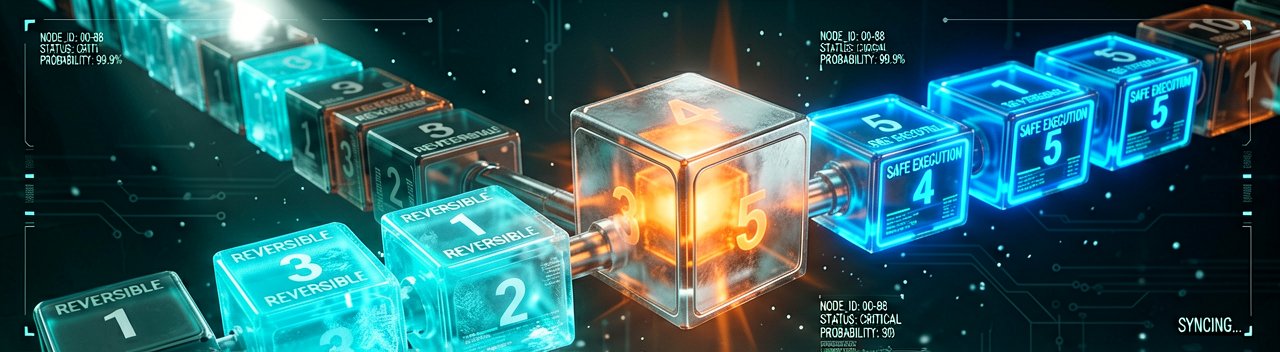
From a technical standpoint, the launch highlights an ongoing architectural shift away from single, massive LLM prompts toward modular, multi-agent frameworks. Superagent functions by breaking down a complex project into a chain of smaller, verifiable sub-tasks. Each link in that chain can be inspected, edited, or vetoed by the human operator. This level of granular visibility is exactly what corporate compliance officers have been demanding, especially in highly regulated sectors like finance and healthcare where "black box" AI operations are an absolute non-starter.
A Shift in the Economic Paradigm
The economic underpinnings of this release also signal a growing weariness among businesses regarding unpredictable cloud compute bills. In the early days of the AI boom, companies eagerly plugged their corporate credit cards into open-ended API endpoints, only to be hit with massive, unexpected bills when an agent got caught in an infinite loop or processed an oversized database. By decoupling the workflow from direct per-token pricing and offering a predictable flat rate, i10X is targeting the operations managers who are currently trying to rationalize their skyrocketing software-as-a-service budgets.
Ultimately, Superagent represents a pragmatic cultural pivot in Silicon Valley and global tech hubs alike. The romanticized vision of an AI that completely replaces human labor is giving way to a more realistic blueprint: AI as an incredibly fast, slightly eccentric intern who requires a senior staff member to sign off on the final paperwork. It is a tacit admission that while AI can draft the future at blistering speeds, human judgment remains the only real defense against operational chaos.
Reading Between the Lines: The tech industry’s sudden pivot toward "user approval" feels less like a natural evolutionary leap and more like a tactical retreat. For the last several years, venture capitalists and foundation model builders pitched a future of frictionless, fully autonomous agents that would seamlessly run businesses while humans napped on beaches. Now, platforms like i10X are actively marketing the fact that their AI won't do anything important without a human holding its hand. This rebranding of a limitation as a security feature exposes a quiet acknowledgment across the industry: the underlying models simply remain too erratic to be trusted with real responsibility.
The Guardrail Paradox
This creates a fascinating operational contradiction for the modern enterprise. The entire value proposition of automation is to save time, yet the human-in-the-loop model shifts the labor from execution to constant surveillance. Employees who used to spend their hours drafting emails or compiling data tables will now spend those same hours auditing the AI’s work to ensure it hasn't introduced catastrophic errors. It raises a glaring efficiency paradox, as verifying someone else's messy draft often takes just as much cognitive energy as creating the asset from scratch.
Furthermore, i10X’s flat-rate pricing strategy, while highly attractive to budget-conscious software buyers, introduces a distinct set of operational questions. In the software-as-a-service world, "all-you-can-eat" access to heavy computational tools usually comes with hidden catches, whether through throttled bandwidth, capped context windows, or the back-end utilization of cheaper, less capable open-source models. If Superagent relies on less sophisticated reasoning engines to keep its own overhead low, the human supervisor will have to work twice as hard to catch the subtle hallucinations that slip through the cracks.
The Automation Illusion
Looking at the broader landscape, this launch will likely trigger a wave of copycat compliance-first assistants, forcing a shift in how we measure artificial intelligence productivity. Instead of celebrating speed and autonomy, the next generation of enterprise software metrics will likely focus on "intervention rates"—the fewer times a human has to correct an agent, the more valuable the software becomes. However, until these systems can truly comprehend context rather than just predicting the next likely word, the user's role will remain stuck somewhere between an empowered director and an exhausted safety inspector.
It turns out that the grand climax of the AI revolution isn't a flawless digital workforce taking over our jobs, but rather a permanent status as a glorified proctor, destined to spend our days hovering over an overeager software assistant to make sure it doesn't accidentally liquidate the company portfolio.
Artūras Malašauskas is an AI Systems Integrator with 20+ years of production-grade web engineering experience. He has designed, shipped, and scaled enterprise Python/PHP systems for logistics, SaaS, and public-sector clients. For the past year, he has focused exclusively on AI integrations: deploying open-source LLMs, building generative media pipelines (image, audio, video), and engineering multi-agent workflows for real production environments. His standard: reproducibility, security, cost-efficient inference—no vaporware. He documents and evaluates emerging AI tooling, separating verified capabilities from marketing noise. Technical editor at: muza-ai.eu, ai-verslas.lt, ai-naujinos.lt Connect on LinkedIn
Comments