Silicon Showdown: The NPU Arms Race Redefining the Creative Laptop

The traditional metric of judging a laptop purely by its raw CPU clock speeds or massive discrete GPU power draw has officially been turned on its head. Over the past year, silicon giants have completely re-engineered the personal computer around dedicated hardware designed exclusively for artificial intelligence: the Neural Processing Unit (NPU). Driven heavily by Microsoft setting a strict 40-TOPS baseline for its local Copilot+ feature ecosystem, a massive industry shift occurred. Chipmakers began integrating these specialized AI engines directly into their system architecture, triggering a fierce technical turf war between ARM-based efficiency and x86 processing muscle.
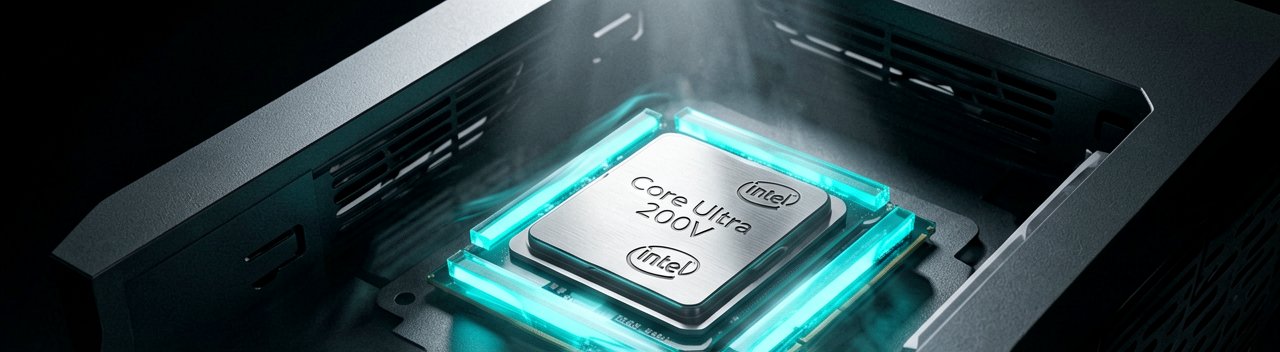
The balance of power shifted dramatically when Qualcomm disrupted the Windows laptop market by launching its ARM-based Snapdragon X Elite processor family, detailed via a comprehensive Qualcomm technical overview. This custom Oryon-driven architecture brought a robust Hexagon NPU pushing 45 TOPS of localized AI performance to thin-and-light chassis. Not to be outdone on their own turf, traditional x86 heavyweights fired back. Intel completely overhauled its mobile blueprint, releasing the Intel Core Ultra 200V series mobile processors to address power efficiency and AI compute bottlenecks simultaneously, as announced by the Intel Corporation. AMD joined the high-stakes fray alongside them by delivering its third-generation mobile platforms, the Ryzen AI 300 series processors, which feature an XDNA 2 architecture NPU capable of scaling up to an industry-leading 50 to 55 TOPS, according to an official release from AMD.
The Architecture Divide: ARM Efficiency vs. x86 Compatibility
The baseline differences between these competing technologies boil down to fundamental structural philosophies. Qualcomm’s ARM approach sacrifices legacy instruction sets to achieve spectacular battery life and immediate, low-overhead AI task handling. On the flip side of the coin, Intel and AMD leverage their deep x86 compatibility to ensure that heavy-duty creative applications run natively without translation layers. While Qualcomm thrives on executing lightweight generative models continuously throughout a workday, the x86 rivals lean on raw architectural power to handle sustained, multi-threaded rendering pipelines without breaking a sweat.
Editorial Pros & Cons
| Platform Architecture | Operational Advantages (Pros) | Operational Disadvantages (Cons) |
|---|---|---|
| Qualcomm Snapdragon X Elite | Unmatched battery longevity during continuous AI inference; exceptional thermal efficiency in fanless designs; class-leading standby times. | Occasional translation overhead for legacy creative software; limited peripheral driver support for specialized hardware. |
| Intel Core Ultra 200V | Flawless application compatibility out of the box; exceptional per-core NPU response times; tightly integrated graphics block. | Hard memory limits forced by on-package RAM placement; higher peak power spikes compared to ARM alternatives. |
| AMD Ryzen AI 300 | Massive multi-threaded processing muscle; support for massive RAM configurations up to 256GB; superior sustained computational throughput. | Higher overall platform thermal footprint; slightly reduced battery endurance when handling mixed baseline workloads. |
Navigating the Real-World Trade-Offs
Reading Between the Lines: The sleek marketing materials provided by these chipmakers obscure a fundamental truth about the current state of local artificial intelligence hardware. While a device boasting 50 TOPS sounds universally superior to one pushing 45 TOPS on a spec sheet, real-world utility depends entirely on how software developers hook into that specific silicon. An NPU is completely useless if your video editing suite or photo manipulation application cannot address its instruction set natively, leaving users to fall back on battery-draining CPU or GPU rendering paths anyway.
Qualcomm’s ARM platform represents a massive leap forward for mobile professionals who prioritize long flights and coffee-shop work sessions over absolute raw rendering horsepower. The chip operates with an astonishingly low thermal ceiling, which means your laptop stays completely silent and cool to the touch while generating local text summaries or running continuous camera tracking effects. However, specialized creative professionals utilizing obscure plug-ins, legacy audio interfaces, or niche CAD tools will still run into stubborn compatibility walls that the ARM translation layer cannot fully resolve.
For those users, the traditional x86 architecture championed by Intel and AMD remains an absolute necessity despite its higher appetite for power. Intel’s clever move to glue the memory directly onto the processor tile mitigates a lot of historical x86 latency bottlenecks, making it a highly responsive choice for rapid, bursty AI tasks. Meanwhile, AMD targets the heavy lifters who require massive local memory pools to manipulate gigapixel images or multi-stream video pipelines. Choosing a mobile workstation in this current climate is no longer about finding the fastest overall machine, but rather about selecting the specific architectural compromise you are willing to live with on a daily basis.
"We have finally achieved the long-promised dream of putting a literal supercomputer inside a thin-and-light laptop, yet the tech industry's immediate response is to use all that groundbreaking, localized silicon to power a glorified autocorrect and blur our messy bedroom backgrounds during morning corporate video calls."
Artūras Malašauskas is an AI Systems Integrator with 20+ years of production-grade web engineering experience. He has designed, shipped, and scaled enterprise Python/PHP systems for logistics, SaaS, and public-sector clients. For the past year, he has focused exclusively on AI integrations: deploying open-source LLMs, building generative media pipelines (image, audio, video), and engineering multi-agent workflows for real production environments. His standard: reproducibility, security, cost-efficient inference—no vaporware. He documents and evaluates emerging AI tooling, separating verified capabilities from marketing noise. Technical editor at: muza-ai.eu, ai-verslas.lt, ai-naujinos.lt Connect on LinkedIn
Comments