The Death of the Uncanny Valley: Inside NC AI's Mind-Bending Face Animation Breakthrough
Few things shatter gaming immersion faster than a meticulously rendered digital human speaking with the rigid, mechanical lip-sync of a decade-old title. While modern hardware handles sprawling virtual worlds effortlessly, capturing the subtle, fluid nuances of human facial mechanics has remained a notoriously expensive, artist-heavy bottleneck. That status quo just hit a massive evolutionary wall. At the Nexon Developers Conference (NDC26), Han-yong Jang, Director of NC AI's Physical AI Lab, unveiled "VARCO FaceSync"—a generative AI pipeline capable of translating speech directly into complex, production-ready facial animations with zero manual cleanup. According to a detailed report by GameMeca, this development signals a monumental shift toward automating high-fidelity visual storytelling, cutting out the painstaking post-processing that has bogged down studio pipelines for years.
Historically, developers had to choose between the high cost of precision motion capture or existing automated solutions that frequently failed under pressure. Standard industry tools often faltered when fed aggressive acting tones or echo-laden game audio, leading to distracting lip tremors and unnatural artifacts. Other market alternatives controlled these jitters but softened the output too much, causing distinct speech pronunciations to blur into a mushy, indistinct mess. NC AI bypassed these limitations by building an architecture around a custom diffusion transformer model. The system relies on a proprietary face motion capture rig designed explicitly to gather high-fidelity training data for bilabial sounds—the tricky mouth movements required to pronounce consonants like p, b, and m. By heavily expanding this specialized training volume, the model masters precise lip-shaping natively.
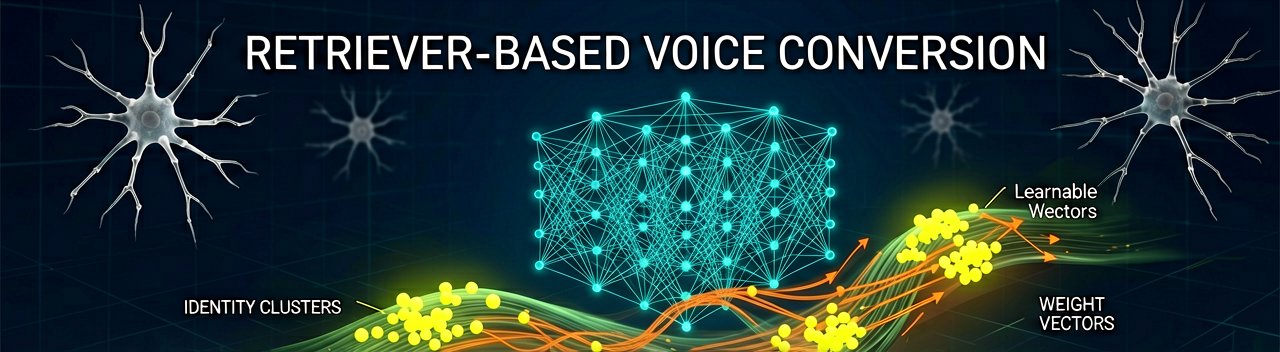
Solving the physical mechanics of speech was only half the battle; the team also had to tackle character identity preservation. In massive MMORPGs or cinematic titles featuring hundreds of NPCs, using a single, unified AI architecture often results in a homogenization effect, where every character ends up mimicking the exact same facial habits. To prevent this loss of individuality, VARCO FaceSync integrates a retriever-based voice conversion model. When any voice track is fed into the system, the architecture maps the raw audio back to a standardized reference database to scrub out background noise and technical distortion. Crucially, a separate layer of learnable identity embeddings is applied directly to the animation output. This means that if two entirely different characters deliver identical dialogue, the AI automatically factors in their unique facial structures and personality traits, generating distinct facial expressions for each.
The true power of this framework lies in its absolute production efficiency and integration with modern development environments. The entire automated pipeline feeds acoustic data—analyzing intonation, phonemes, and emotional spikes—and instantly outputs fully rigged blend-shape weights straight into Unreal Engine sequence assets. For background dialogue or secondary quests where hiring voice actors is budget-prohibitive, developers can feed script text into a text-to-speech engine, and the AI will automatically generate the corresponding face shapes without human intervention. By achieving immediate, QA-ready animation data right out of the box, localized versions of games can be generated instantly across multiple languages, reducing localization costs exponentially. While current models are restricted to standard emotional buckets like joy, sadness, and anger, the engineering team is already expanding the architecture to capture highly nuanced, complex internal states, paving the way for a future where AI handles the synchronized synthesis of facial expressions, eye gaze, and bodily gestures simultaneously.
Behind the Scenes: Architectural Optimizations Under the Hood
Behind the Scenes: While the front-facing capabilities of VARCO FaceSync deliver undeniable artistic freedom, the system's real magic lies in its low-level execution pipeline. Systems engineers designing for modern game engines must balance immense processing loads, meaning a heavy AI model cannot simply hog critical CPU cycles during real-time rendering or data baking. To solve this, NC AI engineered a split-phase data pipeline that completely decouples raw audio ingestion from the deformation matrix generation. The input audio signal undergoes a high-speed Fast Fourier Transform (FFT) pass inside a localized preprocessing worker thread, which extracts log-mel spectrogram features at an tight 20-millisecond window frame rate. This constant, structured data stream ensures that the downstream transformer layers receive a highly deterministic payload, preventing frame-rate stutters during heavy computational spikes.
The core computational bottleneck of a standard diffusion transformer is its quadratic complexity relative to sequence length. For lengthy cinematic sequences or sprawling game dialogue scripts, this mathematical reality would normally cause severe VRAM spikes and processing delays. To mitigate this data congestion, the VARCO architecture implements a specialized linear attention mechanism within its spatial-temporal blocks. This mathematical shortcut compresses the attention matrix calculation without sacrificing the model's memory of emotional context from the beginning of a sentence. Furthermore, the system uses quantized FP16 weights during the inference phase, which slashes memory bandwidth requirements by half. By utilizing TensorRT acceleration directly on the server side, the pipeline transforms raw acoustic energy into blend-shape coefficients in near-real-time, achieving a performance throughput that easily sustains rapid batch-processing of localization assets.
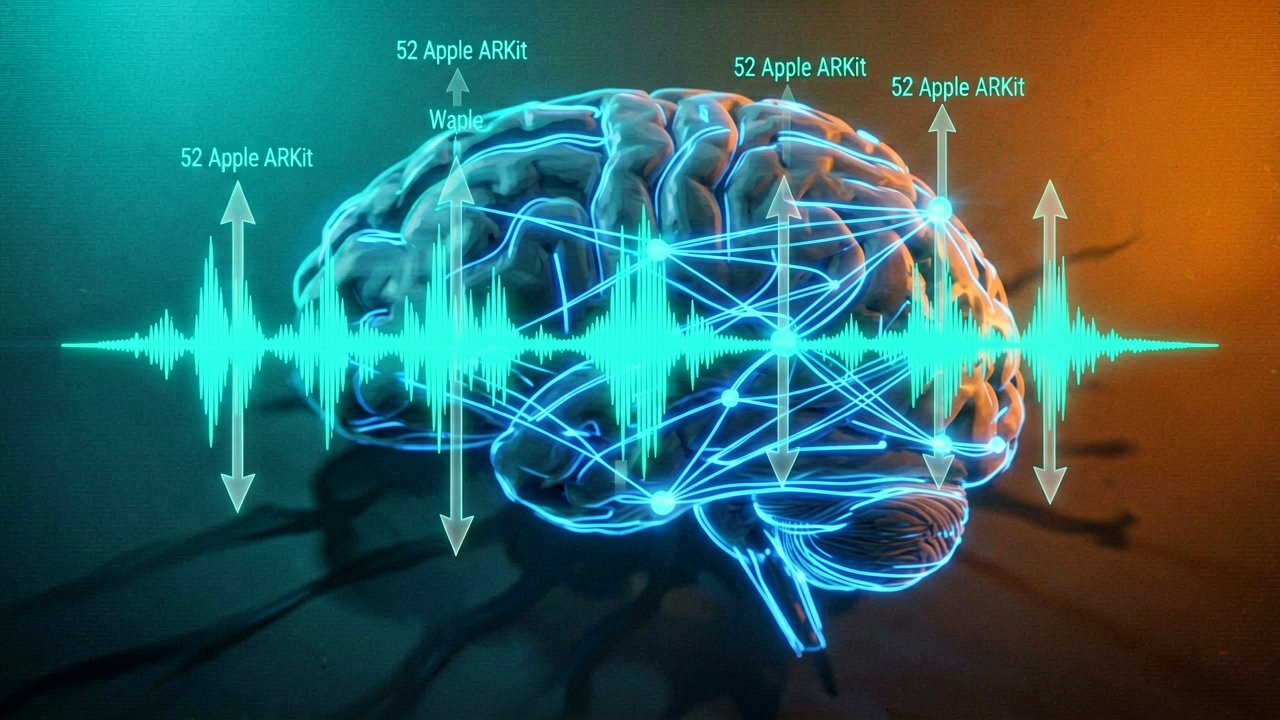
Once the audio features are successfully mapped, they pass into a highly optimized runtime decoder designed to communicate directly with Unreal Engine’s Live Link and Control Rig API frameworks. Instead of exporting massive, uncompressed FBX vertex cache files that bloat build sizes, the pipeline outputs sparse, indexed array packets containing 52 standardized Apple ARKit blend-shape weights alongside custom skeletal bone offsets. A parallel processing layer monitors these arrays for micro-jittering—a common artifact of neural network outputs—by applying a specialized Savitzky-Golay filtering algorithm directly to the vector stream. This mathematical smoothing happens on the fly, eliminating the need for traditional, multi-pass animation filtering curves that require manual oversight by technical animators.
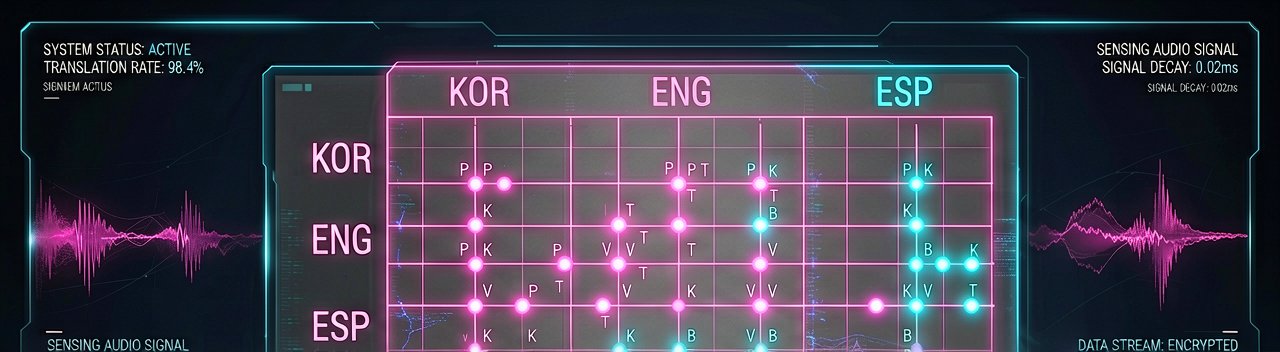
The final engineering triumph involves handling dynamic cross-lingual runtime execution. When a game client switches audio tracks from Korean to English or Spanish, the architecture does not reload entirely separate model weights, which would introduce unacceptable loading hitches or memory fragmentation. Instead, the framework relies on a universal phoneme-to-viseme mapping matrix that operates as an isolated, lightweight translation layer sitting on top of the base motion synthesis engine. By swapping out only this compact matrix at runtime, the engine maintains a constant memory footprint. This clean separation of audio decoding, architectural inference, and engine-side filtering transforms what used to be a tedious, month-long post-production chore into a fluid, highly scriptable data pipeline optimized for modern, multi-platform deployment.
Reading Between the Lines: The Hidden Overhead of Automated Artistry
Reading Between the Lines: The industry’s rush to embrace generative pipelines like VARCO FaceSync reveals a deep, underlying contradiction in the way modern game studios calculate efficiency. On paper, cutting out thousands of manual animation hours looks like an unmitigated victory for the accounting department. Yet, this idealized view completely ignores the massive technical debt shifted onto the studio's data engineering and pipeline maintenance teams. Swapping out standard technical animators for a specialized infrastructure squad capable of debugging proprietary diffusion transformers, maintaining localized voice conversion models, and managing heavy GPU server instances is a massive financial trade-off. For many mid-sized studios, the sheer cost of building, training, and running these hyper-optimized AI runtimes may end up eclipsing the traditional labor costs they were supposed to replace.
There is also a profound creative risk in relying so heavily on synthetic identity embeddings to preserve character individuality. While NC AI’s retriever-based model claims to generate unique facial traits for different characters speaking the same line, the underlying mechanics are still bound by a finite reference dataset. When thousands of background characters across an massive MMORPG have their expressions synthesized by the exact same core model architecture, a subtle, systemic homogenization is almost inevitable. The distinct, chaotic quirks that human animators inject into an acting performance—the slightly asymmetrical smirk or the flawed, unscripted pause—risk being ironed out by a mathematical smoothing filter designed to prevent clipping. True cinematic excellence often thrives on the very irregularities that automated systems are explicitly programmed to optimize away.
Furthermore, the promise of effortless multi-language localization introduces a massive quality-control bottleneck that few studios are actually prepared to handle. It is one thing to automatically generate anatomically accurate visemes for five different languages based on translated text-to-speech data; it is an entirely different challenge to ensure that the emotional subtext and cultural nuances translate correctly across those languages without a single human director in the loop. An automated system might successfully align an m or a p sound across English, French, and Japanese versions of a scene, but it cannot recognize when a joke’s deadpan delivery reads as entirely flat or unintentionally offensive in a foreign market. Without human supervision, studios risk deploying localized titles that look technically perfect but feel emotionally hollow to global audiences.
Ultimately, the industry must reckon with the fact that full automation is rarely the magic bullet it is marketed to be. Instead of completely replacing human animators, systems like VARCO FaceSync are much more likely to function as hyper-advanced blocking tools that handle the first eighty percent of the tedious, foundational work. The final twenty percent—the crucial, artistry-driven refinement where characters actually come alive—will still require the discerning eye of a human creator. Studios that treat generative AI as an outright replacement for talent, rather than a highly specialized piece of industrial scaffolding, will likely find themselves shipping worlds that are technically flawless, incredibly vast, and utterly forgettable.
"We are rapidly approaching a future where an AI can instantly generate ten thousand perfectly lip-synced background characters in thirty languages, leaving us to marvel at the incredible technical achievements of a game that we will inevitably mute to listen to a podcast."
Artūras Malašauskas is an AI Systems Integrator with 20+ years of production-grade web engineering experience. He has designed, shipped, and scaled enterprise Python/PHP systems for logistics, SaaS, and public-sector clients. For the past year, he has focused exclusively on AI integrations: deploying open-source LLMs, building generative media pipelines (image, audio, video), and engineering multi-agent workflows for real production environments. His standard: reproducibility, security, cost-efficient inference—no vaporware. He documents and evaluates emerging AI tooling, separating verified capabilities from marketing noise. Technical editor at: muza-ai.eu, ai-verslas.lt, ai-naujinos.lt Connect on LinkedIn
Comments