Silicon Over Subscriptions: How Apple Intelligence Upends Smart Home Security
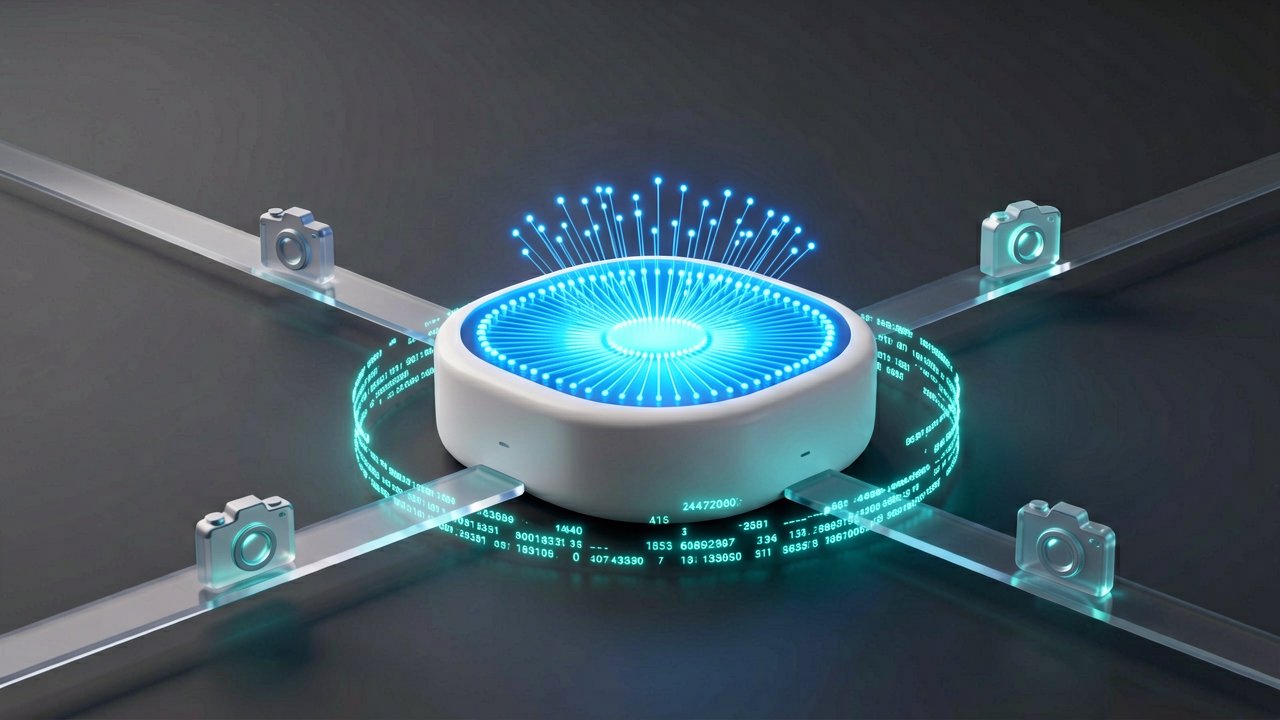
The consumer smart home surveillance industry is undergoing a structural realignment as Apple integrates Apple Intelligence into HomeKit Secure Video. Unveiled at WWDC 2026, the updated service introduces AI-powered text descriptions, cross-camera event timelines, and natural language video searching natively within iOS. By executing computer vision pipelines directly on local home hubs and via Private Cloud Compute, Apple is actively decoupling high-tier machine learning analytics from the expensive, hardware-specific monthly subscription paywalls that have historically defined consumer security markets.
This localized intelligence model introduces severe competitive disruption for traditional ecosystem gatekeepers. Legacy security brands have long relied on recurring cloud-storage fees to monetize features like package tracking, facial recognition, and spatial anomalies. Apple’s architectural shift shifts the computing burden onto native silicon, allowing multi-brand camera systems to share a unified, intelligent layer within the Home experience. According to market insights from Parks Associates, this cross-brand interoperability bypasses individual applications, removing the friction of siloed hardware ecosystems and positioning Apple as the centralized aggregator of residential security data.
The Architecture of Edge-Based Threat Detection
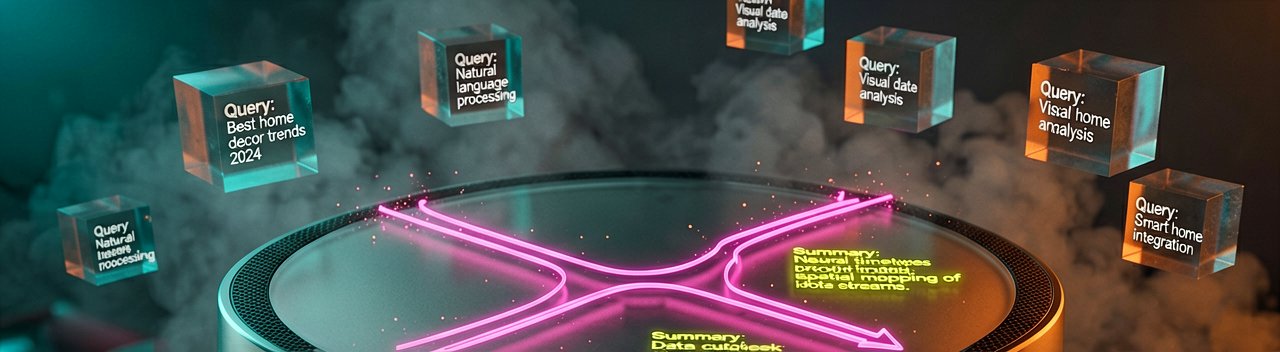
The technological core of Apple's strategy relies on shifting intensive video processing away from public cloud servers to local nodes and cryptographically secure sandboxes. With the rollout of these features, HomeKit Secure Video cameras utilize edge-based machine learning to scan video frames, identify contextual actions, and output comprehensive text summaries directly to the user. Rather than firing generic motion alerts, the system constructs semantic interpretations of events, such as tracking a delivery courier walking up a driveway across multiple camera fields of view. As reported by The Verge , this natural language understanding allows users to instantly search historical footage across all connected devices using simple phrases rather than manually scrubbing through timestamps.
Privacy Frameworks and the Competitive Moat
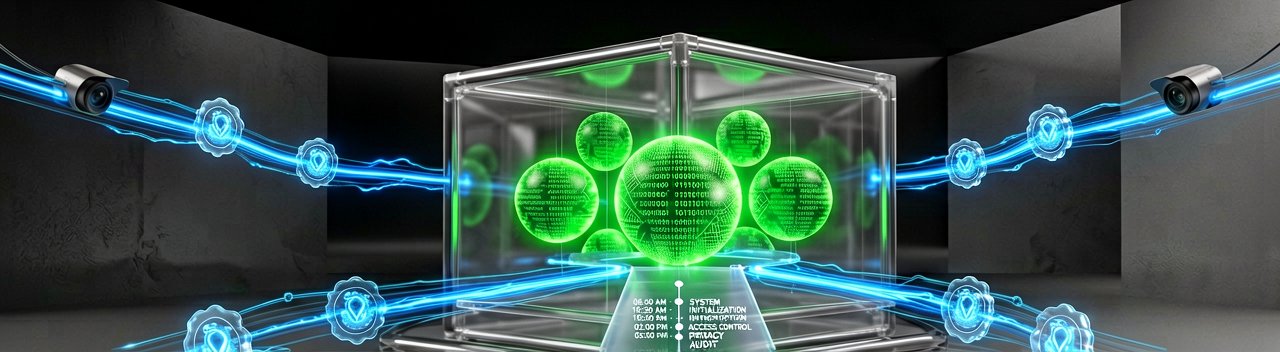
By executing these video analytics within its end-to-end encrypted ecosystem, Apple is addressing the inherent privacy vulnerabilities that plague traditional cloud surveillance. Standard smart home systems often process raw video feeds on third-party servers, creating significant data liability and trust issues among privacy-conscious consumers. Apple bypasses this compromise by anchoring its machine learning workloads on local home hubs—such as the Apple TV 4K or HomePod—and scaling to Private Cloud Compute only when advanced processing is required. Details highlighted by MacRumors show that this approach also consolidates fragmented, repeating accessory notifications into a single ongoing activity, reducing notification fatigue without exposing user metadata to external entities.
Disrupting the Hardware and Subscription Monolith
From a market standpoint, Apple’s platform updates commoditize the primary software differentiators that manufacturers use to justify ongoing subscription costs. While companies like Google Nest and Arlo rely on software tiers to sustain profitability, Apple’s strategy treats advanced video analysis as an extension of the baseline hardware and iCloud ecosystem. Simultaneously lifting the platform's resolution threshold to support native 4K recording eliminates a long-standing hardware bottleneck, stripping legacy manufacturers of their computational monopoly. By offering superior, privacy-first analytics as an inherent ecosystem feature, Apple is forcing hardware vendors to compete strictly on optical quality and industrial design, permanently altering the economics of consumer home security.
An Analytical Deep Dive into the Smart Home Surveillance Shift
Beyond the Marketing Gloss: The true battleground for the future of residential surveillance is not fought over optical glass or sensor resolution, but inside the localized silicon of the modern smart home hub. For nearly a decade, the business model for smart home security has mirrored that of the smartphone app economy: sell the hardware at thin margins, then lock the consumer into perpetual monthly subscription tiers to unlock basic features like human detection or cloud activity logs. Apple’s decision to decentralize this model by running computer vision pipelines directly on HomePod and Apple TV silicon strips legacy providers of their primary revenue engine. By shifting advanced spatial awareness from multi-tenant cloud datacenters to local edge devices, Apple is changing the industry definition of what constitutes a baseline security product.
This pivot exposes an uncomfortable engineering bottleneck for legacy manufacturers who have long externalized their computing costs to Amazon Web Services or Google Cloud. Companies relying on subscription-tied video analytics must now justify their recurring fees against a platform that handles the exact same analytical tasks locally, without latency, and at no additional cost beyond an iCloud tier. Industry insiders note that this structural shift forces a massive hardware re-evaluation; third-party manufacturers will likely be split into those who capitulate to Apple's local computing ecosystem and those who attempt to build proprietary, high-compute localized silicon to stay independent. The immediate casualty in this transition is the premium subscription tier, which is rapidly transforming from an industry standard into an consumer liability.
From an architectural standpoint, the operational execution of Private Cloud Compute solves a fundamental trust deficit that has plagued cloud-based home security for years. Traditional smart home architectures routinely upload unencrypted or provider-accessible video streams to external servers for semantic analysis, creating massive targets for state actors and data breaches. Apple’s dual-layer approach acts as a strategic moat: the local home hub attempts to run the bulk of the natural language tagging, and only complex multi-camera temporal tracking is offloaded to stateless, cryptographically auditable cloud nodes. This framework eliminates the historic trade-off between receiving intelligent notifications and maintaining absolute domestic privacy, setting a rigid benchmark that competitors cannot easily replicate without completely overhauling their underlying data pipelines.
The long-term industry implications extend directly into the broader Matter and smart home standards ecosystem, where Apple is subtly positioning itself as the mandatory intelligence layer for an increasingly commoditized hardware landscape. As cameras become cheaper and more uniform, the value of the surveillance system consolidates entirely into the software orchestration layer that interprets the data. By transforming fragmented, brand-specific alerts into a unified, contextual stream of household events, Apple establishes its operating system as the definitive control center for the home. This maneuver essentially reduces third-party cameras to basic data collection nodes, ensuring that while consumers can buy any hardware they prefer, they must remain firmly anchored within Apple's software environment to make sense of it.
The Hidden Fault Lines of Privacy-First Automation
Reading Between the Lines: The tech industry’s collective pivot toward localized machine learning is frequently framed as a triumph for consumer data rights, yet this narrative glosses over a glaring structural contradiction. Apple’s architecture successfully starves third-party cloud servers of raw video metadata, but it achieves this by intensifying consumer dependence on Apple's proprietary hardware footprint. To participate in this new paradigm of ambient surveillance, a household must not only own compatible cameras but must also invest in high-margin Apple silicon nodes—such as the Apple TV 4K or an updated HomePod—to act as the local computational gatekeeper. Privacy, in this business model, ceases to be an unalienable platform standard and instead becomes a premium feature gated behind an expansive, hardware-dependent ecosystem buy-in.
Furthermore, the engineering reality of edge-based computer vision introduces a delicate operational paradox regarding local power consumption and thermal efficiency. Processing continuous streams of 4K video feeds to detect behavioral anomalies requires sustained computational throughput that stretches the limits of compact, passively cooled consumer electronics. While multi-tenant cloud data centers can dynamically scale processing clusters to handle sudden spikes in activity across thousands of homes, a localized home hub must absorb these computational bursts independently. This localized processing strategy risks hitting a ceiling of diminishing returns, where the local hub must choose between throttling its analytical depth or running constantly hot, thereby sacrificing the longevity of the consumer’s central smart home hardware.
This localized model also introduces an intellectual property bottleneck that could inadvertently stifle open smart home standards like Matter. By keeping the natural language processing, semantic tagging, and multi-camera timeline stitching entirely within its closed software layer, Apple ensures that the truly valuable insights remain proprietary. Third-party camera manufacturers are effectively demoted to building dumb lenses; they capture the photons, but Apple retains the exclusive right to interpret what those photons mean. This dynamic discourages hardware innovation from smaller firms, as any advanced on-device sensor capabilities they develop will ultimately be flattened and homogenized by Apple’s dominant application programming interfaces.
Looking toward the horizon, the broader societal implications of natural language surveillance search engines inside the home remain deeply unpredictable. When finding a specific historical event becomes as simple as typing a casual phrase into a smartphone, the psychological nature of domestic surveillance fundamentally shifts from a passive deterrent against external intruders to an active tool for internal micromanagement. The ease of auditing household behavior could amplify domestic friction, turning the smart home app into an unblinking corporate mediator of everyday family life. As this technology matures, the industry will have to confront the reality that the real threat to residential peace might not be the hacker targeting cloud servers, but the hyper-efficient, frictionless surveillance apparatus running entirely inside the living room.
The modern smart home has achieved the ultimate capitalistic synthesis: we now willingly pay a premium for local silicon to protect us from the very cloud servers we previously paid a premium to connect to, proving that the most profitable product in tech is simply the cure for the last decade's innovations.
Artūras Malašauskas is an AI Systems Integrator with 20+ years of production-grade web engineering experience. He has designed, shipped, and scaled enterprise Python/PHP systems for logistics, SaaS, and public-sector clients. For the past year, he has focused exclusively on AI integrations: deploying open-source LLMs, building generative media pipelines (image, audio, video), and engineering multi-agent workflows for real production environments. His standard: reproducibility, security, cost-efficient inference—no vaporware. He documents and evaluates emerging AI tooling, separating verified capabilities from marketing noise. Technical editor at: muza-ai.eu, ai-verslas.lt, ai-naujinos.lt Connect on LinkedIn
Comments