Unreal Engine 6's AI Shift: A Developer's Dilemma in Game Design Evolution

The global game development community is experiencing a period of intense friction following Epic Games' official roadmap disclosure for Unreal Engine 6. In an industry-defining strategic pivot announced at State of Unreal 2026, Executive Vice President Marcus Wassmer confirmed that the upcoming engine will deprecate foundational visual scripting systems like Blueprints and traditional Actor frameworks. According to the official announcement published on the Unreal Engine Website, Epic Games intends to replace these long-standing workflows with an advanced Entity Component System (ECS) called Scene Graph, powered by the text-based programming language Verse and a highly sophisticated generative AI architecture.
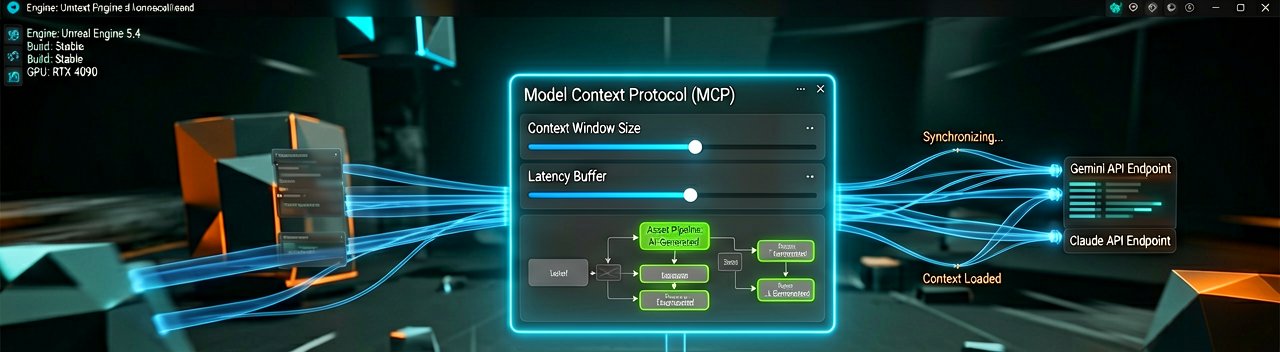
This massive structural reorganization centers on an experimental Model Context Protocol (MCP) plugin, which provides native, out-of-the-box integrations for prominent large language models including Google Gemini and Anthropic Claude. As reported by Video Games Chronicle, Epic Games frames this aggressive push into generative machine learning as a critical means to reduce tedious content authoring, optimize performance scaling, and automate complex programming tasks. However, the prospect of deep-seated AI integration has triggered acute anxiety among professional developers, who face the steep learning curve of a new scripting environment alongside immediate fears of creative displacement and automated labor reduction.
The market tension underscores a deeper industry dilemma regarding the evolution of game design tools. While Epic Games promises that these deep pipelines will serve as productivity multipliers, independent creators and industry veterans note that merging Unreal Engine 5 with the Unreal Editor for Fortnite (UEFN) ecosystem forces a rigid paradigm shift toward highly commoditized, live-service ecosystems. As detailed by Game Developer, the timeline targets an early access release in late 2027, leaving studios to navigate an unsettling multi-year transition where traditional technical expertise must adapt to, or be redefined by, algorithmic generation frameworks.
The Architecture of Friction: Displacing Blueprints for Verse
The technical restructuring of Unreal Engine 6 systematically alters the entry barriers for non-programmers. For over a decade, Blueprints enabled technical artists, level designers, and indie developers to construct sophisticated game logic without writing compiled code. Phasing out this binary-based visual framework in favor of Verse and AI-driven automated generation creates a highly complex dual-pathway. Teams must now adapt to a text-driven environment where natural language prompts to integrated models handle asset population and local logic blocks. This change fundamentally threatens the specialized role of intermediate gameplay scripters.
Market Consolidation and the UEFN Interoperability Mandate
Epic Games' long-term commercial strategy relies heavily on Metcalfe's Law, seeking to connect distinct virtual experiences into a unified, shared economic graph. By forcing the convergence of standalone engine pipelines and UEFN into a singular product, the engine provider aims to make code, player cosmetics, and functional assets completely portable across traditional games and the Fortnite ecosystem. This interoperability model relies on AI tools to auto-translate and scale user-generated assets into open-source standards like glTF and USD. Consequently, independent studios are increasingly pulled away from bespoke engine configurations and steered toward decentralized, live-service platforms dominated by platform holder distribution frameworks.
Corporate Optimism vs. Creative Displacement Realities
The core tension within this technological shift lies in the contrasting viewpoints of corporate leadership and frontline creators. Executive leadership presents automated level population, semantic search asset libraries, and self-repairing code generation as liberating mechanisms that unburden talent from routine maintenance. Conversely, developers view the integration of third-party commercial AI models directly into the core engine architecture as an optimization strategy intended to downsize production teams. With a full commercial rollout projected between late 2028 and mid-2029, the gaming industry is entering a critical transition phase where technical self-reliance must actively compete with native, algorithmic automation.
The Hidden Architecture of Epic's Platform Convergence
Beneath the Polished Announcements: The structural transition underpinning Unreal Engine 6 represents a profound recalibration of digital creation rights and studio autonomy. By unifying the standalone Unreal Engine pipeline with the Unreal Editor for Fortnite (UEFN) sandbox, Epic Games is not merely updating software; they are engineering an enclosed digital economy. Historically, game engines functioned as neutral, localized creation utilities, allowing studios complete sovereignty over their data, distribution pipelines, and intellectual property. The introduction of unified cloud-tied architecture and persistent interoperability frameworks shifts the engine's core identity from an offline asset-generation suite into a distributed, cloud-dependent platform service model.
This architectural pivot introduces complex operational hurdles for independent and mid-tier studios. Veteran technical directors note that the mandated shift to Scene Graph and the Verse language forces teams to abandon proprietary pipelines optimized over a decade of iterating on Unreal Engine 4 and 5. This workflow replacement creates immediate technical friction, as existing asset libraries, customized visual scripting tools, and legacy C++ plugins cannot be natively ported to the new ecosystem. Studios must choose between paying the steep financial tax of comprehensive staff retraining or accepting a dependence on automated generative AI tools to translate and rebuild their proprietary pipelines from scratch.

The institutional anxiety within the developer community is further compounded by unresolved legal and ethical questions surrounding asset ingestion. While Epic Games emphasizes that its Model Context Protocol plugin utilizes open APIs to interface with localized corporate instances of models like Google Gemini or Anthropic Claude, frontline artists remain deeply skeptical. The integration of generative algorithms directly into the engine's content browser means that asset creation, procedural terrain generation, and automated code refactoring happen within an environment connected to massive external training datasets. This close proximity raises concerns about hidden copyright liabilities for commercial studios, who risk losing distinct artistic signatures as automated tools homogenize visual and systemic design patterns across the marketplace.
From an executive and macroeconomic perspective, Epic’s strategy is a calculated response to the soaring costs of modern AAA game production. The current industry model, which demands hundreds of millions of dollars and half a decade of development time for a single prestige title, has proven increasingly volatile. Executive leadership views automated level design, algorithmic asset optimization, and self-correcting logic systems as essential stabilization tools to prevent catastrophic studio bankruptcies. By lowering production overhead through algorithmic assistance, the goal is to make the creation of vast, interactive virtual spaces economically viable for smaller teams, effectively lowering the financial barrier to entry for highly ambitious projects.
However, this corporate optimization narrative conflicts directly with the realities of human creative labor. Specialized level designers, environmental artists, and junior gameplay programmers increasingly view these embedded tools as automated replacement systems disguised as workflow enhancements. The historical evolution of game development demonstrates that automation rarely reduces developer workloads; instead, it tends to expand project scope, accelerate production timelines, and lead to team downsizing once foundational systems are automated. As the industry approaches the initial rollout phases of Unreal Engine 6, the core debate centers on whether this new era will truly democratize creation or simply establish a commoditized production landscape where human oversight is limited to refining algorithmically generated baselines.
The Paradox of Democratic Automation
Reading Between the Lines: The corporate promise that algorithmic automation will democratize game design contains a fundamental structural contradiction. Epic Games positions the integration of generative AI and the Verse-driven Scene Graph as tools that liberate small creators from the financial burdens of AAA production. However, this narrative overlooks the reality of platform economics, where lowering the barrier to entry invariably triggers an exponential surge in marketplace noise. When anyone can generate vast, functional virtual environments with a series of natural language prompts, the market value of raw content collapses, shifting the industry's ultimate bottleneck from production capability to discoverability and platform distribution power.
This reality exposes a profound conflict of interest embedded within the engine’s architectural evolution. By steering developers toward a unified ecosystem where code, assets, and player identity seamlessly cross-pollinate with Fortnite, Epic Games creates a closed loop of economic dependency. The technological tools intended to grant independent studios creative freedom simultaneously bind them to a singular distribution network’s economic rules. Studios utilizing these automated pipelines are no longer just building standalone commercial products; they are actively populating a platform holder's digital landscape, transforming independent developers into decentralized content creators for a broader corporate service model.
Furthermore, the technical assumption that generative models can reliably replace the nuanced optimization of human programmers ignores the chaotic reality of game physics and runtime execution. While an LLM can easily generate standard boilerplate code or populate a grid with static environmental assets, the true difficulty of game engineering lies in debugging unpredictable, emergent interactions between interconnected systems. Replacing traditional visual scripting with non-deterministic, AI-generated code layers creates a new category of technical debt. Instead of analyzing a clearly mapped visual blueprint, engineers will spend production cycles reverse-engineering opaque, algorithmically generated logic blocks to discover why an unexpected physics glitch is crashing a live-service game server.
Ultimately, this strategic shift accelerates an industry-wide trend toward creative homogenization. When development suites rely heavily on commercial models trained on existing digital assets, the output naturally drifts toward a standardized middle ground. The distinct stylistic flaws, experimental mechanics, and unexpected programming workarounds that historically defined cult-classic video games risk being smoothed over by algorithmic optimization. In chasing a frictionless production pipeline where every asset is perfectly translated and every codebase is automatically repaired, the industry faces the very real possibility of engineering the surprise and human eccentricity right out of interactive media.
The future of game development promises an era where a lone visionary can manifest a sprawling, photorealistic digital universe with a single spoken phrase, leaving them with nothing to worry about except how to fund the server architecture, how to bypass the platform distribution monopolies, and how to explain to their players why a routine cloud update accidentally deleted the concept of gravity.
Artūras Malašauskas is an AI Systems Integrator with 20+ years of production-grade web engineering experience. He has designed, shipped, and scaled enterprise Python/PHP systems for logistics, SaaS, and public-sector clients. For the past year, he has focused exclusively on AI integrations: deploying open-source LLMs, building generative media pipelines (image, audio, video), and engineering multi-agent workflows for real production environments. His standard: reproducibility, security, cost-efficient inference—no vaporware. He documents and evaluates emerging AI tooling, separating verified capabilities from marketing noise. Technical editor at: muza-ai.eu, ai-verslas.lt, ai-naujinos.lt Connect on LinkedIn
Comments