Operation Infinity: How GEM Hospital’s Tech is Redefining Cross-City Healthcare Networks

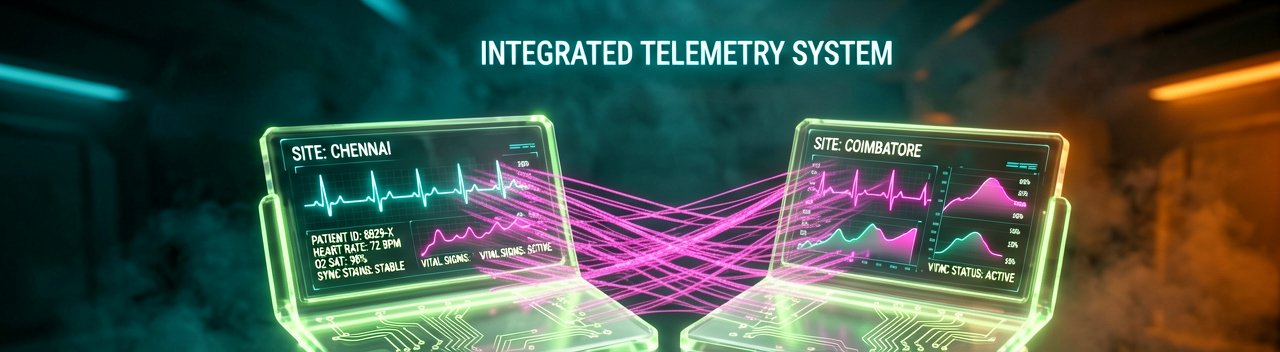
The healthcare technology landscape has passed a critical inflection point with the official unveiling of "Operation Infinity" by GEM Hospital at the GEM TechnoSurg 2026 summit in Chennai. This groundbreaking initiative establishes India's first interconnected, dual-city robotic surgery network, seamlessly linking the complex medical infrastructures of Chennai and Coimbatore. By bridging these major urban centers, the initiative transitions telesurgery from an experimental proof-of-concept into a high-utility, real-world paradigm for synchronized clinical interventions.
From a market analysis perspective, Operation Infinity resolves a structural bottleneck that has long plagued decentralized healthcare systems: the geographic concentration of elite surgical expertise. Historically, patients in secondary urban markets required emergency transfers to tier-one hubs for complex procedures, incurring high logistical costs and introducing critical delays. By implementing a dual-console interconnectivity matrix powered by AI-driven engineering, GEM Hospital allows specialist surgeons to deliver real-time guidance, exchange diagnostic telemetry, and execute collaborative cross-city procedures without latency. This strategic shift repositions advanced robotic surgery from a localized hospital asset into an elastic, cloud-managed regional network.
Market Implications of Cross-City Telesurgery Platforms
The roll-out of Operation Infinity signals a fundamental disruption in the broader medtech sector. According to announcements detailed by The Hindu, the framework leverages highly integrated digital platforms, including the newly showcased MIZZO Endo 4000 robotic system, to execute remote procedures across vast distances. For instance, during a live demonstration, a telesurgical robotic procedure initiated at GEM Hospital in Coimbatore was dynamically continued by remote specialists in Chennai. This operational model yields three primary commercial and clinical advantages:
- Talent Optimization: Healthcare networks can maximize the utility of their top-tier clinical assets, allowing a single specialist to oversee multiple operating theaters across state lines without physical transit.
- Reduced Patient Hardships: Aligning with regional policy directives to lower barriers to world-class care, this infrastructure ensures that localized patients receive uncompromised surgical precision closer to home.
- Accelerated Skill Acquisition: The dual-console interconnected environment allows next-generation surgeons to participate in live, multi-city clinical collaborations, creating a standardized pipeline for advanced medical training.
The Institutionalization of AI and Robotics in Surgery
Beyond the immediate cross-city network, the ecosystem changes introduced at the summit highlight a broader push toward institutionalizing digital health tech. Accompanying the network launch was the establishment of the Association for Surgical Technology Robotics and AI (ASTRA). This institutional body will standardize the integration of foundational AI models, immersive 3D preoperative imaging, and fluorescence-guided surgery into everyday workflows. By anchoring these technologies within a formal regulatory and educational framework, the healthcare sector is building a scalable, legally compliant blueprint for autonomous and semi-autonomous cross-city emergency response frameworks worldwide.
Anatomy of the Cross-City Network
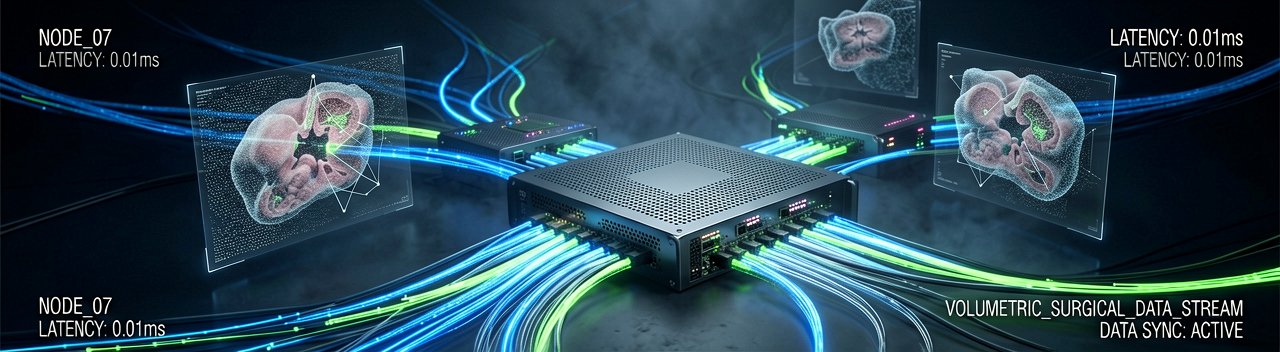
Beneath the Infrastructure: The true triumph of Operation Infinity lies not in the mere existence of robotic arms, but in the severe mitigation of telemetry latency over public and private networks. In high-stakes robotic surgery, even a millisecond of lag between a surgeon's hand movement in Chennai and the corresponding instrument articulation in Coimbatore can introduce unacceptable clinical risks. Medtech engineering teams achieved this cross-city synchronization by deploying dedicated, ultra-low-latency fiber pipelines paired with edge-computing nodes stationed directly within each hospital. These nodes process volumetric data on-site before transmitting coordinates across the network, ensuring that visual feedback and haptic responses remain perfectly aligned for the operating clinician.
The operational reality of a dual-city framework also demands a radical reimagining of traditional operating room hierarchy and medical malpractice frameworks. Industry insiders note that when a procedure is split across multiple geographic locations, assigning primary surgical liability becomes complex. The Operation Infinity model addresses this by utilizing a synchronized multi-console architecture, where a master console can seamlessly pass control to a local backup surgeon if a network anomaly occurs. This creates a fail-safe, tiered hierarchy that protects the patient while establishing a clear legal framework for collaborative, remote surgical interventions.
Historically, the adoption of telemedicine was constrained by fragmented institutional buy-in and the prohibitive cost of early-generation surgical systems. By anchoring this project within the structured framework of the newly formed Association for Surgical Technology Robotics and AI (ASTRA), organizers are shifting the conversation from isolated high-tech demonstrations to scalable clinical standardization. Hospital administrators view this as a crucial step toward decoupling elite medical care from geographic density, effectively transforming traditional regional hospitals into highly capable extension nodes of a centralized healthcare hub.
Looking forward, the commercial viability of these interconnected networks depends heavily on training next-generation medical professionals within a dual-console environment. Senior clinical stakeholders emphasize that the skill set required to navigate a telesurgical interface differs fundamentally from traditional open or laparoscopic surgery. By embedding AI-driven simulation and real-time cross-city proctoring into the residency curriculum, the initiative ensures that the transition to cloud-managed healthcare is supported by a robust pipeline of technically proficient surgeons capable of operating across regional boundaries.
The Pragmatic Hurdles of Scaled Telesurgery
Reading Between the Lines: While the live demonstrations of Operation Infinity present a flawless vision of seamless cross-city healthcare, the underlying economics and infrastructure realities demand a more cautious evaluation. The enthusiasm surrounding dual-city robotic networks frequently glosses over a stark systemic contradiction: these advanced platforms are being deployed in regional environments that still battle fundamental utility vulnerabilities. A multi-console, ultra-low-latency surgical network is entirely dependent on absolute infrastructural stability. In practice, the commercial viability of expanding this network to tier-two and tier-three cities relies on a level of uninterrupted fiber connectivity and auxiliary power redundancy that very few regional municipalities can currently guarantee without exorbitant capital expenditure.
Furthermore, the institutionalization of platforms like the MIZZO Endo 4000 introduces a hidden bottleneck in hospital operational budgets through vendor lock-in. While hospital networks project long-term savings via talent optimization, the upfront procurement costs, specialized maintenance contracts, and proprietary software licensing fees create a massive financial barrier to entry. This financial reality threatens to widen the healthcare equity gap rather than close it. Instead of democratizing medicine, early iterations of cross-city networks risk creating a highly insular ecosystem where only premier corporate hospital chains can afford to trade surgical assets, leaving public healthcare infrastructure further left behind.
There is also a palpable tension between technological capability and human compliance within the surgical community itself. The transition from a localized operating room to an elastic, cloud-managed regional network requires veteran surgeons to cede a degree of physical autonomy to automated fail-safes and remote algorithms. If a network disruption occurs mid-procedure, the transition of control to a local backup surgeon must be instantaneous and friction-free. However, institutional hierarchies and the psychological friction of taking over a compromised, remote procedure present non-technical liabilities that cannot be patched with a software update. Until these human and legal protocols are as refined as the fiber-optic networks supporting them, the true scalability of synchronized cross-city interventions will remain constrained by risk mitigation strategies.
"We are rapidly approaching a future where a surgeon can save a life from three hundred miles away, provided the hospital's internet bill is paid, the software update doesn't log them out mid-incision, and the local backup team remembers how to operate without a digital user manual."
Artūras Malašauskas is an AI Systems Integrator with 20+ years of production-grade web engineering experience. He has designed, shipped, and scaled enterprise Python/PHP systems for logistics, SaaS, and public-sector clients. For the past year, he has focused exclusively on AI integrations: deploying open-source LLMs, building generative media pipelines (image, audio, video), and engineering multi-agent workflows for real production environments. His standard: reproducibility, security, cost-efficient inference—no vaporware. He documents and evaluates emerging AI tooling, separating verified capabilities from marketing noise. Technical editor at: muza-ai.eu, ai-verslas.lt, ai-naujinos.lt Connect on LinkedIn
Comments