Delhivery Maps Is Here to Tackle India’s Chaotic Address Problem With AI

Most digital maps are built to help people find the nearest coffee shop, but navigating commercial logistics through India's famously complex maze of unstructured addresses requires a completely different breed of intelligence. On June 19, 2026, homegrown logistics giant Delhivery celebrated its 15th anniversary by doing something about it, officially launching an AI-native geospatial platform called Delhivery Maps. Instead of relying on traditional databases, this commercial suite opens up the enterprise-grade infrastructure Delhivery previously used strictly for its internal operations, making it commercially available to third-party developers, gig-economy platforms, and e-commerce businesses.
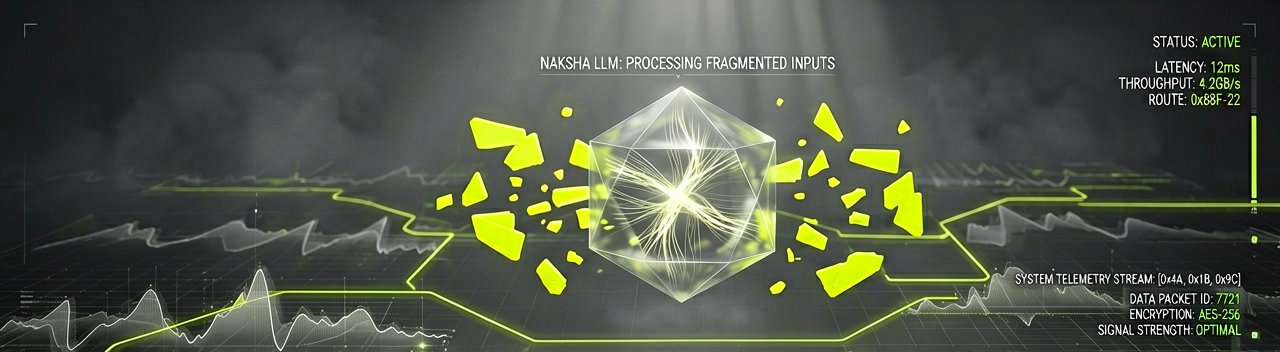
The magic under the hood comes courtesy of Naksha LLM, an in-house large language model trained on geospatial reasoning to interpret messy landmarks and fragmented location inputs. Because data is only as good as its source, Delhivery has backed its system with telemetry generated from over two billion shipments and a staggering one billion daily GPS pings from a fleet exceeding 100,000 vehicles. This massive real-world dataset powers an API suite capable of vehicle-aware routing, automated address validation, and hyper-accurate estimated delivery times that account for regional constraints. According to a detailed report by The Times of India, the move signals Delhivery's aggressive expansion into software-as-a-service (SaaS) and enterprise logistics infrastructure.
A Crowded Arena for Homegrown Geodata
By commercializing its mapping stack, Delhivery has transitioned from a pure-play logistics network into a direct software competitor against established tech giants. It isn't alone in this patriotic push toward local digital mapping infrastructure; companies like MapmyIndia and Ola Maps have similarly ramped up their enterprise offerings to break Big Tech's hold on regional navigation. However, by embedding a continuous stream of actual freight telemetry into its model, Delhivery is betting that its operational data will give it a distinct advantage in serving high-velocity sectors like quick commerce, ride-hailing, and hyperlocal delivery apps.
Behind the Data Deluge
What most industry reports miss is that the true battleground for logistics in developing economies is not the distance traveled, but the sheer unpredictability of the final mile. Traditional mapping APIs approach navigation from a consumer standpoint, treating every road segment and landmark as static points on a grid. In reality, India's urban layout changes by the week, with makeshift detours, seasonal flooding, and unregistered alleyways altering delivery routes on the fly. By weaponizing fifteen years of courier feedback and heavy-vehicle telemetry, Delhivery is essentially shifting the paradigm from static geographic mapping to dynamic, behavioral mapping.

This operational transition highlights a major tactical shift within Delhivery's long-term business strategy. The firm is quietly decoupling its proprietary software intelligence from its physical fleet operations, transforming a massive internal cost center into a high-margin, scalable software-as-a-service asset. For years, the company used these algorithmic tools to slash its own line-haul expenses and boost courier efficiency. Now, by offering these capabilities via APIs to external developers, they are positioning themselves to extract financial value from competitors and adjacent industries alike, including food delivery networks and ride-sharing platforms that have long complained about skyrocketing third-party mapping fees.
The timing of this rollout coincides with a broader national push for digital sovereignty and localized technology infrastructure across the subcontinent. For over a decade, international mapping providers dominated the enterprise landscape, but their reliance on generalized satellite data often left local enterprises grappling with inaccurate geocoding and poor address matching. Delhivery's introduction of the Naksha LLM represents a localized response to this dependency, proving that a language model trained specifically on regional address formats can outperform western-centric algorithms that struggle with non-standardized postal inputs.
From an engineering perspective, training a large language model on geospatial data rather than standard text presents unique challenges. The system must understand that words like "opposite," "behind," or "near" carry specific mathematical weights when translating an informal text string into a physical set of GPS coordinates. While traditional geocoders often fail when an address lacks a formal street number, Delhivery’s model uses contextual historical delivery successes to pinpoint the exact drop-off zone, effectively turning billions of past mistakes and corrections into a predictive roadmap for future fleets.
Ultimately, this technological leap sets up a high-stakes showdown in the enterprise software space. As corporate logistics managers demand greater transparency and lower fuel costs amid tightening margins, the reliance on high-fidelity, real-time data will only intensify. Delhivery is banking on the fact that while anyone can build a software interface, very few entities possess the physical footprint required to feed an AI engine with fresh, real-world data every single second of the day.
Reading Between the Lines
The corporate narrative surrounding this launch paints a picture of seamless algorithmic efficiency, yet a sober analysis reveals significant operational hurdles. Transitioning from an internal proprietary tool to a public-facing enterprise SaaS platform is rarely a smooth migration. While Delhivery’s AI models have thrived within the controlled ecosystem of its own proprietary delivery network, exposing these APIs to the chaotic, unstandardized demands of external developers is an entirely different challenge. The real test lies in whether an AI trained predominantly on Delhivery's historical delivery patterns can maintain its accuracy when plugged into highly fragmented third-party supply chains that operate under completely different logistics workflows.
There is also an inherent tension in Delhivery's dual identity as both a core infrastructure provider and a direct software vendor. By selling its mapping suite to the broader market, the company is actively inviting its direct logistics rivals, quick-commerce platforms, and e-commerce competitors to build their networks on Delhivery's digital backbone. This setup creates a complex conflict of interest that may trigger data privacy concerns among enterprise clients. Convincing a fierce competitor to trust Delhivery Maps with their proprietary route data and customer drop-off locations will require a level of corporate decoupling that is much easier to promise in a press release than to execute in practice.
Furthermore, the heavy reliance on a proprietary LLM for geospatial interpretation introduces a layer of unpredictable risk that the tech industry routinely underplays. Language models are notoriously prone to subtle hallucinations, and in the high-stakes world of commercial logistics, a misinterpreted address or a miscalculated vehicle clearance route does not just result in a bad text response—it leads to missed service level agreements, wasted fuel, and gridlocked delivery trucks. The company's massive dataset of one billion daily GPS pings is undeniably impressive, but processing that volume of raw telemetry requires immense, continuous computational power, raising serious questions about the long-term pricing sustainability and margins of this new software venture.
Ultimately, this pivot into the mapping space forces a direct confrontation with entrenched tech platforms that have deep pockets and a decade-long head start in enterprise sales. While local data sovereignty is an incredibly appealing pitch to regional stakeholders, global tech giants are not standing still and are actively investing in hyper-local mapping capabilities of their own. Delhivery is placing a massive financial bet that operational telemetry can consistently outperform pure software engineering, transforming a physical logistics network into a defensible data moat before its competitors can bridge the analytical gap.
It turns out that fixing India's legendary address chaos doesn't just require a team of brilliant software engineers; it requires a fleet of a hundred thousand couriers making wrong turns for fifteen years until the machine learning model finally learns exactly which side of the tea stall the delivery box actually belongs on.
Artūras Malašauskas is an AI Systems Integrator with 20+ years of production-grade web engineering experience. He has designed, shipped, and scaled enterprise Python/PHP systems for logistics, SaaS, and public-sector clients. For the past year, he has focused exclusively on AI integrations: deploying open-source LLMs, building generative media pipelines (image, audio, video), and engineering multi-agent workflows for real production environments. His standard: reproducibility, security, cost-efficient inference—no vaporware. He documents and evaluates emerging AI tooling, separating verified capabilities from marketing noise. Technical editor at: muza-ai.eu, ai-verslas.lt, ai-naujinos.lt Connect on LinkedIn
Comments