Deezer Wants to Purge the Slop From Your Spotify and Apple Music Playlists
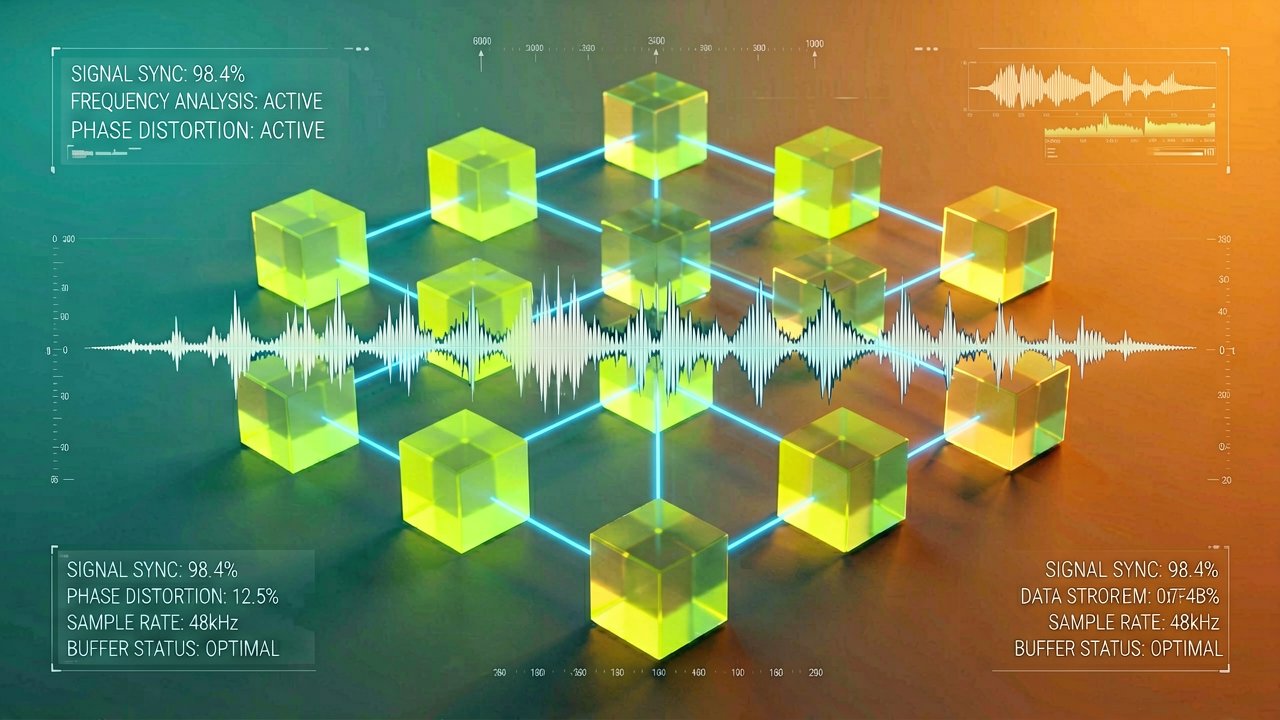
On June 11, 2026, French streaming platform Deezer launched a free web-based AI music detector, throwing down the gauntlet in the ongoing battle against synthetic audio. Rather than keeping its proprietary detection tech locked away within its own app, the company is making it accessible to the broader public. Listeners on up to 20 major streaming services—including heavyweights like Spotify, Apple Music, and YouTube Music—can now audit their personal libraries to see exactly how many algorithmic tracks have snuck into their rotations.
The initiative, powered behind the scenes by playlist-transfer utility Tune My Music, offers an eye-opening reality check for everyday listeners. According to an official announcement on the Deezer Newsroom , data collected by the platform indicates that roughly 43% of users migrating from competitor platforms already carry AI-generated tracks in their existing libraries. The tool scans imported playlists for structural audio artifacts left behind by generative platforms like Suno and Udio, serving up a shareable "AI score" that listeners can analyze.
Taking on the Synthetic Flood
Deezer’s aggressive public push comes at a critical juncture for the digital music ecosystem. The platform currently faces an avalanche of nearly 75,000 completely machine-made track uploads every single day, making up a staggering 44% of its incoming music delivery. While rivals have mostly settled for passive metadata labeling, Deezer CEO Alexis Lanternier explained that the company wanted to provide a more definitive tool directly to the public because no other major player has mirrored their proactive curation and filtering stance.
Protecting the Royalty Pool
Beyond giving consumers a peek behind the algorithmic curtain, the broader struggle is deeply financial. Industry coverage from TechCrunch highlights that generative music is heavily tied to stream manipulation, with bad actors deploying automated bot networks to farm plays. In fact, Deezer's internal analytics show that up to 85% of streams on fully AI-generated tracks are fraudulent. By deploying this scanner across platforms, the company aims to raise mainstream awareness and prevent artificial content from diluting the royalty pools that legitimate human artists rely on for their livelihoods.

The Economic Underbelly of Audio Slop: The relentless flood of synthetic music isn't driven by amateur hobbyists experimenting with new software, but by sophisticated syndicates leveraging algorithmic scale for financial gain. Because major streaming platforms distribute royalties using a pro-rata model—where all subscription revenue is pooled and paid out based on total stream market share—the system is highly vulnerable to exploitation. Bad actors can easily manufacture hundreds of thousands of generic, AI-generated ambient tracks and deploy automated botnets to stream them on repeat. This siphons millions of dollars directly out of the pockets of human artists who rely on those fractional payouts to survive.
From a technical standpoint, identifying these tracks has turned into a high-stakes game of digital cat-and-mouse. Generative AI platforms leave behind distinct acoustic fingerprints, such as specific phase distortions, unnatural high-frequency behavior, and bizarre structural repetitions that Deezer’s detection algorithms are trained to flag. However, as machine-learning models iterate and improve, these synthetic artifacts rapidly vanish. This forces platforms to continuously update their detection models, shifting the burden of policing the internet's audio catalog onto streaming services rather than the tech firms generating the content in the first place.
The Publisher Backlash and Legal Warfare
Major record labels and publishing houses are watching Deezer's public experiment with intense interest as they wage their own war in the courts. Industry titans like Universal Music Group and Sony Music are already locked in massive copyright lawsuits against prominent AI developers, claiming widespread intellectual property theft during model training. For these traditional powerhouses, data generated by cross-platform scanners serves as vital ammunition. It provides concrete proof of market dilution, showing regulators and judges that synthetic content is actively displaced human creativity on commercial platforms.
Ultimately, this rollout puts tech-first giants like Spotify and Apple Music in an incredibly awkward defensive position. These companies have historically favored hands-off moderation policies to maintain massive content libraries and avoid the messy logistics of gatekeeping. By offering a free tool that explicitly highlights the artificial tracks hiding inside a competitor's ecosystem, Deezer is weaponizing consumer transparency. This maneuver forces the rest of the industry to either publicly defend the presence of bot-friendly synthetic tracks or invest heavily in creating their own public filtering systems.

The Illusion of Consumer Choice: While framing this tool as a victory for listener transparency makes for excellent public relations, it conveniently masks a deeper systemic failure. Forcing everyday users to manually audit their libraries with external scanners shifts the responsibility of content moderation from billionaire tech platforms straight onto the consumer. It is a bit like a supermarket handing shoppers a chemical testing kit at the door instead of ensuring the food on the shelves is safe to eat. If nearly half of migrating users already have synthetic tracks woven into their favorite playlists, it is because the streaming ecosystem has spent years training listeners to accept optimized, frictionless audio wallpaper over deliberate artistic expression.
There is also a glaring contradiction in how the streaming industry defines the enemy. Deezer eagerly flags low-effort ambient noise and generic lo-fi beats generated by third-party software, yet major platforms continue to heavily promote their own algorithmic curation. Features like personalized AI DJs and endless auto-play queues are designed to keep users trapped in passive listening loops where individual authorship matters very little. This creates an environment where platforms explicitly train their audiences to consume music as an ongoing, ambient utility, making it incredibly difficult to draw a clean moral boundary between a platform-approved algorithm and a rogue AI generator.
The Compliance Dilemma for Independent Creators
Furthermore, an aggressive, automated crackdown on anything deemed "synthetic" risks creating immense collateral damage for independent human musicians. Modern music production relies heavily on sophisticated digital tools, ranging from advanced pitch correction and algorithmic mastering plugins to generative synthesizers and royalty-free loop packs. If detection software becomes overly sensitive in its quest to purge bad actors, indie artists without major-label legal backing will inevitably find their legitimate, human-directed work flagged, de-monetized, or quietly suppressed by overzealous distribution filters.
Ultimately, a free scanning tool cannot fix an industry whose core financial incentives remain completely unchanged. As long as streaming platforms reward pure volume and continuous playtime over artistic depth, the factory floor of algorithmic audio will simply adapt to bypass the latest detection definitions. Deezer's tool might temporarily clean up a few personal playlists, but it remains a minor speed bump against an inevitable, automated tide that is reshaping the very definition of what we consider music.
Perhaps the ultimate irony of the modern streaming era is that we have built an incredibly complex web of advanced, multi-million-dollar artificial intelligence models just to detect and delete the art made by other advanced, multi-million-dollar artificial intelligence models, all while human musicians sit on the sidelines wondering if anyone is still listening to the guitar solo.
Artūras Malašauskas is an AI Systems Integrator with 20+ years of production-grade web engineering experience. He has designed, shipped, and scaled enterprise Python/PHP systems for logistics, SaaS, and public-sector clients. For the past year, he has focused exclusively on AI integrations: deploying open-source LLMs, building generative media pipelines (image, audio, video), and engineering multi-agent workflows for real production environments. His standard: reproducibility, security, cost-efficient inference—no vaporware. He documents and evaluates emerging AI tooling, separating verified capabilities from marketing noise. Technical editor at: muza-ai.eu, ai-verslas.lt, ai-naujinos.lt Connect on LinkedIn
Comments