Vivo Bridges the DSLR Divide with New X300 Ultra, X300s, and Snap-On Zeiss Teleconverters
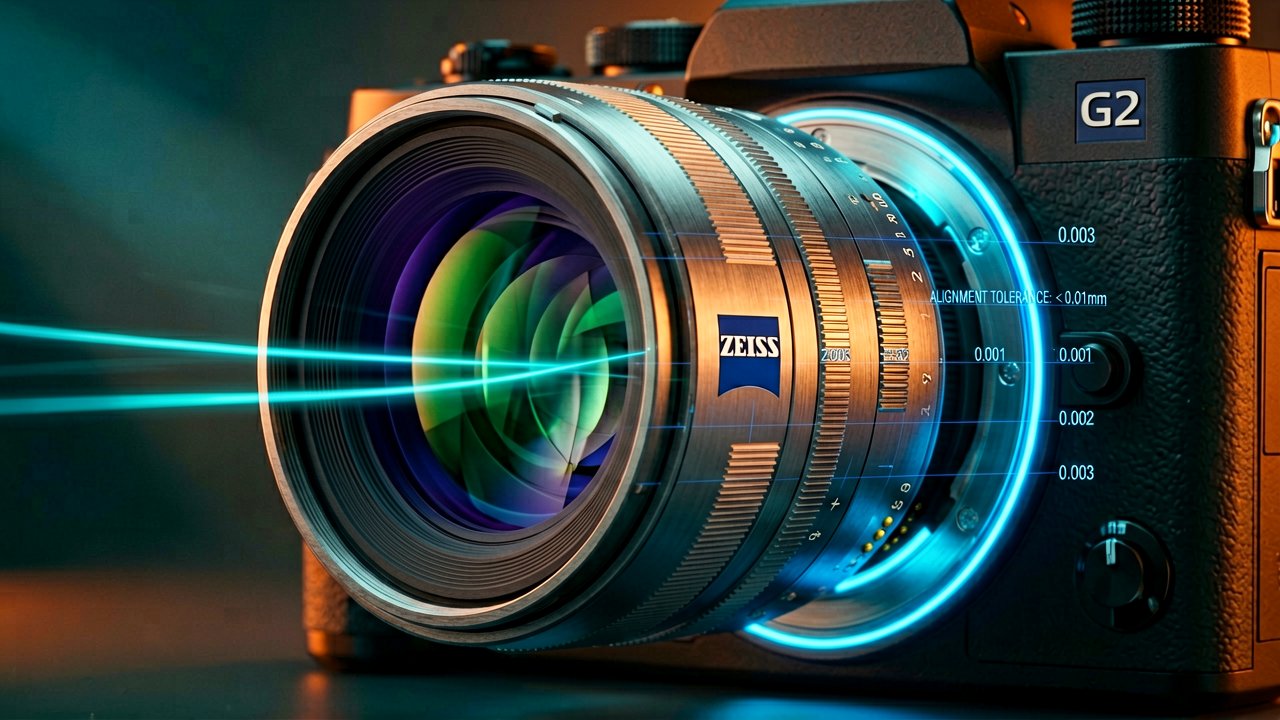
Vivo has officially blurred the line between mobile devices and standalone cameras by unveiling its latest flagship smartphones, the X300 Ultra and X300s, in China on March 30, 2026. Rather than relying solely on the usual iterative sensor updates, the company introduced an ingenious hardware twist: physical, detachable Zeiss teleconverter lenses designed to mechanically extend the devices' optical focal lengths. Tech journalist Prakhar Khanna noted after field-testing the system for TechRadar that these add-on glass elements prove mobile teleconverters are no longer just a gimmick, bringing genuine utility to mobile creators.
The star of the show is undoubtedly the X300 Ultra, an uncompromising imaging powerhouse that hit Chinese shelves on April 3, 2026, before making its highly anticipated global debut. It features a customized 200-megapixel Sony LYT901 main sensor paired with a massive 200-megapixel Samsung periscope telephoto camera. Driving the experience is Qualcomm's Snapdragon 8 Elite Gen 5 processor, alongside a massive 6,600mAh silicon-carbon battery to sustain intensive shooting sessions. To complement this hardware, the optional Photographer Kit introduces the Zeiss G2 Ultra 400mm teleconverter and an upgraded second-generation 200mm lens, effectively converting the handset into a specialized wildlife or sports rig.
For those looking for flagship-level optics without the Ultra price tag, the newly launched X300s serves as an elegant alternative. Powered by MediaTek's Dimensity 9500 chipset, it exchanges the Ultra's curved screen for a 144Hz flat display while retaining compatibility with the new 200mm Zeiss G2 teleconverter accessory. According to GSMArena, Vivo has priced the highly portable 200mm lens at CNY 999 (around $145), making professional-grade focal extension accessible to a broader audience of mobile enthusiasts.
A Massive Leap for Mobile Focal Lengths
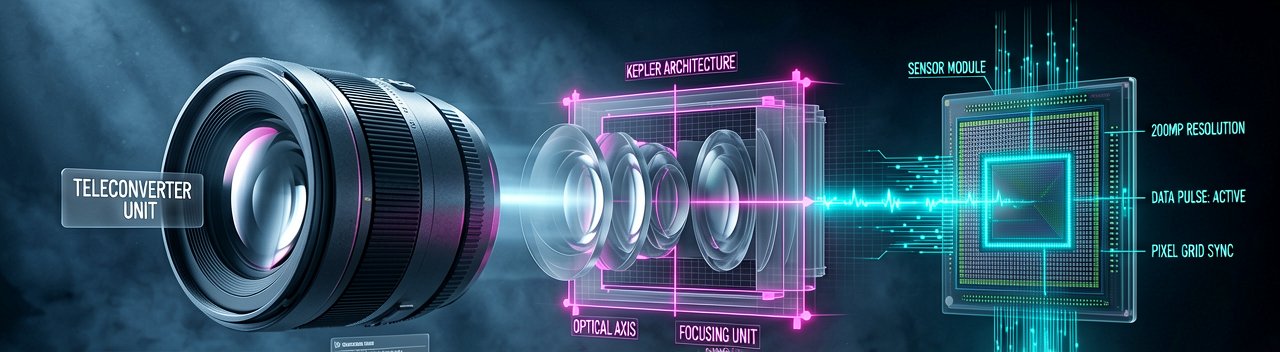
Mobile computational photography has historically struggled to replicate the pristine detail of pure glass magnification, which explains why Vivo's hardware-first methodology feels so refreshing. When attached to the rear module via a custom-fit case with an integrated filter ring, the 400mm teleconverter lens enables the stock camera application to unlock dedicated interfaces for 800mm, 1200mm, and even 1600mm digital extensions. The glass itself implements a specialized Kepler optical architecture that weighs only 153 grams, striking an excellent balance between structural rigidity and portable convenience.
"Its 200MP ZEISS Gimbal-Grade APO Telephoto Camera lets me capture runway details in stunning clarity, making it the perfect accessory for my next fashion show. A ZEISS-powered camera smartphone that definitely matches my style wherever I go," noted Filipino actress and model Anne Curtis regarding her first-hand experience with the Ultra's specialized camera system.
To prevent the extreme image shakiness common to extreme telephoto lenses, Vivo integrated CIPA 6.5-level professional image stabilization directly into the system, combining internal sensor-shift OIS with high-speed tracking focus. This ensures that handheld shots remain sharp and usable, even when capturing distant subjects in changing outdoor environments. While a physical grip kit adding a shutter button, control dial, and an extra 2,300mAh battery can push the price up significantly, it successfully anchors the setup for serious enthusiasts looking to replace a heavy bag of camera lenses.
Behind the Scenes: The Engineering Gamble on Pure Glass
For nearly a decade, the premium smartphone market has chased a singular, software-driven dream: making camera bumps smaller while using artificial intelligence to artificially fill in the pixels missing from digital zoom. Vivo’s sudden pivot toward physical, snap-on glass accessories with the X300 Ultra and X300s represents a radical departure from this industry trajectory. Instead of asking algorithms to guess what a bird looks like at 40x magnification, engineers collaborated deeply with Zeiss to compress traditional DSLR lens elements into pocketable modules. This mechanical approach sidesteps the uncanny, painterly textures often produced by aggressive AI upscaling, providing purists with genuine optical character and micro-contrast.
The manufacturing process behind these teleconverters reveals a complex supply chain challenge. Creating a 153-gram Kepler optical structure meant using high-index, low-dispersion molded glass that could align perfectly with the phone's internal periscope elements without causing severe vignetting or chromatic aberration. According to industry insiders, the alignment tolerances required for the magnetic and mechanical mounting rings are sub-millimetric. If the teleconverter is misaligned by even a fraction of a millimeter, the light path refracts incorrectly, rendering the phone's 200-megapixel sensor useless. This high-wire act of hardware precision explains why competitors have largely stuck to safer, software-only zoom solutions.
From a market perspective, this launch signals Vivo's intent to capture the ultra-premium "prosumer" demographic that traditionally buys entry-level mirrorless cameras. While mainstream consumers might find the idea of carrying an external lens kit cumbersome, street photographers, wildlife enthusiasts, and fashion industry professionals are reacting with genuine curiosity. The inclusion of an optional physical grip kit—complete with a tactile shutter button, rotary exposure dial, and an auxiliary battery—transforms the smartphone from a passive pocket computer into a dedicated, single-purpose creative tool. By targeting this niche, Vivo is successfully differentiating its hardware in a sea of identical glass slabs.
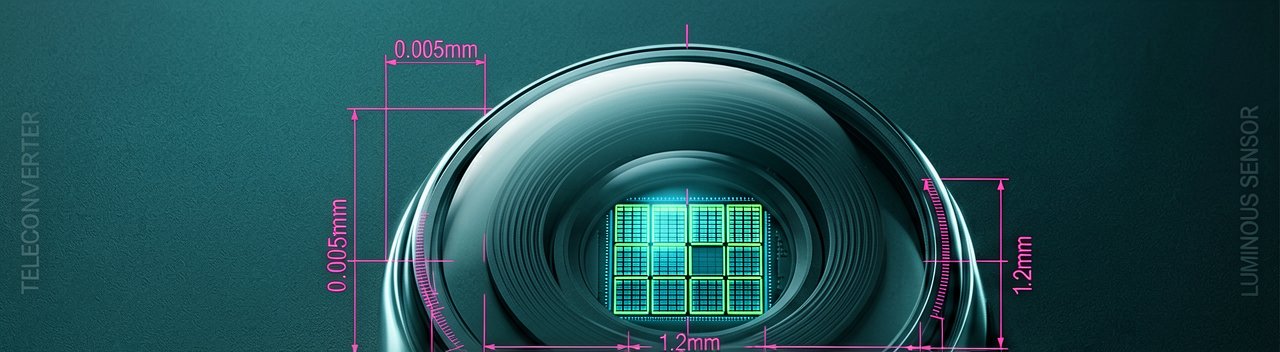
Historically, mobile lens attachments were relegated to cheap, third-party plastic clips that degraded image quality rather than enhancing it. By natively integrating the Zeiss G2 lenses into the stock camera application, Vivo has corrected that historical pain point. The phone immediately detects the accessory via internal electronic pins or proximity sensors, instantly recalibrating the optical image stabilization algorithms and tuning the exposure curves to account for the minor light loss inherent to teleconverters. This seamless symbiosis between external glass and internal silicon represents a mature evolution of the mobile photography ecosystem, proving that innovation doesn't always have to happen behind a screen.
Reading Between the Lines: The Friction of Computational Glass
While tech enthusiasts routinely celebrate hardware milestones, a critical look at Vivo’s teleconverter strategy reveals a glaring philosophical contradiction. For years, the primary value proposition of the premium smartphone has been frictionless convenience—the ability to pull a device from a pocket and instantly capture a flawless image. By introducing external glass elements that require a specific mounting case, meticulous alignment, and careful storage, Vivo is actively reintroducing the exact operational friction that drove consumers away from traditional cameras in the first place. The company is betting that users will willingly sacrifice spontaneity for a bump in optical focal length, an assumption that history suggests may only hold true for a very vocal minority.
There is also the unresolved tension between physical optics and computational overdrive. Vivo’s marketing heavily emphasizes the purity of the Zeiss glass, yet the underlying reality of modern mobile imaging is that a 200-megapixel sensor cannot function in a vacuum. Even with a teleconverter attached, the device relies on massive multi-frame stacking, semantic segmentation, and aggressive noise reduction algorithms to deliver a usable shot, especially at the simulated 1200mm and 1600mm thresholds. This creates a strange hybrid system where expensive glass is ultimately fed into a digital meat grinder, raising legitimate questions about whether a slightly refined software algorithm could have achieved a similar aesthetic result without requiring a trip to the user's gear bag.
Furthermore, this modular ecosystem exposes early adopters to severe hardware lock-in risks. In the fast-paced smartphone industry, chassis designs change annually, meaning a custom-fit lens case purchased for the X300 Ultra will almost certainly be obsolete when the inevitable X400 series arrives. While Vivo has promised a broad compatibility list for the 200mm lens, the physical dimensions of future camera bumps remain entirely unpredictable. Consumers are being asked to buy into a premium accessory ecosystem with the financial commitment of a traditional camera lens system, but without any of the generational longevity that makes buying dedicated glass a sound long-term investment.
Ultimately, the X300 Ultra and X300s function less as mass-market blockbusters and more as engineering manifestos. They prove that mobile manufacturers can still surprise us with tactile innovation rather than incremental megapixel bumps. However, by turning the smartphone into a multi-piece rig that demands its own carrying case, Vivo may find that the bridge they have built between mobile photography and DSLRs is one that only the most dedicated nerds are willing to cross, leaving the average consumer contentedly zooming in with their thumbs.
"We spent a decade and billions of dollars convincing the world that the best camera is the one that's always with you, only to realize that what we actually wanted was to carry a tiny, expensive velvet pouch full of extra lenses everywhere we go."
Artūras Malašauskas is an AI Systems Integrator with 20+ years of production-grade web engineering experience. He has designed, shipped, and scaled enterprise Python/PHP systems for logistics, SaaS, and public-sector clients. For the past year, he has focused exclusively on AI integrations: deploying open-source LLMs, building generative media pipelines (image, audio, video), and engineering multi-agent workflows for real production environments. His standard: reproducibility, security, cost-efficient inference—no vaporware. He documents and evaluates emerging AI tooling, separating verified capabilities from marketing noise. Technical editor at: muza-ai.eu, ai-verslas.lt, ai-naujinos.lt Connect on LinkedIn
Comments