Elon Musk’s 2026 AI Ambitions in Gaming: A High-Stakes Disruption of Interactive Media

The intersection of generative artificial intelligence and interactive entertainment is undergoing a seismic reallocation of capital, driven heavily by Elon Musk’s expanding tech empire. Following the high-profile integration of xAI products into a newly public corporate ecosystem, Musk has solidified a strict timeline targeting the release of a commercially viable, fully AI-generated video game before the close of 2026. Rather than relying on standard development pipelines where neural networks merely optimize existing assets, this aggressive initiative centers on building dynamic "living simulations" where entire physics architectures, narrative arcs, and virtual worlds are synthesized on the fly by advanced neural models.
To support this foundational shift, xAI has rapidly scaled up its internal gaming division, aggressively recruiting veteran researchers from legacy chipmakers and establishing high-paying positions for specialized video game tutors to train its flagship model, Grok. This structural expansion serves a dual market purpose. It establishes an experimental playground for testing real-world artificial general intelligence (AGI) constraints while simultaneously threatening to upend the economic models of traditional AAA game publishers, who are currently spending hundreds of millions of dollars over multi-year production cycles to deliver handcrafted digital environments.
The Architecture of Living Simulations and World Models
The technical underpinning of Musk's gaming strategy relies on "world models"—neural networks designed to inherently understand the laws of physics and project continuous, photorealistic 3D environments from basic contextual prompts. Reports from industry observers like Tom's Hardware confirm that xAI has onboarded former Nvidia researchers explicitly tasked with formulating these real-time structural engines. Operating via the massive computing capacity of the Colossus supercomputer cluster, these models aim to bypass traditional game engines entirely, replacing rigid, pre-rendered polygon geometry with fluid, generative imagery that adapts dynamically to every individual player input.
Market Capitalization and the Massive AI Pivot
This entry into interactive entertainment is not an isolated creative pursuit, but rather a core component of a broader multi-trillion-dollar valuation strategy. According to financial data tracked by TechCrunch , recent investor filings reveal that the vast majority of Musk’s projected total addressable market relies strictly on artificial intelligence capabilities. By demonstrating that an AI can autonomously design, balance, and operate a complex interactive application from the ground up, xAI is positioning its technology to capture a significant share of the global software development market, proving a scale of utility that extends far beyond conversational web chatbots.

Industry Resistance and Technical Bottlenecks
The established video game market remains deeply divided regarding the viability and ethics of full-scale automation. Traditional development powerhouses continue to show significant resistance, with major publishers actively choosing to restrict generative tools in flagship titles to avoid copyright complications and public pushback. Analysts from platforms like The Express Tribune point out that while procedural tools have successfully assisted with dialogue generation or ambient asset creation in the past, shipping a cohesive, mainstream interactive product generated 100% by neural networks faces intense scrutiny regarding quality control, repetitive asset logic, and the legal parameters of AI training data.
The Hidden Architecture of the xAI Gaming Paradigm
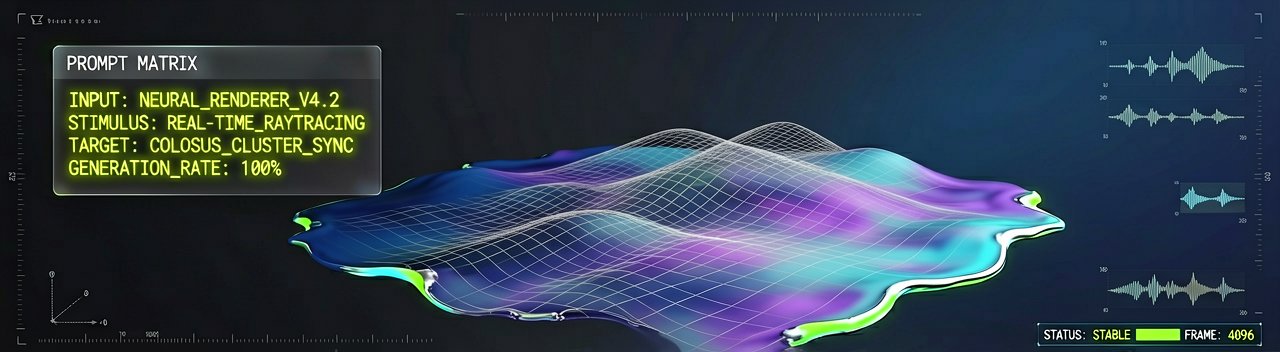
What Most Reports Miss: The transition from static algorithms to generative game engines represents an existential rewrite of the traditional development hierarchy rather than a mere upgrade in tooling. Behind closed doors, the recruitment strategy at xAI is targeting engineers with deep expertise in neural radiance fields (NeRFs) and real-time ray-tracing architecture. This specialized focus suggests that Musk’s 2026 gaming timeline is not built on top of commercial middleware like Unreal Engine or Unity. Instead, the initiative relies on a proprietary "neural renderer" that interprets player inputs as continuous prompt matrices, outputting frame-by-frame pixel arrays directly from the weights of the model itself. For legacy developers, this shift eliminates the need for manual asset pipelines, texturing, and traditional environmental mapping, effectively threatening to render conventional rendering pipelines obsolete within the decade.
This radical departure from standard computing paradigms introduces a highly volatile dynamic between xAI and established hardware distributors. While traditional game development relies on consumer-grade graphics processing units (GPUs) to render pre-compiled code, a completely AI-synthesized game demands unprecedented server-side inference capacity. Industry insiders note that this model essentially shifts the computational burden from the player's local hardware to centralized data centers like the Colossus supercomputer. Consequently, the commercial viability of this enterprise hinges entirely on reducing the cost of real-time token generation to a fraction of a cent per frame. This economic barrier has sparked skepticism among veteran system architects, who argue that the network latency and energy expenditures required to stream a fully generative interactive world remain fundamentally unsustainable at scale.
From a labor perspective, the ongoing hiring surge for specialized video game tutors highlights a profound shift in how artificial intelligence is trained for complex task solving. Rather than using passive dataset scraping, xAI is actively utilizing human playtesters to map out edge cases, exploit system logic, and teach the model how to maintain narrative consistency and spatial permanence across extended gameplay loops. These human feedback loops are critical for solving the "hallucination" problem in interactive media, where a neural network might accidentally alter the geometry of a room or forget a player's inventory mid-session. The data gathered from these gaming environments is highly prized by researchers, who view interactive simulations as the ultimate training ground for refining spatial reasoning and causal logic in broader autonomous systems.
Meanwhile, the broader entertainment industry views these advancements through a lens of profound legal and cultural apprehension. Screenwriters, voice actors, and digital artists argue that training a model capable of generating entire interactive worlds inevitably relies on the unauthorized assimilation of decades of copyrighted human creativity. While legacy publishers cautiously experiment with isolated AI tools for non-playable character behavior or minor asset optimization, Musk's uncompromising push for total automation bypasses the industry's delicate compromise with creative unions. The ultimate success or failure of the 2026 initiative will likely serve as the definitive legal bellwether, establishing whether fully synthesized digital products can withstand the impending wave of intellectual property litigation currently making its way through the federal courts.
Artūras Malašauskas is an AI Systems Integrator with 20+ years of production-grade web engineering experience. He has designed, shipped, and scaled enterprise Python/PHP systems for logistics, SaaS, and public-sector clients. For the past year, he has focused exclusively on AI integrations: deploying open-source LLMs, building generative media pipelines (image, audio, video), and engineering multi-agent workflows for real production environments. His standard: reproducibility, security, cost-efficient inference—no vaporware. He documents and evaluates emerging AI tooling, separating verified capabilities from marketing noise. Technical editor at: muza-ai.eu, ai-verslas.lt, ai-naujinos.lt Connect on LinkedIn
Comments