Raisio's People-First AI Initiative Sets New Standard for Municipal Governance
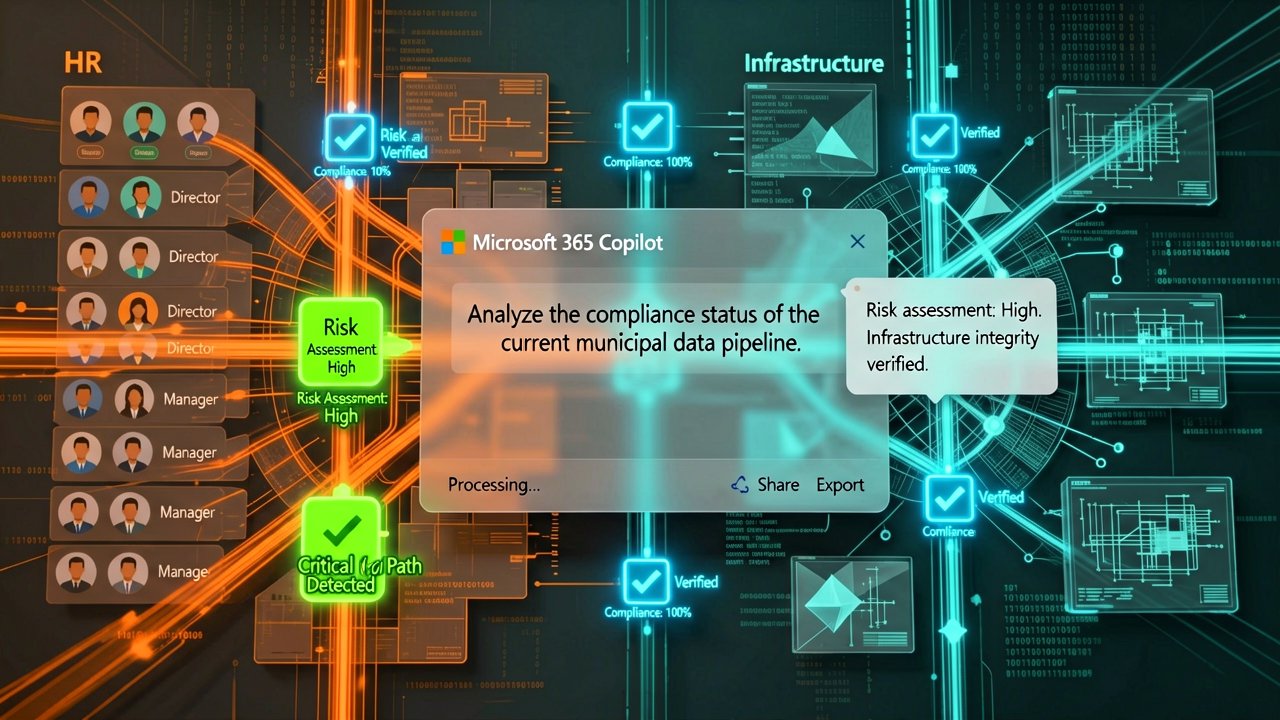
The global public sector faces intense structural pressure to modernize administrative operations without sacrificing regulatory compliance or public trust. While private corporations fast-track generative artificial intelligence deployment to optimize profitability, municipalities frequently struggle with lagging adoption due to strict data privacy requirements and organizational inertia. In a decisive strategic shift, the City of Raisio has countered this trend by initiating a human-centric AI framework powered by Microsoft 365 Copilot, positioning itself as an agile leader in public sector governance.
Developed in close collaboration with Sogeti, a branch of the Capgemini Group, Raisio's deployment framework deliberately avoids tech-centric enforcement. Instead, the initiative prioritizes systemic change management, human oversight, and customized learning environments designed to accommodate varied levels of technical literacy. By addressing individual workflow needs across internal departments, the project bridges the gap between raw technological capability and daily civic administration.
Strategic Imperatives and Governance Framework
The municipal operating model created by Raisio establishes an essential blueprint for modern local governance. Rather than relying on top-down mandates, the municipality instituted a structured, gradual learning path that integrates AI into established public service workflows. The model relies heavily on functional risk assessments and structured data policies to guarantee compliance with regional security standards while scaling digital capabilities.
Operational data reveals that the integration focused heavily on role-specific exercises, ensuring employees in diverse departments like education, infrastructure, human resources, and corporate communications could leverage automated assistance securely. By treating data as an active operational enabler, the initiative has systematically accelerated routine document generation, optimized information retrieval across cross-departmental databases, and streamlined daily municipal communication channels.

Expert Market Analysis and Public Sector Implications
Raisio's strategic roadmap highlights a profound evolutionary turn in how government bodies approach digital transformation. For years, public entities hesitated to deploy commercial large language models due to concerns regarding algorithmic bias, hallucination, and data leakage. By utilizing Microsoft 365 Copilot within a strictly governed sandbox designed by seasoned integration partners, Raisio effectively demonstrates that municipal bodies can harness enterprise-grade automation safely.
From an industry standpoint, the enterprise-wide training program, which immediately upskilled nearly 100 internal municipal employees, highlights a critical reality: the true bottleneck of AI implementation is culture, not software. Systems integrators that focus on role-specific workshops and continuous collaborative environments will likely capture the majority of public sector modernization contracts moving forward. Raisio proves that maintaining rigorous human oversight does not slow down innovation; instead, it provides the psychological safety required to make digital modernization sustainable.
Behind the Scenes of Raisio's Digital Transition
The Operational Reality: Moving beyond the marketing prose of enterprise software deployments reveals a highly calculated approach to risk mitigation within Raisio’s city halls. For public sector workers, the primary barrier to adopting generative AI is rarely a lack of interest, but rather the fear of making a compliant-violating error with public data. By introducing Microsoft 365 Copilot as a conversational collaborator rather than an autonomous decision-maker, project leaders systematically decoupled the technology from the anxiety of automated displacement. This shift allowed administrative staff to treat the tool as a digital assistant for high-volume paperwork, clearing the administrative bottlenecks that historically slow down citizen services.
Historical digital transformations in municipal governance have frequently failed due to a lack of baseline continuity. When new platforms are introduced, employees often revert to legacy systems if the learning curve interferes with their immediate daily obligations. The partnership between Raisio and Sogeti bypassed this friction by structuring training modules around immediate, low-stakes micro-tasks, such as summarizing long municipal board agendas or drafting routine internal memos. This localized strategy ensured that departmental leaders could quantify time savings within the first few weeks of implementation, building internal momentum across separate administrative silos.

The human-centric architecture of this initiative also addresses a deeper, structural shift in public workforce demographics. As experienced public servants retire, municipalities struggle to pass down decades of localized institutional knowledge. Raisio’s deployment utilizes the semantic search and data-indexing capabilities of modern AI tools to act as an active knowledge repository, making cross-departmental documentation instantly accessible to newer staff members. This strategy effectively transforms unstructured public data into an active training tool, proving that thoughtful AI deployment can preserve institutional continuity while modernizing everyday municipal workflows.
Reading Between the Lines of Municipal Automation
The Pragmatic Assessment: While the narrative surrounding Raisio’s initiative paints a seamless picture of technological triumph, a critical look at public sector procurement reveals a perpetual tension between innovation and accountability. Municipalities are structurally risk-averse, and for good reason: unlike private corporations, local governments cannot simply write off algorithmic failures or data leaks as acceptable operational costs. The celebration of early adoption often obscures the long-term dependency these partnerships create, anchoring public infrastructure to commercial subscription models that can fluctuate in price and availability at the whim of global tech conglomerates.
Furthermore, the assertion that role-based training completely solves the human friction point overlooks the inherent contradiction of generative AI in a bureaucratic environment. Bureaucracy relies on predictability, rigid precedents, and absolute auditability. Large language models, by their very nature, introduce a layer of probabilistic outputs that defy traditional standardization. Even with human-in-the-loop oversight, verifying the accuracy of AI-generated content can occasionally require more cognitive effort and time from specialized staff than drafting the original text from scratch, creating a hidden productivity tax that rarely appears in initial vendor metrics.
The true test of Raisio's framework will not be its initial deployment but its adaptability when the technology inevitably misfires or shifts. As municipal budgets face tightening economic realities, justifying the continuous licensing costs of enterprise-tier AI capabilities will require clear proof of hard financial savings, not just qualitative improvements in workplace satisfaction. If the tool merely speeds up the production of internal paperwork without noticeably reducing the time a citizen waits for a construction permit or a social service approval, the initiative risks becoming a high-tech veneer on a fundamentally unchanged administrative apparatus.
"In the public sector, the ultimate dream of automation is a frictionless bureaucracy where every form fills itself out, yet the reality remains that giving an algorithm a seat at the municipal table usually just means humans now have to spend their afternoons proofreading the math of a machine that doesn't actually understand what a property tax is."
Artūras Malašauskas is an AI Systems Integrator with 20+ years of production-grade web engineering experience. He has designed, shipped, and scaled enterprise Python/PHP systems for logistics, SaaS, and public-sector clients. For the past year, he has focused exclusively on AI integrations: deploying open-source LLMs, building generative media pipelines (image, audio, video), and engineering multi-agent workflows for real production environments. His standard: reproducibility, security, cost-efficient inference—no vaporware. He documents and evaluates emerging AI tooling, separating verified capabilities from marketing noise. Technical editor at: muza-ai.eu, ai-verslas.lt, ai-naujinos.lt Connect on LinkedIn
Comments