Vercel Wants to Do for AI Agents What Next.js Did for Web Development
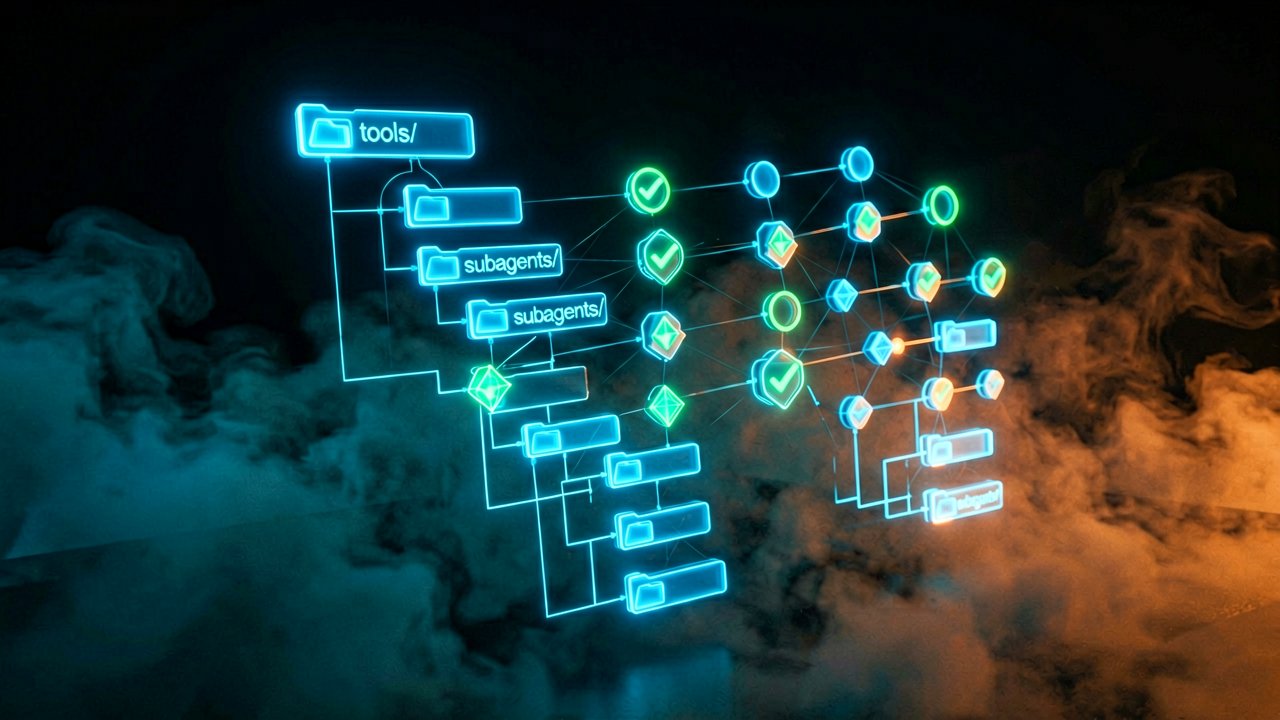
Building production-ready AI agents usually means wrestling with an ugly mess of custom boilerplate, fragile state machines, and disconnected infrastructure tools. Vercel wants to clear that headache entirely. On Wednesday, June 17, 2026, the company officially launched eve, an opinionated, open-source framework designed to make building an autonomous AI agent as familiar as organizing a classic web project. By treating each agent as a filesystem directory, developers can stop writing infrastructure glue and start focusing entirely on what their agents actually do.
The core philosophy behind eve borrows heavily from the file-based routing success of Vercel's official blog announcement. Instead of getting buried in complex codebase abstractions, an agent is configured simply by placing files in specific folders. For instance, an instructions.md file sets the baseline prompt, a tools/ folder automatically registers TypeScript functions the model can execute, and a subagents/ directory lets developers delegate specialized tasks to child processes. This predictable layout scales from a basic command-line chatbot to an advanced system capable of managing workflows independently.
Production-Ready Plugs Right In
What makes this launch significant for teams trying to move past the prototype phase is that production capabilities are built straight into the scaffolding. According to the vercel/eve GitHub Repository, the runtime automatically connects agents to necessary underlying cloud infrastructure. The system leverages Vercel Functions for durable execution, ensuring that long-running tasks can resume smoothly after interruptions without dropping context or state.
Every agent also runs with an isolated code sandbox by default, offering a safe playground where models can test code safely away from sensitive operational layers. The infrastructure integrates natively with the platform's AI Gateway to securely handle large language model routing and provider fallbacks. This setup removes the manual burden of managing API keys and token rotations across different development setups.
Enterprise Guardrails for Autonomous Agents
While open-source developers get a frictionless setup tool, enterprise teams get the governance controls they need to prevent autonomous operations from going off the rails. Alongside the framework, the cloud platform rolled out its "Vercel for Enterprise Apps and Agents" package to bring strict identity and access governance to agentic operations. This gives IT departments full auditing power over what internal agents are doing behind the scenes.
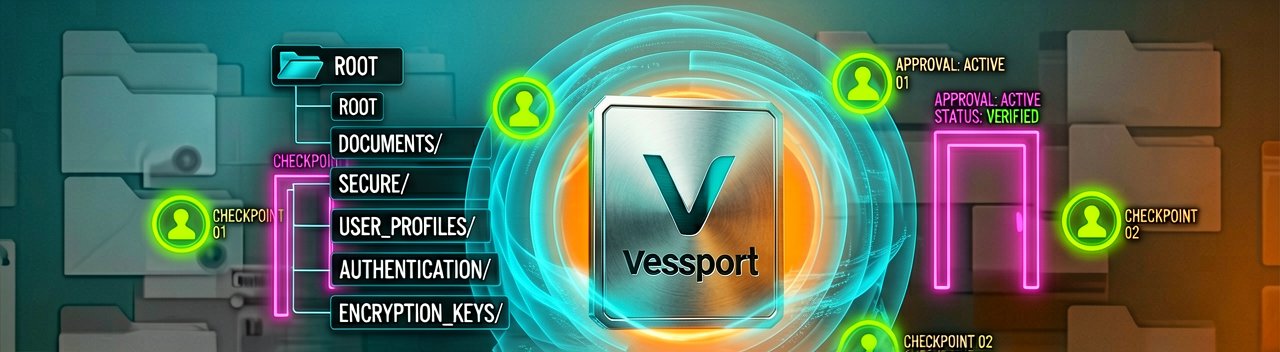
Features like Vercel Passport allow companies to lock their internal apps and custom agents behind their existing identity providers automatically. Human-in-the-loop approvals can be woven directly into the agent pipelines, meaning a system like an automated code reviewer can draft a pull request but still require a human engineer's green light before merging. It is a calculated move to position the vendor as a trustworthy foundation for enterprise automation, ensuring that compliance and oversight keep pace with rapid engineering breakthroughs.
What Most Reports Miss: The Architectural Shift Beyond Simple Wrappers
The shift from rigid script pipelines to fluid, file-based agent configuration marks a massive turning point for modern enterprise software engineering. In the rush to adopt autonomous workflows, early adopters built fragile systems held together by complex orchestration frameworks. Vercel observed this bottleneck internally while building its own support tools like Vertex, an automated helper that handles complex tasks seamlessly by resolving up to 92% of client issues autonomously. The realization was simple: engineers do not want another rigid API wrapper; they want an architectural standard that fits into their standard coding workflows.
By defining capabilities based on the structural layout of a filesystem directory, the new open-source system transforms prompts, API keys, and memory tools into simple files. The strategy mirrors the exact convention-over-configuration design that turned Next.js into a standard for corporate web apps. Moving the agent architecture into Git repositories changes how corporations validate AI logic, as a simple prompt update or a new tool addition becomes a visible commit with a clear diff. For security teams, this structural visibility means an agent's permissions can be reviewed and approved using standard engineering workflows rather than opaque black-box testing.
Solving the Persistence and Execution Nightmare
The engineering reality of running autonomous models in production is that they are prone to network drops, memory exhaustion, and unexpected execution pauses. Standard serverless architecture often fails here because stateless functions time out long before an multi-step agent completes a complex task. Vercel bypasses this limitation by weaving checkpointing mechanics directly into its serverless functions using Vercel Workflows. This allows an active execution session to pause mid-task, preserve its full contextual state, and resume exactly where it left off after an interruption. According to technical insights shared on the Vercel Blog, code changes or redeploys do not kill active workflows, meaning an agent will finish its current assignment using the exact version of the logic it started with.
Another major challenge for enterprise infrastructure teams is giving an autonomous model the freedom to execute code without endangering core networks. The framework answers this by wrapping the agent execution environment in an isolated sandbox by default. Instead of relying on predefined tools as an absolute ceiling, the model can dynamically write its own Python or Bash scripts to shape datasets, run custom data analysis, or process files inside a secure compute space. This capability is paired with a strict governance framework that allows organizations to route traffic through an central AI Gateway, giving IT leaders a single vantage point to monitor token consumption, trace execution steps via OpenTelemetry, and enforce compliance across different model providers.
Reading Between the Lines: The Friction Between Chaos and Compliance
The corporate push to centralize agentic AI exposes a fundamental contradiction that no amount of open-source boilerplate can easily solve. Vercel is betting heavily that developers want autonomous agents to behave exactly like predictable, file-based web routes. Yet the very definition of an autonomous agent relies on non-deterministic behavior, letting an LLM decide how to chain tools and respond to fluid variables. Forcing these unpredictable AI state machines into the rigid, stateless box of serverless functions feels less like a natural evolution and more like a tactical attempt to anchor a messy, emerging paradigm to an existing, highly profitable cloud infrastructure business model.
There is also a clear tension between the open-source freedom of the framework and the walled garden of the platform's enterprise controls. While anyone can pull down the repository to organize their prompts into clean directories, the architectural design practically demands the company's proprietary stack to handle anything resembling scale. Durable execution requires their custom workflows, secure runtime execution mandates their sandboxes, and identity governance relies entirely on their Passport layer. By providing a clean developer experience up front, the vendor subtly steers teams away from multi-cloud flexibility, locking them into a single ecosystem where every autonomous thought an agent has incurs a metered API gateway or serverless execution fee.
Furthermore, the human-in-the-loop security guardrails raise uncomfy questions about the actual efficiency gains of agentic workflows. Enterprises are drawn to autonomous systems because they promise to slash manual labor and accelerate operational velocity. However, if an IT department mandates that every pull request, data transformation, or external API call requires a human engineer to review a dashboard and click "approve," the agent effectively morphs into an over-engineered, asynchronous suggestion box. The technology might move at lightspeed, but the organizational bureaucracy required to keep it from hallucinating a catastrophic data breach will inevitably drag the system right back down to a crawl.
Ultimately, this launch positions the platform as the default infrastructure layer for enterprise AI, shifting the battleground away from who trains the best foundation model toward who controls the operational plumbing. If the framework succeeds in setting the standard for how code interacting with AI is structured, individual model providers become interchangeable utilities. Whether a company chooses OpenAI, Anthropic, or an open-weights model matters less than the fact that the entire orchestration, logging, and security perimeter runs through a single platform. It is a brilliant play for corporate dominance, assuming enterprise legal teams are willing to hand the keys to their operational autonomy over to a third-party serverless cloud.
"We spent a decade convincing enterprises that the web could be built without servers, only to realize that giving AI the keys to the castle means we now need to build an entire fortress of virtual servers, sandboxes, and digital passports just to make sure the chatbot doesn't accidentally liquidate the company assets during a routine support ticket."
Artūras Malašauskas is an AI Systems Integrator with 20+ years of production-grade web engineering experience. He has designed, shipped, and scaled enterprise Python/PHP systems for logistics, SaaS, and public-sector clients. For the past year, he has focused exclusively on AI integrations: deploying open-source LLMs, building generative media pipelines (image, audio, video), and engineering multi-agent workflows for real production environments. His standard: reproducibility, security, cost-efficient inference—no vaporware. He documents and evaluates emerging AI tooling, separating verified capabilities from marketing noise. Technical editor at: muza-ai.eu, ai-verslas.lt, ai-naujinos.lt Connect on LinkedIn
Comments