Moody’s Decision-Grade AI Skills Signal New Era in Enterprise Risk Management
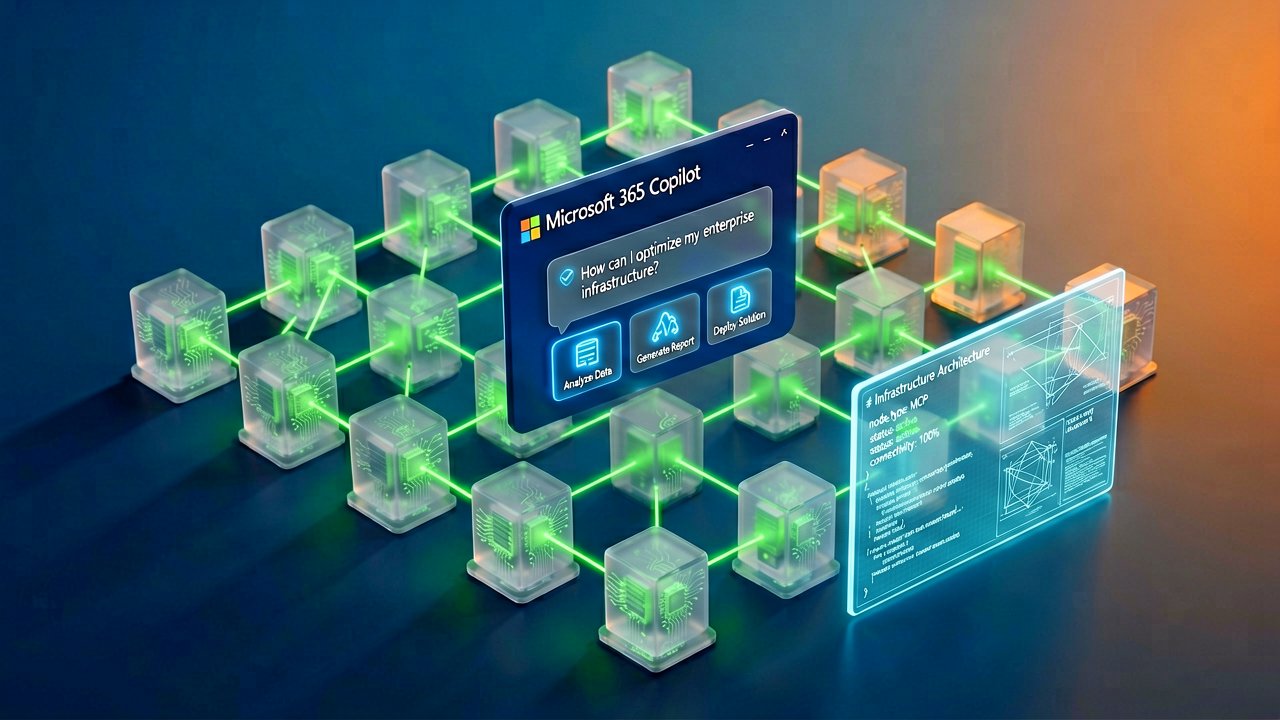
Business Wire reports that Moody’s Corporation has officially launched its first suite of Decision-Grade AI Skills, a rollout of purpose-built instructional toolkits that encode the firm’s proprietary analytical frameworks directly into mainstream enterprise software. Available initially via Microsoft 365 Copilot, these platform-agnostic tools enable corporate risk officers and financial analysts to execute complex risk assessments using direct, natural-language commands. The tactical shift positions Moody’s as a foundational logic layer within global enterprise AI ecosystems, transforming its traditional database architecture into an actionable execution asset.
This deployment highlights a major strategic shift from standard information retrieval to autonomous, specialized execution within corporate workflows. According to technical documentation from The Financial Times, these specialized skills leverage the open-standard SKILL.md format initially established by Anthropic. By anchoring these instruction sets to Moody's Model Context Protocol (MCP) servers, enterprise customers can securely run complex analytics while grounding outputs in audited financial data rather than unverified public web information. This setup effectively mitigates hallucination risks in highly regulated operational environments.
By publishing its analytical blueprints as modular, transportable assets, Moody's is addressing a key friction point in enterprise AI adoption: the lack of domain-specific reasoning in generalized large language models. Rather than locking its capabilities inside an isolated proprietary platform, Moody's is embedding its data intelligence directly into the collaborative software where corporate leadership already operates. This cross-platform interoperability sets a new baseline for business risk compliance, forcing traditional intelligence providers to shift from static data delivery to native workflow automation.
Functional Core of the Initial AI Release
The first wave of AI skills automates several intensive financial workflows. The Earnings Call Summary skill synthesizes transcript data to track revenue trajectories and tariff vulnerabilities, while the Peer Analysis module constructs investor-ready evaluations comparing leverage and ESG metrics. Additionally, the Public Information Book skill generates deep dossiers on single entities, and specialized tools for Sector Analysis combine historical research with live market feeds to produce real-time risk outlooks.

Market Impact and Ecosystem Integration
This integration marks a critical evolutionary step for modern enterprise software providers. By supplying pre-configured analytical guardrails, Moody's enables enterprise tools to handle complex financial underwriting and corporate due diligence without sacrificing regulatory accuracy. As corporate reliance on automated agents grows, the monetization of portable, verified domain expertise will likely redefine how data networks license valuable intellectual property to third-party AI platforms.
The Technical Architecture of Trusted Intelligence
Behind the Scenes: The technical infrastructure powering Moody’s transition to autonomous enterprise risk management relies heavily on the open-source Model Context Protocol (MCP). Developed to give artificial intelligence systems a secure, structured channel to interface with external databases, MCP serves as the bridge between standard conversational agents and Moody’s massive analytical repositories. By implementing this protocol, Moody's bypasses the dangerous practice of uploading massive datasets into third-party large language models. Instead, the system functions via targeted, contextual queries that fetch precise financial parameters in real-time, ensuring that confidential corporate information remains entirely isolated and protected within a secure boundary.
The choice of the SKILL.md format for these instruction sets reflects a calculated move toward platform-agnostic enterprise standards. Rather than tying its software to a single cloud provider, Moody's delivers its proprietary reasoning frameworks as portable markdown blueprints that define explicit parameters, behavior constraints, and execution pathways. When a platform like Microsoft 365 Copilot processes these files, it does not just search for a generic definition of financial risk. It executes a specific, audited sequence of quantitative calculations modeled on decades of institutional credit and risk rating expertise, drastically minimizing the unpredictable variability inherent in general-purpose models.
This integration marks a critical evolution from information indexing to rigorous verification, particularly for high-stakes decisions like supply chain stress testing and credit underwriting. Corporate legal and compliance teams have historically resisted deploying conversational AI for core operations due to the persistent threat of data hallucinations. By grounding every output in verified financial databases through explicit prompt guidelines and fixed operational guardrails, this architecture ensures that a sector overview or a leverage analysis can be traced directly back to an audited, uncompromised source. This transparency is crucial for maintaining accountability during internal audits and regulatory reviews.

As competition intensifies in the corporate AI market, the strategic focus is shifting from raw computing capacity to the quality of authoritative domain expertise. Generalized artificial intelligence models have largely become commoditized, leaving enterprise software providers hungry for specialized intelligence that can execute complex, regulated workflows safely. Moody's open integration strategy establishes a blueprint for how legacy data networks can protect their intellectual property while maximizing its distribution. Ultimately, it redefines the role of a data provider from a passive repository into an active, native engine running inside the everyday software of global business.
The Friction Between Automation and Accountability
Reading Between the Lines: The enthusiastic corporate embrace of automated risk assessment glosses over a fundamental contradiction in modern corporate governance. While Moody’s promises that its pre-packaged instruction sets eliminate the guesswork from financial analysis, the underlying mechanics of generative AI still rely on probability distributions. Transferring the burden of critical enterprise risk evaluation onto algorithmic agents assumes that a standardized digital framework can accurately capture the erratic shifts of global markets. In practice, substituting standardized, automated workflows for deep human judgment introduces an invisible vulnerability, where multiple enterprises might utilize the exact same model to reach identical, systemic conclusions, creating an artificial consensus on market stability.
Furthermore, this architectural setup challenges long-held definitions of professional liability and corporate auditing. When an automated agent generates an inaccurate sector outlook or overlooks hidden leverage risks during an acquisition evaluation, identifying the source of failure becomes remarkably difficult. Moody's protects its core models with strict, deterministic guardrails, yet the software platforms executing these instructions operate within less predictable environments. This creates an operational grey zone where enterprise risk managers may struggle to determine whether a faulty analysis stems from inadequate data grounding, an algorithmic translation error, or flawed reasoning within the third-party application itself.
This systemic complexity will likely accelerate a consolidation of power among established financial intelligence networks. Although the open-standard Model Context Protocol permits a more flexible architecture, building and maintaining these complex, secure servers requires capital-intensive infrastructure that smaller, independent research firms simply cannot afford. By integrating its analytical blueprints directly into corporate software ecosystems, Moody's is effectively locking in its market position, making it incredibly difficult for emerging analytics providers to break through. This shifts the enterprise AI competition away from technical innovation, transforming it into a battle for exclusive licensing rights over legacy data assets.
Ultimately, this rollout could redefine the career path of corporate analysts from active financial investigators to passive system monitors. As the software automates the aggregation, calculation, and reporting of risk metrics, human personnel will increasingly find themselves tasked with verifying outputs they did not generate using methods they cannot fully alter. This creates a paradox where corporate leadership depends entirely on automated systems to manage operational risk, while simultaneously relying on human employees to act as the final backstop for errors a machine should never have made in the first place.
By transforming decades of financial expertise into automated software commands, we have successfully reduced the time required to build an investment case from days to minutes. Now, corporate analysts can dedicate their newly saved hours to wondering whether they are actively reviewing a sophisticated mathematical analysis, or simply rubber-stamping a highly polished hallucination with an institutional logo attached.
Artūras Malašauskas is an AI Systems Integrator with 20+ years of production-grade web engineering experience. He has designed, shipped, and scaled enterprise Python/PHP systems for logistics, SaaS, and public-sector clients. For the past year, he has focused exclusively on AI integrations: deploying open-source LLMs, building generative media pipelines (image, audio, video), and engineering multi-agent workflows for real production environments. His standard: reproducibility, security, cost-efficient inference—no vaporware. He documents and evaluates emerging AI tooling, separating verified capabilities from marketing noise. Technical editor at: muza-ai.eu, ai-verslas.lt, ai-naujinos.lt Connect on LinkedIn
Comments