Adtech Meets the Open AI Ecosystem: Nexxen Embraces Claude and Google Protocols
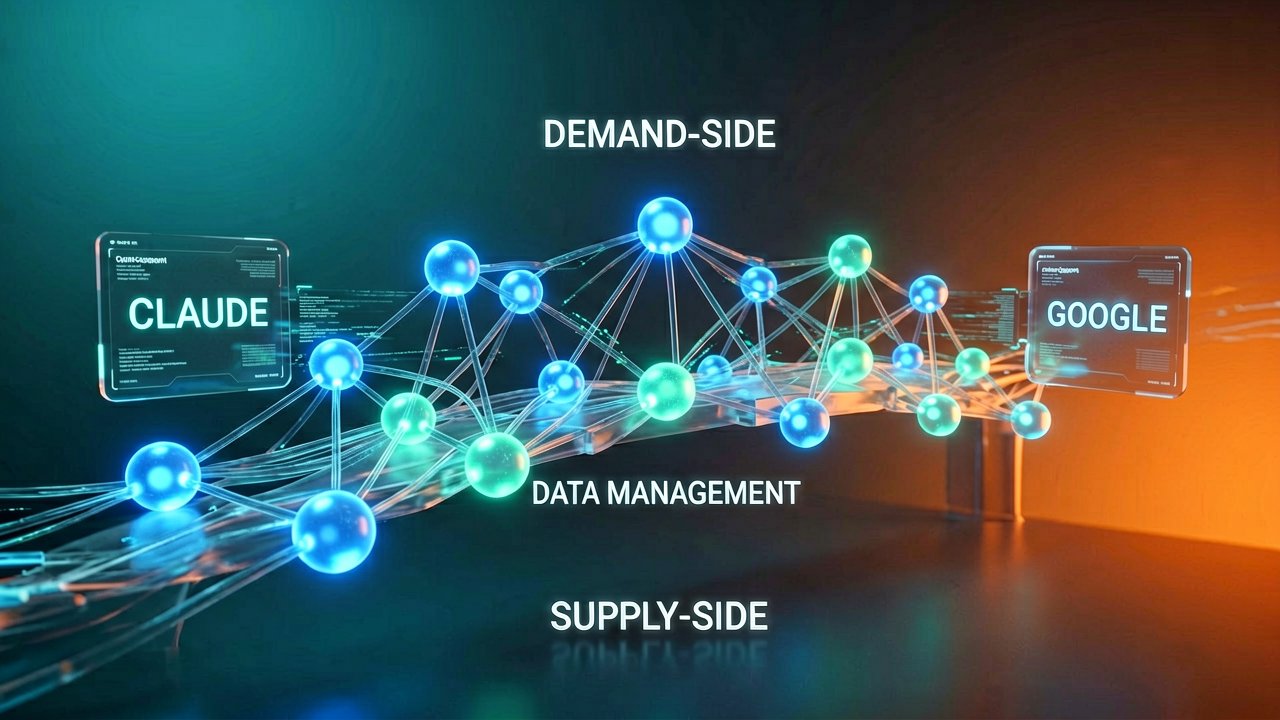
The adtech landscape just took a massive leap toward total automation, and it’s throwing out the old, walled-garden playbook in the process. On June 16, 2026, advertising technology powerhouse Nexxen officially rolled out its next-generation nexAI upgrades, introducing Model Context Protocol (MCP) and Agent-to-Agent (A2A) AI integrations. Instead of forcing agency media buyers to log into another isolated dashboard, this dual-path architecture lets external, in-house AI assistants talk directly to Nexxen's demand-side, supply-side, and data management layers. It’s an aggressive bet that interoperability, rather than proprietary lock-in, will define the next era of enterprise campaign management.
According to an exclusive report by Adweek, the shift responds directly to mounting agency frustration over managing messy, multi-platform media buys. Agencies are increasingly building internal AI frameworks to gain a competitive edge but have historically hit a brick wall when attempting to connect those tools natively to third-party ad networks. By integrating Anthropic's open-source MCP and Google's agentic frameworks, Nexxen essentially builds a standardized "USB-C port" for artificial intelligence. An agency's custom agent running on Claude can now seamlessly cross the digital threshold to pull data, run pre-launch campaign quality assurance, and trigger optimizations overnight without human hands touching a keyboard.
Breaking Down the Walled Gardens
What makes this development particularly compelling is the macro environment driving it. Automated web traffic is hitting unprecedented highs, and agency budgets are under constant pressure to deliver greater strategic efficiency. Instead of attempting to box clients into a single proprietary ecosystem, Nexxen is leaning into an open AI operating system model. Early beta testing has already involved several prominent agency partners, including PMG and H/L, with early users highlighting how the integration bypasses grueling manual data processing at critical, fast-moving moments in the media calendar.
Of course, hand-off automation requires immense trust, which is why the platform retains human-defined guardrails and fully auditable decision logs. While Nexxen isn’t initially charging clients for these integration capabilities, the move positions them as a uniquely collaborative infrastructure provider at a time when the broader tech sector is scrambling to standardize agentic workflows. By letting autonomous agents safely transact media on their own terms, the company is shifting the conversation from basic AI features to a fully connected, programmatic AI ecosystem.

What Most Reports Miss: The Structural Shift Behind the Scenes
Behind the Scenes: The real story of Nexxen’s sudden embrace of agentic interoperability isn’t just about adding cutting-edge software features; it is a calculated response to a fundamental disruption in how the internet operates. Industry data reveals that automated traffic spiked by 23.5% in recent months, with AI assistant traffic to digital commerce and media touchpoints skyrocketing by 400% year-over-year Adweek. AI agents are no longer passive web crawlers summarizing text, but are actively transforming into transactional entities that negotiate, buy, and execute enterprise workflows. By standardizing connections through Model Context Protocol (MCP), Nexxen is building the necessary structural plumbing to ensure its adtech platform remains accessible to these autonomous buyers rather than getting locked out by next-generation agency infrastructure.
From a stakeholder perspective, this protocol integration addresses the hidden administrative tax that plagues multi-platform ad campaign execution. Media buyers at major agencies face the tedious reality of logging into half a dozen distinct systems just to duplicate a single Connected TV (CTV) campaign layout across fragmented publishers like YouTube, Disney, and Prime Video. As agency executives point out, training humans to master the nuances of four or five separate tech stacks creates an incremental burden that frequently forces them to deprioritize smaller ad platforms. Shifting this execution layer to interconnected AI agents removes that operational friction, allowing buyers to horizontally orchestrate expansive campaigns across the entire ecosystem simultaneously.
Historically, adtech platforms successfully maintained market share by enforcing platform lock-in, capitalizing on the high migration costs of human teams moving between different software interfaces. However, the rise of the AI Agent Stack in 2026 has turned that traditional strategy on its head, establishing interoperability and shared user interface layers as the definitive competitive advantages. As agency partners build out customized in-house intelligence engines to handle real-time bidding, optimization, and audience segment generation, they are actively abandoning partners that refuse to play nice with open standards. Nexxen’s choice to support Anthropic and Google protocols serves as an explicit acknowledgment that the future of programmatic media execution belongs to open networks that treat autonomous machines as first-class citizens.
Reading Between the Lines: The Cynic’s Guide to Agentic Adtech
Reading Between the Lines: Stripping away the utopian marketing gloss of an "open AI operating system" reveals a deeply defensive play that positions Nexxen ahead of a looming ecosystem shift. Adtech platforms have historically generated massive margins by trapping agency workflows inside proprietary dashboards and charging premium rates for specialized data onboarding. By validating Anthropic’s Model Context Protocol (MCP), Nexxen isn't acting purely out of altruism; it is anticipating a world where agencies cease using manual human trading desks altogether. Failing to accommodate these external autonomous agents means risking total obscurity, as agency procurement tools will simply filter out networks that cannot be optimized via a single centralized API call.
This technical shift introduces an obvious operational paradox regarding platform trust and legal liability. While Yahoo Finance highlights Nexxen's emphasis on "human-governed guardrails," the fundamental purpose of agentic AI is to eliminate human oversight during fast-paced bidding cycles. If a third-party Claude instance misinterprets a campaign prompt and burns through an entire quarter’s ad budget in minutes due to an unexpected protocol conflict, pinning down legal culpability becomes an immediate nightmare. Blaming an open-source data pipeline like MCP won’t satisfy angry brand clients, meaning that true structural adoption will remain limited until platforms establish legally ironclad liability frameworks for algorithmic errors.
Furthermore, the current monetization strategy reveals a glaring contradiction that will inevitably spark conflict down the road. Nexxen is offering these extensive integration features for free during its initial rollout, gambling that transaction volume will scale fast enough to offset infrastructure costs. However, running real-time, LLM-driven programmatic auctions requires immense computational overhead, and agencies will quickly realize that external agent integration lets them extract premium data signals without paying traditional platform fees. As resource utilization climbs, the company will face intense pressure from investors to end the free tier, testing whether agencies genuinely value open protocols once they carry a concrete line-item cost.
It turns out the ultimate destiny of digital advertising isn’t creative genius, but rather two autonomous neural networks haggling endlessly over programmatic billboard space in milliseconds while the humans quietly step outside to grab a coffee.
Artūras Malašauskas is an AI Systems Integrator with 20+ years of production-grade web engineering experience. He has designed, shipped, and scaled enterprise Python/PHP systems for logistics, SaaS, and public-sector clients. For the past year, he has focused exclusively on AI integrations: deploying open-source LLMs, building generative media pipelines (image, audio, video), and engineering multi-agent workflows for real production environments. His standard: reproducibility, security, cost-efficient inference—no vaporware. He documents and evaluates emerging AI tooling, separating verified capabilities from marketing noise. Technical editor at: muza-ai.eu, ai-verslas.lt, ai-naujinos.lt Connect on LinkedIn
Comments