NVIDIA's Unyielding AI Dominance Reshapes the Global Technology Landscape

Nvidia’s relentless drive to push the boundaries of computational power continues to rewrite the rules of the global technology sector. Holding an estimated 80% of the AI accelerator market, the company is no longer simply a hardware vendor, but the chief architect of the modern artificial intelligence infrastructure stack Silicon Analysts. By organically coupling advanced processing nodes with deeply entrenched software ecosystems, Nvidia has successfully locked hyperscalers and enterprises alike into an accelerated upgrade cycle that defines modern corporate capital expenditure.
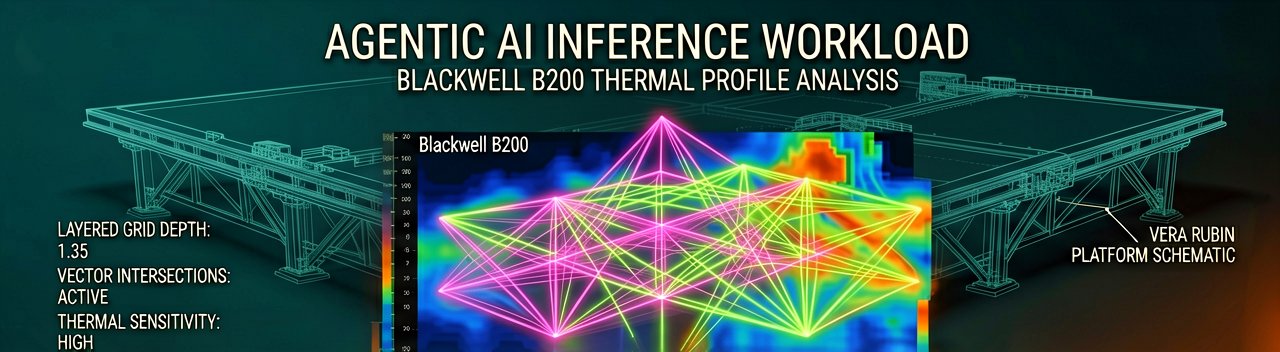
The strategic expansion of Nvidia's hardware portfolio underscores a fundamental market shift from pure AI model training to heavy, real-time inference workloads technologychecker.io. With the massive rollout of architectures like the Blackwell B200 and the introduction of next-generation infrastructures such as the Vera Rubin platform, Nvidia is addressing the urgent demand for agentic AI and multi-modal models NVIDIA. These technological leaps are engineered to deliver exponential throughput per megawatt, fundamentally changing the economics of scaling AI factories and edge computing KuCoin News .
Enterprise Computing and the AI Factory Paradigm
Enterprise computing is undergoing a massive transformation as businesses pivot from experimental pilots to production-grade, retrieval-augmented generation systems. Nvidia is actively greasing the wheels of this enterprise adoption by offering vertically integrated rack-scale systems and high-speed networking fabrics Deep Research Global. This comprehensive approach effectively reduces the operational friction that typically hinders corporate IT departments. By bundling compute with proprietary networking protocols, Nvidia ensures maximum performance and deep systemic lock-in.
Market Pressures and the Push for Custom Silicon
Despite this overwhelming market leadership, Nvidia's dominance is facing strategic shifts across the value chain. Hyperscale cloud providers, while remaining Nvidia's largest customers, are concurrently investing billions in developing custom application-specific integrated circuits to optimize their own proprietary workloads Silicon Analysts. This "great decoupling" allows technology giants to reclaim cost efficiencies for stable, predictable tasks while still relying on Nvidia's cutting-edge GPUs for their most demanding frontier model training. Simultaneously, competitors like AMD are steadily capturing single-digit market shares by offering memory-rich, price-competitive alternatives for targeted inference applications.

The Road Ahead: Ecosystem Expansion
To secure its foothold into the next decade, Nvidia has aggressively expanded its market reach directly into the consumer and mobile device segments. The debut of artificial intelligence-infused system-on-chip architectures signals a clear strategy to dominate edge computing and local language model processing ASUS Blog. By planting its technology across every layer of computing, from massive server farms to personal laptops, Nvidia is successfully positioning itself to dictate the trajectory of global software development and hardware architecture for years to come.
Beyond the Silicon: The Unseen Architecture of Nvidia's Monopoly
What Most Reports Miss: Nvidia's multi-decade dominance is not merely a triumph of hardware engineering, but the result of a meticulously constructed software moat that competitors have spent over fifteen years failing to breach. When Jensen Huang committed the company to the Compute Unified Device Architecture (CUDA) in 2006, Wall Street initially penalized the company for depressing its margins on what was then viewed as a niche gaming component. Today, that early developer tax has transformed into an impenetrable ecosystem where millions of software engineers are trained natively on Nvidia libraries, rendering the hardware migration to rival chips an prohibitively expensive software rewriting task for most enterprises.
This software lock-in has fundamentally shifted the power dynamic between Nvidia and its largest customers, the hyperscale cloud providers. While Microsoft, Alphabet, and Amazon publicly celebrate the deployment of their internal custom silicon, their infrastructure teams privately acknowledge that the time-to-market advantage of Nvidia’s complete stack is irreplaceable for frontier model training. Venture capital firms are actively advising artificial intelligence startups to secure Nvidia compute allocations as a prerequisite for funding, turning GPU access into a form of tech-sector currency that influences company valuations far more than traditional liquid assets.
Behind closed doors, the supply chain management of these AI factories has triggered a fierce geopolitical and logistical scramble. Building a modern data center utilizing Blackwell architectures requires an intricate orchestration of liquid cooling technologies, high-bandwidth memory from specialized suppliers, and proprietary InfiniBand networking topologies that Nvidia tightly controls. By dictating the exact specifications and component allocations of these server racks, the company has effectively shifted from being a component supplier to acting as the ultimate gatekeeper of global data center real estate, deciding which tech giants receive hardware priority.
This unprecedented leverage has forced a strategic pivot among tier-two cloud providers and sovereign nations seeking independent technological capabilities. Countries across Europe and Asia are increasingly bypassing traditional American cloud providers to build their own national "sovereign AI" clouds directly powered by Nvidia infrastructure. This shift allows Nvidia to diversify its revenue streams away from a dangerous reliance on a handful of Silicon Valley hyperscalers, ensuring that even if domestic tech giants slow their capital expenditure, global state-sponsored demand will continue to absorb the company's high-margin production output.
Reading Between the Lines: The Fragile Foundations of the GPU Gold Rush
Reading Between the Lines: The corporate narrative surrounding the artificial intelligence revolution assumes an infinite runway of exponential capital expenditure, yet a stark macroeconomic contradiction looms over the entire tech sector. Hyperscalers are pouring hundreds of billions of dollars into Nvidia’s infrastructure, but the downstream revenue generated by enterprise AI applications remains a microscopic fraction of that investment. This widening chasm between hardware deployment costs and software monetization suggests that the market may be inflating a historic infrastructure bubble, one where the primary beneficiary is the shovel-seller rather than the gold miners.
Furthermore, Nvidia’s strategic pivot toward selling complete, integrated data center blocks introduces severe systemic friction into the tech ecosystem. By controlling everything from the silicon to the proprietary networking fabric, Nvidia is actively cannibalizing the market share of traditional enterprise hardware partners who once distributed its chips. This aggressive vertical integration risks alienating the very server manufacturers and systems integrators that Nvidia historically relied upon, forcing these legacy players to aggressively subsidize and promote alternative chip architectures from rivals just to survive.
The assumption that Nvidia’s software moat is permanently unassailable also ignores an aggressive, industry-wide counter-offensive rooted in open-source software. Tech giants are collectively backing initiatives like AMD's ROCm and the Unified Acceleration Foundation (UXL) to create a universal, chip-agnostic software layer. While rewriting legacy CUDA code remains painful, the economic incentive to break free from Nvidia's high-margin pricing is now so massive that engineering talent is being systematically weaponized to commoditize the hardware abstraction layer, threatening Nvidia's pricing power over the long term.
Ultimately, Nvidia’s greatest vulnerability might not be a rival chipmaker, but the physical and logistical limits of the global power grid. Modern AI factories demand unprecedented gigawatt-scale electrical infrastructure, prompting tech companies to pursue desperate measures ranging from dedicated solar farms to reviving mothballed nuclear reactors. Nvidia may continue to engineer the most efficient processors on earth, but its spectacular growth trajectory will inevitably collide with the hard reality of aging public utilities and zero-sum energy allocations, proving that even the most advanced digital monopoly remains bound by physical infrastructure.
Building the future of human intelligence apparently requires spending hundreds of billions of dollars on hardware to run software that nobody quite knows how to monetize yet, all while praying the local power grid doesn't collapse from the sheer exhaustion of it all.
Artūras Malašauskas is an AI Systems Integrator with 20+ years of production-grade web engineering experience. He has designed, shipped, and scaled enterprise Python/PHP systems for logistics, SaaS, and public-sector clients. For the past year, he has focused exclusively on AI integrations: deploying open-source LLMs, building generative media pipelines (image, audio, video), and engineering multi-agent workflows for real production environments. His standard: reproducibility, security, cost-efficient inference—no vaporware. He documents and evaluates emerging AI tooling, separating verified capabilities from marketing noise. Technical editor at: muza-ai.eu, ai-verslas.lt, ai-naujinos.lt Connect on LinkedIn
Comments