Zebra's AI Innovations and Stock Valuation: A Strategic Industry Shift

Zebra Technologies (ZBRA) has ignited a significant Wall Street debate following its impressive first-quarter financial performance and strategic pivot toward advanced automation. The company reported an adjusted earnings per share (EPS) of $4.75, substantially outpacing the consensus estimate of $4.21, alongside a 14.3% year-over-year revenue increase to $1.50 billion, according to market data compiled by Yahoo Finance. This operational resurgence signals an end to the post-pandemic inventory destocking cycle that previously suppressed frontline technology investments.
The primary catalyst for this renewed market enthusiasm is Zebra's aggressive push into enterprise intelligence software. At its recent ZONE 2026 conference, the company unveiled the Zebra Nucleus platform and expanded its Workcloud application suite, focusing on real-time, AI-supported device and workflow management. This shift from pure hardware manufacturing to high-margin, AI-driven automation addresses critical labor shortages and supply chain disruptions across retail and logistics sectors, as detailed by Sahm Capital.
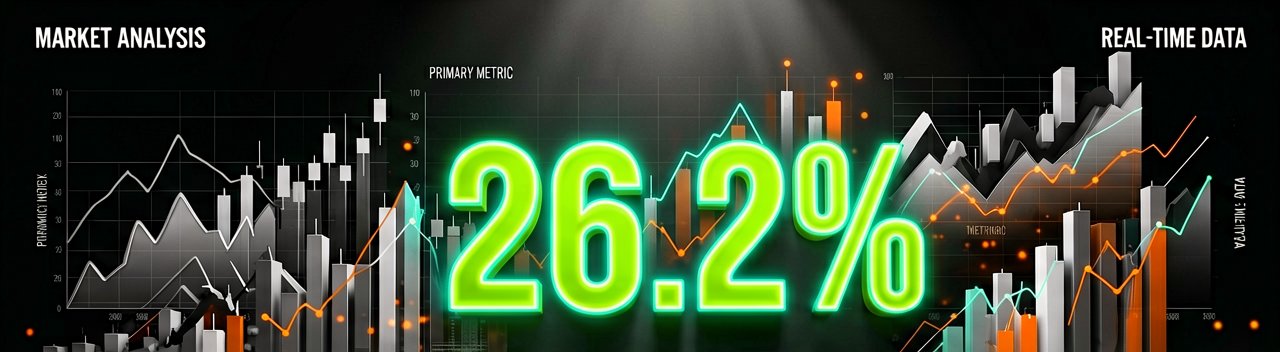
Despite a 5% single-day stock surge following these software rollouts, analysts remain divided on whether the market has fully priced in the turnaround. Financial models published by Simply Wall St indicate that Zebra Technologies closing price of $240.05 sits well below its estimated intrinsic fair value of $325.31. This calculation leaves the company roughly 26.2% undervalued, presenting an intriguing risk-reward profile as its software-heavy portfolio transition takes hold.
The AI Platform Evolution
The introduction of the Zebra Nucleus platform marks a fundamental evolution in how enterprise hardware interacts with frontline operators. By incorporating localized machine learning and predictive analytics, the suite optimizes task allocation and asset visibility without relying solely on cloud connectivity. This technological shift allows businesses to eliminate manual tracking errors, which directly addresses the compounding inefficiencies found in modern, hyper-scaled fulfillment centers.

Valuation Gaps and Institutional Conviction
While quantitative discount models track a 26% gap to fair value, institutional brokerages are actively raising their expectations. Multiple investment banks revised their price targets upward post-earnings, with Barclays moving its target to $345 and BNP Paribas reaching $370, as tracked via Perplexity Finance. These aggressive valuations assume that higher-margin software recurring revenue will successfully counteract inflation-related hardware margin compression and smooth out cyclical hardware upgrade timelines.
Macro Tailwinds and Execution Risks
Sustained revenue growth remains highly dependent on macro conditions and the execution of recent corporate integrations, such as the acquisition of Elo. This expansion into self-service technology and customer-facing automation increases Zebra's total addressable market by billions, yet integration friction or prolonged regional demand softness in EMEA could cap near-term margin expansion. Investors must weigh these execution risks against the structural demand for digital transformation and automated supply chain infrastructure.
Reading Between the Lines: The Reality of the Software Pivot
Reading Between the Lines: The prevailing Wall Street narrative frames Zebra Technologies as a triumphant software-and-AI phoenix rising from the ashes of hardware cyclicality, but this transition warrants a deeper dose of skepticism. Financial models suggesting a 26% undervaluation rely heavily on the assumption that software recurring revenue will scale quickly enough to offset structural shifts in the hardware space. Yet, the realities of enterprise procurement reveal that buyers rarely separate Zebra’s software from the physical devices they hold, meaning the company remains deeply bound to the very hardware capital cycles it claims to transcend.
A glaring contradiction lies in Zebra’s operational margin structure during this transition. While software deployment inherently boasts near-90% gross margins, the massive engineering overhead required to build out platforms like Zebra Nucleus and integrate acquisitions has kept overall operating margins tightly bound to historical ranges. Furthermore, as corporate clients prolong the lifecycle of their existing device fleets to maximize efficiency, Zebra faces a delicate balancing act: its new software must be backward-compatible with older hardware, which inadvertently incentivizes customers to delay lucrative hardware upgrades.
The competitive landscape presents another hurdle that standard valuation models frequently overlook. Zebra is no longer just competing against traditional automated identification rivals, but is now steering directly into the territory of entrenched enterprise asset management giants and nimbler, cloud-native logistics startups. These cloud players do not carry the operational baggage of managing global hardware supply chains or manufacturing facilities, allowing them to iterate algorithms at a pace that legacy industrial hardware firms traditionally struggle to match.
Projecting this trajectory outward, Zebra's success hinges entirely on whether it can successfully transform from a trusted hardware vendor into an indispensable strategic software partner. If enterprise customers begin treating the Workcloud suite as an optional add-on rather than a mission-critical platform, the premium multiple currently being priced into the stock will quickly dissolve. The coming quarters will prove whether Zebra can truly shift the gatekeeper economics of logistics automation, or if it will simply remain a premium manufacturer wearing an artificial intelligence coat of paint.
"Wall Street's sudden realization that a barcode scanner company can write software resembles a proud parent discovering their teenager can boil water—impressive for the demographic, but perhaps not yet worthy of a Michelin star."
Artūras Malašauskas is an AI Systems Integrator with 20+ years of production-grade web engineering experience. He has designed, shipped, and scaled enterprise Python/PHP systems for logistics, SaaS, and public-sector clients. For the past year, he has focused exclusively on AI integrations: deploying open-source LLMs, building generative media pipelines (image, audio, video), and engineering multi-agent workflows for real production environments. His standard: reproducibility, security, cost-efficient inference—no vaporware. He documents and evaluates emerging AI tooling, separating verified capabilities from marketing noise. Technical editor at: muza-ai.eu, ai-verslas.lt, ai-naujinos.lt Connect on LinkedIn
Comments