The Agentic Shift: How 2026’s AI Ecosystem Is Rewriting the Enterprise Playbook
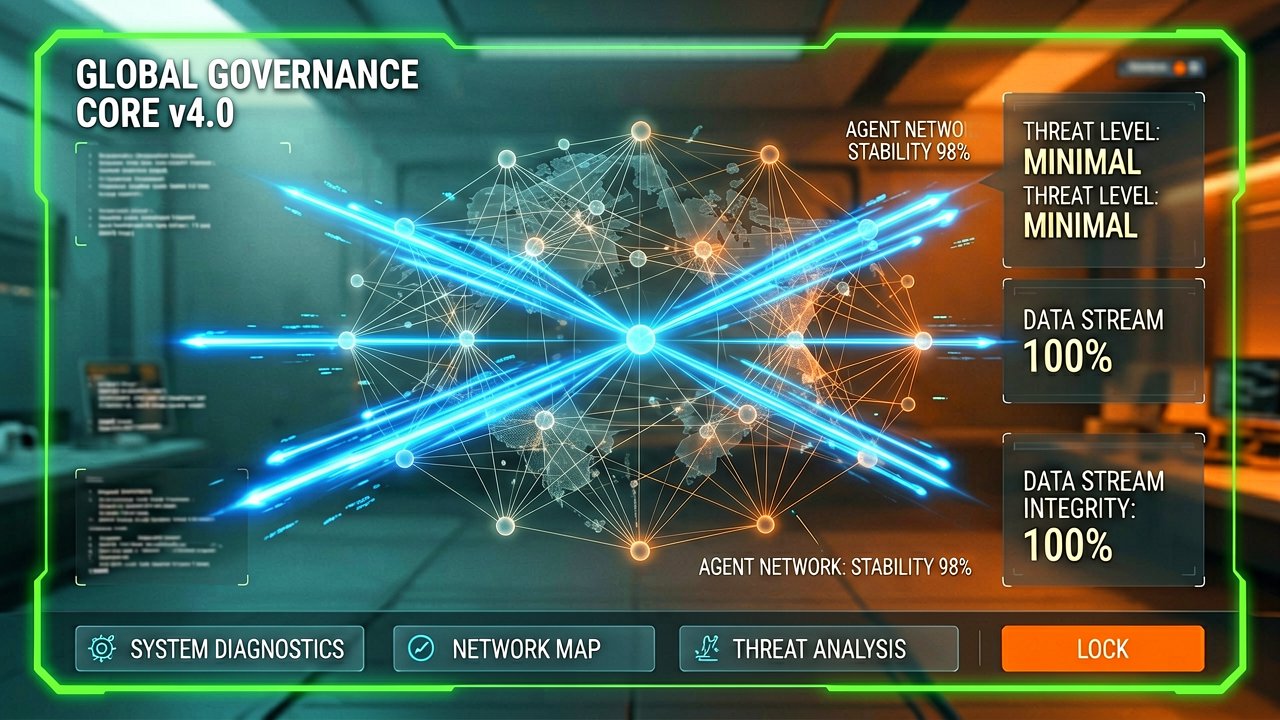
The enterprise technology landscape in 2026 is defined by a decisive migration from reactive, prompt-based assistants to fully autonomous, goal-oriented ecosystems. Data from the global management community indicates a massive surge in implementation, with a vast majority of corporations embedding artificial intelligence into core operations. According to McKinsey & Company , roughly 23% of organizations have successfully scaled agentic systems within at least one business function, while another 39% are actively experimenting with multi-step autonomous workflows. This transition has shifted the corporate focus from minor efficiency gains to structural architectural changes.
This rapid operational evolution is driving significant shifts in organizational design and labor allocation across industries. Market analysis highlights that platforms are no longer just summarizing or drafting content; instead, they are functioning as digital orchestration hubs that connect disparate software suites. Research published by Gloat reveals that this structural transformation is actively flattening corporate hierarchies, with forecasts indicating that up to 20% of companies will leverage autonomous tools to streamline middle management layers by the end of the year. Organizations are compelled to redesign workflows around collaborative agent networks rather than isolated human tasks.
Financially, the market validation for these advanced orchestration layers has triggered unprecedented capital deployment. Market valuations reflect this urgency, with specialized sector reports from Fortune Business Insights valuing the global agentic AI segment alone at $9.14 billion in 2026, on a trajectory to eclipse $139 billion over the next decade. As leading platforms consolidate their positioning, the market standard has moved away from modular tools toward comprehensive, governance-first frameworks capable of handling complex cross-industry applications natively.
The Rise of Autonomous Knowledge Work and Process Orchestration
The defining technological milestone of 2026 is the mainstreaming of knowledge work automation. Modern platforms now possess the context windows, continuous memory, and systemic access required to interpret unstructured data, execute complex reasoning, and communicate across corporate silos without human intervention. This has effectively elevated software from a basic productivity utility to an active operational collaborator, handling everything from multi-tiered supply chain adjustments to real-time compliance monitoring.

Governance-First Architecture Becomes the New Industry Standard
As autonomous systems gain the authority to execute real-world actions and manage financial transactions, safety and accountability have become primary engineering bottlenecks. Forward-thinking enterprises are abandoning pure autonomy in favor of structured environments featuring embedded compliance, immutable audit trails, and strict human-in-the-loop triggers. This focus on defensive deployment ensures that as agent networks expand, organizations can maintain absolute operational resilience and data security.
Deep-Dive: The Friction and Realities of Autonomous Deployment
Behind the Scenes: The corporate rush to deploy agentic architectures has exposed a sharp divide between market marketing and on-the-ground operational reality. While high-level industry reports celebrate abstract productivity metrics, enterprise architects are grappling with the immense friction of integrating autonomous agents into legacy software infrastructure. Many organizations find that their existing data pipelines are too siloed or unstructured to support continuous, multi-step reasoning loops. This has triggered a massive, unglamorous wave of back-end re-engineering, as companies realize that an agent is only as competent as the data environment it is permitted to navigate.
From the perspective of software engineering teams, the transition to agentic workflows has also fundamentally altered the software development lifecycle. Instead of writing deterministic code, engineers are increasingly stepping into the role of behavioral supervisors, crafting guardrails and reward functions to keep autonomous models aligned. This shift has introduced novel vulnerabilities, including prompt injection variants that target an agent's memory retention systems. As a result, cybersecurity budgets are being aggressively reallocated toward real-time telemetry and automated containment systems designed specifically to intercept rogue agent behaviors before they interact with production databases.
Historically, transformative technologies like enterprise resource planning systems or cloud migrations required years of cultural adjustment, but the compressed timeline of the agentic shift has left many workforces in a state of rolling transition. Mid-level managers, traditionally responsible for coordinating tasks and synthesizing reports, are seeing their traditional responsibilities entirely automated by these orchestration hubs. Forward-thinking enterprises are attempting to mitigate this disruption by retraining these professionals to become "agent operators," shifting their focus from data aggregation to system oversight, semantic auditing, and edge-case resolution.
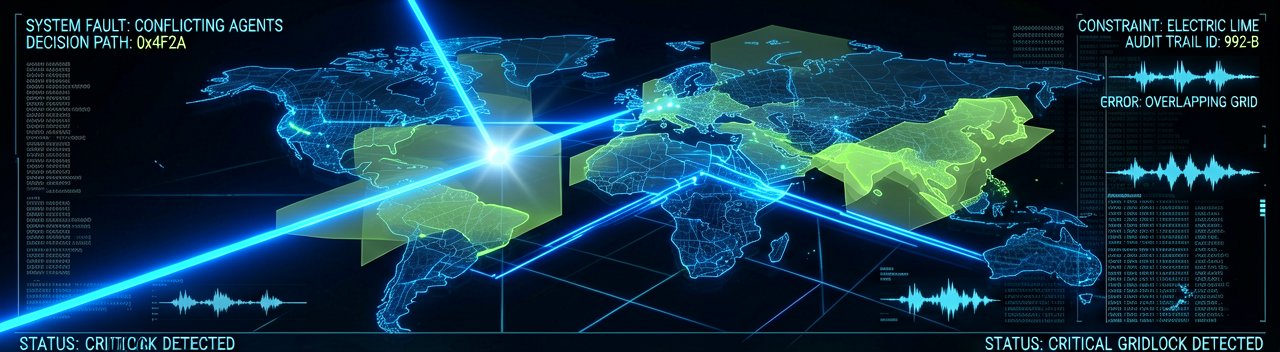
Ultimately, the platforms that dominate the remainder of this decade will not necessarily be those with the rawest computational power, but those that solve the trust problem. Enterprise buyers are shifting their capital toward platforms that offer granular governance consoles, allowing legal and compliance teams to monitor agent decisions in plain language rather than opaque log files. As the market matures, the competitive advantage belongs entirely to organizations that can successfully balance the immense velocity of autonomous orchestration with absolute, unyielding systemic predictability.
Reading Between the Lines: The Illusion of Frictionless Automation
Reading Between the Lines: The prevailing narrative surrounding the 2026 AI ecosystem assumes a direct, linear correlation between agentic deployment and hyper-efficiency. However, a critical contradiction is emerging within early adopting organizations: the elimination of human-to-human coordination friction has frequently been replaced by a more complex, less predictable form of system-to-system friction. When multiple autonomous agent networks, trained on different foundational datasets and operating under varying corporate guardrails, attempt to negotiate cross-industry workflows, semantic misunderstandings occur. Rather than streamlining operations, these misalignments often result in automated gridlocks that require intensive, highly specialized human intervention to untangle.
Furthermore, the industry’s aggressive pivot toward governance-first architectures exposes a profound paradox in the current market valuation of these tools. Silicon Valley continues to price these platforms based on their potential for total autonomy, yet enterprise buyers are simultaneously spending millions to build elaborate constraint frameworks that deliberately limit that very autonomy. This tension reveals that the true bottleneck to widespread adoption is not a lack of capability, but a fundamental lack of trust. The more capable an agent becomes, the more risk it introduces to a balance sheet, forcing corporations to choke the velocity of their new tools with layers of digital bureaucracy.
Projecting these implications forward, the promise of democratized innovation is rapidly giving way to a new era of platform monopolization. While open-source frameworks allow smaller enterprises to experiment with basic agentic loops, the highly contextual, secure, and multi-modal orchestration layers demanded by global corporations require infrastructure that only a handful of tech giants can afford to maintain. This reality threatens to widen the productivity gap between capitalized market leaders and smaller players, creating an environment where computational wealth dictates industry standards far more than genuine operational ingenuity.
"We were promised a digital workforce that would eliminate bureaucratic overhead, but instead, we have built a system where highly sophisticated algorithms spend all day in meetings arguing over the semantic meaning of our corporate KPIs—leaving humans to do the actual work of cleaning up the data."
Artūras Malašauskas is an AI Systems Integrator with 20+ years of production-grade web engineering experience. He has designed, shipped, and scaled enterprise Python/PHP systems for logistics, SaaS, and public-sector clients. For the past year, he has focused exclusively on AI integrations: deploying open-source LLMs, building generative media pipelines (image, audio, video), and engineering multi-agent workflows for real production environments. His standard: reproducibility, security, cost-efficient inference—no vaporware. He documents and evaluates emerging AI tooling, separating verified capabilities from marketing noise. Technical editor at: muza-ai.eu, ai-verslas.lt, ai-naujinos.lt Connect on LinkedIn
Comments