When Political Voice Cloning Goes Full Otaku: Inside the ZONOS2 Evangelion Demo
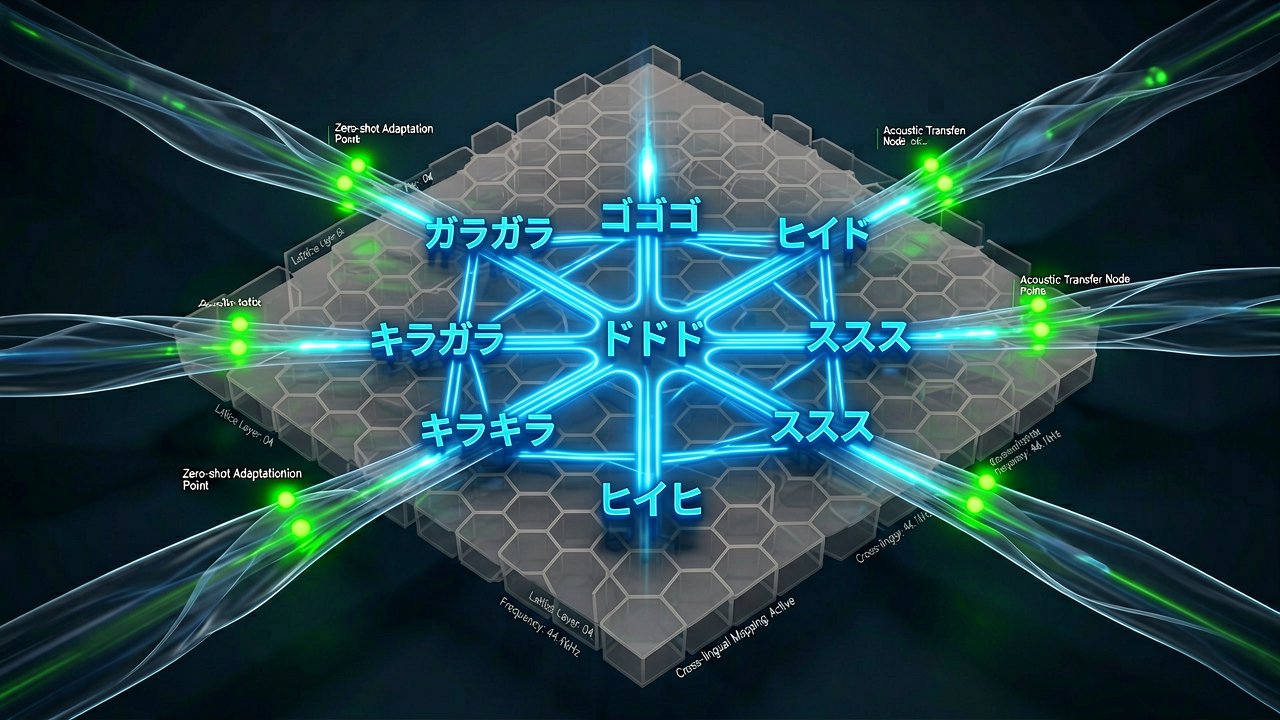
The boundary between high-stakes geopolitical discourse and niche internet culture has dissolved completely. In a stunning technological showcase, a newly unveiled Japanese-language voice clone AI named ZONOS2 demonstrated its advanced synthesis capabilities by generating a flawless audio replica of Donald Trump. Instead of breaking down trade policies or campaign strategies, the synthetic president spent the demo passionately discussing the intricacies of the classic anime Neon Genesis Evangelion.
This uncanny intersection of political imagery and pop-culture fandom is powered by the latest open-weight text-to-speech architecture developed by the AI research firm Zyphra. According to the technical documentation published on the official Zyphra GitHub Repository, the underlying ZONOS2 model relies on a massive Mixture of Experts (MoE) backbone trained on over 6 million hours of multilingual speech data. This extensive training allows the system to achieve unprecedented emotional expressiveness and natural cadence, capturing the exact linguistic quirks of public figures even when forcing them to speak an entirely different language.
The Architecture of a Multilingual Clone
Replicating a distinct voice like Trump's in Japanese requires far more than literal translation. The technology utilizes an advanced pipeline that extracts speaker embeddings and matches them with normalized UTF-8 bytes to generate high-fidelity audio tokens. What makes the demo particularly significant for the AI industry is its zero-shot adaptation capability, which allows the model to clone complex speech patterns from just a brief reference clip without requiring hours of targeted fine-tuning.
By delivering this level of nuance at exceptionally low latency, the open-weight release presents a massive leap forward for localized content creation and deepfake synthesis alike. While the immediate internet reaction has naturally focused on the absurdity of a simulated world leader breaking down mecha anime lore, the underlying technology signals a future where highly accurate, cross-lingual voice cloning is accessible to anyone with basic hardware.
Behind the Synthetic Curtain: The ZONOS2 demo represents a massive paradigm shift in how the tech world views the intersection of open-source AI, internationalization, and the inevitability of political deepfakes. Historically, voice cloning tools required massive, meticulously cleaned datasets of a specific speaker in a targeted language to produce anything resembling natural cadence. Zyphra’s achievement bypasses this constraint entirely by leveraging cross-lingual acoustic transfer, effectively mapmaking the unique timbre, vocal fry, and dramatic pauses of a high-profile Western politician directly onto a complex Japanese phonetic matrix.
For industry observers and researchers, the choice of Neon Genesis Evangelion as the demo's subject matter is far more than a cheeky nod to internet meme culture. The complex terminology, emotional weight, and hyper-specific vocabulary of the anime serve as a rigorous stress test for any text-to-speech engine. Capturing a synthetic Trump navigating the philosophical monologues of an otaku staple requires a level of inflection control and dynamic range that older, rigid neural networks simply could not muster without sounding entirely robotic.
The Architecture of Expressive Open-Source Tech
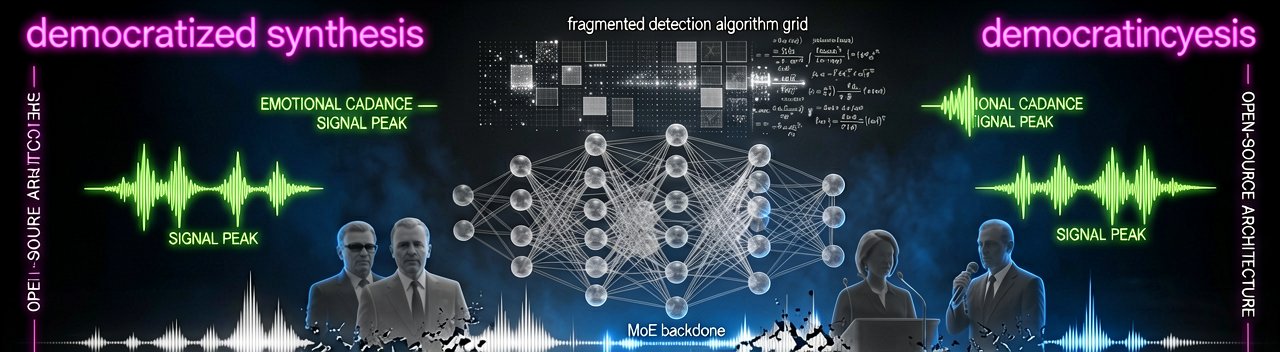
The engineering community is particularly focused on Zyphra's decision to release the underlying architecture under an open-weights model. By putting this level of raw computational power directly into the public domain, the developers are actively democratizing elite-tier audio synthesis while simultaneously complicating the ongoing battle against digital misinformation. Experts note that while proprietary platforms like ElevenLabs maintain strict guardrails to prevent users from cloning non-consenting public figures, open-weight models allow local execution where those corporate restrictions cease to exist.
This technical freedom creates a stark division among stakeholders. Localized content creators and indie game developers view the system as a revolutionary tool for affordable, high-quality international dubbing and dynamic voice acting. Conversely, digital ethics advocates warn that the window to reliably detect synthetic audio is closing rapidly, as the nuances that once gave away deepfakes—such as unnatural breathing patterns and metallic artifacts—are seamlessly smoothed out by ZONOS2’s mixture-of-experts training framework.
Ultimately, the Trump Evangelion demo serves as a vivid harbinger of a fully decentralized media landscape. As these synthesis tools become increasingly lightweight and hyper-realistic, the friction required to translate any cultural or political figure into any language, context, or subculture effectively drops to zero. The technology has evolved past simple mimicry, arriving at a stage where AI can confidently capture the distinct, theatrical persona of a global figure and project it into entirely alien cultural territory.
Reading Between the Lines: The breathless industry reception of ZONOS2 highlights a profound contradiction in how the tech sector evaluates artificial intelligence milestones. We are routinely told that the primary value of advanced audio synthesis lies in maximizing corporate efficiency, revolutionizing automated customer service, or enabling seamless global corporate communications. Yet, time and again, the breakthroughs that genuinely capture the public imagination and demonstrate the true state of the art are birthed from the absolute fringes of internet subculture, operating entirely outside the boundaries of institutional utility.
This reality exposes a glaring vulnerability in the mainstream conversation surrounding AI safety and regulatory guardrails. Policymakers consistently draft defensive frameworks under the assumption that malicious actors will deploy high-fidelity voice clones primarily for sophisticated financial fraud or coordinated geopolitical sabotage. The ZONOS2 demo suggests a completely different, highly chaotic vector of disruption: a decentralized army of hobbyists weaponizing elite-tier technology simply for the sake of cultural absurdity, producing a volume of surreal, unvetted content that could desensitize the public far faster than any calculated disinformation campaign.
The Disconnection Between Safety and Open Weights
Furthermore, the celebratory tone surrounding Zyphra’s open-weights release glosses over an uncomfortable operational paradox. While the open-source ethos champions transparency and collective scrutiny as the ultimate solutions to algorithmic bias and security flaws, it simultaneously abdicates all responsibility for how those models are weaponized post-release. By removing the centralized gatekeeper, the creators have ensured that the exact same architecture driving a harmless, viral anime parody can be repurposed instantly for localized phishing attacks or targeted character assassination with zero accountability.
This dynamic leaves traditional media platforms and institutional fact-checkers in a permanent state of reactive obsolescence. When a model can synthesize flawless, emotionally expressive cross-lingual audio locally on a consumer-grade graphics card, the traditional markers of authenticity evaporate entirely. The skepticism required to navigate this landscape will inevitably morph into absolute cynicism, where the public defaults to disbelieving all authentic audio documentation simply because the technical cost of fabricating it has effectively plummeted to zero.
The true legacy of this demonstration will likely not be a sudden wave of political chaos, but rather the total normalization of hyper-real absurdity. As the barrier between parody and reality erodes, the structural value of a public figure's unique voice is systematically degraded, transforming global leaders into mere aesthetic assets to be mixed, matched, and deployed across arbitrary internet memes at the whim of anonymous creators.
We spent decades worrying that artificial intelligence would eventually become sentient enough to conquer the world, only to discover its true destiny is to act as a highly sophisticated, multi-million-dollar joke engine translating western politicians into full-time anime commentators.
Artūras Malašauskas is an AI Systems Integrator with 20+ years of production-grade web engineering experience. He has designed, shipped, and scaled enterprise Python/PHP systems for logistics, SaaS, and public-sector clients. For the past year, he has focused exclusively on AI integrations: deploying open-source LLMs, building generative media pipelines (image, audio, video), and engineering multi-agent workflows for real production environments. His standard: reproducibility, security, cost-efficient inference—no vaporware. He documents and evaluates emerging AI tooling, separating verified capabilities from marketing noise. Technical editor at: muza-ai.eu, ai-verslas.lt, ai-naujinos.lt Connect on LinkedIn
Comments