IIT Roorkee and TeamLease Launch Targeted AI Initiative to Optimize High-Velocity Digital Commerce
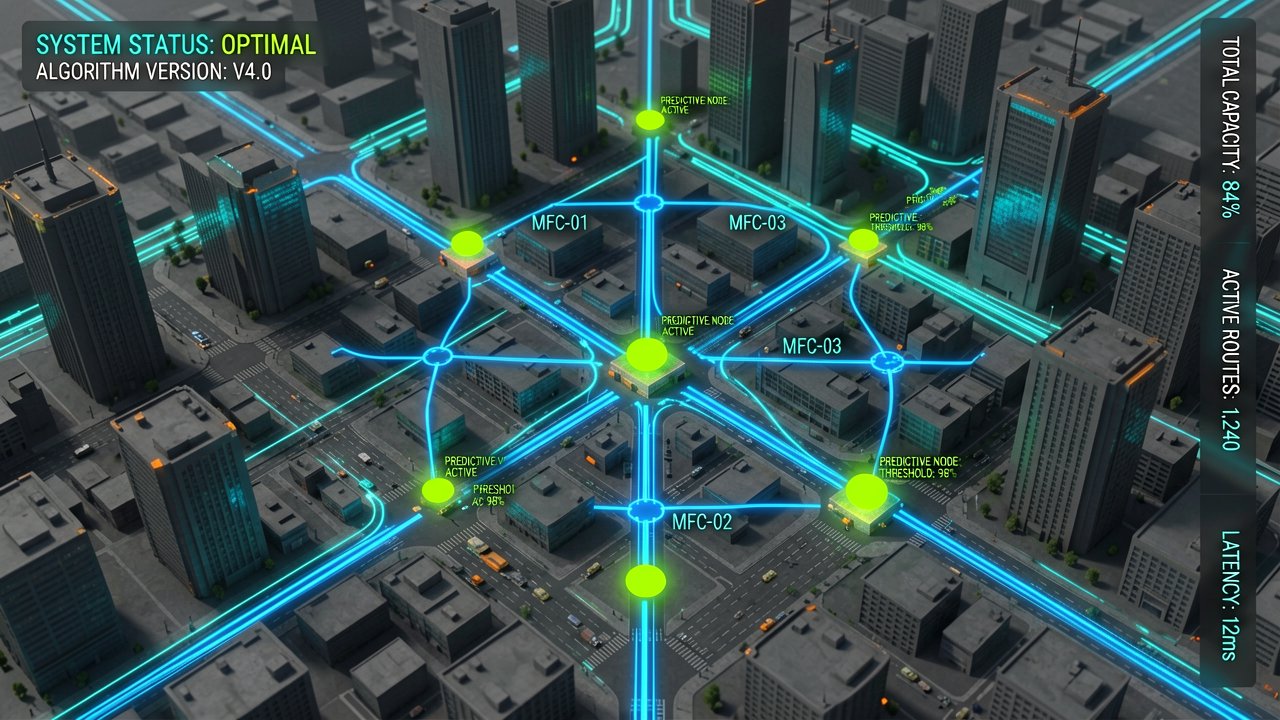
The Continuing Education Centre at the Indian Institute of Technology Roorkee, in collaboration with TeamLease EdTech, has introduced a specialized six-month executive program focused entirely on deploying artificial intelligence within the e-commerce and quick commerce ecosystems. This joint initiative targets working professionals and sector aspirants, delivering an intensive curriculum that moves past general data science to focus directly on localized, rapid-delivery business models. The educational framework leverages live online sessions alongside an optional campus immersion component to build functional, tech-driven expertise tailored to immediate industry pain points.
The strategic emergence of this program coincides with an unprecedented structural transformation within India's digital retail landscape, where traditional scheduled e-commerce is rapidly giving way to hyper-local, sub-hour quick commerce infrastructure. Operating at this accelerated velocity strips regional supply chains of their traditional margins for error, demanding predictive rather than reactive logistical frameworks. To maintain operational viability amid fluctuating localized demands, enterprises are forced to migrate from basic software heuristics toward deeply integrated machine learning models capable of orchestrating complex distribution networks in real time.
By offering specialized training across advanced neural language programming, generative systems, and real-time analytical modeling, this collaboration addresses a severe structural talent deficit that currently caps the scaling potential of major hyper-local networks. Academic institutions and corporate upskilling partners are moving aggressively to codify engineering competencies into clear operational advantages, recognizing that sustained market capitalization in rapid delivery depends entirely on continuous algorithmic optimization.
Algorithmic Optimization in High-Velocity Supply Chains
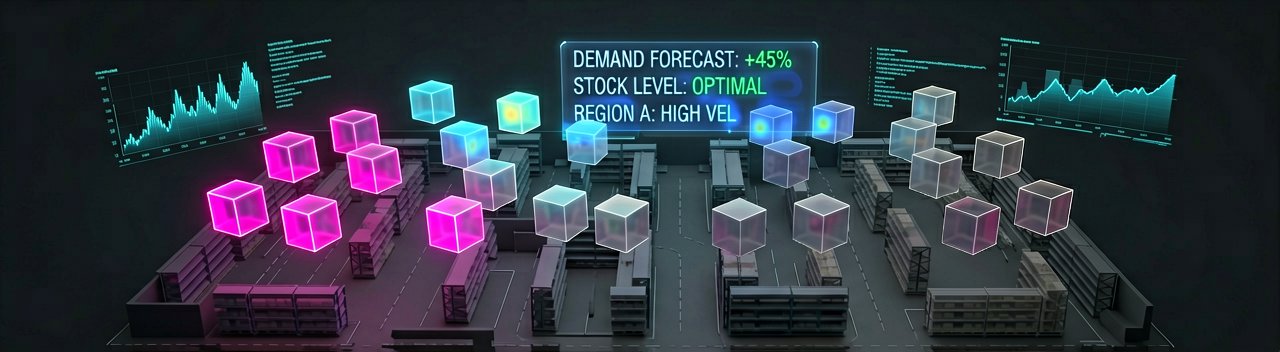
Modern quick commerce platforms operate on razor-thin logistical margins where delivery windows are measured in minutes, making predictive capabilities the baseline for operational survival. According to curriculum insights published by The Indian Express, the program addresses these realities by educating professionals in demand forecasting, dynamic pricing structures, and automated inventory planning. These algorithmic interventions eliminate overhead by positioning high-demand SKUs within dark stores before local orders are even placed, minimizing processing bottlenecks and reducing the systemic waste typical of unoptimized food and grocery networks.
Enhancing Hyper-Local Last-Mile Efficiency
The last mile of distribution remains the most expensive and variable segment of the modern digital commerce lifecycle. Through targeted instruction in last-mile operations and semantic search protocols, the program provides managers with the tools to implement automated routing agents and real-time fraud detection systems. By mastering these specialized data pipelines, operations professionals can reduce transit idling times, optimize courier utilization rates, and dynamically adjust dispatch parameters to accommodate sudden spikes in regional micro-demand.
Generative AI and the Personalization Paradox
As consumer acquisition costs scale upward across digital platforms, retention hinges on an enterprise's ability to offer hyper-personalized customer interfaces without introducing friction. The joint curriculum heavily emphasizes generative AI, natural language processing, and advanced recommendation engines to build context-aware support agents and intuitive product discovery funnels. Moving beyond static keyword matching to semantic search ecosystems allows digital storefronts to anticipate user intent, directly increasing average order values while lowering customer service overhead through automated, high-fidelity resolution workflows.
Behind the Scenes: The launching of this targeted academic partnership highlights a deeper, systemic crisis within India's digital retail infrastructure: the acute shortage of mid-level management capable of turning raw mathematical models into actual street-level fulfillment. While premier technology firms easily recruit top-tier machine learning researchers to build foundational models, the hyper-local quick commerce sector operates on an entirely different operational plane. Platforms do not just need abstract code; they require operations leads, supply chain managers, and regional directors who know how to deploy localized predictive tools directly onto dark store floors. The partnership between CEC - IIT Roorkee and TeamLease EdTech specifically aims to convert field-experienced managers into algorithmic orchestrators, filling a operational vacuum that traditional computer science degrees regularly ignore.
Historically, e-commerce networks scaled by expanding their warehouse square footage and relying on regional courier hubs to smooth out shipping delays over two to three business days. The sudden, aggressive rise of micro-delivery platforms upended this buffer, consolidating the entire retail lifecycle into a high-stakes ten-to-fifteen-minute window. This compression has made legacy enterprise resource planning systems entirely obsolete, as human dispatchers cannot calculate multi-variable routing changes or shifting SKU demands fast enough to prevent real-time bottlenecks. By moving industrial education into an online, executive format, the program allows active operators to stress-test data science workflows against live operational metrics without stepping away from their active corporate duties.

From a macroeconomic perspective, this rapid workforce pivot reflects a broader consolidation phase occurring across the entire tech ecosystem. Venture capital is no longer flowing unconditionally into market-share acquisition via heavy customer discounting; instead, boards are demanding strict operational sustainability and clear paths to unit-economic profitability. Industry stakeholders emphasize that automating customer acquisition pipelines and optimizing dark store inventory through predictive heuristics represent the only realistic ways to preserve capital while sustaining sub-hour delivery networks. Consequently, upskilling initiatives are shifting away from general digital literacy toward high-fidelity algorithmic deployment, establishing predictive data modeling as a baseline competency for modern supply chain executives.
The Realities of Micro-Fulfillment Data Architectures
To run a profitable micro-fulfillment center, a platform must maintain precise control over localized product assortments while preventing inventory stagnation or stockouts. Academic insights featured by The Indian Express indicate that the new executive curriculum heavily targets predictive demand forecasting at the neighborhood level. By training professionals to feed hyper-local variables—such as real-time weather changes, local festival schedules, and historical point-of-sale patterns—into localized neural networks, platforms can automate inventory replenishment protocols down to individual micro-warehouses. This granular level of planning stabilizes delivery pipelines and protects fragile operating margins from the high costs of holding excess perishable stock.
Mitigating Friction in Automated Customer Lifecycles
Beyond the physical mechanics of moving goods, the program addresses the growing complexity of automated user retention through practical instruction in semantic search models and natural language processing. Modern e-commerce platforms increasingly depend on context-aware recommendation systems to drive impulse purchases and maximize average basket sizes before a user reaches the checkout screen. Teaching managers how to deploy and monitor these advanced machine learning pipelines helps companies replace rigid, keyword-dependent interfaces with intuitive, intent-driven digital storefronts. This strategic adjustment reduces browsing friction, lowers customer service intervention rates, and improves overall platform loyalty in a highly competitive digital marketplace.
Reading Between the Lines: The widespread industry enthusiasm surrounding this AI-focused curriculum masks a fundamental contradiction in the quick commerce playbook: the assumption that algorithmic optimization can indefinitely substitute for physical infrastructure reality. While training managers to deploy predictive neural networks will undoubtedly streamline inventory placement, a sophisticated demand-forecasting model cannot widen a congested road or prevent a monsoon from delaying a courier. By framing machine learning as the primary savior of thin operating margins, stakeholders risk overlooking the fact that digital retail is still heavily dependent on hard physical assets, manual labor, and unpredictable urban environments. No amount of real-time algorithmic refinement can fully insulate an enterprise from the escalating capital expenditures required to lease, secure, and maintain dense networks of urban dark stores.
Furthermore, the aggressive rush to integrate generative AI and semantic search into digital storefronts introduces a subtle personalization paradox that may alienate the very consumers platforms are desperate to retain. While context-aware recommendation engines excel at maximizing short-term average basket sizes, they often create digital echo chambers that restrict product discovery and frustrate users who desire predictable utility over algorithmic curation. When automated customer service agents are deployed primarily to shield companies from the overhead costs of human support teams, the consumer experience frequently degrades into a loop of unhelpful, automated scripts. Tech-centric platforms often mistake complete automation for friction-free service, forgetting that customer loyalty in high-velocity retail is built on simple reliability rather than complex conversational interfaces.
Ultimately, the true metric of success for this academic partnership will not be the volume of certificates issued, but whether upskilled professionals can translate predictive data models into sustainable unit economics. If these newly minted AI managers simply use their training to design increasingly complex, capital-intensive software architectures that fail to account for unpredictable human delivery dynamics, the industry's structural deficit will remain unaddressed. True operational maturity will require these executives to cultivate a healthy skepticism toward raw data inputs, ensuring that machine learning systems are used as practical tools to support ground-level staff rather than rigid frameworks that ignore the messy realities of localized distribution networks.
The Realities of Automated Demand Shock Management
When unexpected localized demand shocks occur, rigid algorithmic systems frequently falter because they lack historical context for unprecedented urban events. According to curriculum outlines and program reports documented by India Education Diary, the initiative focuses heavily on equipping managers with the skills to audit, retrain, and override automated machine learning models during structural market anomalies. Teaching professionals how to intervene when algorithms deliver skewed predictions ensures that platforms do not over-order inventory during temporary market spikes, thereby protecting fragile corporate cash reserves from being tied up in unsellable stock.
Balancing Technical Innovation with Operational Reality
The operational divide between theoretical data engineering and practical street-level execution remains one of the largest hurdles for modern quick commerce platforms. As detailed by The Indian Express, this specific executive program tries to bridge this gap by forcing active operators to analyze real-world logistics bottlenecks through a rigorous statistical lens. By mastering the limitations of predictive pipelines, managers learn to stop treating AI as an infallible oracle and start using it as a flexible optimization tool, allowing them to balance ambitious digital targets with the physical constraints of hyper-local delivery zones.
"We are rapidly approaching a digital landscape where a consumer can use an advanced, semantic AI prompt to order a single organic avocado, which a predictive neural network will perfectly pre-position at a local dark store, only for the entire transaction to be derailed because the delivery driver's scooter got a flat tire on an unpaved road."
Artūras Malašauskas is an AI Systems Integrator with 20+ years of production-grade web engineering experience. He has designed, shipped, and scaled enterprise Python/PHP systems for logistics, SaaS, and public-sector clients. For the past year, he has focused exclusively on AI integrations: deploying open-source LLMs, building generative media pipelines (image, audio, video), and engineering multi-agent workflows for real production environments. His standard: reproducibility, security, cost-efficient inference—no vaporware. He documents and evaluates emerging AI tooling, separating verified capabilities from marketing noise. Technical editor at: muza-ai.eu, ai-verslas.lt, ai-naujinos.lt Connect on LinkedIn
Comments